Anti-aging skincare remains one of the most active areas of cosmetic ingredient development, but the ingredients attracting attention are not the same every year.
Retinoids, vitamin C and peptides are still central to many anti-aging formulas. What has changed is how brands use them. Stability, skin tolerance, delivery systems, ingredient combinations and long-term user experience now matter as much as simply putting a familiar active on the front of the pack.
At the same time, PDRN, NAD+, growth factors and ectoin are appearing in more product launches. These ingredients are helping expand anti-aging skincare beyond wrinkle care into skin longevity, regenerative skincare, barrier resilience and anti-glycation.
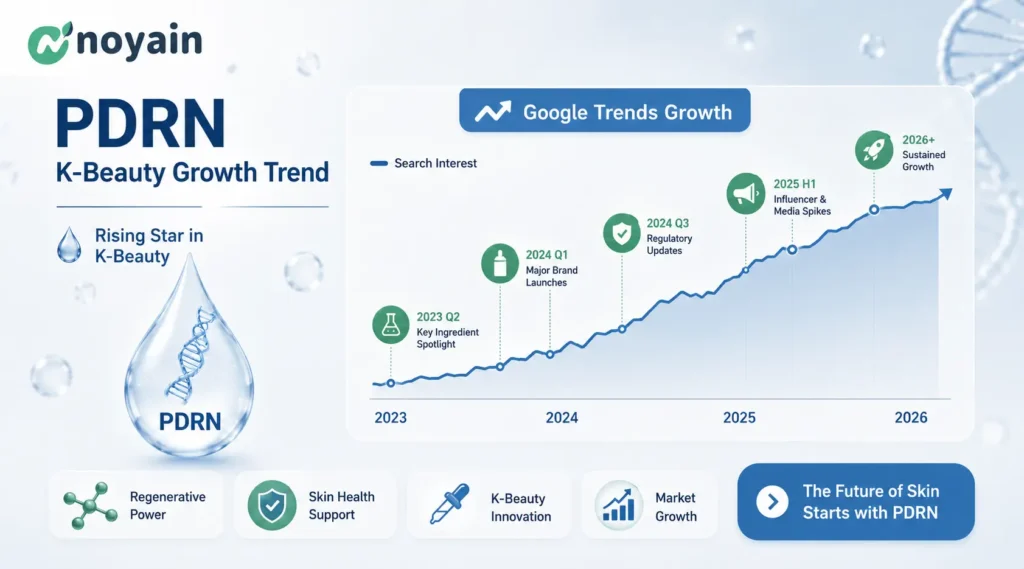
Spate’s 2026 Beauty & Wellness Predictions shows this shift clearly. In its US Google, TikTok and Instagram dataset, interest associated with NAD increased by approximately 7.8 million, resveratrol by 1.5 million, and PDRN by about 957,800 year over year. View the 2026 Spate trend report
For skincare brands, OEM/ODM manufacturers and formulators, the useful question is not simply, “What is the best anti-aging ingredient?”
A better starting point is:
Which anti-aging ingredients fit the product you want to develop, how mature is the evidence behind them, and how are successful brands already using them in finished products?
The ten ingredients below were selected based on 2026 market momentum, finished-product adoption, topical evidence and formulation potential.
Market example disclaimer: Brands and finished products mentioned in this article are included only to illustrate how anti-aging ingredients are being used in the market. Their inclusion does not imply any supply relationship, partnership, authorization or endorsement involving Noyain.
For a broader view of the raw materials currently available for formulation, see our anti-aging active ingredients.
10 Best Anti-Aging Ingredients in 2026 at a Glance
| Rank | Ingredient | 2026 Positioning | Best-Fit Product Direction | Representative Market Product |
|---|---|---|---|---|
| 1 | Next-Generation Retinoids | Established anti-aging category with continued innovation | Wrinkles / Texture / Photoaging | The Ordinary Granactive Retinoid 2% Emulsion |
| 2 | Peptides | Established and still highly active | Firming / Expression Lines / Multi-Active Anti-Aging | The Ordinary Multi-Peptide + Copper Peptides 1% Serum |
| 3 | PDRN | Rapidly growing regenerative skincare active | Firming / Regenerative / Glow | Medicube PDRN Pink Peptide Serum |
| 4 | Vitamin C & Advanced Derivatives | Established antioxidant category with formulation innovation | Photoaging / Antioxidant / Brightening | SkinCeuticals C E Ferulic |
| 5 | NAD+ | High-growth skin longevity concept | Premium Longevity / Biotech | numbuzin No.9 NAD+ BIO Lifting-sil Essence |
| 6 | Growth Factors / EGF | Premium regenerative and biotech skincare | Firming / Regenerative | BIOEFFECT EGF Serum |
| 7 | Ectoin | Barrier-first anti-aging | Sensitive Aging / Barrier Resilience | The INKEY List Ectoin Hydro-Barrier Serum |
| 8 | Resveratrol | Renewed interest in botanical antioxidant skincare | Botanical Longevity / Antioxidant | Caudalie Resveratrol-Lift |
| 9 | Carnosine | Growing anti-glycation direction | Glycation / Firming / Longevity | Elizabeth Arden PREVAGE 3-in-1 Reset Serum |
| 10 | Coenzyme Q10 | Established antioxidant linked to cellular-energy positioning | Mature Skin / Antioxidant | Eucerin Q10 Revitalize Daily Cream |
1. Next-Generation Retinoids
Retinoids remain among the best-established anti-aging skincare ingredients for visible photoaging, fine lines and uneven texture.
The category is also changing.
Instead of competing only on higher retinol percentages, newer formulas increasingly focus on alternative retinoids, encapsulation, improved stability and better tolerance.
This has brought more attention to:
- Retinal
- Hydroxypinacolone Retinoate (HPR)
- Encapsulated retinoids
- Multi-retinoid systems
- Retinoid + barrier-support formulations
HPR is particularly relevant for formulators looking for a next-generation retinoid story.
A 2026 study investigated a specific 0.03% 9-cis HPR preparation against 0.3% retinol in a four-week split-face trial involving 31 women. Improvements were reported across wrinkles, elasticity, hydration, dermal density and radiance, with no observed irritation during the study. Read the 2026 HPR photoaging study on PubMed
The distinction between “HPR” as a category and the material tested in that trial matters. The study evaluated a specific 9-cis HPR preparation, so its results should not automatically be applied to every commercial HPR raw material or finished formula.
For formulators, the attraction of HPR is therefore not that it has replaced retinol. It is that it creates another route for building retinoid products around wrinkle care, skin renewal and improved product tolerance.
Noyain supplies Hydroxypinacolone Retinoate (HPR) for cosmetic formulation.


Representative Product: The Ordinary Granactive Retinoid 2% Emulsion
The Ordinary Granactive Retinoid 2% Emulsion is a useful market example because its ingredient list includes both Hydroxypinacolone Retinoate and Retinol.
Rather than competing only on retinol concentration, the product is positioned around next-generation retinoid technologies for early signs of aging, uneven tone and textural irregularities.
That positioning points to several useful product-development directions:
- HPR night serum
- HPR + ectoin sensitive anti-aging serum
- Retinoid + peptide firming serum
- Retinoid + ceramide night cream
- Beginner-retinoid serum with soothing and barrier-support actives
For an already crowded retinoid market, better tolerance, stability, elegant texture and realistic daily-use experience can be stronger points of differentiation than simply increasing active concentration.
2. Peptides
Peptides remain one of the most widely used categories of anti-aging active ingredients, but “peptide” is too broad a term to describe how a formula actually works.
Depending on the molecule, topical peptide ingredients may be positioned as:
- Signal peptides
- Carrier peptides
- Copper peptides
- Expression-line peptides
- Palmitoylated peptides
- Multi-peptide systems
The evidence also varies considerably from one peptide to another.
A 2026 systematic review and meta-analysis examined 19 randomized controlled trials involving peptide-based interventions for skin aging. The pooled results suggested modest wrinkle improvement overall, but much of that effect was driven by oral polypeptide studies. Only a small number of high-quality topical peptide trials were available. Read the 2026 peptide systematic review and meta-analysis
Copper peptides illustrate the same issue.
GHK-Cu is widely used in cosmetic products and has substantial cellular and mechanistic research behind it, but a recent review noted that published clinical and skin-permeability data remain limited relative to its commercial popularity. Review the evidence and formulation challenges for topical GHK and GHK-Cu
For product development, the practical question is therefore not: “Should we add peptides?”
It is: Which peptide should we use, what role does it play, and what ingredients should support it?
For copper-peptide development, see our Copper Tripeptide-1 cosmetic ingredient page.


Representative Product: The Ordinary Multi-Peptide + Copper Peptides 1% Serum
This product gives formulators a clearer picture of how a modern multi-peptide system can be constructed.
Its published ingredient list includes:
- Copper Tripeptide-1
- Acetyl Hexapeptide-8
- Pentapeptide-18
- Palmitoyl Tripeptide-1
- Palmitoyl Tetrapeptide-7
- Palmitoyl Tripeptide-38
The system also includes amino acids and hyaluronic-acid-related hydration support.
The formulation lesson is more useful than simply counting the number of peptides.
A brand can build different products by giving different peptides specific jobs:
Copper Peptide Firming Serum
Copper Tripeptide-1 + humectants + barrier-support actives
Expression-Line Serum
Targeted expression-line peptide + hydration system
PDRN + Peptide Serum
PDRN + Copper Tripeptide-1 + selected signal peptides
Multi-Peptide Eye Serum
Multiple peptides + caffeine + moisturizing actives
The value of a peptide formula comes from the peptide selection and formulation architecture—not from how many times the word “peptide” appears on the ingredient story.
3. PDRN
PDRN is one of the clearest 2026 growth stories in regenerative skincare.
Spate’s trend data shows an increase of approximately 957,800 in PDRN-related interest across its US Google, TikTok and Instagram dataset.
The finished-product market has expanded just as quickly. PDRN now appears in:
- Serums
- Ampoules
- Eye products
- Creams
- Masks
- Regenerative and clinic-inspired skincare lines
This makes PDRN one of the most commercially interesting anti-aging ingredients for brands looking for a distinctive hero active.
Scientific positioning needs more care.
A large proportion of historical PDRN research comes from injectable, medical or wound-related applications. Those findings should not automatically be treated as evidence for a conventional topical cosmetic.
Topical evidence, however, is developing.
A July 2026 study evaluated an eye cream containing 0.1% medium-length PDRN-850K in a randomized, double-blind, split-face study. The formulation was compared with a 0.1% retinol eye cream using the same base, and positive changes were reported in several periocular skin measurements, including crow’s-feet-related parameters and dermal characteristics. Read the 2026 topical PDRN study in PLOS ONE
The result applies to that particular PDRN preparation and finished formula. It should not be simplified into “PDRN is proven to outperform retinol.”
Brands evaluating PDRN should therefore pay attention to the material itself—especially molecular characteristics and quality documentation—not just the percentage printed on the final pack.
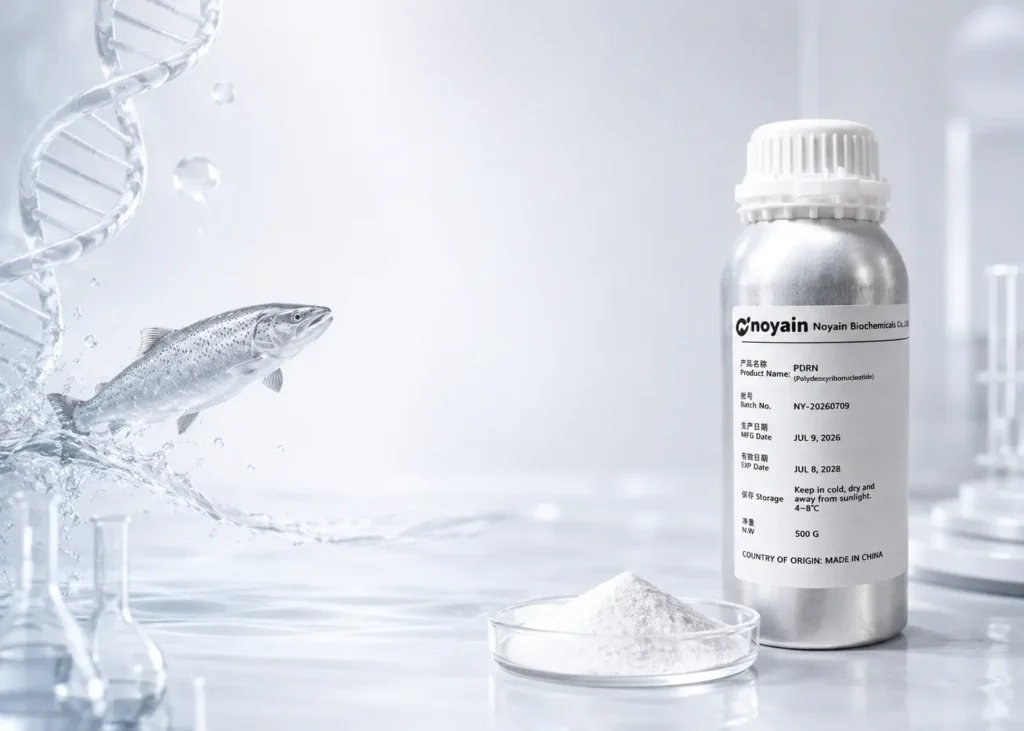
For raw-material specifications, visit our Sodium DNA / PDRN product page.
For a deeper review of the available evidence, see PDRN Benefits for Skin: What Science Says. If molecular-weight selection is part of your project, our PDRN Molecular Weight and Chain Length Guide explains why one average number is not enough to characterize a PDRN material.

Representative Product: Medicube PDRN Pink Peptide Serum
Medicube is one of the brands that helped make PDRN recognizable to a wider skincare audience.
Its PDRN Pink Peptide Serum uses a PDRN-centered concept together with ingredients such as peptides, niacinamide and adenosine, building the finished product around elasticity, hydration, tone and glow rather than relying on PDRN alone.
That is a useful formulation pattern.
PDRN can act as the hero ingredient, while more familiar supporting actives give the consumer a clearer reason to use the product.
Potential product concepts include:
- PDRN + peptide firming serum
- PDRN + ectoin recovery serum
- PDRN + niacinamide tone and elasticity serum
- PDRN eye serum
- PDRN ampoule
- PDRN sheet mask
For product-format considerations across serum, cream, mask, toner and ampoule systems, see our PDRN Formulation Guide.
4. Vitamin C and Advanced Derivatives
Vitamin C remains one of the most important anti-aging and antioxidant ingredients in skincare.
Topical L-ascorbic acid has been studied for photoaging, uneven pigmentation and wrinkle appearance. A systematic review of clinical studies found positive results for uneven and wrinkled skin, while also noting the need for more standardized research and clearer guidance on optimal concentrations. Review the clinical evidence for topical vitamin C in photoaging
For formulators, the challenge is well known:
Vitamin C is not one ingredient with one formulation profile.
L-Ascorbic Acid has the deepest clinical history, but formulation can be constrained by:
- Oxidative instability
- Low-pH requirements
- Packaging
- Water-phase compatibility
- Sensory design
Derivatives were developed to address some of these limitations, but their clinical evidence is not equally mature. Reviews of topical vitamin C derivatives repeatedly point out that many derivative claims rely more heavily on in vitro data than L-Ascorbic Acid does. Read the review of topical ascorbic acid and vitamin C derivatives
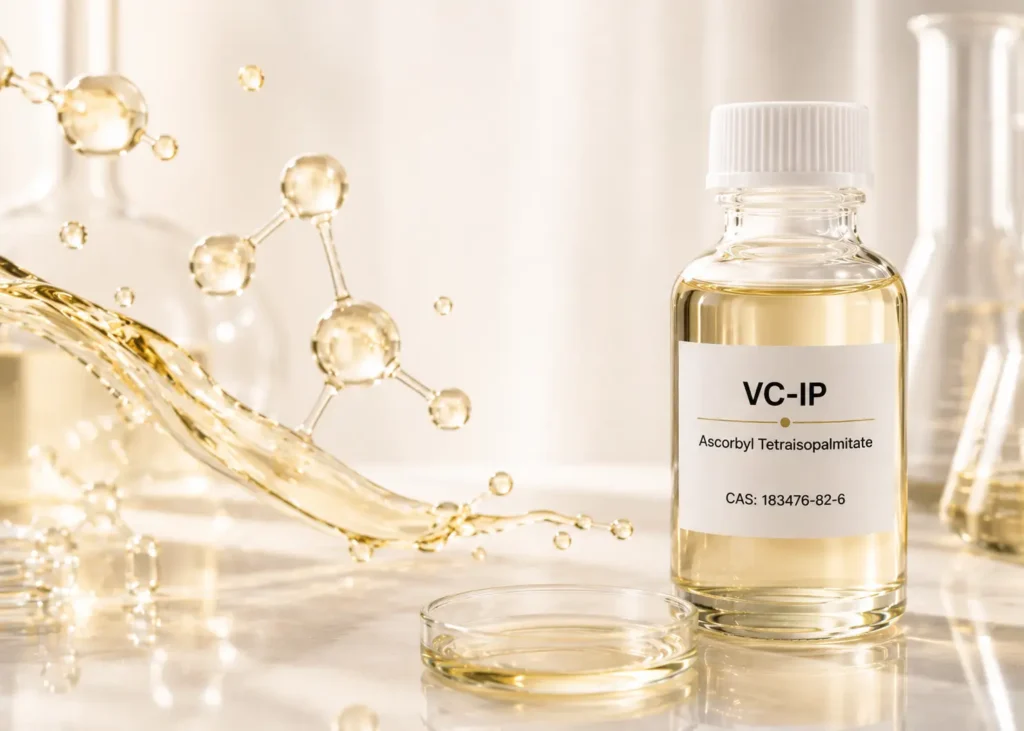
For oil-phase or premium emulsion concepts, Ascorbyl Tetraisopalmitate (VC-IP) provides a different formulation route from conventional water-soluble Vitamin C.

Representative Product: SkinCeuticals C E Ferulic — 2026 Formula
The 2026 update to C E Ferulic provides a useful example of how an established antioxidant formula can evolve without simply increasing the Vitamin C percentage.
The core antioxidant system retains:
- 15% L-Ascorbic Acid
- 1% Vitamin E
- 0.5% Ferulic Acid
The updated formula also introduces 0.3% Carnosine and 1% Endophytol™, broadening the product story into additional aging pathways.
For formulators, the development lesson is straightforward:
A mature hero ingredient can be refreshed through mechanism combination, not just higher concentration.
Possible concepts include:
- Vitamin C + carnosine
- Vitamin C + resveratrol
- VC-IP + CoQ10
- Vitamin C + peptides
- Antioxidant + anti-glycation serum
5. NAD+
NAD+ has become one of the most visible ingredients associated with the skin-longevity movement.
Spate recorded approximately 7.8 million additional points of NAD-related interest in its 2026 trend dataset, making it one of the fastest-growing ingredient signals covered in the report.
NAD+, or Nicotinamide Adenine Dinucleotide, is a coenzyme involved in cellular energy metabolism and many other biological processes.
That biology creates an obvious link to product concepts such as:
- Skin longevity
- Cellular energy
- Healthy aging
- Mitochondrial support
- Biotech skincare
The science needs to be framed carefully.
A 2026 systematic review of NAD-related anti-aging interventions identified a large body of preclinical and human research, but the eligible human intervention studies focused primarily on oral NAD+ precursors and parenteral approaches, not conventional topical skincare. Clinical effectiveness for broader anti-aging or wellness outcomes also remained inconsistent. Read the 2026 NAD+ systematic review
That makes NAD+ commercially exciting, but still an emerging topical active.
Product development should pay particular attention to:
- Stability
- Delivery
- Effective use level
- Compatibility
- Finished-formula substantiation
For cosmetic raw-material projects, see our Nicotinamide Adenine Dinucleotide (NAD+) product page.


Representative Product: numbuzin No.9 NAD+ BIO Lifting-sil Essence
numbuzin No.9 demonstrates how NAD+ is currently being commercialized.
Instead of positioning NAD+ as the only active, the formula builds a broad anti-aging system around NAD+ and multiple peptides, with additional ingredients such as resveratrol, CoQ10 and carnosine appearing in the ingredient list.
That approach makes sense for an emerging ingredient.
NAD+ can provide the longevity and biotechnology story, while more familiar supporting ingredients give the product a broader anti-aging framework.
Possible development directions include:
- NAD+ + peptide longevity serum
- NAD+ + CoQ10 antioxidant serum
- NAD+ + retinoid night treatment
- NAD+ + PDRN premium biotech serum
6. Growth Factors and EGF
Growth factors occupy a different part of the anti-aging ingredient market.
They are signaling proteins rather than conventional botanical extracts or small-molecule cosmetic actives, which makes their source, stability, delivery and formulation environment particularly important.
Topical growth factors have also been studied in human facial-rejuvenation products.
A systematic review identified 33 studies involving 1,180 participants and 23 different topical growth-factor preparations. The studies reported generally modest improvements in skin texture, fine lines and overall appearance, but the evidence was highly heterogeneous because the source and number of growth factors, finished formulations and supporting ingredients varied considerably. Read the systematic review of topical growth factors for facial rejuvenation
This makes Growth Factors particularly relevant for:
- Premium biotech skincare
- Regenerative serums
- Firming products
- Professional skincare
- High-value minimalist formulations


Representative Product: BIOEFFECT EGF Serum
BIOEFFECT provides one of the clearest examples of another formulation strategy: a high-value hero active in a deliberately simple formula.
Its EGF Serum uses barley-derived EGF in a formula containing only a small number of ingredients, with basic hydration support from ingredients such as hyaluronic acid and glycerin.
That is very different from the multi-active approach used in many NAD+ or PDRN products.
Both strategies can work.
For a high-value biotech ingredient, a minimalist formula can make the active itself easier to understand and can reduce unnecessary formulation complexity.
Potential directions include:
- Minimalist EGF serum
- Growth factor + peptide serum
- Premium regenerative serum
- Growth factor eye care
7. Ectoin
Ectoin has traditionally been associated with hydration, sensitive skin and barrier care.
Those applications are now increasingly relevant to anti-aging product development.
Many consumers looking for anti-aging skincare also deal with:
- Dryness
- Sensitivity
- Compromised barrier function
- Retinoid intolerance
- Environmental stress
This creates room for barrier-first anti-aging rather than formulations built only around aggressive wrinkle actives.
A systematic review of ectoine-containing topical formulations found evidence supporting its use in conditions associated with impaired skin barrier function, dryness and inflammation, with generally good tolerability. Read the systematic review of topical ectoine and skin barrier applications
Ectoin therefore fits anti-aging products best as a barrier resilience and long-term tolerance active, rather than as a direct replacement for retinoids.
For formulation projects, see our Ectoin cosmetic active ingredient.


Representative Product: The INKEY List Ectoin Hydro-Barrier Serum
The INKEY List combines:
- 2% Ectoin
- Multi-molecular Hyaluronic Acid
- A barrier blend containing Ceramides
The product is positioned around hydration, stronger barrier function and improved skin bounce.
This is a useful example because Ectoin is not being forced into a conventional “maximum wrinkle reduction” story.
It is used where it makes more formulation sense.
For anti-aging products, similar combinations could include:
- Ectoin + peptides sensitive anti-aging serum
- Ectoin + ceramides barrier longevity serum
- Ectoin + PDRN recovery serum
- Ectoin + HPR low-irritation retinoid serum
8. Resveratrol
Resveratrol is not a new anti-aging ingredient, but it has returned to the conversation around antioxidant skincare and longevity.
Spate reported an increase of approximately 1.5 million in Resveratrol-related interest in its 2026 dataset.
Its commercial appeal comes from the combination of:
- Antioxidant positioning
- Botanical origin
- Grape and vine associations
- Longevity-related consumer recognition
That makes it particularly useful for brands that want to combine natural-origin storytelling with science-led anti-aging positioning.
Human topical evidence is more nuanced than the marketing story sometimes suggests.
A 2025 randomized placebo-controlled trial investigated oral, topical and combined trans-resveratrol use in women over 40. Significant wrinkle reduction was most clearly observed in the group using both oral and topical resveratrol, while topical-only treatment did not significantly improve every measured aging parameter. Read the randomized human resveratrol skin-aging study
Resveratrol therefore has a useful antioxidant and skin-aging research base, but topical wrinkle claims should still be tied to finished-formula substantiation.


Representative Product: Caudalie Resveratrol-Lift
Caudalie has built one of the most recognizable skincare franchises around Resveratrol.
Its Resveratrol-Lift line combines the hero ingredient with other components such as peptide technology and hyaluronic-acid-related hydration support, while extending the concept across serum, day cream, night cream and eye care.
For ingredient suppliers and product developers, the broader lesson is important:
A successful hero ingredient does not have to remain limited to one serum.
With a strong enough product story, it can support an entire anti-aging collection.
Potential directions include:
- Resveratrol antioxidant serum
- Resveratrol + peptide firming serum
- Resveratrol + Vitamin C antioxidant system
- Resveratrol night cream
- Botanical longevity product line
9. Carnosine
Carnosine is less familiar to consumers than retinol, Vitamin C or peptides, but it is linked to a mechanism that is gaining more visibility in anti-aging skincare:
Glycation.
Glycation occurs when sugars react non-enzymatically with proteins and other biological molecules, contributing to the formation of advanced glycation end products, or AGEs.
In skin-aging research, glycation is relevant because structural proteins such as collagen and elastin can be affected by these processes.
Carnosine has been studied for anti-glycation activity in biochemical, cellular and ex vivo models.
One study using human skin explants found that topically applied carnosine and a carnosine-containing facial cream reduced markers of AGE formation under experimentally induced glycation conditions. Read the human skin explant study on topical carnosine and glycation
This is useful mechanistic evidence, but it should not be confused with large-scale clinical proof that standalone Carnosine serums visibly reverse skin aging.
For formulators, Carnosine currently makes the most sense as a mechanism-specific supporting active.
Noyain supplies Carnosine for anti-glycation skincare formulations.

Representative Product: Elizabeth Arden PREVAGE 3-in-1 Reset Serum
Elizabeth Arden PREVAGE 3-in-1 Reset Serum provides a more useful Carnosine example than a product built around Carnosine alone.
The formula combines Carnosine with other anti-aging components including peptide and antioxidant systems, while the brand specifically connects Carnosine with glycation-related aging.
This is close to how Carnosine is likely to be most useful in many formulations:
- Carnosine + Vitamin C
- Carnosine + resveratrol
- Carnosine + peptides
- Carnosine + firmness actives
- Anti-glycation + antioxidant serum
Anti-glycation gives brands another route into anti-aging skincare without simply launching another conventional retinol or peptide serum.
10. Coenzyme Q10
Coenzyme Q10, or Ubiquinone, has been used in skincare for decades.
Its relevance comes from two closely related roles:
- Lipid-soluble antioxidant activity
- Cellular energy metabolism
That gives CoQ10 a natural connection to current longevity-oriented skincare language without turning it into a newly discovered ingredient.
Topical evidence also exists.
Earlier research showed that CoQ10 could penetrate viable epidermal layers and was associated with reduced oxidative stress and wrinkle depth. Review the foundational topical CoQ10 skin research
A later study found that topical Q10-containing formulations increased Q10 levels within the epidermis and improved antioxidant capacity, while also showing effects on cellular energy metabolism in skin-related models. Read the topical CoQ10 skin-level and antioxidant study
The challenge for CoQ10 is therefore not lack of familiarity.
It is product differentiation.
For formulation projects, see our Ubiquinone / Coenzyme Q10 cosmetic ingredient page.

Representative Product: Eucerin Q10 Revitalize Daily Cream
Eucerin’s Q10 line represents a mature and straightforward use of the ingredient.
The Q10 Revitalize Daily Cream combines Coenzyme Q10 with other antioxidant components and is positioned for aging, dry and sensitive skin.
That remains a commercially useful formula architecture:
Antioxidant support + moisturization + mature sensitive skin.
Newer Q10 concepts could extend this into:
- Q10 + ectoin barrier anti-aging cream
- Q10 + resveratrol antioxidant serum
- Q10 + peptides firming cream
- Q10 + NAD+ longevity serum
A mature ingredient does not need to be abandoned when the market changes. It can be repositioned through better combinations and a more current product concept.
Trending Does Not Mean Equally Proven
The most talked-about anti-aging ingredients in 2026 do not all have the same level of topical evidence.
That distinction matters for both formulation and product claims.
| Ingredient | 2026 Market Momentum | Topical Evidence Maturity |
|---|---|---|
| Retinoids | High | Very high |
| Peptides | Very high | Varies widely by peptide |
| PDRN | Very high | Developing |
| Vitamin C | High | High |
| NAD+ | Very high | Emerging |
| Growth Factors | High | Moderate |
| Ectoin | High | Stronger for barrier / hydration |
| Resveratrol | Growing | Moderate |
| Carnosine | Growing | Moderate / emerging |
| CoQ10 | Stable | Moderate |
This is why many commercially strong anti-aging formulas combine different types of ingredients rather than selecting only the newest trend.
Examples include:
PDRN + Peptides
New hero active + more familiar firming system.
NAD+ + Peptides + Antioxidants
Longevity story + broader anti-aging support.
Vitamin C + Carnosine
Established antioxidant + anti-glycation positioning.
Retinoid + Ectoin
Wrinkle-focused active + barrier and tolerance support.
The strongest formula is not necessarily the one with the newest ingredient. It is the one where each ingredient has a clear role.
Anti-Aging Product Concepts to Consider in 2026
Looking across these anti-aging active ingredients, several product directions stand out.
1. Regenerative Firming Serum
PDRN + Peptides + Ectoin
A PDRN-led concept supported by peptide firming and barrier resilience.
Suitable for:
- Serum
- Ampoule
- Premium K-beauty-inspired lines
- Regenerative skincare collections
2. Skin Longevity Serum
NAD+ + Peptides + Antioxidants
NAD+ can provide the longevity and biotechnology positioning, while peptides, CoQ10 or resveratrol give the formula more familiar supporting mechanisms.
Suitable for:
- Premium serum
- Essence
- Longevity skincare line
- Biotech beauty positioning
3. Sensitive-Skin Anti-Aging Serum
Ectoin + Peptides + Ceramides
Designed for consumers who want anti-aging skincare without a high-irritation formula.
Key positioning:
- Hydration
- Barrier resilience
- Fine-line appearance
- Long-term tolerance
4. Next-Generation Retinoid Serum
HPR or Retinal + Barrier-Support Actives
Instead of competing only on retinoid percentage, build the product around:
- Better tolerance
- Stability
- Elegant texture
- Daily-use experience
5. Anti-Glycation Antioxidant Serum
Carnosine + Vitamin C or Resveratrol
This gives brands a more mechanism-specific story than another generic antioxidant serum.
The product can combine:
- Anti-glycation
- Oxidative-stress protection
- Firming support
- Skin-longevity positioning
6. Premium Regenerative Serum
Growth Factors + Peptides
Suitable for:
- Premium anti-aging
- Biotech beauty
- Professional skincare
- Minimalist high-value active systems
The formula does not need to contain every trending active. BIOEFFECT demonstrates that a focused hero-active strategy can also work.
Which Anti-Aging Ingredient Should You Choose?
For brands and formulators, ingredient selection becomes easier when it starts with the product brief.
| Product Goal | Ingredients to Consider First |
|---|---|
| Fine Lines / Wrinkles | Retinoids, Peptides |
| Firmness / Elasticity | Peptides, PDRN |
| Photoaging | Retinoids, Vitamin C |
| Oxidative Stress | Vitamin C, Resveratrol, CoQ10 |
| Sensitive-Skin Aging | Ectoin, Peptides |
| Anti-Glycation | Carnosine |
| Regenerative Skincare | PDRN, Growth Factors, Peptides |
| Skin Longevity | NAD+, Peptides, Antioxidants |
| Botanical Longevity | Resveratrol, CoQ10 |
| Mature Sensitive Skin | CoQ10, Ectoin |
Once the ingredient direction is selected, the next step is to compare the actual raw materials by INCI, active content, solubility, processing conditions, stability and compatibility.
The same ingredient name does not guarantee that two supplier materials will behave identically in formulation.
Frequently Asked Questions
What are the best anti-aging ingredients in 2026?
The best anti-aging ingredients depend on the product goal.
For established wrinkle and photoaging care, retinoids, peptides and Vitamin C remain important. PDRN and NAD+ are attracting strong interest in regenerative skincare and skin-longevity products, while ectoin is particularly relevant to barrier-first and sensitive-skin anti-aging.
What is the best ingredient for wrinkles?
Retinoids remain one of the most established skincare ingredient categories for fine lines and photoaging.
Peptides can also be useful, but the evidence varies considerably depending on the specific peptide and formulation.
For brands looking beyond conventional Retinol, HPR and Retinal provide additional next-generation retinoid options.
Does topical PDRN have clinical evidence?
Topical PDRN evidence is developing.
A 2026 randomized split-face study evaluated an eye cream containing 0.1% medium-length PDRN-850K and reported improvements in several periocular skin parameters.
The study applies to that specific PDRN preparation and finished formulation and should not be generalized to every PDRN cosmetic raw material.
Is NAD+ a proven topical anti-aging ingredient?
Not to the same level as established topical actives such as retinoids.
NAD+ has a strong biological connection to cellular metabolism and has become a major skin-longevity trend, but conventional topical human evidence remains limited.
Brands developing NAD+ skincare should treat it as an emerging active and validate the final formulation accordingly.
What anti-aging ingredients are suitable for sensitive skin?
Ectoin, selected peptides and barrier lipids such as ceramides can be useful in sensitive-skin anti-aging formulas.
Retinoids may also be included when concentration, frequency and the overall barrier-support system are carefully designed.
Can multiple anti-aging active ingredients be used in one serum?
Yes, provided the ingredients are compatible and the combination has a clear purpose.
A formula such as:
PDRN + Peptides + Ectoin
already gives a product three understandable roles:
- Regenerative positioning
- Firming support
- Barrier resilience
Adding more trending ingredients is not automatically better.
Final Thoughts
There is no single best anti-aging ingredient for every formulation. In 2026, established actives such as retinoids, Vitamin C and peptides remain important, while PDRN, NAD+, Ectoin and other emerging ingredients are opening up new directions in regenerative skincare, skin longevity and barrier-focused anti-aging.
For product developers, ingredient selection should follow the product concept, target user and formulation system rather than market popularity alone. A clear hero ingredient supported by compatible actives is usually more useful than adding multiple trending ingredients without a defined role.
Explore our anti-aging ingredients for skincare formulations to compare available raw materials and product options.
Data, Research & Product Sources
- Spate — 2026 Beauty & Wellness Predictions — 2026 NAD, PDRN and Resveratrol trend data. View report
- Hydroxypinacolone 9-cis Retinoate Photoaging Study — 2026 — Clinical comparison of 0.03% 9-cis HPR and 0.3% Retinol. PubMed
- Peptides for Skin Aging — Systematic Review, 2026 — Clinical evidence for oral and topical peptides in skin aging. Full text
- Topical GHK / GHK-Cu Review — Evidence, skin permeability and formulation considerations for copper peptides. Full text
- Topical PDRN Study — PLOS ONE, 2026 — Clinical study of a 0.1% medium-length PDRN-850K eye cream. View study
- Topical Vitamin C — Systematic Review — Clinical evidence for Vitamin C in photoaging and uneven skin tone. PubMed
- Ascorbic Acid and Vitamin C Derivatives — Review — Clinical evidence and formulation differences between Vitamin C forms. PubMed
- NAD+ and Anti-Aging — Systematic Review, 2026 — Current human and preclinical evidence for NAD+-related anti-aging interventions. PubMed
- Topical Growth Factors — Systematic Review — Clinical evidence for growth-factor-based facial rejuvenation products. PubMed
- Topical Ectoin — Systematic Review — Evidence for Ectoin in skin barrier support, dryness and tolerability. PubMed
- Trans-Resveratrol and Skin Aging — Clinical Trial, 2025 — Human study evaluating topical, oral and combined Resveratrol use. PubMed
- Carnosine and Skin Glycation — Human skin explant study evaluating the anti-glycation effects of Carnosine. PubMed
- Topical Coenzyme Q10 Research — Research on skin penetration, antioxidant activity and wrinkle-related effects. PubMed
- Topical CoQ10 and Skin Antioxidant Capacity — Study on epidermal Q10 levels and antioxidant effects after topical application. PubMed