
- Compatible with oils, esters, lipophilic ingredients
- Stable under normal emulsification temperatures (≤80°C recommended)
- Avoid prolonged high-temperature heating
- Highly oxidation resistant, but antioxidants (e.g. tocopherol) recommended in complex formulas
- Suitable for O/W, W/O, and anhydrous systems
- Recommended usage: 1%–20%
- Stable across pH 3–10
- Improves skin feel, spreadability, and softness
- Reduces greasiness in formulations
- Avoid strong oxidizing agents
- Ensure proper emulsifier selection in emulsions
Cosmetic Active System
Squalane
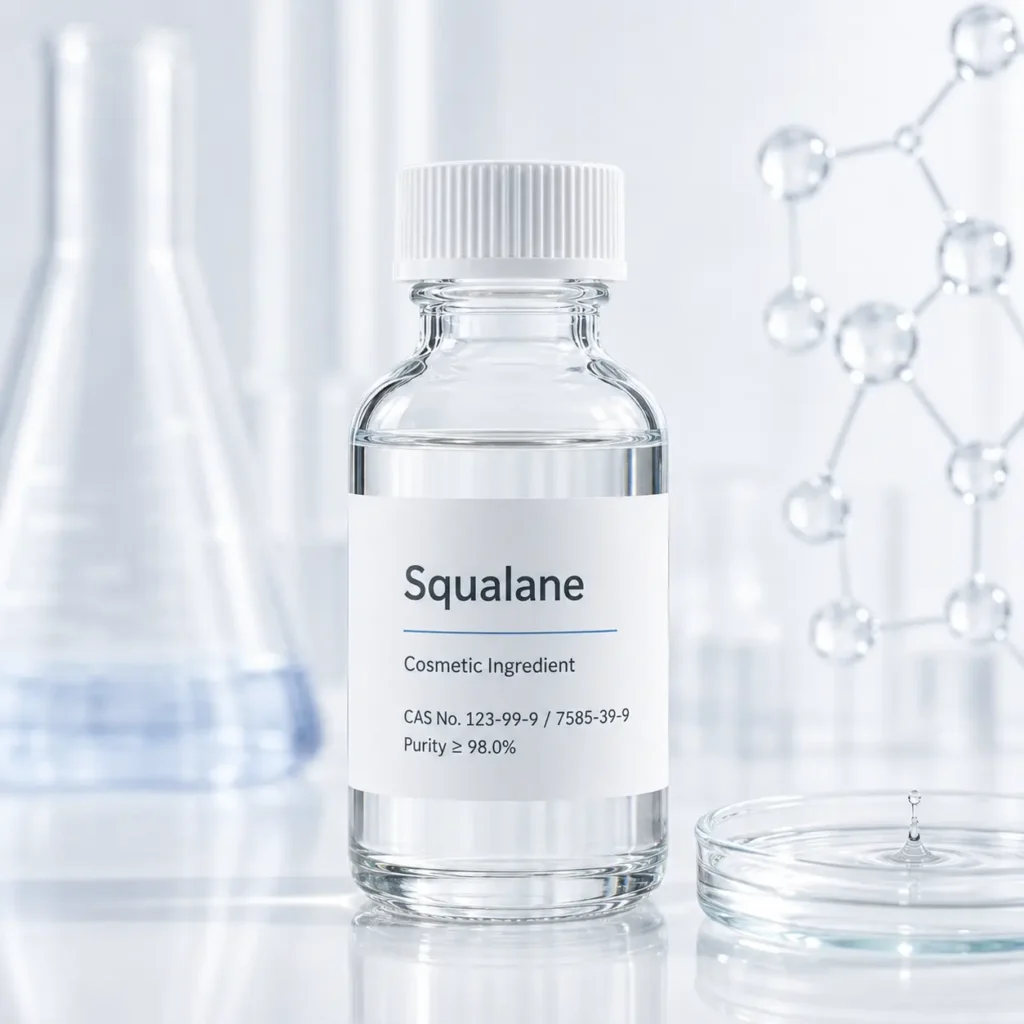
Squalane is a stable, plant-based emollient with excellent affinity to human sebum. It spreads easily, supports a soft skin barrier feel, improves moisture retention, and provides a smooth, non-greasy finish in creams, serums, sunscreens, color cosmetics, hair care, and premium moisturizing formulations.
INCI
Squalane
CAS
111-01-3
Function
Emollient, moisturizing support, skin barrier support, sensory enhancer, softness improvement
Shelf Life
24 months
Product Overview
dvanced Emollient Solution for Lightweight Moisturizing Formulations
Squalane is one of the most widely used premium emollients in modern skincare because it combines skin compatibility, elegant sensory performance, and strong formulation versatility. Structurally, it is a stable saturated hydrocarbon that resembles natural skin lipids, allowing it to spread smoothly across the skin surface and integrate with the sebum film. This makes Squalane especially valuable in moisturizers, facial oils, serums, sunscreens, primers, and sensitive-skin formulations where brands need softness without a heavy or sticky after-feel.
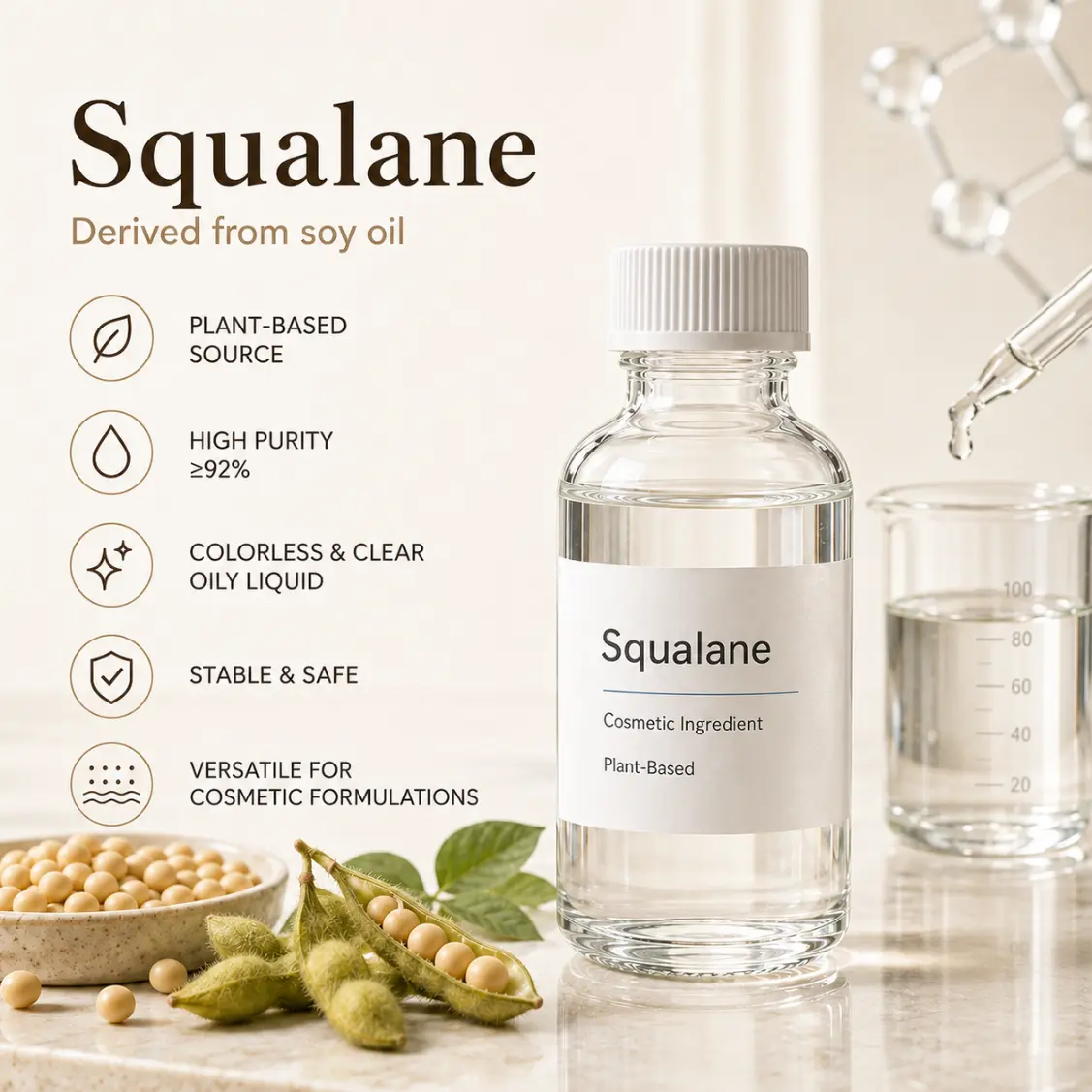
For formulators, Squalane solves a practical sensory challenge: it delivers the nourishing feel of an oil while remaining light, smooth, and quickly absorbed. It helps reduce the greasy perception of richer oil phases and improves glide in creams, lotions, balms, color cosmetics, and hair care products. The supplied NOYAIN® material is a plant-based vegetable squalane with 92%-94% squalane content, colorless clarity, odorless profile, and oil solubility.
The product also offers a strong sustainability story. As a vegetable-source, shark-free alternative to traditional shark-derived squalane, it is suitable for vegan, cruelty-free, and clean beauty positioning. The supplied NOYAIN® material is derived from soy oil and produced through a plant-based route from vegetable fatty acid to vegetable squalene, followed by hydrogenation and purification into vegetable squalane. Compared with some conventional vegetable squalane products, the ultra-low temperature cold-filtration process helps reduce low-temperature haze and wax precipitation, supporting better clarity and visual stability in finished formulations.
Skincare principles
Moisturization Benefits
Water Retention
Squalane supports moisturization by reinforcing the skin surface lipid environment and reducing the dry, tight feeling associated with impaired barrier comfort. In the supplied ingredient-level moisture-retention test, Squalane achieved 98.66% moisture retention at 1 hour and maintained 97.50% retention at 2 hours under controlled conditions. This makes it useful in products that need both immediate softness and sustained moisturized feel.
Barrier Support
Because Squalane has strong affinity with skin surface lipids, it helps support a smooth and flexible barrier feel. It is particularly useful in dry skin creams, sensitive-skin moisturizers, after-sun care, and barrier-support systems that combine emollients with humectants and lipids. It pairs naturally with ceramides, panthenol, glycerin, and hyaluronic acid.
Skin Softness
Squalane provides a soft, silky finish without the greasy, sticky, or thick feeling often associated with heavier oils. It spreads quickly and gives formulas a more refined touch, making it ideal for high-end creams, facial oils, primers, color cosmetics, and hair oils where sensory quality is a key purchasing factor.
Synergistic Effects
Squalane works well with both water-binding and lipid-support ingredients. With glycerin or hyaluronic acid, it complements hydration by improving surface softness. With ceramides and cholesterol-inspired lipid systems, it strengthens the barrier-care narrative. With bisabolol and panthenol, it supports soothing and sensitive-skin positioning.
Suitable for the following applications
Recommended Applications
Moisturizing Cream
Adds soft emolliency, spreadability, and barrier comfort without a heavy after-feel. Ideal for dry skin, sensitive skin, and daily facial moisturizers.
Facial Oil or Serum
Provides elegant slip and quick absorption in anhydrous or oil-rich products. Suitable for premium lightweight oil systems.
Sunscreen
Improves spreadability and skin feel in sun care emulsions while reducing greasy perception from high oil-phase formulas.
After-Sun Care
Supports soothing, comfort, and moisture-retention positioning in lotions, gel creams, and body oils.
Product's own advantages
Why Formulators Choose Squalane
Skin-Lipid Affinity
Squalane has excellent affinity with the skin surface lipid film, helping formulas feel naturally compatible with the skin rather than heavy or occlusive.
Lightweight Emollient Performance
It delivers softness, smoothness, and nourishment while avoiding the greasy and sticky after-feel associated with many traditional oils.
Plant-Based, Shark-Free Positioning
Vegetable-source Squalane supports vegan, cruelty-free, and sustainability-driven product stories for modern skincare brands.
Low-Temperature Clarity
Ultra-low temperature cold filtration helps reduce wax precipitation and haze, supporting clearer appearance in transparent oils and cold-climate distribution.
Broad Formula Compatibility
Squalane is oil soluble and easy to incorporate into emulsions, anhydrous oils, balms, sunscreens, color cosmetics, and hair care products.
Ingredient-Level Efficacy Data
Supplied testing shows strong moisture retention, 14.00% hyaluronidase inhibition, and 89.34% elastase inhibition at 100% sample concentration, supporting moisturizing, soothing, and anti-aging-related cosmetic positioning.
Technical Specifications
Product Technical Parameters
Parameter | Specification |
|---|---|
INCI Name | Squalane |
Appearance | Colorless clear oily liquid |
Purity | 92%-94% |
Recommended Dosage | 1%-48.9% |
Solubility | Oil soluble; insoluble in water |
pH Stability | 5.0-6.5 |
Application | Skincare, sun care, after-sun, color cosmetics, hair care, body care |
Storage Condition | Store in sealed packaging at room temperature in a ventilated and dry environment |
Shelf Life | 24 months |
why choose us
Our high-quality Squalane
Easy oil-phase incorporation
Squalane can be added to oil phases, anhydrous blends, balms, and emulsion systems.
Excellent sensory profile
Provides a soft, smooth, non-greasy, non-sticky finish.
Colorless and odorless
Does not interfere with formula color or fragrance direction.
Low-temperature visual stability
Cold-filtration process supports clearer appearance under low-temperature storage.
Broad use-level flexibility
Suitable for low-level sensory modification and high-level oil-rich formulas.
Compatible with clean beauty positioning
Plant-based and shark-free source supports modern sustainability expectations.
Kind tips
Formulation Precautions
related products
Other related products
Related Documents
Technical Support Materials
COA Document
Get For FreeTDS (Technical Data Sheet)
Get For FreeMSDS (Material Safety Data Sheet)
Get For FreeFormulation Guide
Get For FreeRelated Topics
Product-related articles
Frequently Asked Questions
- What is Squalane and what is its primary function in cosmetic formulations?Squalane is a stable, saturated hydrocarbon emollient used to improve skin softness, moisture support, spreadability, and barrier comfort. In cosmetic formulations, it functions mainly as an emollient and sensory enhancer. It is widely used in moisturizers, serums, facial oils, sunscreens, primers, color cosmetics, body care, and hair care because it provides a smooth, lightweight, non-greasy finish.
- What is the difference between Squalane and Squalene?Squalene is an unsaturated lipid naturally found in human sebum and some plant oils, but it is more prone to oxidation. Squalane is the hydrogenated, fully saturated form of squalene, making it much more stable for cosmetic formulation. This higher oxidation stability is why Squalane is preferred in finished skincare, sun care, color cosmetics, and hair care products.
- What is the recommended dosage for Squalane?The recommended dosage from the supplied product material is 1%-48.9%. Lower levels can improve spreadability and skin feel in emulsions, while higher levels are suitable for facial oils, balms, oil-rich creams, body oils, and anhydrous systems. Final use level should be selected based on sensory target, formula type, packaging, stability, and market requirements.
- Is this Squalane plant-based and shark-free?Yes. The supplied product material identifies the product as vegetable squalane derived from vegetable oil sources, with soy oil referenced as the source material. This makes it suitable for vegan, shark-free, and sustainability-focused cosmetic positioning. It is designed as a high-quality alternative to shark-derived squalane and fermentation-derived squalane.
- Is Squalane suitable for sensitive skin formulations?Yes. Squalane is widely used in sensitive-skin and barrier-support products because it is lightweight, non-greasy, and highly compatible with the skin surface lipid film. It can be combined with ceramides, panthenol, bisabolol, glycerin, and hyaluronic acid to build formulas that feel soft, soothing, and comfortable. Final formula tolerance testing is still recommended.
- Can Squalane be used in sunscreens and color cosmetics?Yes. Squalane is suitable for sunscreens, primers, foundations, lip products, and other color cosmetics. It improves glide, spreadability, smooth finish, and overall skin feel. In sunscreens, it can reduce greasy perception and improve comfort in formulas with larger oil phases or UV filter systems.
- What makes low-temperature clarity important for Squalane?Some vegetable squalane products can develop haze or wax precipitation under low-temperature storage, which affects visual quality, especially in transparent oils or clear packaging. The supplied product uses an ultra-low temperature cold-filtration process to improve clarity and reduce low-temperature turbidity risk, supporting more consistent appearance during storage and distribution.