
A few years ago, developing a skin brightening product came down to one question: how do we reduce melanin formation? That is why tyrosinase-targeting ingredients such as Kojic Acid and Arbutin became central to brightening formulations.
By 2026 the brief is more specific. Different skin brightening agents act on different points in the pigmentation process, and brands now look at several contributors to uneven skin tone at once:
- melanosome transfer to keratinocytes
- post-inflammatory hyperpigmentation (PIH)
- epidermal turnover
- oxidative stress
- UV- and visible-light-related pigmentation
- barrier condition
- long-term skin tolerance
The practical question has shifted away from how much of one whitening ingredient to add, toward which pigmentation pathway needs to be addressed and which ingredient should be responsible for it.

Clinical opinion has moved the same way. A 2025 Delphi consensus with 62 dermatologists at 43 centers reached agreement on 23 ingredients, with Niacinamide, Vitamin C, Azelaic Acid, Glycolic Acid and retinoids all appearing under dark spots (Alvarez et al., 2025). A separate melasma consensus run by the Pigmentary Disorders Society with 38 dermatologists across 11 countries endorsed topical Azelaic Acid and Kojic Acid, plus oral Tranexamic Acid (Sarkar et al., 2026). Meanwhile Beiersdorf continues to develop its Thiamidol platform, while L’Oréal’s Melasyl takes a route that does not rely primarily on direct tyrosinase inhibition.
For skincare brands and ODM development teams, asking which single material is the strongest skin whitening ingredient is the wrong starting point. This ranking is built on four factors instead:
- 2026 market relevance and finished-product adoption
- 2025–2026 product-development and R&D momentum
- maturity of topical evidence
- practical value as a sourceable cosmetic raw material
The final factor affects the positions of Thiamidol and Melasyl. Both represent important pigmentation technologies, but unlike Niacinamide, Tranexamic Acid or Alpha-Arbutin, they are proprietary systems rather than broadly available cosmetic ingredients.
About the brands and products mentioned in this article: Commercial products are included only to illustrate how different brightening ingredients are currently being used in the market. Their inclusion does not imply any supply relationship, cooperation, authorization or endorsement involving Noyain.
In this article, the terms skin brightening ingredients, skin whitening ingredients and skin lightening ingredients refer to cosmetic actives used to improve the appearance of dark spots, post-acne marks, dullness and uneven skin tone. They do not refer to changing a person’s natural skin color.
Top 10 Skin Brightening Ingredients in 2026
| Rank | Ingredient | 2026 Positioning | Best-Fit Product Direction | Sourcing Status | Representative Product |
|---|---|---|---|---|---|
| 1 | Niacinamide | Global mainstream brightening foundation | Brightening / Post-Acne Marks / Barrier Care | Open-market ingredient | The Ordinary Niacinamide 10% + Zinc 1% |
| 2 | Vitamin C & Derivatives | Established category evolving through derivatives and stabilization technologies | Antioxidant / Photoaging / Brightening | Open-market ingredient | SkinCeuticals C E Ferulic |
| 3 | Tranexamic Acid | High-growth pigmentation-management active | Dark Spots / PIH / Uneven Tone | Open-market ingredient | Paula’s Choice Clinical Discoloration Repair Serum |
| 4 | Alpha-Arbutin | Established tyrosinase-targeting brightener | Dark Spots / Brightening Serum | Open-market ingredient | The Ordinary Alpha Arbutin 2% + HA |
| 5 | Azelaic Acid | Acne + PIH crossover active | Post-Acne Marks / Uneven Tone | Open-market ingredient | The Ordinary Azelaic Acid Suspension 10% |
| 6 | Kojic Acid | Classic brightener; body-pigmentation demand growing | Face / Hand Dark Spot Care; body use requires market-specific review | Open-market ingredient; EU/UK use restrictions apply | SkinCeuticals Discoloration Defense |
| 7 | Thiamidol | One of the strongest proprietary anti-pigmentation benchmarks | Premium Dark Spot Care | Proprietary / not broadly sourceable | Eucerin Anti-Pigment Dual Serum |
| 8 | Glycolic Acid | Exfoliation + tone improvement + body care | Dullness / Texture / Body Brightening | Open-market ingredient | The Ordinary Glycolic Acid 7% Exfoliating Toner |
| 9 | Glutathione | High-interest antioxidant brightening concept in Asian beauty | K-Beauty / Glow / Multi-Active Serum | Open-market ingredient | numbuzin No.5+ Glutathione Vitamin Concentrated Serum |
| 10 | Melasyl / 2-MNG | Emerging melanin-precursor interception technology | Premium Pigmentation / Dark Spot Serum | Proprietary / not broadly sourceable | La Roche-Posay Mela B3 Serum |
1. Niacinamide
Niacinamide may not be the most aggressive melanin-targeting active on the market, but when consumer recognition, finished-product adoption, formulation compatibility, versatility, cost and long-term usability are considered together, it remains one of the strongest foundations for a 2026 brightening formula.
Its role differs from classic tyrosinase-targeting ingredients such as Kojic Acid and Alpha-Arbutin. Niacinamide is more commonly associated with mechanisms including reduced melanosome transfer to keratinocytes, support for barrier function and modulation of inflammatory processes. That makes it particularly useful as the foundation of a multi-pathway brightening system, rather than an ingredient that has to carry the entire pigmentation claim by itself.
The 2025 JAAD Delphi consensus placed Niacinamide among the 23 consensus ingredients, under both redness and dark spots (Alvarez et al., 2025).
Representative Product: The Ordinary Niacinamide 10% + Zinc 1%


The market positioning of this product is worth examining. Rather than presenting Niacinamide simply as a strong whitening agent, it is positioned around multiple concerns:
- dullness
- uneven texture
- visible shine
- skin brightness
- barrier support
The competitive question has moved away from whether a Niacinamide serum should contain 10% or 15%, toward what role Niacinamide plays in the complete formulation.
Formulation Directions
| Product Concept | Ingredient Combination | Positioning |
|---|---|---|
| Daily Brightening Serum | Niacinamide + Alpha-Arbutin | Everyday tone-evening care |
| Post-Acne Mark Serum | Niacinamide + Tranexamic Acid | PIH and post-blemish marks |
| Barrier Brightening Serum | Niacinamide + Ectoin / Panthenol / Ceramides | Brightening for long-term use and sensitive-skin positioning |
| Multi-Pathway Dark Spot Serum | Niacinamide + TXA + Kojic Acid | Multiple pigmentation pathways |
2. Vitamin C and Advanced Derivatives
Vitamin C remains one of the core ingredients in antioxidant, photoaging and skin brightening formulations in 2026. The evidence base, though, is smaller than the category’s market share suggests. The first systematic review of randomized trials on topical Vitamin C in melasma and photoaging found only seven eligible publications covering 139 volunteers in total; objective pigmentation measures showed significant lightening, but the authors noted that long-term use may be needed before changes become noticeable (Correia & Magina, 2023). A 2026 meta-analysis reached a similar conclusion, with topical application the most effective of the routes compared (He et al., 2026).
One finding from that first review is directly useful for product development: while serums on the market are sold at concentrations up to 30%, most of the studies used under 10%. The evidence base does not support the concentration race.
For product developers, the working question has become which form of Vitamin C suits the formula:
- L-Ascorbic Acid
- 3-O-Ethyl Ascorbic Acid
- Ascorbyl Glucoside
- Sodium Ascorbyl Phosphate
- Ascorbyl Tetraisopalmitate / VC-IP
- encapsulated Vitamin C systems
L-Ascorbic Acid has one of the most established research backgrounds, and also creates some of the most demanding formulation challenges: oxidation, low-pH requirements, packaging compatibility, water-phase stability, irritation potential and long-term color change.
Vitamin C derivatives give formulators access to different solubility profiles, processing conditions and product formats. Their evidence bases are not identical, however, and evidence generated for L-Ascorbic Acid should not automatically be transferred to every derivative.
There is also at least one endpoint where Vitamin C did not perform. In two randomized controlled trials on high-energy visible light exposure, ascorbic acid 7% showed no efficacy against HEV-induced pigmentation versus its vehicle, while 2-MNG at 0.5% and 1% did (Marionnet et al., 2025). Antioxidant protection and melanogenesis inhibition are not interchangeable claims.
Representative Product: SkinCeuticals C E Ferulic

C E Ferulic remains one of the best-known examples of an established antioxidant system. Its core composition includes:
- 15% L-Ascorbic Acid
- 1% Alpha Tocopherol
- 0.5% Ferulic Acid
The formulation illustrates that Vitamin C innovation does not have to mean increasing the active concentration. It can come from antioxidant synergy, stabilization, delivery, packaging, skin tolerance and complementary pigmentation pathways.
Formulation Directions
| Product Concept | Ingredient Combination |
|---|---|
| Water-Based Brightening Serum | 3-O-Ethyl Ascorbic Acid + Niacinamide |
| Premium Oil Serum | VC-IP + CoQ10 / Tocopherol |
| Dark Spot Antioxidant Serum | Vitamin C Derivative + Tranexamic Acid |
| Sensitive-Skin Brightening Serum | Stable Vitamin C Derivative + Ectoin |
For brands looking to avoid the formulation limitations associated with low-pH L-Ascorbic Acid systems, stable Vitamin C derivatives remain commercially important options.
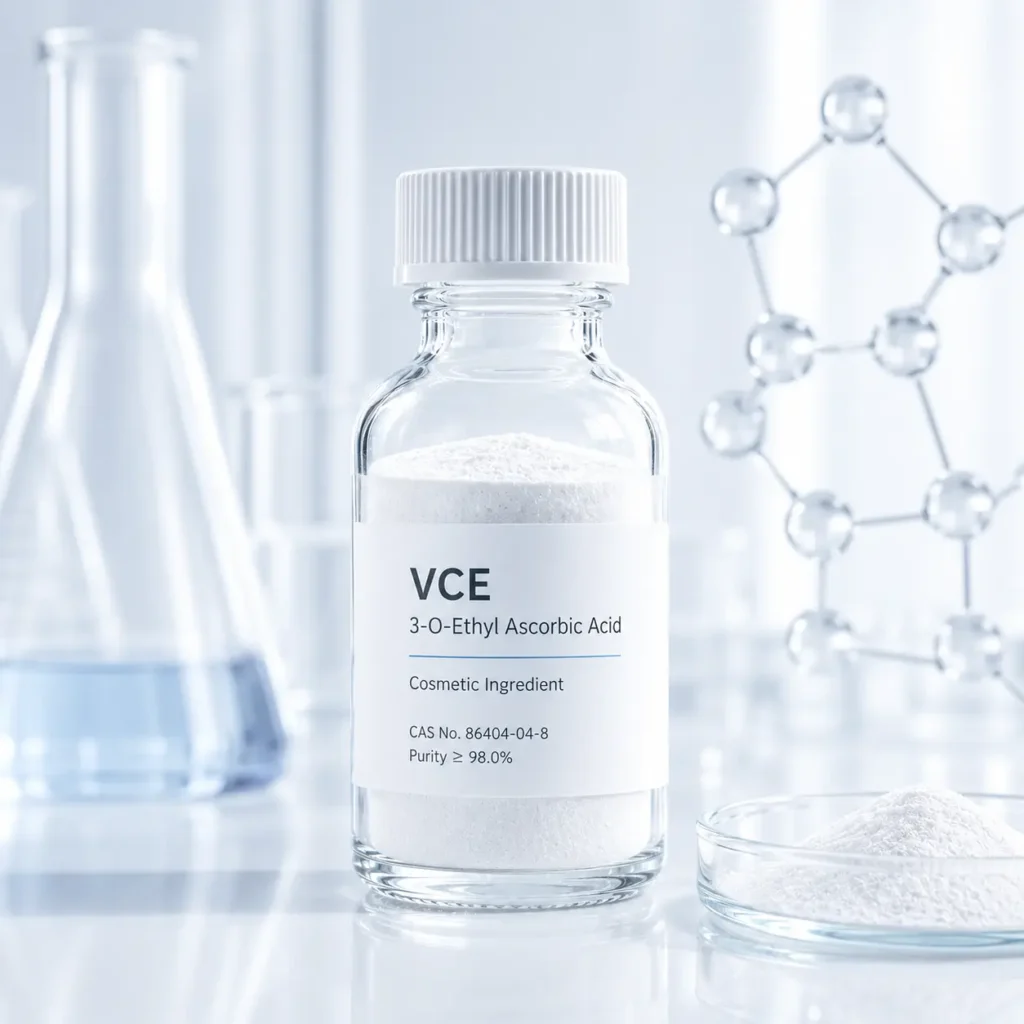
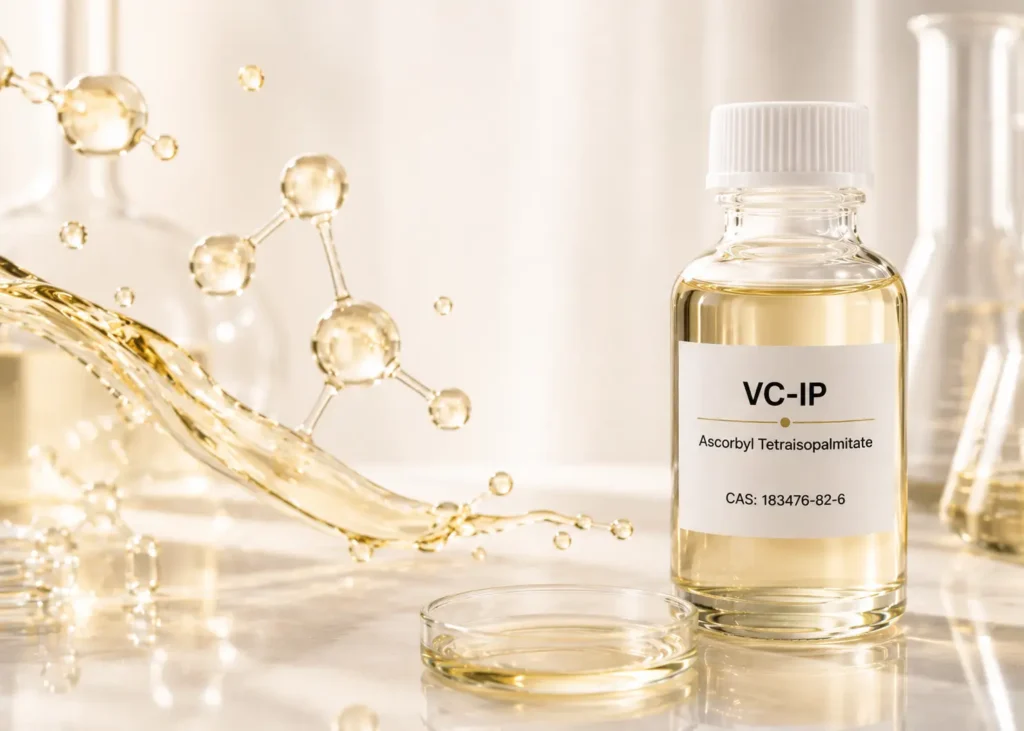
Related ingredients: 3-O-Ethyl Ascorbic Acid (VCE) · Ascorbyl Tetraisopalmitate (VC-IP)
3. Tranexamic Acid
Tranexamic Acid (TXA) has become one of the most commercially relevant pigmentation ingredients for modern dark-spot formulations. Unlike classic brighteners that primarily target tyrosinase-related pathways, TXA has been studied across several pigmentation-management contexts, which has helped drive its use in products positioned around dark spots, PIH, post-acne marks, uneven skin tone and melasma-related concerns.
Its evidence base requires careful interpretation, and the reason is specific rather than general. A 2024 meta-analysis and systematic review of 22 randomized trials with 1,280 patients found that TXA significantly reduced melasma severity scores — but when the analysis was broken down by route, oral administration produced the largest reduction in MASI, followed by injection, with topical application last. Heterogeneity across studies was high (Calacattawi et al., 2024). The 2026 Pigmentary Disorders Society melasma consensus likewise endorses oral TXA, not topical (Sarkar et al., 2026).
For cosmetic-product development, one principle therefore has to stay explicit:
Results from oral or injectable Tranexamic Acid should not be used as evidence for an ordinary topical cosmetic raw material.
What matters commercially is where TXA now appears: increasingly inside multi-active discoloration systems rather than as a standalone claim. There is direct clinical support for that approach. A 2025 investigator-blind randomized study compared a cosmetic serum containing 5% niacinamide, 1% tranexamic acid, 0.2% of a stabilized Vitamin C form and hydroxy acids against 4% hydroquinone in 60 women with facial melasma. Both regimens produced significant pigmentation reduction at three months; the serum showed better local tolerance and lower erythema, and melanin density reduction was similar between groups (Rocio et al., 2025). The study supports the performance and tolerability of that finished multi-active serum under the tested conditions; it does not isolate the contribution of any single ingredient or prove which component was responsible for the outcome.
Representative Product: Paula’s Choice Clinical Discoloration Repair Serum


The publicly disclosed key actives include:
- 3% Tranexamic Acid
- 5% Niacinamide
- 0.5% Bakuchiol
The product does not depend on one percentage claim alone. Several ingredients are used to construct a broader discoloration strategy, which reflects a wider direction in dark-spot product development: few modern formulas rely on a single active.
Formulation Directions
| Product Concept | Ingredient Combination |
|---|---|
| General Dark Spot / Uneven Tone | TXA + Niacinamide |
| Multi-Pathway Brightening | TXA + Alpha-Arbutin |
| Pigmentation + Antioxidant Support | TXA + Vitamin C Derivative |
| Post-Acne / Sensitive Brightening | TXA + Panthenol / Ectoin / Bisabolol |
From a sourcing perspective, one of TXA’s practical strengths is its ability to fit into a range of multi-active brightening concepts involving Niacinamide, Alpha-Arbutin, Vitamin C derivatives and soothing actives.
Related ingredient: Tranexamic Acid
4. Alpha-Arbutin
Alpha-Arbutin remains one of the clearest examples of an established brightening ingredient built around tyrosinase inhibition. Its market positioning is easy to understand — dark spots, uneven tone, brightening, radiance — and it is water soluble, widely used in serums, essences and lotions, and fits naturally alongside ingredients such as Niacinamide and Tranexamic Acid.
The regulatory framework is now settled. Commission Regulation (EU) 2024/996, adopted 3 April 2024, added Alpha-Arbutin and Arbutin to Annex III with these conditions:
- up to 2% in face creams
- up to 0.5% in body lotions
- Hydroquinone must remain at technically unavoidable trace levels
The dates matter for product planning. Non-compliant products could not be placed on the EU market from 1 February 2025, and could not be made available on the EU market from 1 November 2025. Both deadlines have now passed.
The hydroquinone condition is not arbitrary. The SCCS concluded that Alpha-Arbutin and Arbutin are safe at the specified levels, but flagged concern when they are used in combination with hydroquinone or hydroquinone-releasing agents — which is why the trace-level requirement is written into the entry rather than left to good practice.
For B2B buyers, this clarity is worth something. It allows the ingredient to be evaluated against an established framework rather than only through supplier marketing claims.
Representative Product: The Ordinary Alpha Arbutin 2% + HA


This is a clear example of a single-hero-active approach focused on uneven skin tone, dark spots and radiance. It also highlights an important formulation issue: Alpha-Arbutin requires proper management of pH and stability in aqueous systems. The buffer system should be selected for the target pH and validated in the complete formulation rather than assuming that one buffer is suitable for every brightening system. For product development, those factors can be just as important as the headline concentration.
Alpha-Arbutin also appears in combination studies. A 2025 split-face, evaluator-blinded randomized pilot compared a topical cosmetic containing alpha-arbutin 5% plus kojic acid 2% against triple combination cream for melasma (Tantanasrigul et al., 2025). Note the use levels: both exceed current EU limits, so the study is a mechanism and combination reference rather than a formulation template for the EU market.
Formulation Directions
| Product Concept | Ingredient Combination |
|---|---|
| Minimalist Brightening Serum | Alpha-Arbutin + Humectant System |
| Classic Dual-Pathway Formula | Alpha-Arbutin + Niacinamide |
| Dark Spot-Focused Serum | Alpha-Arbutin + TXA |
| Brightening Essence | Alpha-Arbutin + Vitamin C Derivative |
Related ingredient: Alpha-Arbutin
5. Azelaic Acid
Azelaic Acid reaches the Top 5 because it fits one of the most important current formulation trends: acne care and pigmentation care are increasingly overlapping.
For many consumers, pigmentation is not an isolated concern. The sequence often runs from acne to inflammation, then to post-inflammatory hyperpigmentation, and finally to marks that persist long after the blemish itself has cleared. An ingredient that can participate in both blemish-prone-skin and uneven-tone formulations therefore has significant commercial value.
The 2025 JAAD Delphi consensus listed Azelaic Acid under both acne and dark spots — one of the few ingredients to achieve consensus in two categories (Alvarez et al., 2025). The 2026 melasma consensus also includes topical Azelaic Acid within its clinical management framework (Sarkar et al., 2026). That clinical context is useful background, but it should not be converted directly into an efficacy claim for a cosmetic raw material.
Representative Product: The Ordinary Azelaic Acid Suspension 10%

The product is positioned around uneven skin tone, dullness, visible redness, textural irregularities and blemish-prone skin — which demonstrates why Azelaic Acid does not need to be confined to a conventional acne-treatment story.
Formulation Directions
| Product Concept | Ingredient Combination |
|---|---|
| Post-Acne Mark Serum / Cream | Azelaic Acid + Niacinamide |
| Sensitive Tone-Correcting Formula | Azelaic Acid + Soothing Actives |
| Texture + Tone Formula | Azelaic Acid + Controlled Exfoliation System |
| Blemish + Pigmentation Formula | Azelaic Acid + Pigmentation-Supporting Actives |
For brands, this crossover functionality can help reduce the gap between acne-care and pigmentation-care product lines.
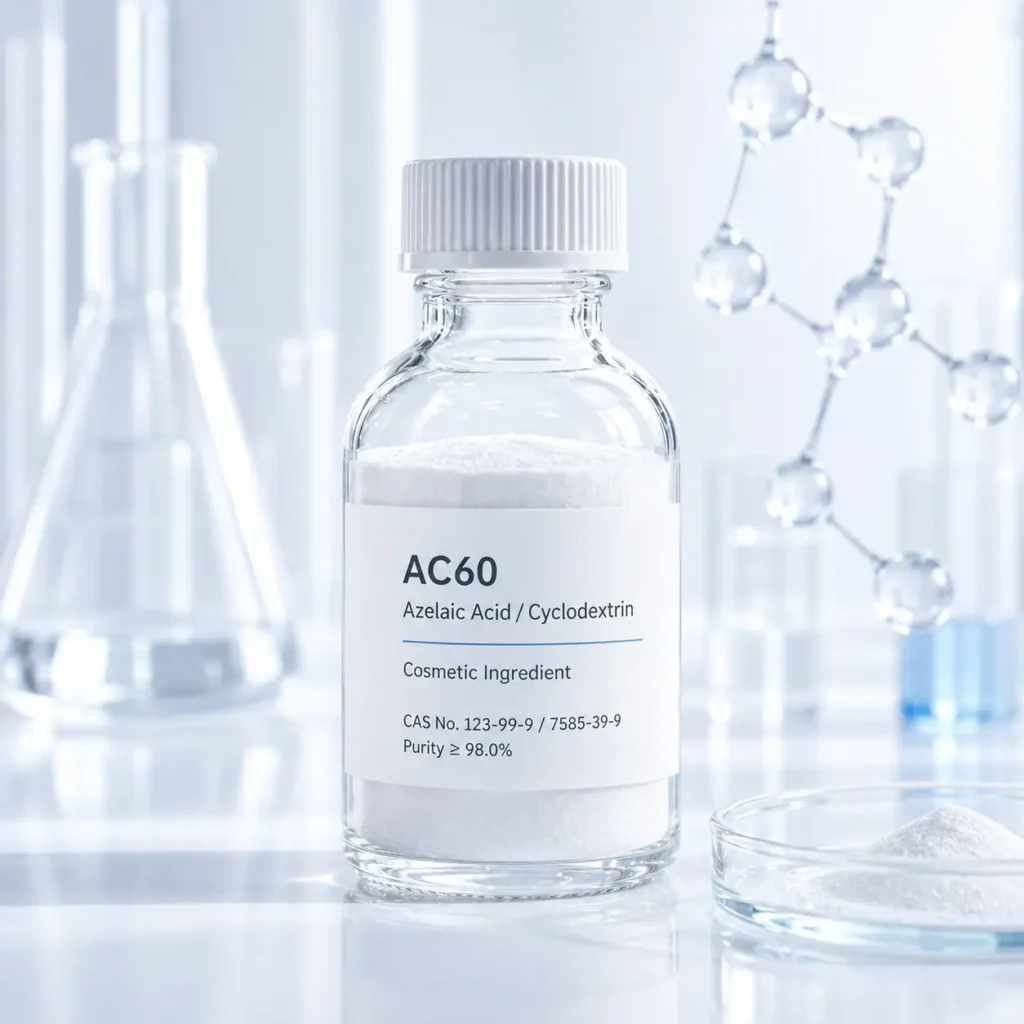
Related ingredient: Azelaic Acid encapsulation
6. Kojic Acid
Kojic Acid has been used for many years in dark spot products, brightening serums, creams, hand-care formulas and tone-evening products. It is well recognized by consumers; its difficulties sit on the formulation side, where common development issues include:
- oxidation
- discoloration
- pH sensitivity
- interaction with metal ions
- finished-product stability
A new commercial opportunity is emerging through body pigmentation care. Spate’s 2026 trend data tracks dark underarms as a growing consumer concern in body care, alongside a broader migration of skincare logic into the body category — glycolic acid body washes and niacinamide lotions among the clearest examples (Spate, 2026). Brightening skincare is expanding from the face toward underarms, elbows, knees, hands, body folds and post-inflammatory body marks.
Regulation: read this before setting a use level
Commission Regulation (EU) 2024/996 added Kojic Acid (CAS 501-30-4) to Annex III, restricted to a maximum of 1% in face and hand products when used as a skin lightening agent. The UK introduced a matching limit under SI 2024/1334. The same EU deadlines apply as for Alpha-Arbutin: 1 February 2025 for placing on the market, 1 November 2025 for making available.
Two details are worth carrying into formulation work:
The restriction is grounded in endocrine-disruption concern, not irritation. The SCCS opinion (SCCS/1637/21) linked Kojic Acid exposure to increased thyroid cell proliferation and concluded 1% was the appropriate ceiling for skin-lightening use.
The SCCS also specifically noted that Kojic Acid is often used alongside exfoliating agents that can weaken the skin barrier, and treated the resulting potential for increased absorption as an additional concern. That has a direct bearing on the multi-pathway combinations below: Kojic Acid plus an AHA is exactly the pairing the SCCS singled out. It does not make the combination impermissible, but it belongs in the safety assessment rather than being treated as a free formulation choice.
Body products are outside the face-and-hand scope of the EU entry, which means Kojic Acid is not authorized for body use as a skin lightening agent in the EU at all. Do not copy a facial use level into a body brightening brief.
Representative Product: SkinCeuticals Discoloration Defense


Its publicly disclosed key actives provide a useful example of a multi-pathway discoloration formula:
| Ingredient | Role in the Product System |
|---|---|
| 3% Tranexamic Acid | Pigmentation-related pathway |
| 1% Kojic Acid | Tyrosinase-related pathway |
| 5% Niacinamide | Melanosome-transfer and barrier support |
| 5% HEPES | Brand-positioned exfoliating / skin-renewal support |
A formula using 1% Kojic Acid alongside several ingredients with different roles illustrates the direction of modern dark-spot formulation more clearly than pushing one brightening active to the highest possible level.
Formulation Alternative: Kojic Acid Dipalmitate
When oxidation, discoloration or oil-phase compatibility becomes a major formulation problem, Kojic Acid Dipalmitate (KAD, CAS 79725-98-7) may be worth evaluating as an alternative within the same broader brightening category.
KAD is the dipalmitate ester of Kojic Acid and is oil soluble. It is commonly considered for formulations requiring improved oil-phase compatibility, better oxidative stability, and reduced pressure from color-instability issues.
KAD is not simply interchangeable with free Kojic Acid. Its cosmetic activity depends on ester hydrolysis in the skin, and publicly available human evidence for that conversion and its finished-product performance is less extensive than the evidence base for Kojic Acid itself.
Regulatory treatment requires market-specific review. KAD and Kojic Acid have different INCI names and CAS numbers, and SCCS/1637/21 explicitly states that Kojic Acid derivatives — including Kojic Acid Dipalmitate and Kojic Acid Isopalmitate — were not included in that opinion because no data were submitted. The Kojic Acid opinion therefore should not be used either to claim that KAD is covered by the same 1% limit or to claim that KAD is unrestricted. Confirm KAD’s status and any use-level requirements for each target market with the Responsible Person or regulatory adviser.

Formulation Directions
| Product Concept | Ingredient Combination |
|---|---|
| Multi-Pathway Dark Spot Serum | Kojic Acid + TXA + Niacinamide |
| Water-Based Brightening Serum | Kojic Acid + Soothing / Chelating / Antioxidant Support |
| Oil-Phase Brightening Product | Kojic Acid Dipalmitate + Antioxidant System |
| Hand Tone-Care Product | Active level determined according to target-market requirements |
Related ingredients: Kojic Acid · Kojic Acid Dipalmitate
Sourcing note: Specifications, current-batch COA and SDS documentation for the open-market ingredients discussed in this article are available on request. Request the document pack
7. Thiamidol
If this ranking were based only on pigmentation-related clinical evidence, Thiamidol could rank considerably higher. It appears at #7 because this list also evaluates whether an ingredient is realistically available for independent skincare brands and OEM/ODM development.
Thiamidol is a proprietary Beiersdorf active. For most other brands, it should therefore be treated as a market and R&D benchmark, rather than a raw-material sourcing option.
The strongest recent endorsement comes from a 2026 global consensus on melanin hyperpigmentation disorders, in which Thiamidol was the only dermocosmetic active recommended with 100% panel agreement as first-line therapy for facial hyperpigmentation and for maintenance (Passeron et al., 2026). Beiersdorf reports more than 120 clinical studies involving over 9,000 participants across two decades of development (Beiersdorf, 2025), and commercial expansion has continued into markets including the United States, China and India.
Read the consensus with its structure in mind. The panel comprised ten dermatologists; editorial assistance was provided by Beiersdorf, and the majority of panelists disclose consulting or research relationships with Beiersdorf. The paper is open access and states that the sponsor had no role in study design, data collection, analysis, interpretation or the decision to submit. None of that invalidates the recommendation, and the underlying clinical dataset is genuinely large. It does mean the finding should be read as a sponsored consensus rather than an independent guideline — the same standard applied to the 2-MNG literature further down this list.
Representative Product: Eucerin Anti-Pigment Dual Serum


The product system combines Thiamidol, Hyaluronic Acid and Licochalcone A. Thiamidol is positioned by the brand as a human tyrosinase inhibitor.
For independent brands, however, the more useful lesson is not:
How do we source Thiamidol?
It is:
Why are successful pigmentation products becoming increasingly mechanism-specific?
Broad product names such as Brightening Serum are increasingly being divided into more specific concepts:
- Targeted Dark Spot Serum
- Post-Acne Mark Corrector
- Uneven Tone Serum
- Hyperpigmentation Care System
The mechanism story itself is becoming part of the commercial positioning.
8. Glycolic Acid
Glycolic Acid is not primarily a melanogenesis inhibitor. It still belongs in a 2026 brightening-ingredient ranking because modern skin brightening formulations are not limited to melanin synthesis.
By promoting controlled exfoliation and epidermal renewal, AHAs can contribute to products addressing dullness, uneven surface texture, uneven tone appearance, post-blemish marks and body tone irregularities. The 2025 JAAD Delphi consensus included Glycolic Acid among the ingredients reaching consensus for dark spots as well as acne (Alvarez et al., 2025).
Representative Product: The Ordinary Glycolic Acid 7% Exfoliating Toner


The product is positioned around dullness, uneven tone, texture and luminosity, with Glycolic Acid used clearly as the exfoliating active.
Formulation Directions
| Product Concept | Ingredient Combination |
|---|---|
| Exfoliating Brightening Toner | AHA + Soothing System |
| Body Tone Serum | AHA + Niacinamide |
| Dark Spot Renewal Formula | Controlled AHA + TXA / Alpha-Arbutin |
| Rough & Uneven Body Care | AHA + Humectants + Barrier Lipids |
Increasing acid concentration is not the only route to a stronger product. Finished-product performance also depends on pH, free-acid level, irritation control, barrier support, sunscreen communication and long-term user compliance. Where an AHA is combined with Kojic Acid, see the SCCS note in Section 6 on barrier disruption and absorption.
9. Glutathione
Glutathione has one of the widest gaps between market momentum and maturity of topical evidence in this ranking. In Korea and Southeast Asia it has become strongly associated with glow skincare, brightening serums, antioxidant concepts and K-Beauty multi-active products, where a common combination is Glutathione + Niacinamide + Vitamin C + Tranexamic Acid.
Two 2025 systematic reviews set the boundaries. A PRISMA-guided review screened 446 articles and found only five topical clinical trials meeting inclusion criteria; among the positive findings, a 2% oxidized glutathione lotion reduced the melanin index and a 2% S-acyl glutathione cream reduced UV-induced erythema, but the authors emphasized how thin the topical literature remains (Khanna et al., 2025). A second review covering both oral and topical routes found topical glutathione at 0.5% significantly more effective than 0.1% and placebo, while noting that roughly equal numbers of included studies carried low and high risk of bias (Sarkar et al., 2025).
The most defensible positioning is therefore a high-interest antioxidant brightening active with developing topical evidence, rather than the strongest clinically proven whitening ingredient.
Representative Product: numbuzin No.5+ Glutathione Vitamin Concentrated Serum


The publicly promoted active system includes Glutathione, Niacinamide, Vitamin C and Tranexamic Acid. This is representative of how Glutathione is commonly used commercially: rather than carrying the entire pigmentation story alone, it supports an antioxidant + glow narrative, while other actives provide more established pigmentation-related positioning.
Formulation Directions
| Product Concept | Ingredient Combination |
|---|---|
| K-Beauty Glow Serum | Glutathione + Niacinamide + Vitamin C Derivative |
| Dark Spot Glow Ampoule | Glutathione + TXA |
| Antioxidant Brightening Essence | Glutathione + Vitamin C Derivative + Soothing Actives |
Glutathione has real market value, but at present it is better suited to a supporting or co-hero role than to carrying the full efficacy claim by itself.
10. Melasyl / 2-MNG
Melasyl is based on 2-Mercapto Nicotinoyl Glycine (2-MNG), a proprietary technology developed by L’Oréal. Unlike conventional tyrosinase-targeting brighteners, 2-MNG acts further downstream by reacting with melanin precursors such as dopaquinones, DHI-quinones and DHICA-quinones, limiting their polymerization into melanin without directly inhibiting tyrosinase (Muller et al., 2024).
Clinical evidence is emerging. A 2024 randomized study in 33 subjects with melanin-rich skin found that cosmetic formulas containing 0.5% or 1% 2-MNG reduced UV daylight-induced darkening versus vehicle, with 1% outperforming 0.5% (Dormael et al., 2024). A later investigator-blind study in 109 women with facial melasma compared Mela B3 serum containing 0.5% 2-MNG with 4% hydroquinone over three months and reported non-inferior mMASI improvement within the prespecified margin, with fewer local skin reactions at day 28 (Dermatology and Therapy, 2025).
Those results need context. The Mela B3 serum was applied twice daily while hydroquinone was applied once daily, and both groups also used a broad-spectrum SPF 50+ tinted sunscreen twice daily. The study evaluated a specific finished formulation, not isolated 2-MNG raw material, and the trial was manufacturer-sponsored. The evidence is therefore useful for understanding the technology, but it should not be translated into a claim that generic 2-MNG raw material is equivalent to 4% hydroquinone.
Representative Product: La Roche-Posay Mela B3 Serum

The INCI list includes 2-Mercaptonicotinoyl Glycine alongside Niacinamide, LHA and other supporting ingredients. For independent brands, Melasyl is best treated as a pigmentation-innovation benchmark rather than an ordinary open-market sourcing option.
Other Ingredients Worth Considering in Brightening Formulas
The Top 10 ranking reflects market attention, finished-product adoption and evidence maturity. A real formulation brief may lead to different choices, and several less frequently discussed ingredients can still be useful when the formulation problem is specific.
Potassium Methoxysalicylate — 4MSK
CAS 152312-71-5

4MSK is water soluble and was approved by Japan’s Ministry of Health, Labour and Welfare in 2003 as an active skin-lightening ingredient for quasi-drugs. It has been used in Japanese quasi-drug and cosmetic products for over twenty years, which gives it an established position in J-Beauty formulation practice despite its lower visibility in many global ingredient discussions.
Its mechanism is unusual among tyrosinase-targeting actives: a 2025 study reported that 4MSK acts on both melanocytes and keratinocytes, combining competitive tyrosinase inhibition with an effect on keratinocyte differentiation and turnover. Efficacy on facial pigmentation was assessed in a double-blind, split-face, placebo-controlled study using a 3% 4MSK formulation applied twice daily for 12 weeks (Shirasugi et al., 2025). The authors are Shiseido employees, and 4MSK is Shiseido’s designation for the ingredient.
The regulatory distinction matters. Purchasing 4MSK as a cosmetic raw material does not automatically give a finished product quasi-drug status; that status depends on the finished product going through the Japanese approval process, and the responsibility sits with the brand.
Related ingredient: Potassium Methoxysalicylate (4MSK)
Dimethylmethoxy Chromanyl Palmitate — DCP
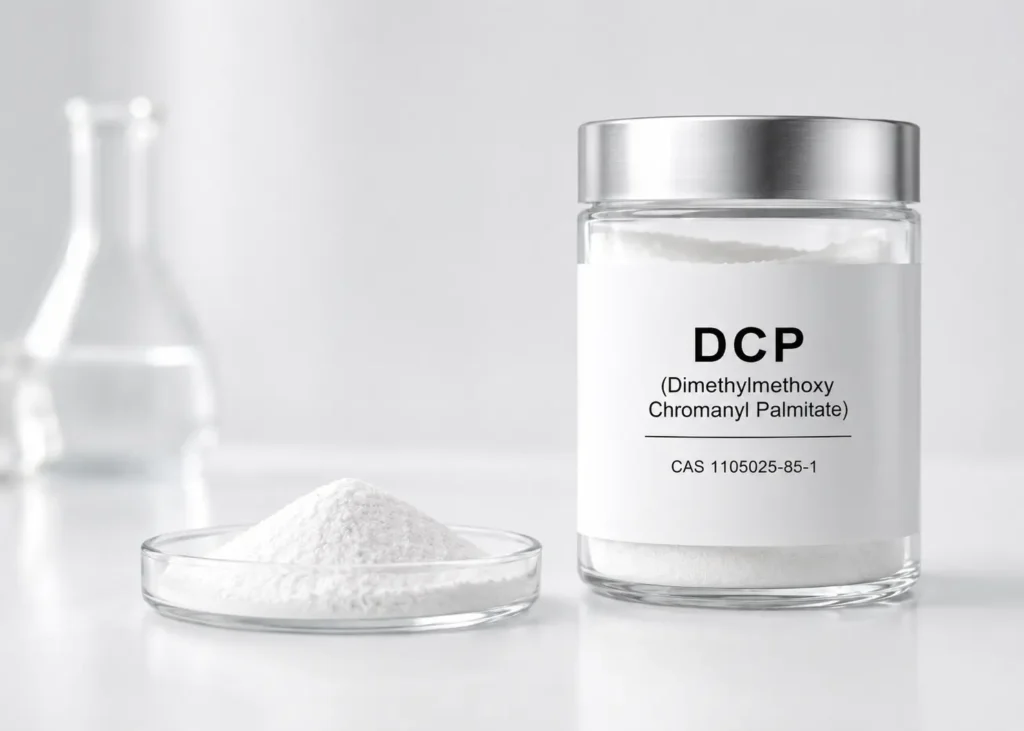
DCP is an oil-soluble active that can be considered for formulation formats less suitable for conventional water-soluble brightening ingredients: facial oils, high-oil-phase creams, premium emulsions and after-sun tone-care products. For brands already offering several water-based brightening serums, an oil-soluble active can also help create meaningful sensory and format differentiation.
Publicly available evidence is still weighted toward in-vitro and finished-product data, with fewer independent human studies. DCP is therefore more appropriately positioned as a supporting active and formulation option, rather than the sole ingredient supporting the main efficacy claim.
Related ingredient: Dimethylmethoxy Chromanyl Palmitate (DCP)
Supporting Formulation Ingredient: HEPES
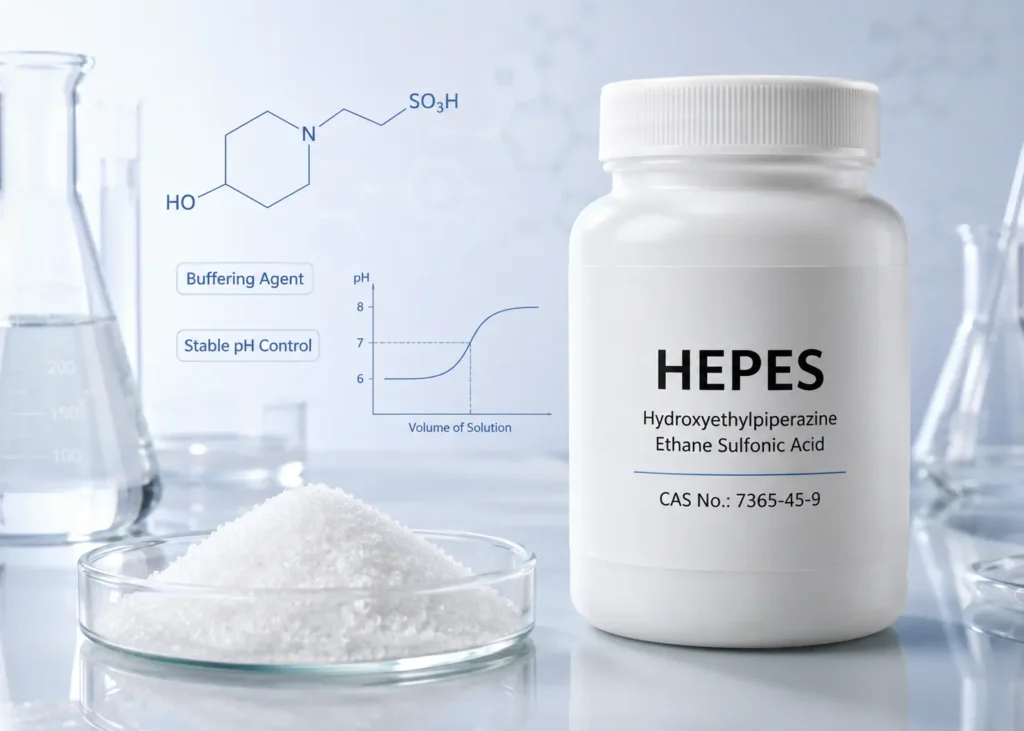
HEPES is primarily a zwitterionic buffering ingredient rather than a primary skin-brightening active. Its suitability depends on the target pH, the rest of the buffer system and the complete formulation; it should not be treated as a universal pH-control solution for brightening actives.
HEPES also appears at 5% in SkinCeuticals Discoloration Defense, where the brand positions it as an exfoliating / skin-renewal component. That finished-product example is useful for market reference, but it should not be generalized into a claim that HEPES alone is an established brightening active.
Related ingredient: HEPES
Market Momentum Does Not Equal Evidence Maturity
Popular skin lightening ingredients do not all carry the same level of topical evidence, and that difference directly affects how brands should formulate, position and claim their products.
| Ingredient | 2026 Market Momentum | Topical Evidence Maturity |
|---|---|---|
| Niacinamide | Very High | High |
| Vitamin C | Very High | Moderate–High; RCT base smaller than category share suggests |
| Tranexamic Acid | Very High | Moderate–High; oral route strongest, topical weakest |
| Alpha-Arbutin | High | Moderate–High |
| Azelaic Acid | High | High |
| Kojic Acid | High, with renewed application areas | High |
| Thiamidol | High | High, but proprietary and sponsor-linked |
| Glycolic Acid / AHA | High | High for exfoliation and tone-support applications |
| Glutathione | High in Asian beauty | Developing |
| Melasyl / 2-MNG | Emerging / Fast Growing | Developing; sponsor-linked |

This is one reason why strong brightening formulas increasingly rely on multiple ingredients with clearly defined roles. The Formulation Directions table in each section above sets out the combinations that suit that ingredient’s pathway.

In the strongest formulas, every active has a clear reason for being there. Length of the ingredient list is a poor proxy for that.
How to Choose the Right Skin Brightening Ingredient
Selecting ingredients for skin brightening should start from the product brief rather than the trend ranking.
| Product Goal | Ingredients to Consider |
|---|---|
| General Brightening / Dullness | Niacinamide, Vitamin C derivatives |
| Dark Spots | TXA, Alpha-Arbutin, Kojic Acid, 4MSK |
| Post-Acne Marks / PIH | TXA, Azelaic Acid, Niacinamide |
| Blemish-Prone Skin + Uneven Tone | Azelaic Acid, Niacinamide |
| Antioxidant Brightening | Vitamin C derivatives, Glutathione |
| Exfoliation + Tone | Glycolic Acid / AHA |
| Sensitive-Skin Brightening | Niacinamide + soothing / barrier-support actives |
| Oil-Phase / High-Oil Formulas | VC-IP, DCP, Kojic Acid Dipalmitate |
| Body Pigmentation Concepts | Niacinamide, controlled AHA; every active must be checked against target-market authorization |
| Japan / J-Beauty Development | 4MSK |
| Premium Pigmentation Benchmarking | Thiamidol, Melasyl — for market reference rather than open sourcing |
| Multi-Pathway Dark Spot Serum | TXA + Alpha-Arbutin + Niacinamide / Kojic Acid |
The Same INCI Does Not Mean the Same Material
Once the ingredient direction is clear, supplier evaluation becomes the next step. Most skincare ingredients for brightening skin are sold by multiple suppliers under identical INCI names, and that is where evaluation actually begins.
A B2B buyer should compare more than the ingredient name:
- INCI name and CAS number
- assay / active content
- purity specification
- impurity controls
- solubility
- recommended processing conditions
- addition stage
- suitable pH range
- stability information
- target-market regulatory restrictions
- current-batch COA
- actual performance in the intended formulation

Two suppliers may sell material under the same INCI name without supplying materials that behave identically. Differences may appear in purity, impurity profile, dissolution behavior, color, stability and finished-product performance — and they are especially relevant for ingredients such as Kojic Acid, Alpha-Arbutin and Vitamin C derivatives, where the gap often becomes apparent only during finished-product stability and formulation testing.
Explore our Whitening & Brightening Active Ingredients
Frequently Asked Questions
What are the best skin brightening ingredients in 2026?
Based on market adoption, current trends, scientific evidence and formulation value, the ingredients worth watching most closely in 2026 are Niacinamide, Vitamin C, Tranexamic Acid, Alpha-Arbutin, Azelaic Acid, Kojic Acid, Thiamidol, Glycolic Acid, Glutathione and Melasyl.
There is no single list of best skin lightening ingredients that fits every product. The correct choice depends on the product goal, target consumer and pigmentation pathway being addressed.
What are the best ingredients for a dark spot serum?
Tranexamic Acid, Alpha-Arbutin, Kojic Acid and Niacinamide can all be used in dark-spot formulation strategies. Modern formulas often combine ingredients acting through different pathways — for example Tranexamic Acid + Alpha-Arbutin + Niacinamide — which creates a more complete product story than increasing the concentration of one active.
Is Niacinamide a skin brightening ingredient?
Yes. Niacinamide is one of the most widely used actives in modern brightening skincare, and it reached consensus for dark spots in the 2025 JAAD Delphi study. Its mechanism differs from direct tyrosinase-targeting ingredients such as Kojic Acid and Alpha-Arbutin, which makes it particularly useful as a foundational ingredient in multi-pathway brightening formulations.
Which ingredients brighten skin tone most reliably?
Ingredients that brighten skin tone work through different mechanisms rather than a single pathway. Niacinamide, Vitamin C, Tranexamic Acid, Alpha-Arbutin, Azelaic Acid and Kojic Acid all have established topical use, but they address melanin synthesis, melanosome transfer, inflammation and epidermal turnover to different degrees. Most modern formulas combine two or three rather than relying on one.
Can Tranexamic Acid and Alpha-Arbutin be used together?
From a formulation-concept perspective the combination is logical, because the two ingredients do not rely entirely on the same pigmentation pathway. The final concentration, pH, stability, compatibility and target-market compliance should always be confirmed in the complete finished formulation.
Should I choose Kojic Acid or Kojic Acid Dipalmitate?
It depends on the formulation. For water-based systems where oxidation, chelation and stability can be properly managed, Kojic Acid offers the more direct and established route. For oil-phase or high-oil formulations, or where discoloration and oxidative stability are major development concerns, Kojic Acid Dipalmitate may be worth evaluating.
KAD depends on ester hydrolysis to release the active form, and publicly available human data are less extensive than for Kojic Acid. Regulatory status should be assessed separately by target market. SCCS/1637/21 explicitly excluded Kojic Acid Dipalmitate and other Kojic Acid derivatives from its assessment because no data were submitted, so that opinion should not be used to infer KAD’s regulatory status.
Is Kojic Acid still relevant for new brightening products in 2026?
Yes. Kojic Acid remains a widely recognized classic brightening active, while body-pigmentation trends are creating new application opportunities. Regulation has to be handled from the start of development: in the EU and UK, Kojic Acid used as a skin lightening agent is restricted to a maximum of 1% in face and hand products, with no authorization for body products under that entry.
Does topical Glutathione have strong clinical evidence?
Not yet at the same level as the most established pigmentation actives. Glutathione has strong market momentum in Asian brightening skincare, but a 2025 systematic review screening 446 articles found only five qualifying topical clinical trials. A more appropriate positioning is high consumer interest, promising potential and a developing topical evidence base.
Can Thiamidol and Melasyl be purchased as ordinary cosmetic raw materials?
They should not be treated in the same sourcing category as open-market whitening ingredients such as Niacinamide, Tranexamic Acid or Alpha-Arbutin. Thiamidol belongs to Beiersdorf’s proprietary active system, while Melasyl / 2-MNG is associated with L’Oréal’s proprietary technology platform. For most independent brands they are more useful as pigmentation-innovation benchmarks than as open-market sourcing options.
References
Consensus and guidance
- Alvarez GV, Kang BY, Richmond AM, et al. Skincare ingredients recommended by cosmetic dermatologists: A Delphi consensus study. J Am Acad Dermatol. 2025;93(6):1509–1525. doi:10.1016/j.jaad.2025.04.021
- Sarkar R, Desai SR, et al. Delphi consensus on melasma management by international experts and pigmentary disorders society. J Eur Acad Dermatol Venereol. 2026;40(4):680–692. doi:10.1111/jdv.70066
- Passeron T, Desai SR, Abdallah M, et al. Global consensus on the management of melanin hyperpigmentation disorders. J Eur Acad Dermatol Venereol. 2026;40(5):760–772. doi:10.1111/jdv.70185 — open access; editorial assistance provided by Beiersdorf.
Regulation
- Commission Regulation (EU) 2024/996 of 3 April 2024 amending Regulation (EC) No 1223/2009 as regards Vitamin A, Alpha-Arbutin and Arbutin and certain substances with potential endocrine disrupting properties.
- SCCS scientific opinion on Kojic Acid, SCCS/1637/21, final version 15–16 March 2022, corrigendum 10 June 2022.
- UK Cosmetic Products (Restriction of Chemical Substances) Regulations 2024, SI 2024/1334.
Ingredient evidence
- Correia G, Magina S. Efficacy of topical vitamin C in melasma and photoaging: A systematic review. J Cosmet Dermatol. 2023;22(7):1938–1945. doi:10.1111/jocd.15748
- He et al. Application of Vitamin C in Melasma: A Meta-Analysis and Systematic Review. Dermatol Ther. 2026. doi:10.1155/dth/9921217
- Calacattawi R, Alshahrani M, Aleid M, et al. Tranexamic acid as a therapeutic option for melasma management: meta-analysis and systematic review of randomized controlled trials. J Dermatolog Treat. 2024;35(1):2361106. doi:10.1080/09546634.2024.2361106
- Rocio J, Pittet JC, Sachdev M, Kovylkina N, Deloche Bensmaine C, Passeron T. Evaluation of the Efficacy of a Serum Containing Niacinamide, Tranexamic Acid, Vitamin C, and Hydroxy Acid Compared to 4% Hydroquinone in the Management of Melasma. J Cosmet Dermatol. 2025;24(3):e70097. doi:10.1111/jocd.70097
- Tantanasrigul P, Sripha A, Chongmelaxme B. The efficacy of topical cosmetic containing alpha-arbutin 5% and kojic acid 2% compared with triple combination cream for the treatment of melasma: a split-face, evaluator-blinded randomized pilot study. J Cosmet Dermatol. 2025;24(1):e16562. doi:10.1111/jocd.16562
- Khanna R, Rambhia P, Chapas A. Systematic Review of the Efficacy and Safety of Topical Glutathione in Dermatology. J Clin Aesthet Dermatol. 2025;18(9):51–54. PMID 41416233
- Sarkar R, et al. Glutathione as a skin-lightening agent and in melasma: a systematic review. Int J Dermatol. 2025;64(6):992–1004. doi:10.1111/ijd.17535
- Shirasugi Y, Shibata T, Koike S, et al. Potassium 4-Methoxysalicylate (4MSK) Exerts a Skin Lightening Effect by Acting on Melanocytes and Keratinocytes. J Cosmet Dermatol. 2025;24(3):e70112. doi:10.1111/jocd.70112 — authors are Shiseido employees.
- Dormael R, et al. 2-Mercaptonicotinoyl glycine prevents UV-induced skin darkening and delayed tanning in healthy subjects: A randomized controlled clinical study. J Cosmet Dermatol. 2024. doi:10.1111/jocd.16200
- Muller B, et al. A Bayesian network meta-analysis of 14 molecules inhibiting UV daylight-induced pigmentation. J Eur Acad Dermatol Venereol. 2024. doi:10.1111/jdv.19910
- Marionnet C, et al. Topical prevention from high energy visible light-induced pigmentation by 2-mercaptonicotinoyl glycine, but not by ascorbic acid antioxidant: 2 randomized controlled trials. Front Pharmacol. 2025. doi:10.3389/fphar.2025.1651068
- Efficacy and Tolerability of a New Facial 2-Mercaptonicotinoyl Glycine-Containing Depigmenting Serum Versus Hydroquinone 4% over 3-Month Treatment of Facial Melasma. Dermatol Ther (Heidelb). 2025. doi:10.1007/s13555-025-01473-4 — sponsor: Cosmétique Active International; ClinicalTrials.gov NCT06787846.
Market data and company sources