When comparing ectoin vs hyaluronic acid, the main difference comes down to how each ingredient supports skin hydration. Hyaluronic acid (HA) is a polymeric humectant primarily used to bind water, ease dryness, and improve surface moisture and plumpness. Ectoin is a water-soluble compatible solute (osmolyte) valued for supporting cellular hydration, skin comfort, and barrier-focused care under environmental stress.
Rather than competing for the same function, ectoin and hyaluronic acid play distinct roles in skincare. Depending on skin needs and product positioning, they can be formulated individually or evaluated together within a complete moisturizing system.
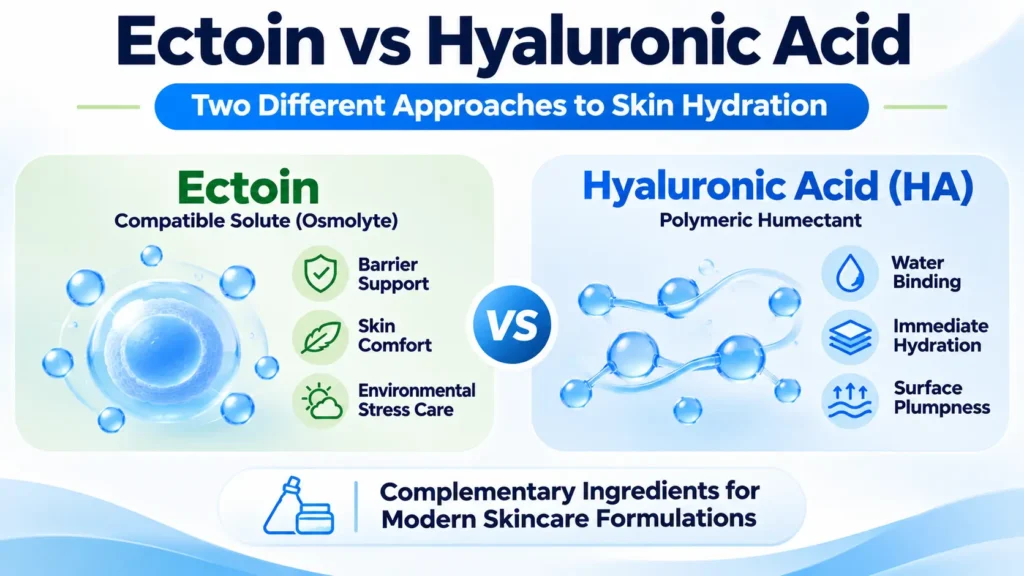
Ectoin vs Hyaluronic Acid: Quick Comparison
The table below outlines the core functional and formulation differences between ectoin and hyaluronic acid for both skincare buyers and product developers.
| Feature | Ectoin | Hyaluronic Acid (HA) |
|---|---|---|
| Ingredient Type | Compatible solute / osmolyte (extremolyte) | Polysaccharide / polymeric humectant |
| Primary Function | Cellular hydration support, soothing, and barrier comfort | Water binding and moisture retention |
| Hydration Mechanism | Interacts with water molecules to help stabilize cellular environments | Attracts and holds water to improve skin hydration |
| Skin Care Focus | Sensitive-skin care, barrier comfort, environmental stress care | Dryness relief, immediate hydration, surface smoothness |
| Formulation Characteristics | Small water-soluble molecule; not a thickener, though ionic character may affect ion-sensitive thickeners | Polymeric; molecular weight, concentration, and grade influence viscosity, film formation, and skin feel |
| Typical Applications | Barrier creams, calming serums, urban-defense skincare | Hydrating serums, ampoules, gels, creams, sheet masks |
In cosmetic ingredient sourcing, hyaluronic acid is commonly encountered as Sodium Hyaluronate, its water-soluble salt form. The differences in ingredient identity, molecular weight, and cosmetic applications are explained in our guide to Sodium Hyaluronate vs. Hyaluronic Acid.
How Do Ectoin and Hyaluronic Acid Work Differently?
Although both ingredients appear in hydrating formulas, their chemical structures and hydration roles differ significantly.
Ectoin: A Compatible Solute for Cellular Hydration Support
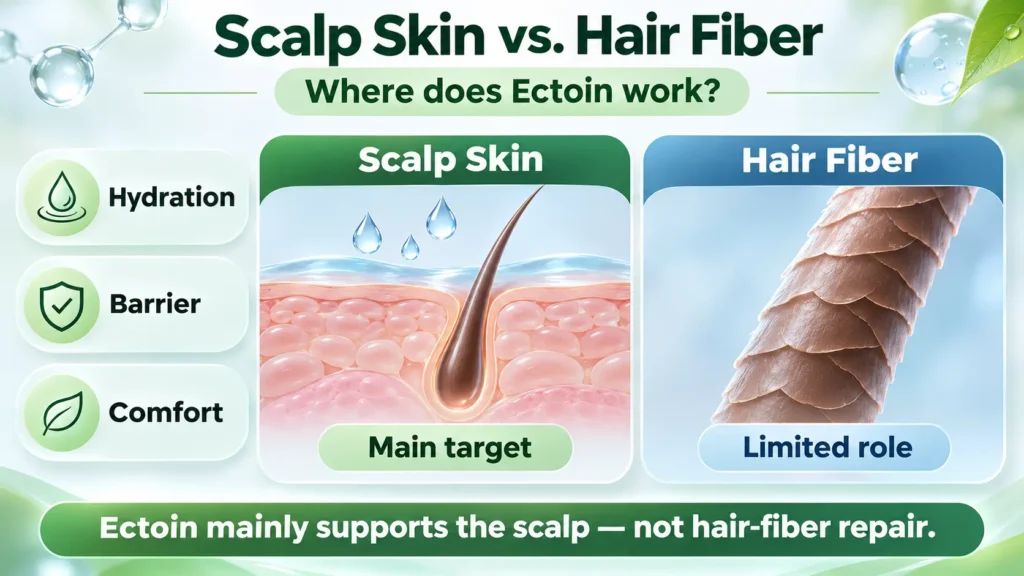
Ectoin is a low-molecular-weight, water-soluble compatible solute classified as an extremolyte—not an exfoliating acid. Its biological background and ingredient identity are explained in more detail in our introduction to Ectoin in skincare.
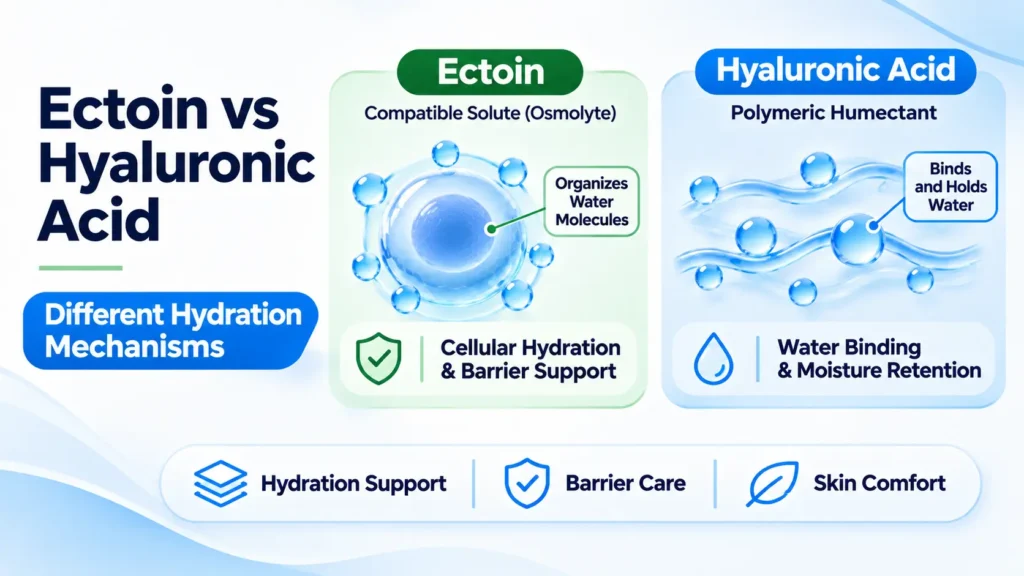
In biochemical research, ectoin is known for interacting with surrounding water molecules to help stabilize proteins and cell membrane structures under stressful conditions. The published review The Multifunctional Role of Ectoine as a Natural Cell Protectant discusses its compatible-solute properties and water-structuring behavior.
In cosmetic applications, this does not mean ectoin creates a physical barrier film on the skin surface. Instead, its osmolyte-based hydration mechanism provides a different approach to supporting cellular hydration, skin comfort, and resilience against environmental stressors.
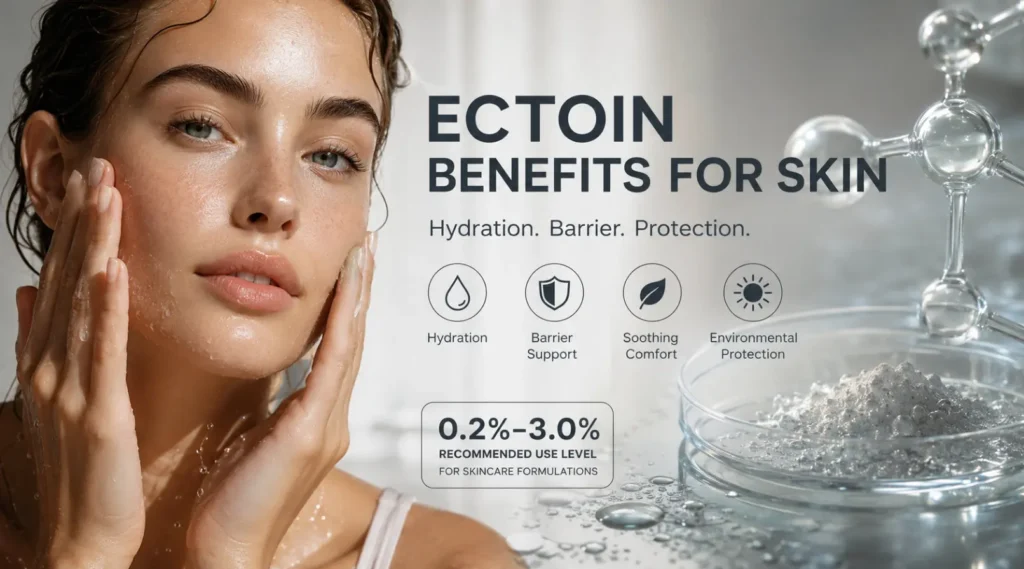
These characteristics explain why ectoin is considered in barrier-focused and sensitive-skin formulations. For a closer look at its cosmetic applications and evidence-based benefit directions, see our article on Ectoin benefits for skin.
As with any active raw material, actual skincare performance always depends on the complete finished formulation.
Hyaluronic Acid: A Polymeric Humectant for Moisture Binding
Hyaluronic acid is a polysaccharide naturally present in the skin, where it contributes to tissue hydration. In topical cosmetic formulations, its primary role is as a polymeric humectant—helping bind moisture, relieve dryness, and improve surface hydration and suppleness.
A published review on the benefits of topical hyaluronic acid in cosmetic skincare discusses its hygroscopic, rheological, and viscoelastic properties, alongside evidence from topical formulations.
Because topical delivery differs from biological activity within deeper skin tissue, cosmetic performance centers primarily on moisture binding and hydrating feel. Any additional claims regarding skin barrier improvement should be supported by testing data from the specific finished formulation.
Differences in Molecular Structure and Formulation Behavior
Structural differences between ectoin and HA directly influence how each material behaves during product development.
Ectoin is a small, water-soluble molecule rather than a polymeric thickener. It generally offers formulation flexibility across toners, serums, and emulsions, but its ionic character may influence certain ion-sensitive thickening systems. Formulators should evaluate viscosity, clarity, and stability within the complete formula.
Hyaluronic acid and sodium hyaluronate, by contrast, are polymers whose molecular weight, concentration, and grade can influence viscosity, film formation, and final skin feel.
Which One Should You Choose for Different Skin Needs?
Choosing between ectoin vs hyaluronic acid for skin depends on the primary hydration goal and product positioning. The table below outlines practical selection directions rather than rigid skin-type rules.
| Skin Need / Product Direction | Practical Ingredient Focus | Why It Fits |
|---|---|---|
| Dehydrated Skin | Hyaluronic Acid / Sodium Hyaluronate | Provides direct water-binding capacity to relieve tightness and improve immediate surface hydration and plumpness. |
| Sensitive or Comfort-Focused Skin | Ectoin | Commonly selected for barrier-support and soothing formulas centered on skin comfort and stress resilience. |
| Dry & Environmentally Stressed Skin | Ectoin + Hyaluronic Acid | Pairs HA’s moisture-binding hydration with ectoin’s cellular hydration and comfort-focused positioning. |
| Oily & Combination Skin | Either (Formula-Dependent) | Both suit lightweight formats; final skin feel depends on choosing an appropriate HA grade or a light ectoin gel/serum base. |
Ectoin is often considered in formulations designed for sensitive skin and barrier-focused care. However, the suitability of a finished product depends on its complete formulation and tolerability testing. Likewise, well-formulated hyaluronic acid products can remain gentle across skin types, and lower-molecular-weight grades should not be broadly assumed to trigger sensitivity without evaluating the full formula.
Can You Use Ectoin and Hyaluronic Acid Together?
Yes. Ectoin and hyaluronic acid can be considered together in well-designed skincare formulations and layered routines. Their different mechanisms offer complementary formulation possibilities: hyaluronic acid contributes water-binding and moisturizing properties, while ectoin provides a distinct osmolyte-based hydration and skin-comfort role.
Consumers can pair them by applying a hydrating HA serum before an ectoin-based cream, while brands can incorporate both into a single serum, ampoule, or emulsion.
However, compatibility and performance depend on the complete formulation. Formulators should evaluate pH, solubility, viscosity, clarity, processing conditions, and long-term stability before finalizing the combination—and avoid claiming confirmed synergistic efficacy unless verified through finished-product testing.
Formulation Considerations for Cosmetic Brands and Formulators
Moving from ingredient comparison to commercial production, ectoin and hyaluronic acid in skincare formulation involve distinct sourcing and technical decisions.
Selecting the Right Sodium Hyaluronate Grade
Rather than sourcing generic “hyaluronic acid,” R&D teams select specific grades of cosmetic-grade Sodium Hyaluronate based on target dosage form and sensory profile.
Higher-molecular-weight grades may contribute more noticeable thickening, slip, and surface film formation in serums, gels, and masks, while lower-molecular-weight options can support different viscosity and sensory requirements.
Actual performance depends on the selected grade, concentration, and formula base. Review supplier specifications for molecular weight range, viscosity, and clarity to match the intended formulation.
Determining the Appropriate Ectoin Use Level
Ectoin is not typically used as a primary rheology modifier, so setting an appropriate use level requires balancing technical and commercial criteria.
Formulators should align dosage with the supplier’s current Technical Data Sheet (TDS), target product positioning, intended claims, cost-in-use, and formula stability. Final concentration choices should always be confirmed through stability and finished-product testing rather than generalized market benchmarks.
Building a Balanced Hydration Formulation
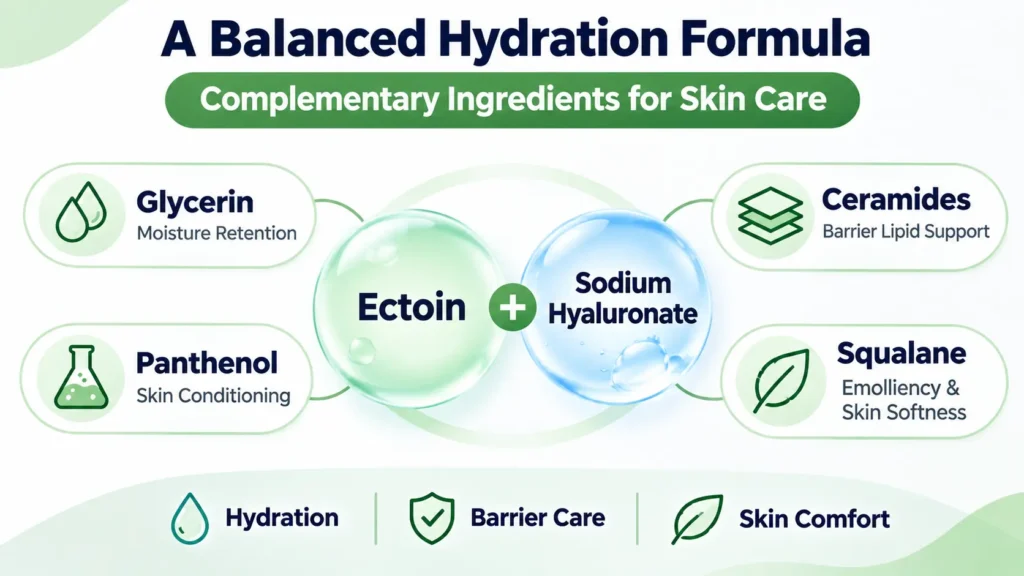
To create a well-rounded moisturizing and barrier-support product, formulators can consider pairing ectoin and sodium hyaluronate with complementary functional ingredients:
- Supporting Humectants: Glycerin and panthenol can support moisture retention and skin conditioning.
- Barrier Lipids and Emollients: Ceramides contribute to skin barrier lipid support, while squalane acts as an emollient to improve softness and skin feel.
Across any multi-ingredient architecture, confirm solubility order, pH alignment, thickener compatibility, and shelf-life stability under actual manufacturing conditions.
For product developers evaluating these ingredients, NOYAIN provides dedicated raw material information for both Ectoin and Sodium Hyaluronate.
Frequently Asked Questions
Is ectoin better than hyaluronic acid?
Neither ingredient is universally better. Hyaluronic acid is generally chosen for direct water binding, dryness relief, and immediate surface hydration. Ectoin is often considered when positioning focuses on skin comfort, barrier support, and environmental stress care. The better option depends on the target skin goal or product brief.
Can ectoin and hyaluronic acid be used together?
Yes. They can be paired in layered routines or combined within a single cosmetic formula for complementary hydration and skin-comfort benefits. For commercial development, formulators should still validate pH, viscosity, clarity, and long-term stability in the finished base.
Is ectoin a humectant like hyaluronic acid?
Not in the traditional sense. Hyaluronic acid is a classic polymeric humectant that binds moisture. Ectoin is a compatible solute (osmolyte) that interacts with water molecules to support cellular hydration and stability rather than functioning solely as a conventional humectant.
Can ectoin replace hyaluronic acid in skincare formulations?
Usually, ectoin complements hyaluronic acid rather than replacing it directly. Hyaluronic acid contributes viscosity, slip, and moisture-binding properties that small-molecule ectoin does not replicate. Brands typically choose one or both depending on desired texture, positioning, and budget.
Which is better for sensitive skin: ectoin or hyaluronic acid?
Both can be formulated into gentle products for sensitive skin. Ectoin is often considered for barrier-focused and calming formulations, while hyaluronic acid provides hydration. Ultimately, sensitive-skin suitability depends on the entire formula, preservative system, and proper tolerability testing.
Source Ectoin and Sodium Hyaluronate for Your Next Formulation
Hyaluronic acid is primarily used for water-binding hydration, while ectoin offers a different approach to cellular hydration and skin-comfort-focused formulation. They serve distinct purposes and can complement each other in well-designed skincare products.
NOYAIN Biochemicals supplies cosmetic brands, OEM/ODM manufacturers, and ingredient distributors with quality Ectoin and Sodium Hyaluronate supported by technical documentation. Whether you are developing a hydrating serum, a barrier-focused moisturizer, or a new skincare concept, our team can help you evaluate suitable raw material options.
To review current TDS, COA, and MSDS files or request samples for formulation testing, contact the NOYAIN team.