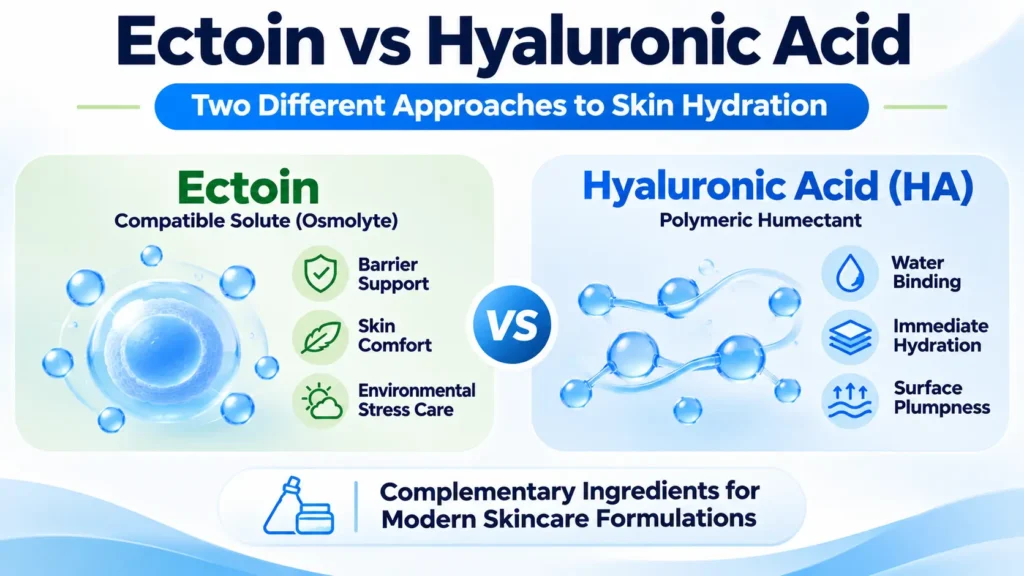
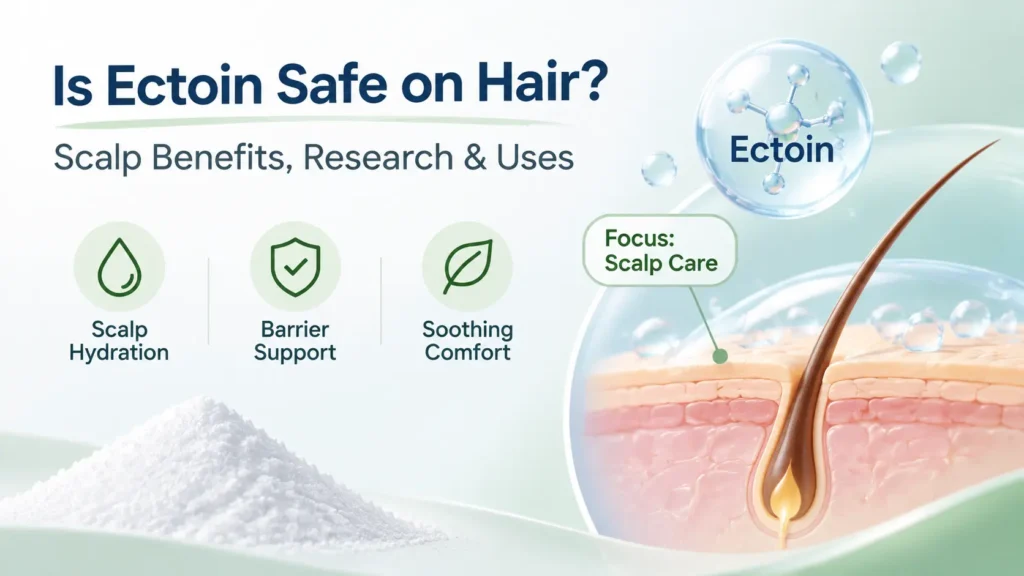
Yes—available topical skin-tolerability data and supplier-published scalp-use evaluations suggest that ectoin is generally well-tolerated in appropriately formulated hair and scalp care products.
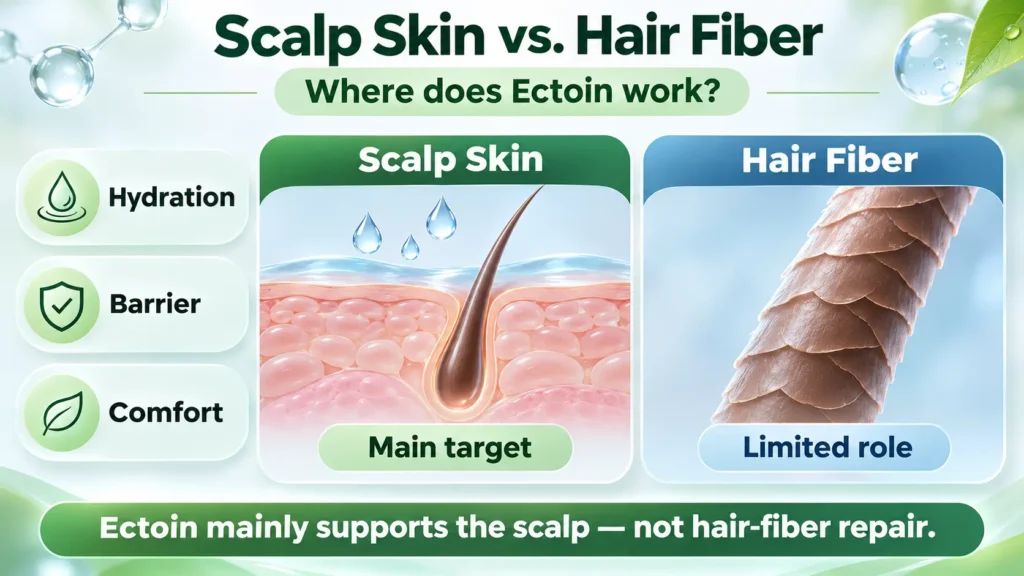
Before adding ectoin in hair care to a routine or product brief, however, there is one key biological distinction to keep in mind: ectoin’s primary value lies in living scalp skin, not in repairing damaged hair strands. Hair fibers are non-living keratin structures, whereas the scalp is living epidermis vulnerable to dryness, barrier disruption, environmental stressors, and surfactant-related irritation.
Originally popular in facial skincare for how ectoin works as a natural extremolyte produced through bio-fermentation, ectoin is now appearing across leave-on scalp serums, hydro-alcoholic tonics, and gentle shampoos. Here is what existing safety data, laboratory and human studies, and commercial formulations actually tell us.
Is Ectoin Safe for Hair and Scalp?
Most people searching is ectoin safe on hair want to know whether the ingredient can irritate a sensitive scalp, leave heavy buildup, or disrupt their existing routine. Answering that accurately requires separating the properties of ectoin itself from the performance of a finished formula.
Ectoin’s Topical Safety Profile
Ectoin (CAS 96702-03-3) is a small, cyclic amino acid derivative with a low molecular weight (142.16 g/mol). Ectoin is a water-soluble ingredient and is not an oil or silicone. Its incorporation into water-based scalp products can support lightweight formulation concepts—though the final sensory profile, including residue and hair feel, always depends on the complete formulation, including emollients, polymers, solvents, and other ingredients.
From a tolerability standpoint, a 2022 systematic review by Kauth and Trusova analyzed six human clinical studies evaluating topical ectoine creams and emollients (5.5%–7.0%) in adults and children with impaired skin barriers, including five atopic dermatitis trials and one retinoid dermatitis trial lasting up to six months in adults (Kauth & Trusova, 2022). Across those cohorts, topical ectoine showed a favorable safety and tolerability profile.
While these findings provide useful supporting context when evaluating whether ectoin is suitable for sensitive scalp concepts, they must be kept in scope: the reviewed trials focused on dermatological skin conditions rather than dedicated healthy-scalp cohorts, so they should not be generalized as universal safety proof for every haircare product or scalp type.
What Determines Safety in Finished Hair Care Products?
A mild active ingredient cannot compensate for an irritating base. In commercial hair and scalp products, real-world tolerance is governed primarily by the surrounding formulation matrix:
- Surfactant systems: High levels of aggressive anionic cleansers can strip surface lipids and leave the scalp feeling tight, even when soothing actives are added.
- Solvents, cooling agents, and fragrances: Denatured alcohol, menthol, essential oils, and allergenic fragrance components are far more likely to trigger stinging or sensitization on reactive scalps than ectoin itself.
- Preservatives and pH: Finished products still require scalp-compatible pH control, well-tolerated preservative systems, and standard dermatological compatibility testing.
Anyone experiencing persistent redness, severe scaling, painful inflammation, sudden hair shedding, or diagnosed scalp conditions such as seborrheic dermatitis or psoriasis should consult a dermatologist rather than relying on cosmetic actives. Likewise, consumers using prescription or medicated scalp treatments should follow medical guidance before layering additional leave-on products.
Scalp Skin vs. Hair Fiber: Where Does Ectoin Actually Work?
Much of the confusion surrounding ectoin hair benefits comes from lumping “hair” and “scalp” together. From a cosmetic science perspective, the two respond very differently.
Ectoin and the Scalp Skin Barrier
The “scalp skinification” movement is grounded in simple anatomy: the scalp is an extension of facial skin, complete with living keratinocytes, an epidermal lipid barrier, sweat glands, sebaceous glands, and densely packed hair follicles. Daily exposure to UV radiation, air pollution, frequent washing, heat styling, and dry indoor environments can contribute to scalp dryness and discomfort, making barrier-supportive scalp care increasingly relevant.
In aqueous systems, ectoin binds surrounding water molecules to form stabilizing hydration shells around cellular membranes and proteins. Readers exploring ectoin’s barrier-supporting benefits for skin can see why cosmetic chemists apply the same protective hydration logic to scalp comfort and barrier-care formulas.
What Ectoin Can—and Cannot—Do for Hair Strands
Once a hair shaft grows past the scalp surface, it consists of dead, keratinized protein fibers shielded by overlapping cuticle scales. Because hair fibers have no living cell membranes or cellular metabolism, ectoin cannot mend split ends, rebuild broken internal bonds, or replace traditional conditioning systems.
When applied to the hair fiber, ectoin should not be positioned as a structural repair or conditioning agent. Its more substantiated role in haircare formulations is supporting scalp-focused hydration and comfort. For direct improvements in hair softness, smoothness, detangling, and damage repair, formulators should continue to rely on ingredients specifically designed for hair conditioning and fiber protection, such as cationic polymers, hydrolyzed proteins, and targeted lipids.
| Comparison Dimension | Living Scalp Skin | Hair Fiber (Shaft) |
|---|---|---|
| Biological State | Living epidermis with active keratinocytes, lipid barrier, and hair follicles | Non-living keratinized protein structure with cuticle scales |
| Primary Stressors | Surfactant stripping, transepidermal water loss, UV, pollution, dry climate | Mechanical friction, heat styling, bleaching, chemical processing |
| Role of Ectoin | Forms stabilizing hydration shells that support epidermal moisture and comfort | Not a structural conditioning or fiber-repair active |
| Realistic Benefit Scope | Scalp hydration, soothing dryness and tightness, supporting barrier comfort | Cannot mend split ends, repair internal bonds, or replace conditioners |
What Does Scientific Research Say About Ectoin for Hair and Scalp?
Dedicated hair and scalp literature on ectoin is narrower than its facial skincare research base, yet three distinct lines of evidence clarify where ectoin for scalp care is scientifically supported—and where claims should stop.
Human Scalp Evaluation: Dryness, Redness & Flaking Relief
The most direct human scalp data widely cited in the industry comes from a supplier-published use test by bitop AG. In this four-week evaluation, 30 subjects aged 18–65 applied a leave-on scalp formulation containing 1.3% ectoin twice daily (bitop AG technical documentation, 2018, p. 33).
Based on the reported average change values across the panel after four weeks, the evaluation documented reductions in four cosmetic scalp comfort parameters:
- Scalp dryness: -27.0%
- Scalp redness: -38.1%
- Dandruff / visible scaling: -33.3%
- Scalp irritation: -33.6%
Two boundaries matter here. First, this is supplier-published human use-test data—not an independent, peer-reviewed randomized controlled clinical trial and not NOYAIN’s own testing. Second, improvements in dryness and visible scaling support cosmetic comfort positioning for dry or itchy-feeling scalps, not drug claims for treating dandruff or scalp disease.
In Vitro Research on Hair Follicle Cells & Oxidative Stress
Oxidative stress in the follicular microenvironment is a recurring focus in hair biology because reactive oxygen species (ROS) can impair follicular cell integrity over time. Supplier technical materials—including page 13 of NOYAIN’s Ectoin technical presentation, which draws on Henkel AG hair follicle model research attributed to Giesen et al. (2013)—report an in-vitro study on human outer root sheath keratinocytes (ORSKs) exposed to hydrogen peroxide ($H_2O_2$)-induced oxidative stress.
In this laboratory cell model, pretreatment with 0.5% ectoin was reported to reduce oxidative DNA damage by up to 80% while helping preserve cellular resilience under stress. Further details are described in the publicly available bitop AG Ectoin technical factsheet, hair follicle research section.
Because this evidence comes from an in-vitro cell culture model referenced in supplier technical documentation (rather than an independently verified peer-reviewed clinical trial), it should be viewed strictly as mechanistic support for follicular cell protection under oxidative stress. It does not prove that ectoin stimulates hair growth, prevents hair loss, or reverses hair aging in humans.
Reducing Surfactant Irritation in Cleansing Systems (In Vitro Model)
Formulators often question whether a water-soluble active serves a meaningful purpose in rinse-off cleansers. A 2020 peer-reviewed laboratory study by Bujak, Zagórska-Dziok, and Nizioł-Łukaszewska investigated ectoine in 1% aqueous anionic surfactant model systems—including sodium lauryl sulfate (SLS), sodium coco-sulfate (SCS), sodium laureth sulfate (SLES), and sodium lauroyl sarcosinate (SARKO)—tested with 2.5% ectoine. The original study in Molecules provides the experimental background and results (Bujak et al., 2020).
In these laboratory assays, adding ectoine reduced the protein-denaturing Zein Value by approximately 12% for SLS, 20% for SCS, and 30% for SLES and SARKO. The authors also reported a 10%–20% reduction in model sebum solubilization and up to a 60% improvement in cell viability in cytotoxicity testing.
These results provide a solid formulation research basis for exploring ectoin in shampoo formulations designed around milder cleansing. Still, single-surfactant aqueous models are far simpler than finished commercial shampoos containing thickeners, conditioning polymers, and fragrance. Finished shampoo mildness requires independent validation, and the 2.5% experimental concentration used in this model should not be treated as a universal or NOYAIN-recommended shampoo dosage.
Summary of Scientific Evidence for Ectoin in Hair & Scalp Care
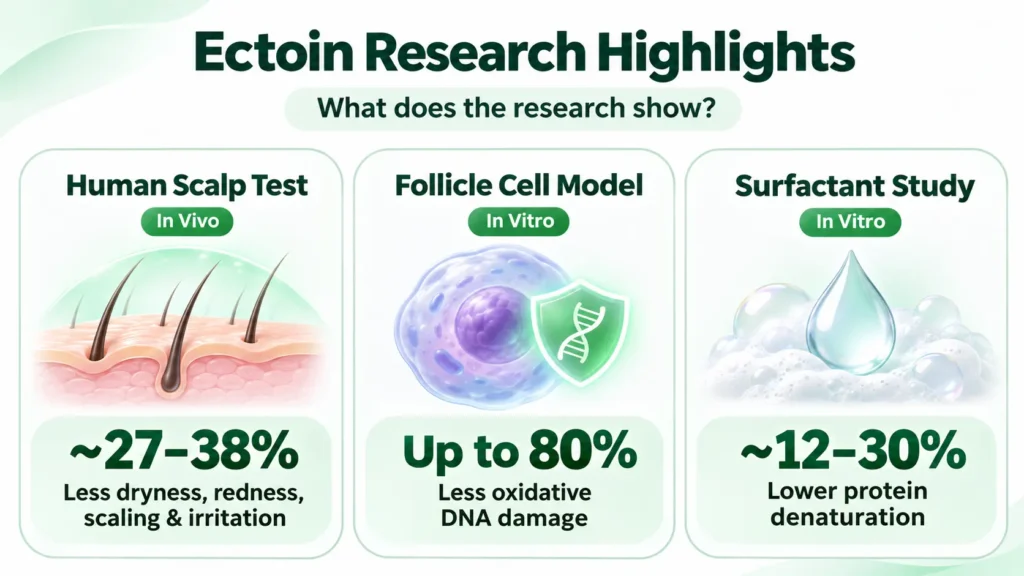
| Research Focus | Source & Attribution | Study Type | Test Setup | Key Reported Findings | Scope & Limitations |
|---|---|---|---|---|---|
| Scalp Hydration & Comfort | bitop AG (supplier technical documentation) | Supplier human use test (in vivo) | 30 subjects (18–65 yrs), 1.3% ectoin leave-on scalp liquid, twice daily for 4 weeks | Average change: dryness -27.0%, redness -38.1%, scaling -33.3%, irritation -33.6% | Not an independent RCT or NOYAIN study; cosmetic comfort data, not medical anti-dandruff efficacy |
| Follicular Cell Stress | NOYAIN Ectoin Presentation (p. 13), referencing Henkel AG research (Giesen et al., 2013) | Cell culture (in vitro) | Human outer root sheath keratinocytes pretreated with 0.5% ectoin under $H_2O_2$ oxidative stress | Reported up to 80% reduction in oxidative DNA damage | In-vitro model cited in supplier technical materials; does not prove human hair growth or hair loss prevention |
| Surfactant Mildness | Bujak et al., 2020 (Molecules) | Laboratory & cell assay (in vitro) | 1% anionic surfactant solutions (SLS, SCS, SLES, SARKO) + 2.5% ectoine | Zein Value reduced ~12%–30%; model sebum dissolution -10%–20%; cell viability improved up to 60% | Model systems only; finished shampoo performance requires separate validation; 2.5% is an experimental level |
| Topical Skin Tolerability | Kauth & Trusova, 2022 (Dermatology and Therapy) | Systematic review of 6 human clinical trials | 5.5%–7.0% ectoine creams/emollients in atopic dermatitis and retinoid dermatitis | Favorable tolerability and hydration support across adult and pediatric skin cohorts | Skin-disease studies, not dedicated scalp trials; supports general topical tolerability context |
How Are Hair Care Brands Using Ectoin?
Across prestige and dermocosmetic haircare, brands are incorporating ectoin into both leave-on treatments and rinse-off cleansers. Examining publicly disclosed ingredient lists (INCI) illustrates how formulators position the molecule in real products—keeping in mind that INCI order reflects overall formulation structure rather than exact active percentages, and product claims such as “thickening” or “redensifying” stem from multi-ingredient formulas rather than ectoin alone.
Leave-On Scalp Serums & Tonics
- Stripes Beauty – The Root Of It Ectoine Thickening Scalp SerumPositioned around scalp hydration and comfort for dry or hormonally stressed scalps, this lightweight leave-on ectoin scalp serum pairs water, light emollients (
C13-15 Alkane,Squalane),Propanediol, andEctoinwithPanthenol, botanical extracts (Scutellaria Baicalensis,Phyllanthus Emblica), andHydrolyzed Pea Protein. Structurally, it illustrates how ectoin integrates into an aqueous-dominant scalp emulsion designed for direct application at the roots. - Kerasilk – Redensifying Scalp SerumThis fast-drying leave-on tonic uses a hydro-alcoholic chassis (
Alcohol Denat.,Water,Butylene Glycol) alongsideEctoin,Biotinoyl Tripeptide-1,Lactobacillus Ferment,Menthol, and fragrance. It highlights ectoin’s practical solubility in water-and-polyol-containing hydro-alcoholic systems—while also serving as a reminder that because such tonics contain denatured alcohol, menthol, and fragrance, they are formulated for a brisk, lightweight finish rather than automatically suiting every ultra-sensitive scalp.
Rinse-Off Shampoo Formulations
- Kerasilk – Redensifying ShampooMarketed as a gentle, sulfate-free cleanser, this rinse-off product combines
Lauryl Hydroxysultaine,Coco-Glucoside, andSodium C14-16 Olefin Sulfonatewith conditioning guar polymer,Panthenol, andEctoin. From a formulation standpoint, it shows how brands bring skincare-inspired scalp positioning into daily wash routines—though formulators know that “sulfate-free” does not mean anionic-free or automatically low-irritation, making overall surfactant balance and finished-product testing essential.
Formulation Considerations for Ectoin in Hair and Scalp Care
For cosmetic chemists, brand owners, and OEM/ODM developers evaluating ectoin scalp care ingredients, matching the delivery format to processing parameters and cost-in-use targets is essential.
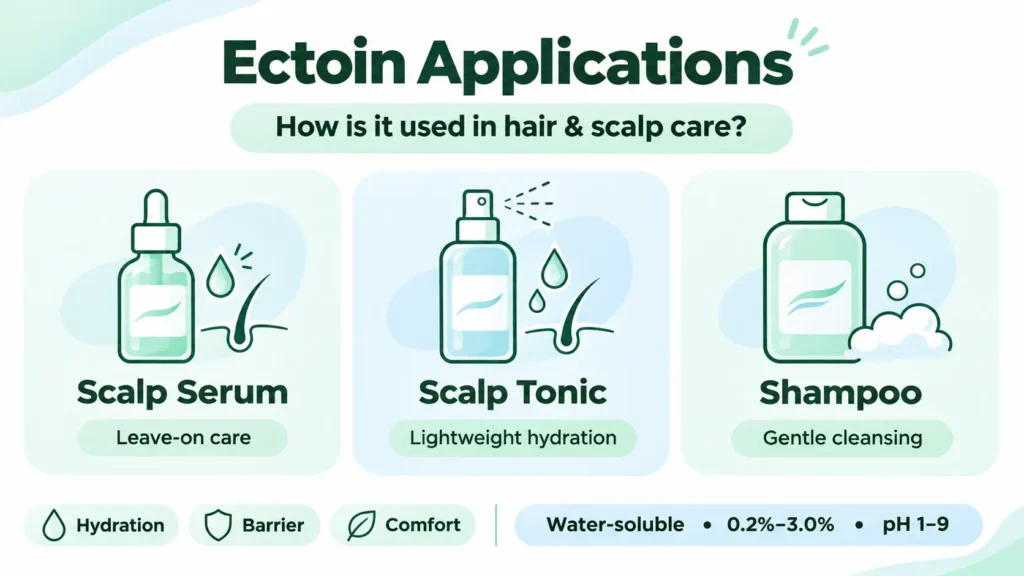
Leave-On vs. Rinse-Off: Choosing the Right Format
- Leave-On Scalp Serums & Drops: The most direct and cost-efficient vehicle for maximizing scalp residence time. Well-suited for dry, tight, or weather-stressed scalp concepts built on lightweight aqueous bases.
- Hydro-Alcoholic Scalp Tonics: Practical for oily-prone or fine-hair audiences who dislike emulsions. Ectoin’s water and polyol solubility supports clear systems and pairs cleanly with fast-evaporating bases.
- Mild & Sensitive-Scalp Shampoos: Best positioned around skin-grade scalp cleansing and mild surfactant concepts rather than prolonged post-wash moisturization. Dosage and cost-in-use should align closely with the target retail tier.
- Pre-Wash Treatments & Scalp Masks: A growing middle category offering 5–15 minutes of contact time before rinsing, bridging intensive scalp care and rinse-off convenience.
Solubility, pH Window & Use Level Guidance
Ectoin is straightforward to handle in personal care production because it dissolves directly in the water phase, requires no specialized solubilizers, and tolerates standard thermal processing. Based on NOYAIN’s supplied technical documentation, core specification and formulation guidelines include:
| Technical Parameter | Specification / Formulation Guidance |
|---|---|
| INCI Name | Ectoin |
| CAS Number | 96702-03-3 |
| Molecular Weight | 142.16 g/mol |
| Appearance | White to off-white crystalline powder |
| Assay (Purity) | ≥98.0% (HPLC) |
| Solubility | Soluble in water and polyols |
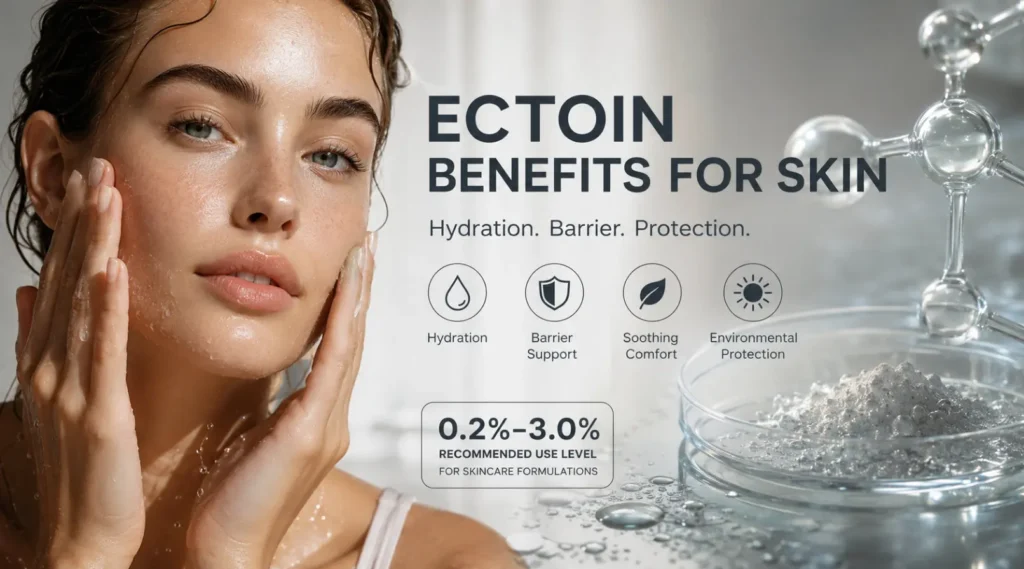
| Recommended Use Level | 0.2%–3.0% (per NOYAIN technical presentation) |
| Formulation pH Tolerance | 1–9 (per NOYAIN technical presentation) |
| Processing Guidance | Add directly to the water phase (or aqueous phase of emulsions); heat-resistant under normal hot-processing conditions |
Two technical details to verify during bench development:
- Formulation pH tolerance vs. raw material pH specification: The broad formulation pH tolerance (
1–9) means ectoin remains stable across slightly acidic scalp serums (typically pH 4.5–5.5), standard shampoos (pH 5.0–6.5), and wider cosmetic systems. This formulation stability window is distinct from the raw material’s own aqueous pH quality-control specification on a Certificate of Analysis—always consult the latest TDS and current batch COA for exact QC specifications and quantitative solubility data. - Matching dosage to product type: While NOYAIN’s technical presentation outlines a general cosmetic range of 0.2%–3.0%, final usage levels in leave-on serums versus rinse-off shampoos should be confirmed through internal stability, sensory, and efficacy testing rather than adopting literature experimental concentrations (such as 1.3% or 2.5%) directly.
Practical Ingredient Pairings for Scalp Concepts
In commercial scalp development, ectoin is typically combined with complementary humectants, lipids, or conditioning agents. The following pairings represent practical formulation concepts—not clinically proven synergies—used to build cohesive scalp care products:
- Ectoin + Sodium Hyaluronate: Pairs multi-molecular-weight surface water binding with ectoin’s cellular hydration-shell concept, fitting lightweight aqueous scalp drops focused on hydration and comfort.
- Ectoin + Ceramides: Combines water-phase hydration support with intercellular lipid replenishment for milky scalp lotions or barrier-focused serums targeting dry, stressed scalp skin.
- Ectoin + Panthenol (Pro-Vitamin B5): Connects scalp and hair-shaft positioning in a single formula—ectoin anchors scalp barrier comfort while panthenol brings broad consumer recognition for humectancy and hair conditioning across shampoos and leave-on mists.
Frequently Asked Questions
1. Is ectoin safe for the scalp?
Available topical skin-tolerability data and supplier-published scalp evaluations suggest that ectoin is generally well-tolerated on the scalp in appropriately formulated products. Because ectoin itself is water-soluble and contains no oils or silicones, it supports lightweight formulas—though final scalp tolerance and hair feel always depend on the complete product.
2. Does ectoin help hair growth or prevent hair loss?
No. There is currently no human clinical evidence proving that ectoin stimulates hair growth, treats alopecia, or prevents hair loss. While in-vitro research on outer root sheath keratinocytes suggests potential cellular protection against oxidative stress, ectoin should be positioned as a scalp hydration and comfort active rather than a hair-growth treatment.
3. Does ectoin benefit the hair shaft or the scalp?
Ectoin primarily targets living scalp skin rather than the hair shaft. The scalp has an active epidermal barrier that benefits from water-binding cellular protection, whereas hair fibers are non-living keratin structures. Ectoin cannot repair split ends or replace conditioning agents, proteins, and lipids formulated specifically for hair fiber care.
4. Can ectoin be used in both shampoos and leave-on scalp serums?
Yes. Leave-on scalp serums and tonics provide the longest contact time for hydration and scalp comfort. In rinse-off shampoos, in-vitro model studies suggest ectoin can reduce the irritant potential of certain anionic surfactant solutions, offering a formulation rationale for milder cleansing concepts—provided finished shampoo performance is validated independently.
5. Is ectoin suitable for sensitive scalp formulations?
Yes, ectoin is a strong supporting candidate for sensitive scalp concepts due to its water solubility, wide pH tolerance, and favorable topical tolerability background. However, true suitability depends on the entire formula—formulators should pair it with gentle surfactants, low-irritation preservatives, and minimal fragrance, and confirm compatibility through finished-product testing.
References
- Kauth, M., & Trusova, O. V. (2022). Topical Ectoine Application in Children and Adults to Treat Inflammatory Diseases Associated with an Impaired Skin Barrier: A Systematic Review. Dermatology and Therapy, 12(2), 295–313. DOI:
10.1007/s13555-021-00676-9. Read the full article on PubMed Central. - Bujak, T., Zagórska-Dziok, M., & Nizioł-Łukaszewska, Z. (2020). Complexes of ectoine with the anionic surfactants as active ingredients of cleansing cosmetics with reduced irritating potential. Molecules, 25(6), 1433. DOI:
10.3390/molecules25061433. Read the original research article in Molecules. - bitop AG Technical Documentation (2018 Ectoin Factsheet). Human Scalp Care Evaluation (1.3% ectoin leave-on formulation, n = 30, twice daily for 4 weeks). Supplier-published human use-test data; not an independent randomized controlled clinical trial. View the publicly accessible Ectoin factsheet (PDF).
- NOYAIN Biochemicals Technical Documentation & Supplier-Referenced Follicle Research. Noyain Ectoin Presentation (p. 13, referencing Henkel AG in-vitro outer root sheath keratinocyte research attributed to Giesen et al., 2013—not an independently verified peer-reviewed journal publication in this reference set), COA, MSDS, and Manufacturer Halal Declaration.