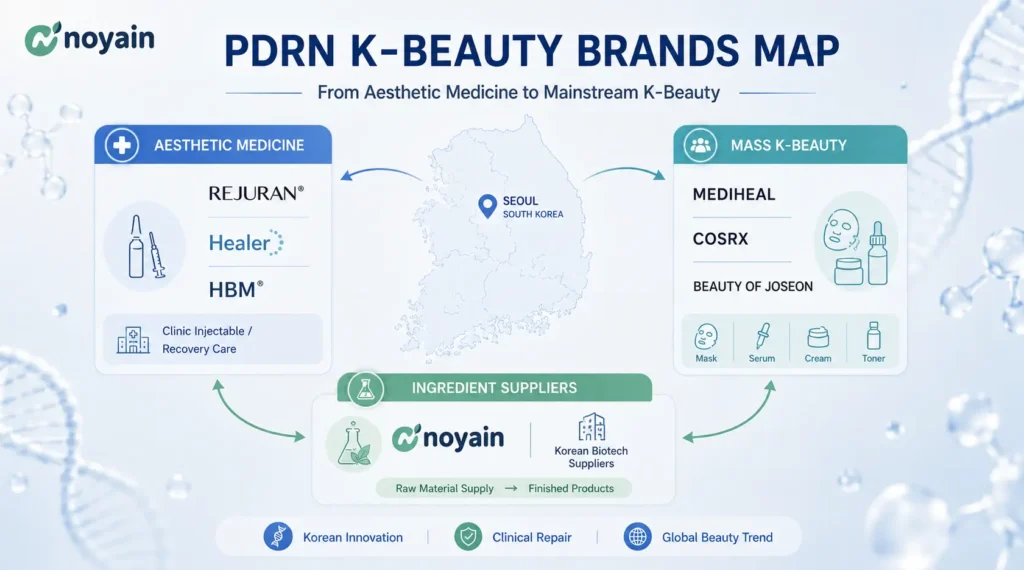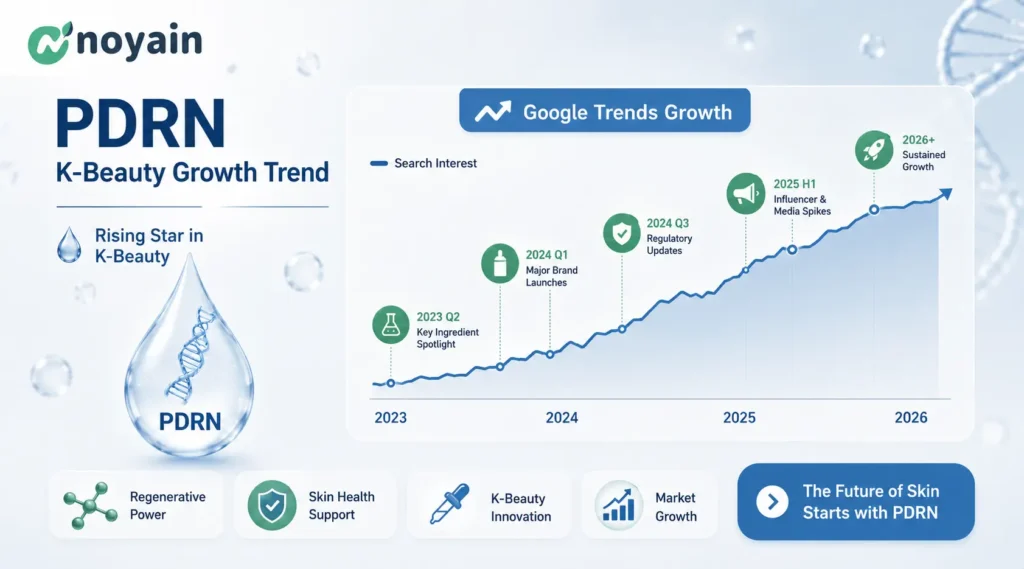
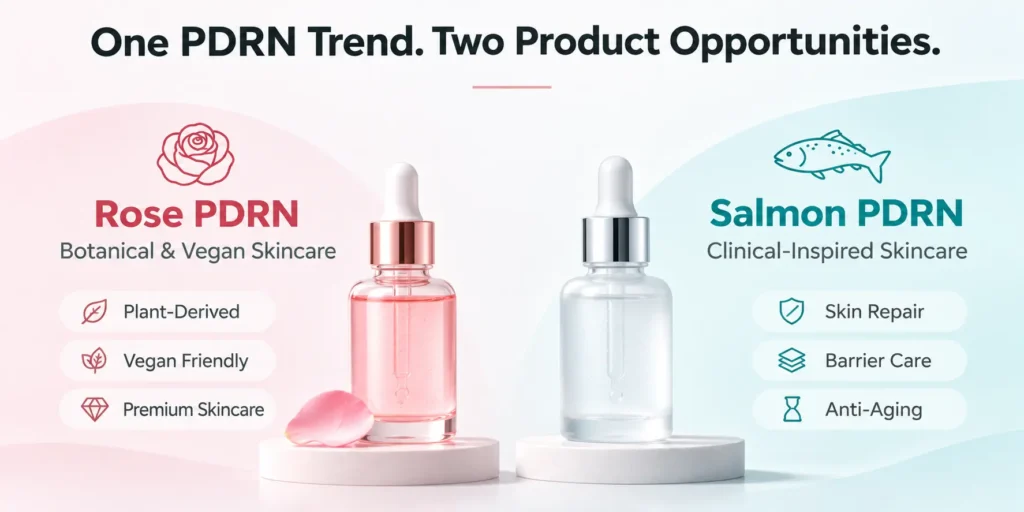
Neither Rose PDRN nor Salmon PDRN is universally better—the right choice depends on your skin goals, ethical preferences, and formulation standards. Salmon PDRN comes from purified salmon sperm DNA and holds decades of clinical and dermatological research for intensive barrier repair. Rose PDRN is a 100% vegan, botanical alternative extracted from rose cells, backed by emerging 2025–2026 skin longevity research and favored by clean and luxury brands. Currently, no direct clinical trial proves one outperforms the other topically; real-world results depend far more on molecular weight, purity, and supporting ingredients than biological origin alone.
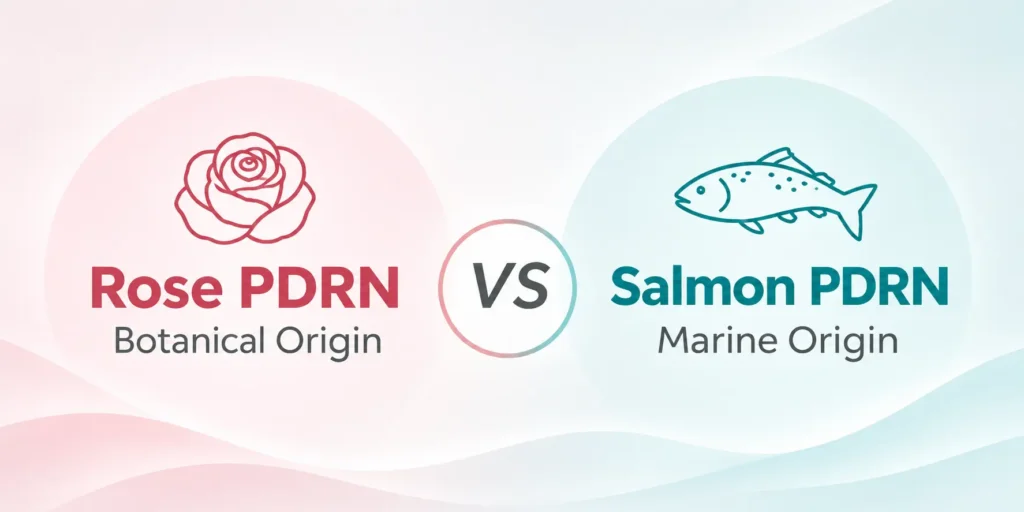
Rose PDRN vs. Salmon PDRN at a Glance: Key Differences
Chemically, both ingredients consist of purified polydeoxyribonucleotide (PDRN) fragments registered under the standard INCI name Sodium DNA. Rather than acting like exfoliating acids or retinoids, PDRN fragments are designed to support skin recovery through two complementary mechanisms: calming inflammation via adenosine $A_{2A}$ receptor signaling and supplying nucleotides via the salvage pathway to assist cellular repair—a framework rooted in established salmon PDRN pharmacology and supported by emerging botanical DNA research.
The practical differences between Rose PDRN and Salmon PDRN come down to biological sourcing, research maturity, purification chemistry, and brand positioning. While the broader market also explores different biological sources of PDRN, including fermentation and microalgae, salmon and rose currently dominate commercial skincare launches.
| Feature | Rose PDRN | Salmon PDRN |
|---|---|---|
| Biological Source | Cultivated rose cells / botanical tissue (Rosa spp.) | Purified salmon sperm / milt DNA (Oncorhynchus spp.) |
| Standard INCI Name | Sodium DNA (often paired with rose water/extracts) | Sodium DNA |
| Research Maturity | Emerging (2025–2026 in vitro & biochemical studies) | Mature (20+ years of medical, injectable & topical data) |
| Vegan / Halal Profile | Plant-derived; suitable for vegan & Halal formulations (with supplier docs) | Marine animal-derived byproduct (not vegan) |
| Primary Skincare Focus | Antioxidant defense, daily calming, skin longevity | Post-procedure recovery, intensive barrier & ECM repair |
| Typical Brand Positioning | Clean beauty, vegan K-beauty, luxury botanical anti-aging | Dermocosmetic, clinic-inspired, high-efficacy K-beauty |
What the Science Says: Does Salmon PDRN Have Stronger Evidence Than Rose PDRN?
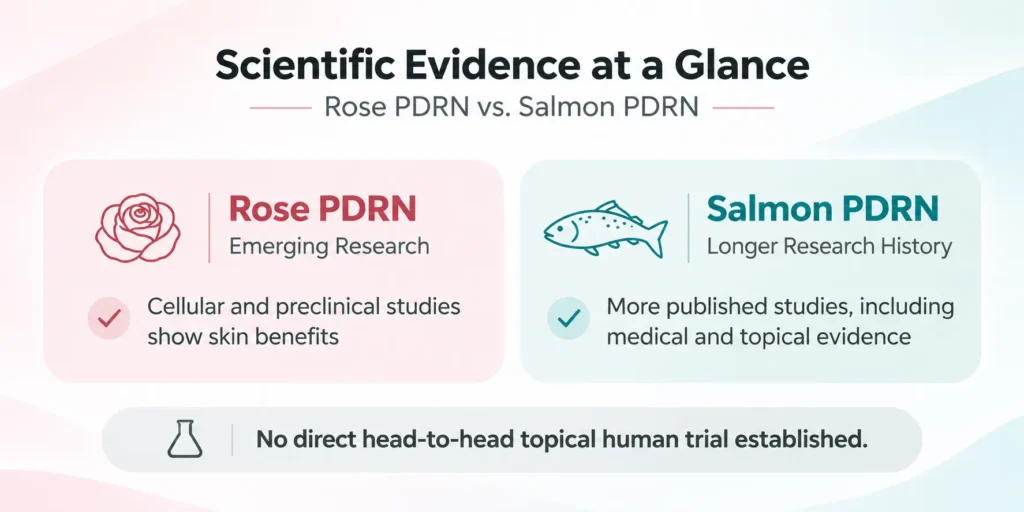
Yes, Salmon PDRN has a substantially deeper body of published research. However, having more historical papers does not automatically mean a salmon-derived cream works better on intact skin than a well-formulated rose-derived serum. Evaluating the science requires separating medical injections from topical cosmetics.
Injectable and Medical Foundations (Salmon PDRN)
For more than two decades, Salmon PDRN has been studied in regenerative medicine, wound healing, and aesthetic microinjections. Clinical trials on injectable PDRN show that it stimulates vascular endothelial growth factor (VEGF), reduces pro-inflammatory cytokines, and accelerates dermal tissue repair. Because intradermal injections bypass the stratum corneum entirely, those clinical outcomes cannot be directly assumed for leave-on topical skincare.
Topical and Photodamage Evidence
To work in a cream or serum, PDRN must overcome the skin’s outer barrier. A 2026 study by Ye et al. evaluated topical medium-length PDRN on photodamaged skin and found that it enhanced dermal extracellular matrix (ECM) repair via PI3K–Akt and TGF-β signaling pathways. Notably, topical medium-length PDRN showed gentler skin tolerability than retinol in the same experimental model—though researchers compared PDRN against retinol, not Rose PDRN against Salmon PDRN.
Emerging Rose PDRN Studies (2025–2026)
Rose PDRN has gained peer-reviewed momentum more recently. In late 2025, Cavagnino et al. demonstrated in cellular models that rose-derived PDRN modulates key molecular targets linked to skin aging and cellular longevity drivers. In 2026, Xu et al. published extraction and bioactivity findings showing that purified rose PDRN supports fibroblast vitality and reduces oxidative stress markers, while a comparative review by Rodríguez-Aleriano et al. confirmed that plant-derived PDRNs share core nucleotide structures with marine counterparts. Still, results from a single proprietary rose extract cannot be generalized across every commercial Rose PDRN ingredient on the market.
The Clinical Gap
As of November 2026, there is no published, randomized, head-to-head human clinical trial directly comparing topical Rose PDRN and topical Salmon PDRN at matched concentrations and molecular weights. Claims that one source definitively outperforms the other in topical skincare go beyond current scientific evidence.
| Study & Year | PDRN Source | Study Type / Model | Key Findings | Key Limitations |
|---|---|---|---|---|
| Squadrito et al. (2017) | Salmon milt PDRN | Pharmacological & clinical review | Confirmed $A_{2A}$ receptor activation, anti-inflammatory action, and VEGF-driven tissue repair. | Primarily based on injectable and medical wound-healing applications, not topical cosmetics. |
| Cavagnino et al. (2025) | Rose-derived PDRN | In vitro / molecular target study | Demonstrated modulation of skin-aging biomarkers and cellular longevity pathways. | Preclinical cellular data; not a human topical trial, and specific to one standardized rose material. |
| Ye et al. (2026) | Medium-length PDRN | Topical photodamage model | Repaired dermal ECM via PI3K–Akt/TGF-β pathways with lower irritation than retinol. | Compared topical PDRN to retinol, not Rose PDRN vs. Salmon PDRN head-to-head. |
| Xu et al. (2026) | Rose-derived PDRN | Extraction & bioactivity assay | Validated rose DNA purification parameters and basic antioxidant/anti-aging bioactivity. | Early-stage laboratory validation; lacks large-scale human clinical endpoints. |
| Rodríguez-Aleriano et al. (2026) | Multi-source (Salmon, Plant, Microbial) | Comparative biochemical review | Highlighted structural similarities and the decisive role of polymer chain length in bioavailability. | Review synthesis; confirms the absence of direct topical cross-source human trials. |
Real-World Skincare Results: How They Compare on Skin
When shoppers compare Rose PDRN and Salmon PDRN serums, they rarely care about purine salvage pathways—they want to know how their skin will look and feel. Importantly, finished products rarely contain PDRN alone; multi-ingredient formulas contribute heavily to visible results.
- Hydration & Plumping: DNA polymers are naturally hydrophilic and bind surface moisture well. In finished serums, however, immediate glass-skin plumping comes primarily from supporting humectants like hyaluronic acid, glycerin, and pentylene glycol working alongside PDRN.
- Fine Lines & Firmness: Both ingredients support collagen maintenance and dermal resilience over time. Salmon PDRN carries stronger clinical credibility in intensive post-procedure recovery routines (such as after microneedling or laser treatments), whereas Rose PDRN fits seamlessly into daily preventative aging routines. Neither source is inherently restricted to a single age group or skin type.
- Soothing & Barrier Comfort: Both forms help calm visible redness and transient barrier stress.
- Skin Radiance & Texture: Smoother skin texture and brighter tone usually emerge after 2 to 4 weeks of consistent barrier support, often accelerated by co-actives like niacinamide and peptides.
- Sensitive Skin & Allergy Considerations: A widespread misconception is that vegan automatically means hypoallergenic. Medical- and cosmetic-grade Salmon PDRN undergoes strict deproteinization to strip away allergenic fish proteins (such as parvalbumin), making true allergic reactions rare. Conversely, poorly refined plant-derived PDRNs can retain trace botanical polyphenols or aromatic compounds that may bother ultra-reactive skin.
How Top Beauty Brands Use Rose and Salmon PDRN
Consumer curiosity around PDRN has surged dramatically. Market intelligence firm Spate identified PDRN as one of skincare’s fastest-rising active ingredients across search and social platforms. While overall category momentum was initially propelled by Korean salmon-DNA ampoules, major brands are now actively using Rose PDRN to unlock new consumer segments.
Medicube: Running a Dual-Track K-Beauty Strategy
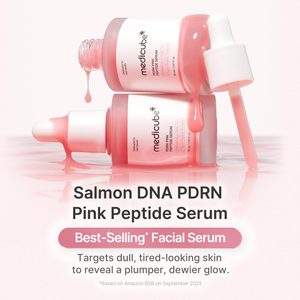
Korean skincare powerhouse Medicube offers both Salmon DNA PDRN and Rose PDRN products on its official storefront, demonstrating that the two ingredients serve distinct consumer mindsets rather than cannibalizing each other. In its viral PDRN Pink Peptide Serum, Medicube pairs Rose PDRN with niacinamide, multiple peptides, and cyanocobalamin (Vitamin B12—the actual source of the serum’s signature pink color, rather than the rose or DNA itself). By spotlighting Rose PDRN, Medicube eliminates the psychological hesitation some Western shoppers feel toward “salmon sperm DNA” while delivering immediate brightening from a proven multi-active base.
Lancôme: Elevating Rose PDRN into Luxury Skin Longevity
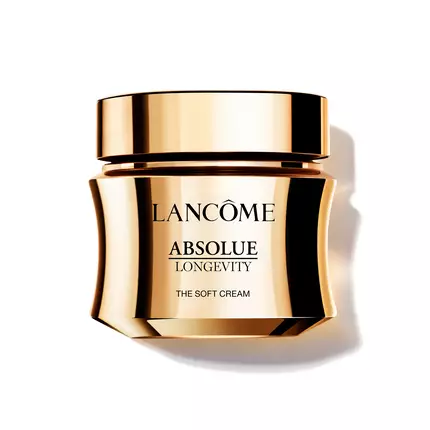
At the prestige end of the market, Lancôme incorporated rose-derived PDRN into Absolue Longevity The Soft Cream. Rather than framing PDRN around post-clinic wound repair, Lancôme connects rose DNA technology to its heritage rose research and the rapidly growing Skin Longevity movement—positioning Rose PDRN as a high-luxury cellular renewal active.
The Broader Botanical Wave
Alongside rose, Korean formulators have introduced phyto-PDRNs derived from ginseng, green tea, and lotus. Among these plant options, Rose PDRN has emerged as the most recognizable botanical PDRN in global prestige and K-beauty launches, largely because rose carries intuitive luxury and soothing associations for everyday consumers.
What Skincare Users Actually Say on Reddit
To see how these formulas perform outside marketing campaigns, we examined discussions across skincare communities, including an r/AsianBeauty discussion comparing vegan and salmon-derived PDRN. While anecdotal posts are not clinical proof, three clear consumer patterns stand out:
- The “No Noticeable Difference” Camp: Many users who have finished bottles of both salmon and rose PDRN serums report that both deliver steady hydration, calmer redness, and a healthy glow—but few can detect a dramatic performance gap on healthy, uninjured skin.
- Scientific context: Because both sources sit inside comparable humectant-and-niacinamide bases and target overlapping recovery pathways, subtle raw-material differences are hard to distinguish on intact skin.
- Skepticism Around Hype and Value: Several ingredient-savvy commenters question whether topical PDRN serums are overpriced hydrating essences riding a viral K-beauty trend.
- Scientific context: This skepticism is justified when products rely on trace amounts of heavily diluted PDRN pre-solutions or oversized DNA chains that sit on the skin surface without meaningful penetration.
- Ethics, Scent, and Ingredient Preferences: A vocal segment of shoppers specifically chooses Rose PDRN to maintain a vegan routine or avoid any perceived “fishy” association.
- Scientific context: Properly purified Salmon PDRN is an odorless white powder; any fishy scent in a finished product stems from oxidized carrier oils or lower-grade refining rather than the DNA itself.
The Concentration Trap: Does Higher PDRN ppm Mean Better Results?
One of the biggest sources of confusion in PDRN skincare—especially among botanical and rose-labeled serums—is concentration labeling. Brands frequently advertise numbers like “10,000 ppm PDRN,” leading shoppers to assume the bottle contains a massive dose of active DNA.
In reality, 10,000 parts per million (ppm) equals just 1%. On the B2B ingredient market, PDRN is typically supplied in two formats:
- High-purity lyophilized powder: 90% to 99% pure Sodium DNA.
- Liquid pre-solution: Usually standardized at 1% (10,000 ppm) PDRN dissolved in water and preservatives.
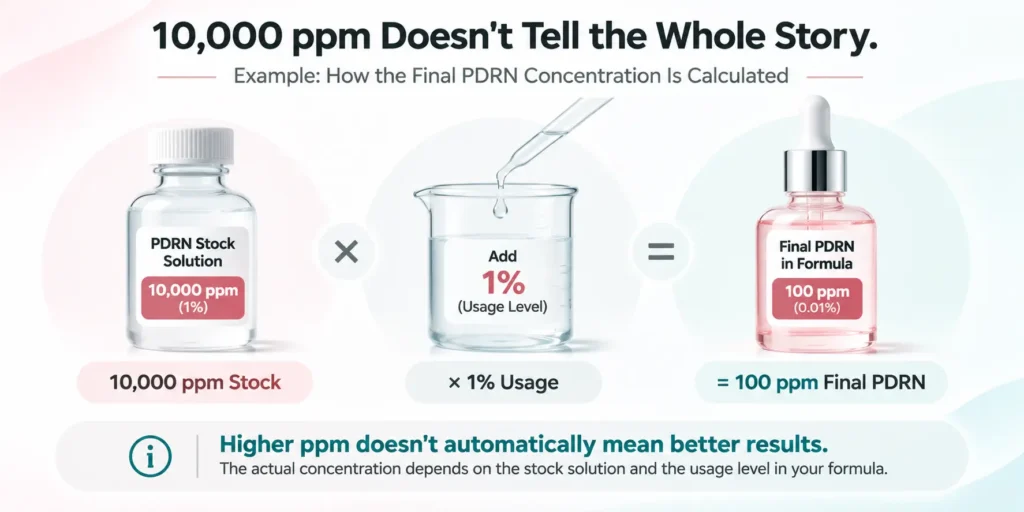
A Simple Concentration Math Check
Suppose a brand adds 1% of a 10,000 ppm PDRN liquid pre-solution into its serum formula. The actual pure PDRN inside the finished bottle is 0.01% (100 ppm). By contrast, a formulator who dissolves 0.5% of a 99% pure PDRN powder delivers 0.495% (4,950 ppm) actual DNA—nearly 50 times more active nucleic acid. Furthermore, some botanical PDRN claims calculate ppm based on total rose extract liquid rather than dry DNA weight.
Why Higher ppm Isn’t Automatically Better
Even when comparing pure dry-weight DNA, pushing concentrations higher does not guarantee better skin results:
- Molecular Weight Governs Penetration: Native, unfragmented genomic DNA is too large to cross the stratum corneum. As Ye et al. (2026) and Rodríguez-Aleriano et al. (2026) highlight, controlled polymer chain length (medium-to-low molecular weight fragmentation) is critical for balancing skin bioavailability and cellular signaling.
- Formulation Rheology: High concentrations of long-chain DNA create stringy, tacky textures and can destabilize emulsions or conflict with cationic ingredients.
Formulator & Buyer’s Guide: Which PDRN Should You Choose?
For skincare brands, OEM/ODM manufacturers, and R&D formulators, selecting between Rose PDRN and Salmon PDRN is a strategic decision that balances target audience, regulatory compliance, and supply chain verification.
Matching Source to Brand Positioning
- Choose Salmon PDRN when developing K-beauty-inspired barrier ampoules, post-procedure recovery creams, or clinical dermocosmetic lines where buyers value established dermatological heritage. Explore technical specifications for high-purity Salmon PDRN (Sodium DNA) raw material when clinical credibility is your primary hook.
- Choose Rose PDRN when building certified Vegan or Cruelty-Free collections, clean-beauty retail lines, Halal-compliant skincare, or prestige Skin Longevity concepts. Review grade options for cosmetic-grade Rose PDRN active ingredient when botanical storytelling and ethical positioning drive customer acquisition.
- Consider a Dual-SKU Strategy: Following Medicube’s model, brands can anchor a flagship clinical recovery line with Salmon PDRN while capturing vegan and fragrance-averse shoppers with a Rose PDRN counterpart.
Proven Formulation Pairings
- Barrier & Post-Treatment Recovery: PDRN + Panthenol + Ceramides + Multi-Weight Hyaluronic Acid.
- Longevity & Firmness: PDRN + Signal Peptides (such as Palmitoyl Tripeptide-1 or Copper Tripeptide-1) + Adenosine.
- Daily Radiance & Urban Defense: PDRN + Niacinamide (2%–5%) + Ectoin.
For more formulation approaches, explore our PDRN skincare product development guide.
Is Your Rose PDRN Actually Rose-Derived DNA?
Because both rose-derived and salmon-derived PDRN carry the identical INCI designation (Sodium DNA), a product label or supplier brochure featuring the word “Rose” does not automatically prove the DNA itself originated from rose cells. Some low-cost blends simply mix standard aquatic or microbial Sodium DNA with rose hydrosol.
Before approving a Rose PDRN supplier, R&D and procurement teams should confirm four practical quality indicators:
- Dry-Weight DNA Assay & UV Purity: Check the Certificate of Analysis (COA) for DNA content (% w/w) and UV absorbance ratios (A260/A280 and A260/A230). These indicators help assess nucleic acid purity and potential protein, salt, or plant-derived impurities.
- Molecular Weight Distribution (GPC/SEC): Confirm consistent kDa fragmentation ranges across batches to ensure predictable viscosity and skin bioavailability.
- Botanical Origin Traceability & PCR Verification: Request raw-material traceability documentation, botanical origin certificates, and—where fragment length allows—species-specific PCR testing confirming Rosa DNA origin without marine DNA adulteration.
- Safety & Compliance Documentation: Verify endotoxin limits, heavy metal screening, pesticide residue testing, and formal Vegan, Cruelty-Free, or Halal declarations.
| Evaluation Criteria | Rose PDRN (Botanical Grade) | Salmon PDRN (Marine Grade) |
|---|---|---|
| Typical Physical Form | Lyophilized powder or standardized aqueous solution | Lyophilized white powder (90%–99% purity) |
| Typical Active Usage Level | 0.05%–0.5% (dry-weight basis) | 0.05%–0.5% (dry-weight basis) |
| Key Verification Docs | COA (DNA purity, UV ratios), molecular weight report, botanical origin verification | botanical origin verification COA (DNA purity, UV ratios), molecular weight report, residual protein testing |
| Best Retail & Regional Fit | EU/US Clean Beauty, Vegan, Halal, Luxury Longevity | Global K-Beauty, Aesthetic Clinics, Dermocosmetics |
Compare Rose & Salmon PDRN Raw Materials
Evaluating molecular weight grades, purity ratios, and botanical origin documentation for your next skincare launch? Explore our technical specifications to compare Rose-derived and Salmon-derived Sodium DNA side by side.
Compare Rose & Salmon PDRN Raw Materials
Frequently Asked Questions
Can you layer Rose PDRN and Salmon PDRN together in the same routine?
Yes, layering both is safe, though usually unnecessary. Because both ingredients act through overlapping nucleotide recovery pathways, combining two separate PDRN serums offers diminishing returns compared to pairing one well-formulated PDRN serum with complementary barrier lipids or peptides.
Can you use Rose or Salmon PDRN with Retinol, Vitamin C, or exfoliating acids?
Yes. PDRN fits comfortably into retinol routines—and 2026 research highlights PDRN’s ability to support dermal repair with much lower irritation potential than retinoids. For very low-pH formulas (such as pure L-ascorbic acid or strong AHA/BHA peels), avoid mixing them directly in your palm, as strongly acidic environments can destabilize DNA chains. Let low-pH acids absorb before applying PDRN, or use acids in the morning and PDRN at night.
Does Salmon PDRN smell fishy in skincare products?
No. Properly refined cosmetic-grade Salmon PDRN undergoes multi-stage purification and deodorization, resulting in a neutral, odorless powder. If a serum smells fishy, the odor typically comes from oxidized omega lipids in unrefined extracts or incompatible carrier ingredients.
Rose PDRN and Salmon PDRN represent two distinct paths to the same biological goal: supporting calmer, stronger, more resilient skin through purified nucleic acids. Salmon PDRN remains the benchmark for clinical heritage and intensive recovery, while Rose PDRN delivers an ethical, botanical, and luxury-ready alternative backed by growing molecular longevity research. For both consumers and cosmetic formulators, looking past marketing buzzwords to examine actual DNA concentration, molecular weight, and purity verification is the surest way to get real results.
Request Samples & Technical Documents
Formulating a vegan longevity serum or a clinical barrier-repair treatment? Contact NOYAIN Biochemicals to request R&D evaluation samples, Certificates of Analysis (COA), and molecular weight data for our Rose PDRN and Salmon PDRN grades.
Request Samples & Technical Documents
References
Scientific Research
- Rodríguez-Aleriano, M., et al. (2026). Polydeoxyribonucleotide (PDRN) from Diverse Biological Sources: Comparative Biochemistry, Biotechnological Production, and Translational Potential. Cosmetics, 13(5), 239. https://www.mdpi.com/2079-9284/13/5/239
- Squadrito, F., Bitto, A., Irrera, N., Pizzino, G., Pallio, G., Minutoli, L., & Altavilla, D. (2017). Pharmacological Activity and Clinical Use of PDRN. Frontiers in Pharmacology, 8, 224. https://doi.org/10.3389/fphar.2017.00224
- Ye, Y., et al. (2026). Topical medium-length PDRN enhances dermal extracellular matrix repair in photodamaged skin via PI3K–Akt/TGF-β–regulated pathways. PLOS ONE. https://doi.org/10.1371/journal.pone.0350905
- Cavagnino, A., et al. (2025). Modulating Skin Aging Molecular Targets and Longevity Drivers Through a Novel Natural Product: Rose-Derived Polydeoxyribonucleotide (Rose PDRN). Current Issues in Molecular Biology, 47(12), 971. https://doi.org/10.3390/cimb47120971
- Xu, H., et al. (2026). Extraction of Rose PDRN and Study on Its Anti-Aging and Repair Efficacy. CDCST, 2026(01). https://doi.org/10.61369/CDCST.2026010019
Market & Consumer Trends
- Spate. PDRN in Skincare: What the Consumer Data Tells Beauty Brands About the Next Big Active. Spate NYC Blog. https://www.spate.nyc/blog/pdrn-in-skincare-what-the-consumer-data-tells-beauty-brands-about-the-next-big-active
Brand & Product Examples
- Medicube. PDRN Pink Peptide Serum — Product Formulation & Ingredients. Medicube US Official Store. https://medicube.us/products/rose-pdrn-pink-peptide-serum
- Lancôme. Absolue Longevity The Soft Cream — Product Details & Rose PDRN Technology. Lancôme USA Official Store.