
Allantoin is a mild, multifunctional cosmetic ingredient commonly used to support moisturization, skin comfort and a smoother skin feel. It is especially relevant to products for dry, sensitive or rough-feeling skin and can also be evaluated in formulas containing retinol, exfoliating acids or surfactants that may contribute to dryness.
The main allantoin skin benefits are not based on dramatic treatment claims. Its practical value lies in helping formulators build gentler moisturizers, serums, body-care products, cleansers and strong-active companion formulas.
For formulators and cosmetic ingredient buyers, however, benefit claims are only part of the decision. Allantoin has limited solubility in cool water, and material dissolved during heating may recrystallize after cooling. Concentration, available water, addition method and finished-formula stability must therefore be considered before scale-up.
Quick Answer: What Are the Main Allantoin Skin Benefits?
The main allantoin skin benefits are moisturizing support, improved skin comfort and a softer, smoother skin feel. It is commonly used in products for dry, sensitive, rough or stressed-looking skin and can form part of a broader comfort-support system in formulas containing retinol, acids or cleansing surfactants.
Allantoin is also associated with keratin-softening activity, making it relevant to rough or flaky-feeling areas. However, it should not be treated as a direct substitute for dedicated exfoliating ingredients such as glycolic acid, lactic acid, salicylic acid or urea.
Key takeaway: Allantoin is most credible as a gentle skin-conditioning and comfort-support ingredient. It should not automatically be presented as a treatment for acne, scars, wounds, pigmentation or inflammatory skin conditions.
What Is Allantoin?
Allantoin is an organic compound used in cosmetics, personal-care products and certain regulated topical drug products. It occurs naturally in some biological systems and plants, but commercial cosmetic-grade Allantoin is commonly produced synthetically to obtain a controlled specification and consistent raw-material identity.
Buyers should not describe an Allantoin grade as natural, botanical, comfrey-derived or plant-derived unless its origin is supported by the supplier’s current documentation. Cleveland Clinic notes that the Allantoin found in many commercial skincare products is more likely to be synthetically produced.
| Item | Information |
|---|---|
| INCI Name | Allantoin |
| CAS Number | 97-59-6 |
| Molecular Formula | C4H6N4O3 |
| Molecular Weight | 158.12 |
| Typical Appearance | White powder or white crystalline powder |
| Typical Odor | Odorless |
| Primary Cosmetic Role | Skin conditioning, moisturizing support, soothing support and keratin-softening support |
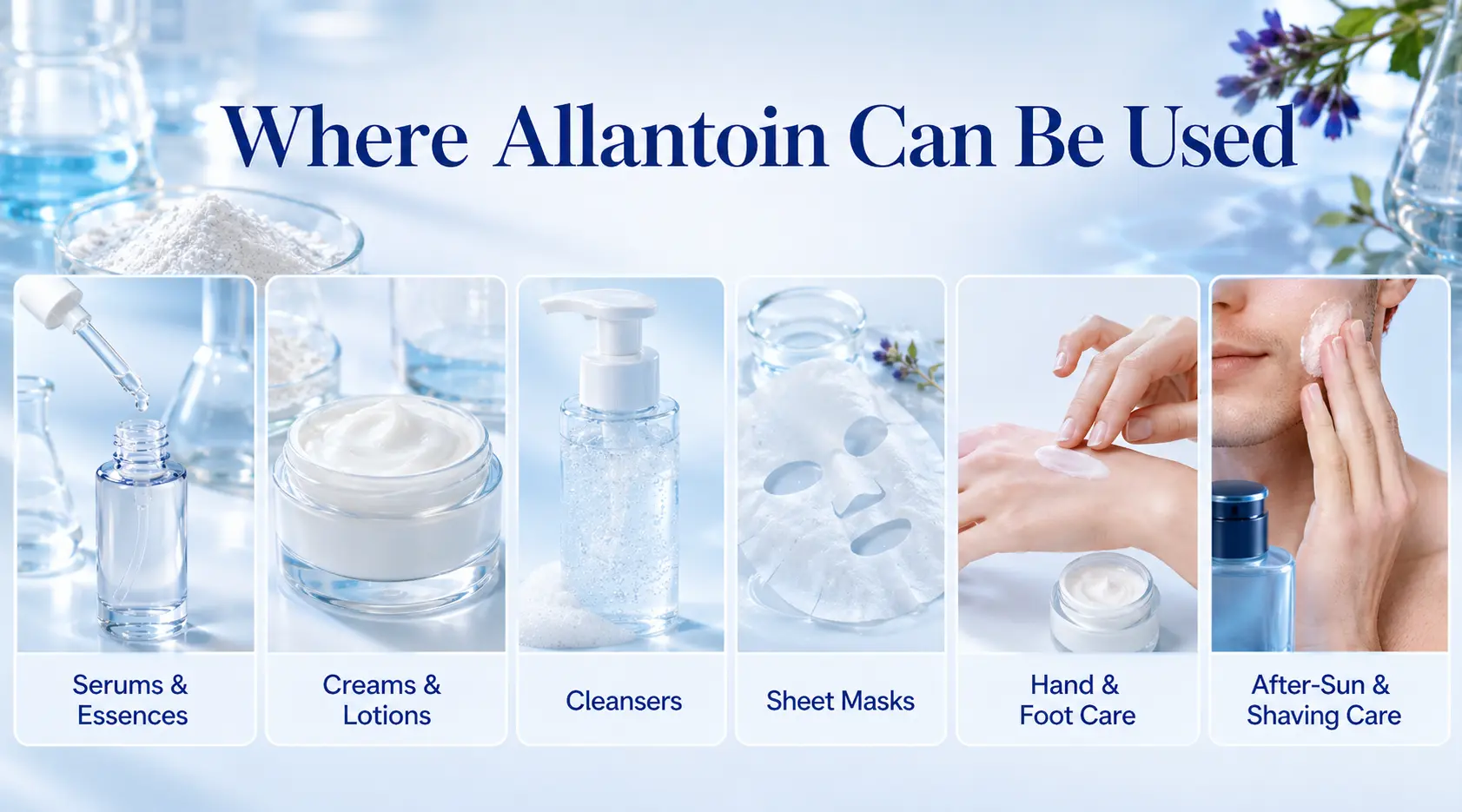
| Common Product Formats | Serums, toners, creams, lotions, masks, cleansers, body care, hand care, foot care and shaving products |
PubChem records Allantoin under CAS 97-59-6 with the molecular formula C4H6N4O3 and a molecular weight of 158.12 g/mol.
Is Allantoin an Active Ingredient?
In conventional cosmetic formulation, Allantoin is usually described as a functional skin-conditioning ingredient. A brand may refer to it as a cosmetic active in marketing communication, but that does not automatically give the finished product a therapeutic or drug status.
In the United States, Allantoin may also be used as an OTC skin-protectant drug active when the product follows the relevant concentration, labeling and regulatory requirements. A standard cosmetic containing Allantoin does not automatically become an OTC drug.
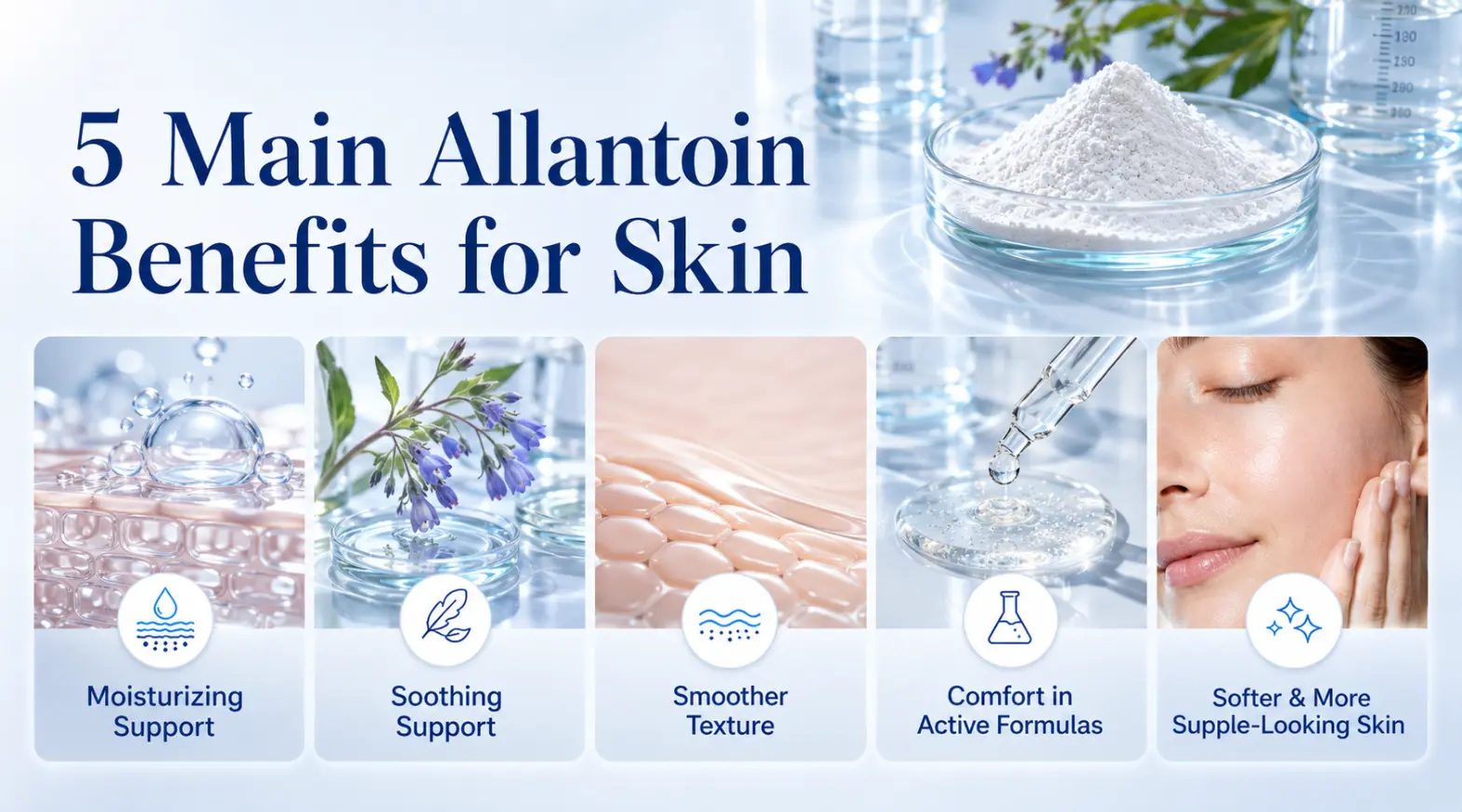
Five Main Allantoin Benefits for Skin
1. Moisturizing Support for Dry-Feeling Skin
Allantoin is commonly included in moisturizers, lotions and serums designed to leave skin feeling softer and less dry. It is particularly useful when the product brief focuses on dryness, tightness, roughness or discomfort after cleansing.
It is better positioned as part of a complete moisturizing system rather than as a replacement for every other type of moisturizing ingredient. A balanced formula may combine Allantoin with:
- Glycerin
- Betaine
- Panthenol
- Sodium hyaluronate
- Trehalose
- Ceramides
- Squalane
- Suitable emollients and occlusives
Humectants help manage water, emollients improve softness and spreadability, and barrier lipids support the lipid structure of the formula concept. Allantoin adds skin-conditioning and comfort value within that wider system.
2. Soothing Support for Sensitive or Stressed-Looking Skin
Allantoin is widely used in products positioned for sensitive or easily uncomfortable skin. It can help formulators build a gentler sensory profile and support claims relating to comfort, softness and reduced dry or tight after-feel.
Suitable cosmetic claim directions include:
- Supports skin comfort
- Suitable for sensitive-skin formulations
- Helps reduce the perception of dryness and tightness
- Supports a calm and comfortable after-feel
- Helps care for dry or stressed-looking skin
These statements should not be converted into claims that the product treats inflammation, dermatitis, sunburn, eczema or damaged tissue.
3. Smoother-Feeling Rough or Flaky Skin
Allantoin is often described as having a keratin-softening or mild keratolytic effect. In practical cosmetic use, this makes it relevant to products targeting rough, dry or flaky-feeling skin.
Suitable applications include:
- Hand creams
- Foot creams
- Body lotions
- Elbow and knee care
- Scalp-comfort products
- Mild texture-refining formulas
Allantoin should not be marketed as if it performs like a dedicated AHA or BHA exfoliant. Healthline notes that direct peer-reviewed evidence supporting Allantoin as a standalone exfoliating ingredient remains limited.
4. Comfort Support in Retinol and Acid-Based Formulas
Allantoin can be evaluated in formulas containing retinol, retinal, glycolic acid, lactic acid or other ingredients that may contribute to dryness or discomfort.
Its presence does not prove that the finished product is non-irritating. Consumer tolerance still depends on:
- Active concentration
- Product pH
- Solvent system
- Surfactant selection
- Preservative system
- Fragrance exposure
- Application frequency
- The complete moisturizing and barrier-support system
A more defensible positioning is “comfort support for active-based skincare” rather than “eliminates retinol irritation.”
5. Softer and More Supple-Looking Skin
Well-moisturized skin generally looks smoother, softer and more supple. This may reduce the visible appearance of dry texture and fine dehydration lines.
This is an indirect appearance benefit. It does not prove that Allantoin independently increases human collagen, reverses wrinkles or regenerates aging skin.
Appropriate cosmetic wording includes:
- Supports smoother-looking skin
- Helps maintain soft and supple skin
- Improves the appearance of dry texture
- Supports a healthier-looking skin surface
- Helps reduce the visible effects of dryness
Which Allantoin Claims Are Well Supported?
Not every claim associated with Allantoin has the same level of evidence or the same regulatory risk. Marketing, R&D and procurement teams should separate established cosmetic functions from claims that require finished-product testing or a drug pathway.
| Claim Direction | Recommended Positioning | Decision |
|---|---|---|
| Skin conditioning | Helps keep skin in good condition | Core claim |
| Moisturizing support | Supports softer and less dry-feeling skin | Core claim |
| Soothing support | Supports comfort for dry or stressed-looking skin | Core claim with measured wording |
| Smoother texture | Helps soften rough or flaky-feeling skin | Suitable cosmetic claim |
| Sensitive-skin use | Suitable for evaluation in sensitive-skin formulas | Confirm in the finished product |
| Barrier support | Can form part of a complete barrier-support system | Do not automatically claim direct barrier repair |
| Anti-aging | Hydration may improve soft and supple appearance | Indirect appearance benefit |
| Exfoliation | May provide keratin-softening support | Do not position as an AHA or BHA replacement |
| Acne treatment | May support comfort in acne-prone skincare | Do not claim standalone acne treatment |
| Brightening or whitening | No established primary brightening role | Avoid as a core claim |
| Scar removal | Results from combination products cannot be assigned to Allantoin alone | Requires product-specific evidence |
| Wound healing | May fall within a medical or OTC framework | Avoid for conventional cosmetics |
| Collagen regeneration | Requires direct and relevant substantiation | Avoid as a general raw-material claim |
| Antibacterial protection | Does not replace a preservative system | Avoid without direct testing and regulatory review |
The Cosmetic Ingredient Review safety assessment identifies Allantoin and related complexes as skin-conditioning agents. COSMILE Europe also lists skin-conditioning, skin-protecting and soothing functions.
Healthline distinguishes these established or commonly accepted uses from areas where evidence is limited, including standalone exfoliation, acne treatment, hyperpigmentation, wound healing and skin-lightening claims.
Allantoin Is Not a Cosmetic Preservative
Allantoin should not be used as the basis for an antimicrobial preservation claim. A water-containing cosmetic still requires a suitable preservation strategy based on:
- Product pH
- Water activity
- Packaging design
- Manufacturing hygiene
- Target microorganisms
- Regional regulatory requirements
- Preservative efficacy testing
Even when a consumer-oriented source associates Allantoin with antimicrobial effects, this does not establish that cosmetic-grade Allantoin can replace an approved and properly tested preservative system.
Which Skin Types and Products Can Benefit from Allantoin?
Dry and Rough-Feeling Skin
Allantoin is a logical supporting ingredient for products targeting dry, tight, flaky or rough-feeling skin. It can be incorporated into moisturizers, body lotions, hand creams, foot creams and gentle cleansing products.
Sensitive or Easily Uncomfortable Skin
Allantoin fits sensitive-skin concepts, but “suitable for sensitive skin” remains a finished-product claim. Fragrance, preservatives, surfactants, pH and the total active load must also be considered.
Skin Using Retinol or Exfoliating Acids
It can be used in retinol companion moisturizers, acid-routine comfort serums and daily barrier-support creams. The wording should focus on moisturization and comfort rather than promising to neutralize irritation.
Hands, Feet and Rough Body Areas
Hand and foot care are particularly suitable applications because softness, keratin management and improved after-feel are central to the consumer benefit.
Shaving and After-Sun Cosmetic Care
Allantoin can be evaluated in shaving and after-sun products designed to support hydration and comfort. Avoid medicinal claims such as treating razor burn or sunburn.
| Product Type | Main Allantoin Value | Key Formulation Watchpoint |
|---|---|---|
| Toner or essence | Lightweight comfort and moisturizing support | Clarity and low-temperature precipitation |
| Water-based serum | Sensitive-skin and active-companion positioning | Solubility and cooling stability |
| Cream or lotion | Moisturizing and smoother after-feel | Complete water-phase incorporation |
| Sheet-mask essence | Hydration and intensive comfort | Microbial control and precipitation |
| Facial cleanser | Reduced dry or tight after-feel | Surfactant compatibility and rinse-off contact time |
| Hand cream | Softness and rough-skin care | High-solids compatibility |
| Foot cream | Keratin-softening support | Interaction with urea or acids |
| Shaving care | Comfort and smoother after-feel | Fragrance and surfactant compatibility |
| After-sun cosmetic care | Hydration and comfort support | Avoid medicinal sunburn claims |
| Scalp care | Dryness and flaking comfort support | Deposition, clarity and preservative efficacy |
Allantoin Use Levels: Cosmetic Formulation vs OTC Skin Protectant
Published Allantoin percentages must be interpreted according to their context. A cosmetic starting point, a historical safety-use concentration and an OTC drug concentration are not interchangeable.
Cosmetic Formulation Starting Point
For our current cosmetic-grade Allantoin, 0.2% can be evaluated as a practical starting point for laboratory screening.
This is not a universal recommendation for every product. The final concentration should be selected according to:
- Product format
- Available water
- Processing temperature
- Target skin feel
- Solubility and crystallization risk
- Finished-product stability
- Target-market regulatory requirements
CIR Safety Context Is Not a Dosage Recommendation
The CIR safety assessment reported that Allantoin was used in 1,376 cosmetic products at concentrations up to 2% and concluded that the reviewed ingredients were safe under the practices of use and concentrations described in the assessment.
The highest concentration recorded in a safety assessment is not automatically the ideal concentration for a new formula. Solubility, exposure, product format and the complete safety assessment must still be considered.
U.S. OTC Skin-Protectant Boundary
Under 21 CFR 347.10, Allantoin is listed as an OTC skin-protectant active ingredient at 0.5% to 2%.
This concentration range belongs to the applicable U.S. OTC drug framework. It should not be copied into an ordinary cosmetic formula as a general cosmetic recommendation or used to justify drug claims on a conventional skincare product.
| Context | Allantoin Level | Correct Interpretation |
|---|---|---|
| Noyain formulation screening | 0.2% | Practical starting point for laboratory evaluation |
| CIR-reported cosmetic use | Up to 2% | Historical safety-use context, not a universal recommended dosage |
| U.S. OTC skin protectant | 0.5%–2% | Drug-active concentration and labeling framework |
Buyer note: Always confirm whether a published percentage represents a formulation starting point, historical use data, a safety assessment concentration or a regulated drug-active range.
How to Formulate with Allantoin
The main technical issue when using Allantoin is managing its temperature-dependent solubility and preventing visible crystals or sediment after cooling.
Allantoin Solubility Changes with Temperature
Our current material documentation provides the following reference values:
| Solvent | Temperature | Reference Solubility |
|---|---|---|
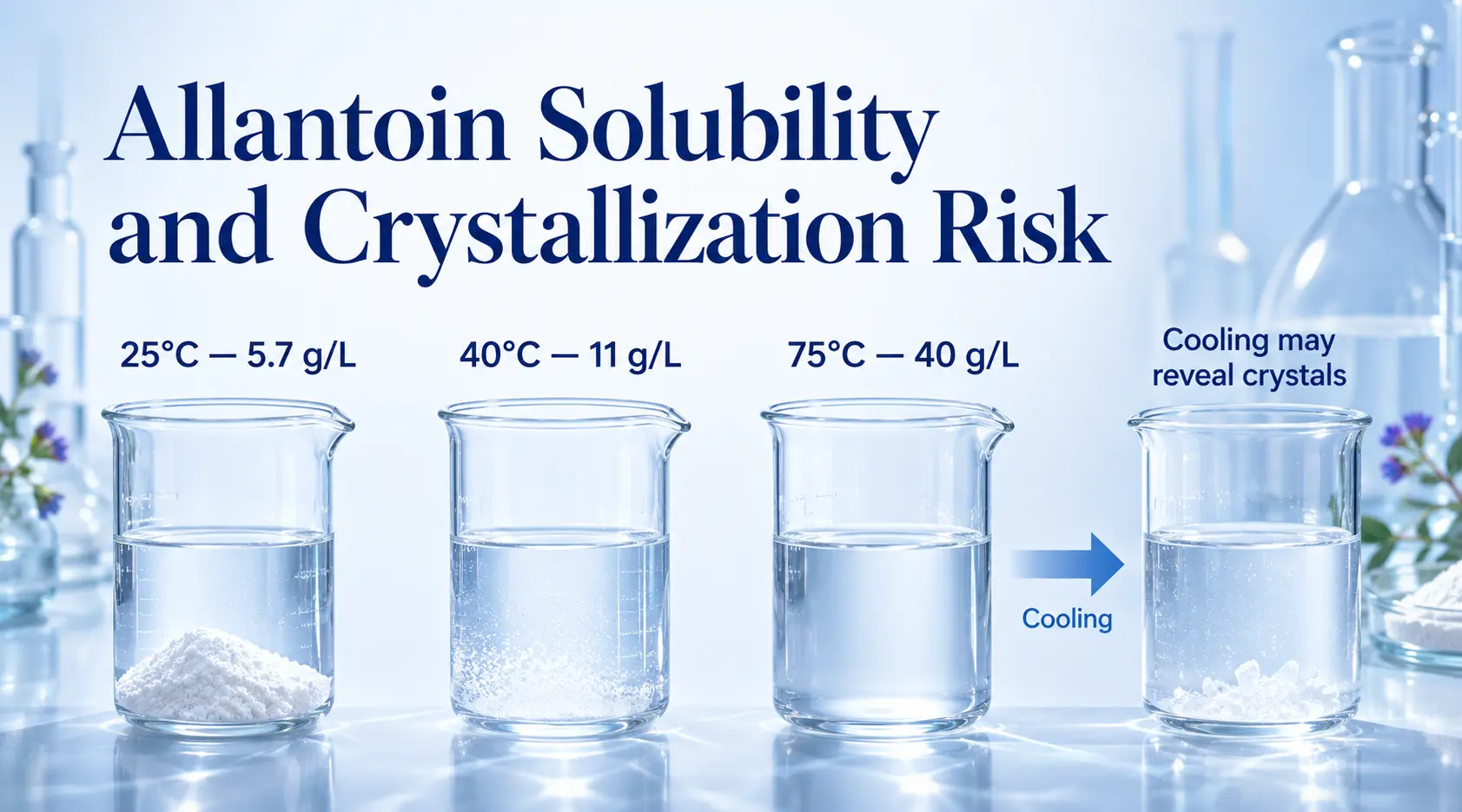
| Water | 25°C | Approximately 5.7 g/L |
| Water | 40°C | Approximately 11 g/L |
| Water | 75°C | Approximately 40 g/L |
| Propylene glycol | 25°C | Approximately 3 g/L |
| Ethanol | 25°C | Approximately 0.4 g/L |
| Glycerin | 25°C | Approximately 0.15 g/L |
These values describe the raw material in individual reference solvents. They do not establish a guaranteed maximum concentration in a finished formula.
Salts, polymers, surfactants, humectants, preservatives and other dissolved materials can change the actual solvent environment. The final formula may therefore behave differently from pure water.
Suggested Processing Workflow
- Confirm the target concentration. Select a starting level appropriate for the product format and intended positioning.
- Calculate the available water. Consider the actual water phase rather than the total batch weight alone.
- Pre-disperse in the water phase. Avoid adding dry powder directly into a finished high-viscosity cream or gel.
- Apply suitable heating and mixing. Allantoin solubility increases as water temperature rises.
- Confirm incorporation. Check for visible particles before continuing the manufacturing process.
- Monitor cooling. Material that appears dissolved while hot may behave differently as the batch cools.
- Evaluate the finished formula. Check clarity, crystals, sediment, pH, viscosity and sensory properties.
- Run stability testing. Include low-temperature and temperature-cycle conditions when relevant.
The exact temperature, mixing time and order of addition should be established through bench testing for the specific formula. A single processing method should not be applied mechanically to every emulsion, gel or surfactant system.
Why Can Allantoin Recrystallize?
Allantoin’s solubility in water falls as temperature decreases. A concentration that dissolves during heating may exceed the formula’s capacity to keep it dissolved after cooling.
Possible signs include:
- White particles
- Needle-like crystals
- Sediment
- Loss of clarity
- Grainy sensory feel
- Uneven raw-material distribution
The risk depends on concentration, available water, other dissolved materials, cooling rate and storage temperature.
Factors That May Increase Crystallization Risk
- High Allantoin concentration
- Low free-water content
- High electrolyte or solids load
- Heavy polymer content
- Dissolution only at a high temperature
- Rapid cooling
- Cold storage
- Direct addition to a finished gel
- Insufficient mixing or wetting
Practical Development Responses
- Reduce the initial screening concentration
- Increase the available water where possible
- Improve water-phase pre-dispersion
- Review processing temperature and mixing time
- Adjust the order of addition
- Review the total solvent and humectant system
- Extend observation after cooling
- Include low-temperature stability testing
How to Interpret Allantoin pH Data
Our current TDS specifies a pH of 4.0–6.0 for a 0.5% test in water at 25°C.
This is a raw-material quality-control test. It does not mean:
- Every finished formula must have a pH of 4.0–6.0
- Allantoin controls the pH of the entire product
- Allantoin is automatically stable in every formula within that range
- A formula outside that range is automatically unsuitable
The finished product’s pH must be selected according to the complete ingredient system, preservative requirements, target application and market regulations.
Finished-Formula Stability Checklist
Before scale-up, evaluate:
- Appearance and clarity
- Crystallization or sedimentation
- Color and odor
- Viscosity and texture
- Phase separation
- Initial and aged pH
- Room-temperature storage
- Low-temperature storage
- Accelerated heat stability
- Freeze-thaw performance
- Preservative compatibility
- Microbial quality
- Packaging compatibility
What Ingredients Can Be Combined with Allantoin?
Allantoin can be evaluated with a wide range of cosmetic ingredients, but compatibility and consumer tolerance must be confirmed in the complete formula.
Humectants and Moisturizing Ingredients
- Glycerin
- Betaine
- Sodium hyaluronate
- Panthenol
- Trehalose
- Propanediol
- Butylene glycol
Soothing and Comfort-Support Ingredients
- Bisabolol
- Madecassoside
- Centella Asiatica Extract
- Beta-glucan
- Ectoin
- Panthenol
These ingredients are not interchangeable. Bisabolol is oil-compatible, while Allantoin is normally incorporated through the water phase. Madecassoside and Centella grades have their own purity, solubility, color and stability considerations.
For a more detailed Centella ingredient decision, read our guide to Madecassoside vs Centella Asiatica Extract.
Barrier-Support Ingredients
- Ceramides
- Cholesterol
- Fatty acids
- Squalane
- Shea butter
- Suitable emollients
In these formulas, Allantoin contributes skin-conditioning and comfort value, while the lipid system provides a more direct barrier-architecture function.
Strong Active Ingredients
- Retinol and retinal
- Glycolic and lactic acid
- Salicylic acid
- Niacinamide
- Vitamin C derivatives
The presence of Allantoin does not prove that the final product is non-irritating. Total active load, pH, solvents, preservatives and application directions remain critical.
Allantoin vs Other Soothing Cosmetic Ingredients
Allantoin does not need to replace other soothing ingredients. It is often more useful as part of a layered ingredient system.
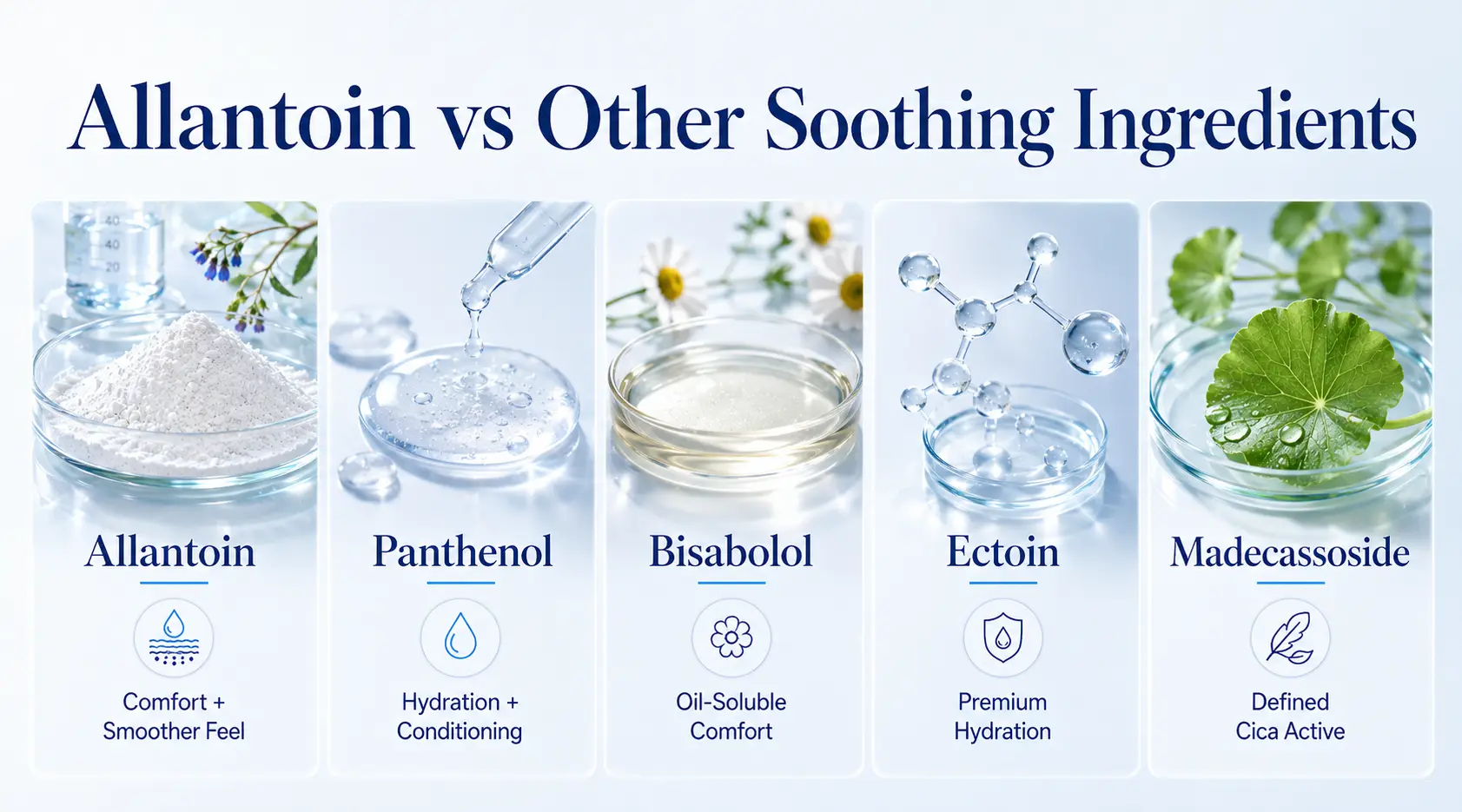
| Ingredient | Typical Formulation Role | Phase Direction | Best Fit |
|---|---|---|---|
| Allantoin | Skin conditioning, comfort and smoother skin feel | Water phase with limited cool-water solubility | Broad mild-care, body-care and strong-active support products |
| Panthenol | Humectancy and skin or hair conditioning | Water phase | Hydrating serums, creams and hair care |
| Bisabolol | Oil-compatible soothing and comfort support | Oil phase or compatible emollient | Sensitive-skin creams, after-sun and scalp care |
| Ectoin | Hydration and environmental-stress positioning | Water-compatible systems | Premium barrier-support products |
| Madecassoside | Defined Centella-derived active positioning | Grade- and formula-dependent | Cica serums and sensitive-skin products |
| Centella Asiatica Extract | Broad botanical or standardized Cica positioning | Grade-dependent | Toners, masks, creams and botanical skincare lines |
Choose Allantoin When:
- You need a widely recognized skin-conditioning ingredient
- The product targets dryness, roughness or sensitive-skin comfort
- The ingredient will support rather than carry the entire product claim
- The project includes hand, foot or body care
- Cost efficiency and broad application are important
- The formula can accommodate proper water-phase incorporation and stability testing
Consider a More Specialized Active When:
- The product requires a premium hero-active story
- A defined biomarker or standardized active content is central to the brief
- Strong antioxidant or redness-appearance evidence is required
- The brand needs a differentiated, high-value market position
How to Evaluate Cosmetic-Grade Allantoin Before Purchasing
The product name alone is not sufficient for raw-material approval. R&D, QA and procurement teams should review specification, batch data, document availability and formulation fit before bulk purchasing.
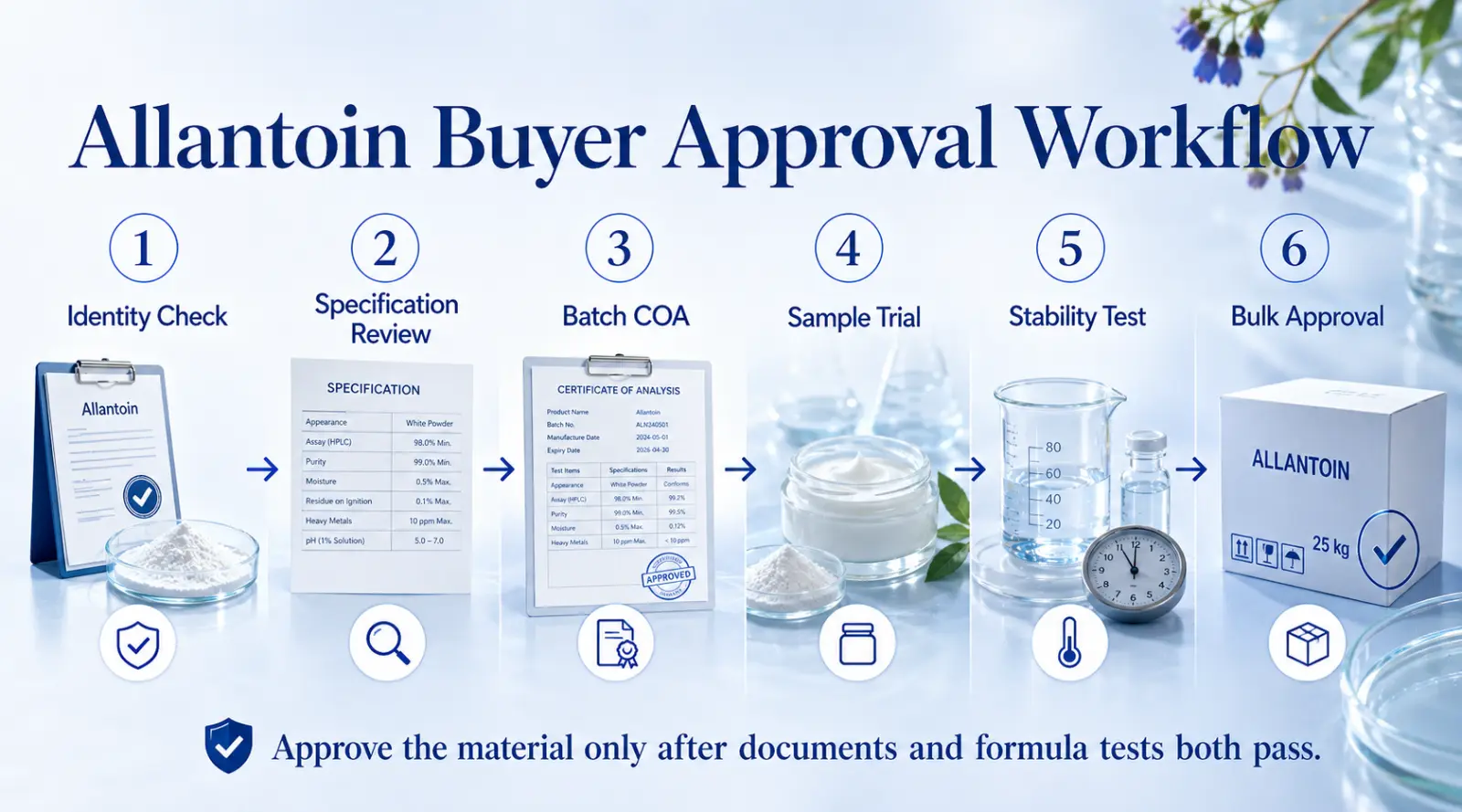
1. Confirm Ingredient Identity
- INCI name
- CAS number
- Molecular identity
- Supplier product name
- Origin or production-route statement when required
- Whether carriers or secondary ingredients are present
2. Review the Raw-Material Specification
Our current specification includes:
| Parameter | Specification |
|---|---|
| Appearance | White powder |
| Odor | Odorless |
| IR identification | Conforms |
| TLC identification | Conforms |
| Assay | 98.5%–101.0% |
| Melting point with decomposition | Minimum 225°C |
| Loss on drying | Maximum 0.1% |
| Residue on ignition | Maximum 0.1% |
| pH | 4.0–6.0 for a 0.5% test in water at 25°C |
| Heavy metals as Pb | Maximum 0.001% |
Specifications should always be checked against the current approved document rather than copied indefinitely from an old brochure or previous batch.
3. Request a Batch-Specific COA
A current Certificate of Analysis should show both the specification and the actual batch result for relevant parameters. Buyers should verify that every reported result falls within the stated specification before approval.
4. Review Solubility and Processing Information
Ask for information covering:
- Water solubility
- Temperature-dependent behavior
- Recommended addition phase
- Practical starting use level
- Known precipitation risks
- Storage recommendations
A raw material may meet its chemical specification and still be unsuitable for a clear serum, low-water system or cold-process formula.
5. Confirm Document Availability
- Batch-specific COA
- Technical Data Sheet
- SDS or MSDS
- Product specification
- Regulatory statements
- Origin statement where required
- Allergen or animal-origin declarations where available
- Storage and shelf-life information
6. Test a Representative Sample
The sample should be tested in the intended formula rather than only in pure water. Use the intended concentration, water phase, process temperature, pH, preservative system and packaging.
7. Confirm Commercial Terms
- MOQ
- Package size
- Lead time
- Available inventory
- Shelf life
- Storage requirements
- Export documents
- Incoterms
- Shipping method
| Evaluation Item | Question to Ask |
|---|---|
| Identity | Does the INCI and CAS match the project requirement? |
| Assay | What is the specification and current batch result? |
| Identification | Are IR and TLC identification included? |
| Appearance | Is the material consistently white and odorless? |
| Solubility | What is its behavior at room and processing temperatures? |
| Use level | Is the figure a starting point, safety-use concentration or regulatory level? |
| Processing | Should it be incorporated through a heated water phase? |
| Stability | Has the finished formula been checked for crystallization? |
| Documentation | Are COA, TDS, MSDS and specification available? |
| Sample | Can the material be evaluated before bulk purchase? |
| Supply | What are the MOQ, package, lead time and shelf life? |
Common Mistakes When Using or Marketing Allantoin
Treating 2% as a Universal Recommended Dosage
The 2% figure may appear in historical CIR use data or the U.S. OTC framework, but it is not a universal recommendation for ordinary cosmetics.
Dissolving Allantoin at High Temperature Without Testing After Cooling
A hot solution may appear clear and later produce crystals at room temperature or during cold storage.
Adding Dry Powder Directly to a Finished Gel
This can cause incomplete wetting, visible particles, lumps or uneven distribution.
Assuming Glycerin or Ethanol Will Solve the Solubility Problem
The reference solubility of Allantoin in glycerin and ethanol at 25°C is considerably lower than its solubility in heated water. They should not automatically be treated as primary solvents for a high-loading Allantoin formula.
Assuming All Allantoin Is Plant-Derived
Do not use natural, botanical or comfrey-derived claims without documentation for the exact supplied grade.
Turning a Raw-Material Function into a Finished-Product Claim
Adding Allantoin does not automatically substantiate claims such as:
- Repairs the skin barrier
- Treats acne
- Removes scars
- Heals wounds
- Regenerates collagen
- Eliminates inflammation
- Kills bacteria
- Whitens skin
Ignoring the Preservative System
Allantoin does not replace preservative selection, microbial-quality control or preservative efficacy testing.
Approving a Supplier Without Reviewing the Current Batch
A generic brochure cannot replace a current specification, batch-specific COA, TDS, SDS, sample evaluation and confirmation of commercial terms.
Final Recommendation
Allantoin is a practical cosmetic ingredient for formulas targeting moisturization, sensitive-skin comfort and smoother-feeling texture.
For skincare users, its most credible value is helping skin feel softer, less dry and more comfortable. It can be particularly relevant to products for dry, rough or sensitive-feeling skin and to routines containing retinol or exfoliating acids.
For formulators, the key question is not only whether Allantoin has desirable skin benefits. It is whether the selected concentration can remain properly incorporated throughout production, cooling and storage.
For procurement teams, approval should include:
- Verified INCI and CAS
- Suitable assay specification
- Current batch COA
- TDS and MSDS
- Solubility review
- Sample testing
- Low-temperature stability
- MOQ and lead-time confirmation
A 0.2% starting point can be evaluated for our current Allantoin grade, but the final dosage and processing method must be confirmed in the customer’s own finished formula.
Review our cosmetic-grade Allantoin or explore more cosmetic active ingredients for moisturizing, soothing and sensitive-skin formulations.
Frequently Asked Questions
What are the main allantoin skin benefits?
The main allantoin skin benefits are moisturizing support, improved skin comfort and a softer, smoother skin feel.
It is commonly used in products for dry, rough, sensitive or stressed-looking skin and can also support comfort in active-based skincare formulas.
Is Allantoin good for sensitive skin?
Yes. Allantoin is commonly evaluated in sensitive-skin cosmetic formulations.
However, final tolerance depends on the complete product, including fragrance, preservatives, surfactants, pH and other active ingredients.
Does Allantoin moisturize the skin?
Allantoin can support moisturized and softer-feeling skin. It is generally most useful as part of a complete system containing humectants, emollients and, where appropriate, barrier lipids.
Does Allantoin exfoliate the skin?
Allantoin may provide mild keratin-softening support, but it is not equivalent to an AHA, BHA or dedicated exfoliating treatment.
Can Allantoin be used with retinol?
Yes. Allantoin can be evaluated in retinol-containing formulas or companion moisturizers.
It may support comfort and moisturization, but it does not eliminate the irritation potential of retinol.
Can Allantoin be used with glycolic or lactic acid?
Yes. It can be evaluated with glycolic acid, lactic acid and other exfoliating ingredients, subject to pH, solubility, stability and finished-product tolerance testing.
Does Allantoin heal damaged skin or scars?
Allantoin should not automatically be marketed as a wound-healing or scar-removal ingredient in conventional cosmetics.
Results from combination scar products or wound models cannot be assigned to every Allantoin raw material or cosmetic formula.
What percentage of Allantoin should be used in skincare?
For our current Allantoin grade, 0.2% can be evaluated as a practical cosmetic formulation starting point.
The final level depends on product format, available water, processing conditions and stability. CIR use data and the U.S. OTC range should not be treated as universal cosmetic recommendations.
Is Allantoin soluble in water?
Allantoin has limited solubility in cool water, but its solubility increases substantially as temperature rises.
Reference values are approximately 5.7 g/L at 25°C, 11 g/L at 40°C and 40 g/L at 75°C.
Can Allantoin crystallize in a finished formula?
Yes. Allantoin may recrystallize if it dissolves at an elevated temperature but cannot remain dissolved after cooling.
The risk depends on concentration, available water, other dissolved materials, cooling conditions and storage temperature.
Should Allantoin be added during the heated phase?
Allantoin is commonly evaluated through water-phase pre-dispersion with suitable mixing and heating because its water solubility increases with temperature.
The exact process should be established for the specific formula.
Is Allantoin soluble in glycerin or ethanol?
Its solubility in glycerin and ethanol at 25°C is low. Current reference values are approximately 0.15 g/L in glycerin and 0.4 g/L in ethanol.
These solvents should not automatically be expected to solve a high-loading Allantoin formula.
Is cosmetic Allantoin natural or synthetic?
Both natural occurrence and synthetic production are possible, but commercial cosmetic-grade Allantoin is commonly produced synthetically.
The exact origin should be confirmed before making natural, plant-derived or comfrey-derived claims.
What documents should buyers request from an Allantoin supplier?
Buyers should request a current specification, batch-specific COA, TDS, SDS or MSDS and any regulatory or origin declarations needed for the target market.
A sample should also be evaluated for solubility, compatibility and finished-formula stability.
Is Allantoin a preservative?
No. Allantoin should not be treated as a complete cosmetic preservative system.
Water-containing products still require suitable preservation and preservative efficacy evaluation.
References & Sources
- PubChem. Allantoin — Compound Summary. Used for CAS number, molecular formula and molecular weight.
- Becker LC, Bergfeld WF, Belsito DV, et al. Final Report of the Safety Assessment of Allantoin and Its Related Complexes. International Journal of Toxicology. Used for cosmetic function, historical use data and safety context.
- Electronic Code of Federal Regulations. 21 CFR 347.10 — Skin Protectant Active Ingredients. Used for the U.S. OTC Allantoin concentration framework.
- COSMILE Europe. Allantoin Ingredient Profile. Used for cosmetic functions, origin categories and common cosmetic applications.
- Cleveland Clinic. What Is Allantoin? And What Does It Do for Your Skin (and More)?. Used for consumer-oriented moisturizing, smoothing and commercial-origin context.
- Healthline. Allantoin for Skin: A Must-Have Ingredient for Your Skin Care Routine?. Used to review evidence limitations for exfoliation, acne, pigmentation, wound care and stronger anti-aging claims.
