Many skincare brands, formulators and consumers still treat PDRN as one standardized ingredient. It is not.
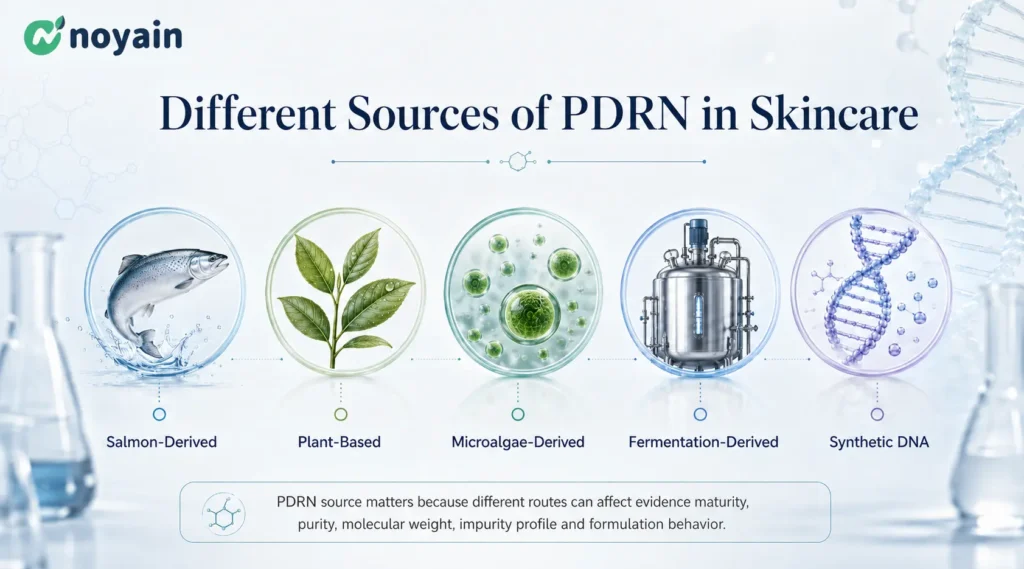
Most articles compare only salmon PDRN and vegan PDRN. In practice, the market now includes at least five major source routes: salmon-derived PDRN, plant-based PDRN, microalgae-derived PDRN, fermentation-derived PDRN and synthetic DNA fragments. These materials can differ substantially in evidence maturity, molecular-weight distribution, purity, impurity profile, formulation behavior, cost structure and claim positioning.
The commercially useful question is therefore not simply, “Is salmon or vegan PDRN better?” It is:
Which PDRN source provides the right balance of evidence, analytical quality, formulation compatibility, positioning and cost for the intended skincare product?
This guide compares all five routes and explains how brands, OEM/ODM manufacturers, formulators and ingredient buyers can qualify a PDRN raw material without assuming that every DNA fragment sold under the same market term is interchangeable.
Cosmetic claim note: This article discusses ingredient-level research, sourcing and cosmetic formulation considerations. Medical, injectable and wound-treatment findings must not be copied directly into claims for ordinary topical cosmetics.
Quick Answer: Which PDRN Source Is Best?
Salmon-derived PDRN remains the evidence benchmark because classic pharmacology and much of the clinical wound-repair literature were developed using purified DNA fragments obtained from salmonid species such as Oncorhynchus mykiss and Oncorhynchus keta. A widely cited pharmacology review describes a broad molecular-weight distribution and discusses adenosine A₂A receptor-related activity and the nucleotide salvage pathway.
That does not mean every salmon-derived material has the same quality, or that every non-animal source is ineffective. Source-specific research has reported encouraging findings for Panax ginseng-derived PDRN, low-molecular-weight peony PDRN, microalgae-derived PDRN and microbial-derived PDRN. However, the evidence remains uneven: some routes are supported mainly by cell, tissue-model or animal data, while the small topical peony study reported preliminary human findings in only ten participants.
Practical conclusion: salmon PDRN is currently the most established starting point for evidence-led and premium positioning. Plant, microalgae and fermented routes may be better aligned with vegan or non-animal concepts. Synthetic DNA may support precision-design concepts. In every case, the actual specification and supplier data matter more than the source name alone.
What Is PDRN and Sodium DNA?
PDRN stands for polydeoxyribonucleotide . In practical terms, it describes a mixture or distribution of DNA-derived polymers rather than one single, uniform molecule.
This distinction matters because two ingredients marketed as “PDRN” may differ in:
- Biological source
- DNA concentration or assay
- Fragment-length and molecular-weight distribution
- Double-stranded versus denatured DNA characteristics
- Purification process
- Residual protein and process-related impurities
- Solubility, color, odor and clarity
- Raw-material and finished-formula stability
- Supporting biological and human evidence
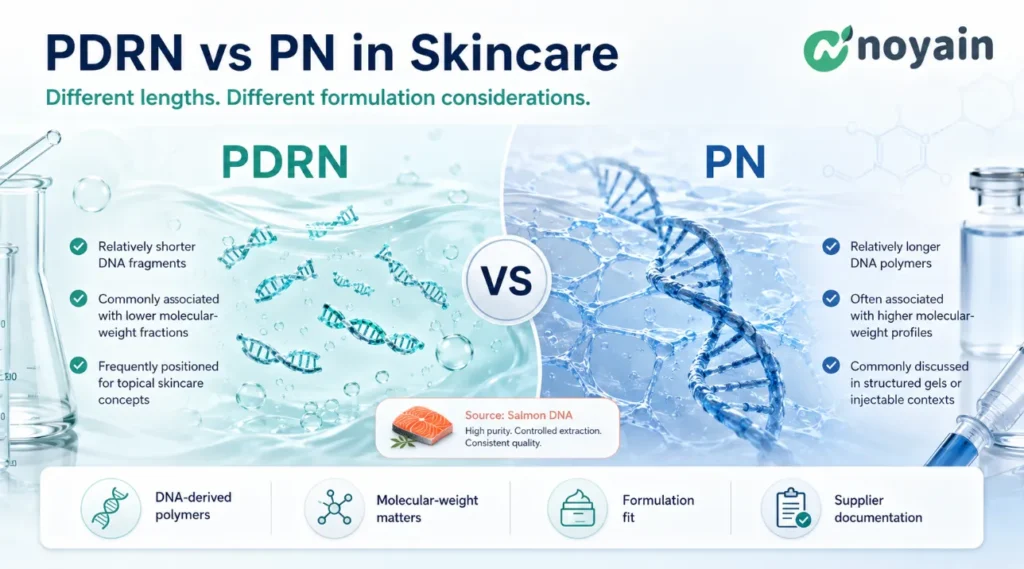
Classic pharmaceutical PDRN literature describes salmonid-derived DNA polymers commonly distributed across approximately 50–1,500 kDa, although current scientific usage is not fully standardized. A 2025 nomenclature review also highlighted ongoing confusion between the terms PDRN and PN and proposed a molecular-weight-based classification. That proposal is useful context, but it is not yet a universally adopted cosmetic naming rule.
In cosmetic ingredient documentation, a supplier may declare an INCI such as Sodium DNA or Sodium DNA/RNA, depending on the material and its supporting regulatory documentation. The European Commission CosIng entry for Sodium DNA/RNA describes it as the sodium salt of DNA and RNA.
PDRN is usually a technical or commercial description. The INCI name is the regulatory ingredient identity used in cosmetic documentation. Buyers should verify both rather than assuming they are always identical.
For a basic introduction, read our guide to what PDRN means in salmon DNA skincare .
How Does PDRN Work?
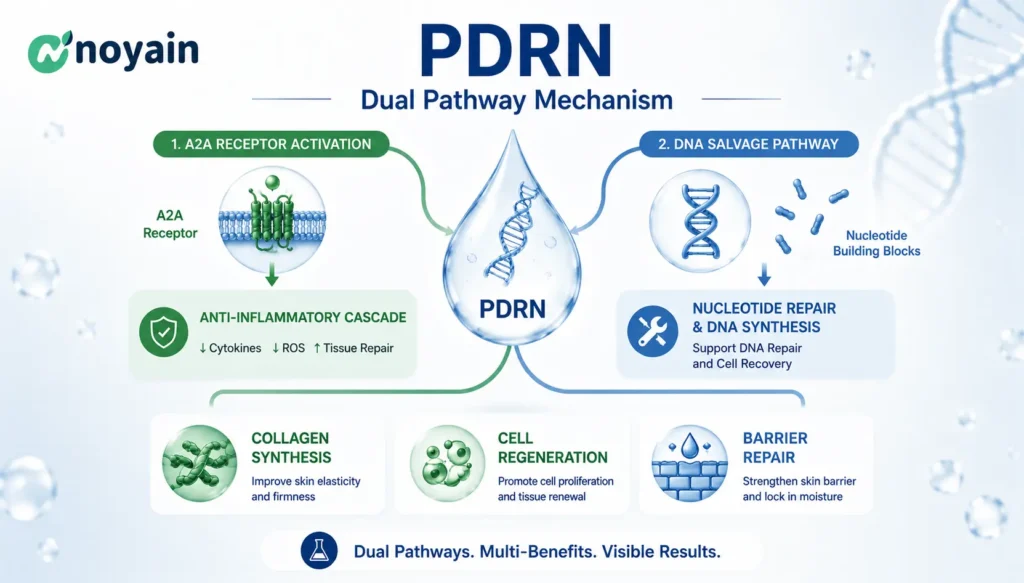
PDRN is commonly discussed through two related biological pathways. The best-characterized evidence comes from specific salmon-derived pharmaceutical PDRN preparations, so these mechanisms should not be treated as guaranteed properties of every material marketed as PDRN.
Adenosine A₂A Receptor-Related Signaling
After enzymatic degradation, PDRN can generate smaller nucleotides and nucleosides. The classic PDRN pharmacology literature suggests that these degradation products participate in adenosine-related signaling and A₂A receptor activation. In studied systems, A₂A signaling has been associated with modulation of inflammatory responses, cell growth, angiogenesis-related pathways and tissue-repair processes.
The key scientific limitation is often overlooked: the 2017 pharmacology review states that A₂A-related activity appears linked to DNA origin, molecular weight and manufacturing process. Therefore, a positive mechanism result from one salmon, ginseng or microbial PDRN cannot automatically validate another unspecified DNA-fragment ingredient.
Nucleotide Salvage Pathway
PDRN-derived nucleotides and nucleosides may also be reused through cellular salvage pathways. These pathways allow cells to recycle nucleotide components rather than relying entirely on energy-intensive de novo synthesis. This salvage-pathway mechanism has been proposed as one reason PDRN can support cellular activity in damaged or metabolically stressed experimental tissues.
For topical skincare: mechanism plausibility is not the same as finished-product efficacy. Performance still depends on the exact raw material, use level, molecular-weight distribution, vehicle, delivery technology, formula stability, application pattern and condition of the skin barrier.
For a deeper review, read what the science says about PDRN skin benefits .
Injectable PDRN vs Topical PDRN
Injectable and topical PDRN products must not be presented as equivalent simply because both use DNA-derived materials. The primary differences are delivery route, regulatory category, sterility and quality requirements, exposure depth and claim boundaries.
| Evaluation Factor | Injectable or Medical PDRN | Topical or Cosmetic PDRN |
|---|---|---|
| Regulatory context | Drug, medical device or procedure-dependent product under route-specific regulation | Cosmetic raw material incorporated into a finished skincare formulation |
| Delivery route | Placed directly into or near target tissue and bypasses the stratum corneum | Applied to the skin surface and limited by the barrier properties of the stratum corneum |
| Primary quality controls | Identity, sterility, endotoxin/pyrogen control, molecular-weight distribution, residual protein and route-specific clinical specifications | Identity, purity, molecular-weight distribution, microbial quality, solubility, clarity, odor, preservation, compatibility and stability |
| Performance variables | Dose, injection technique, tissue placement and treatment protocol | Vehicle, concentration, molecular size, delivery system, skin condition and frequency of use |
| Evidence interpretation | May evaluate medical endpoints such as wound repair or tissue regeneration | Should focus on cosmetic endpoints such as hydration, barrier appearance, comfort, texture and visible skin condition |
| Claim boundary | Medical claims may be permitted only under the relevant regulatory framework | Must not imply injection-equivalent delivery, treatment of disease or guaranteed tissue regeneration |
The central difference is not that injectable PDRN is always “smaller.” Molecular-weight specifications vary by product. The decisive distinction is that injection bypasses the skin barrier, while a topical formula must work within the constraints of surface application and cosmetic delivery.
In the United States, products intended to be injected are also outside the ordinary small-business exemptions discussed under the Modernization of Cosmetics Regulation Act of 2022 (MoCRA), reinforcing the regulatory separation between cosmetics and injected products.
Key takeaway: clinical results from injected PDRN may support biological plausibility, but they are not direct proof that a topical serum containing Sodium DNA will produce the same outcome.
For a more detailed route-by-route comparison, read our PDRN injection vs topical guide.
Different Types of PDRN Sources: Full List
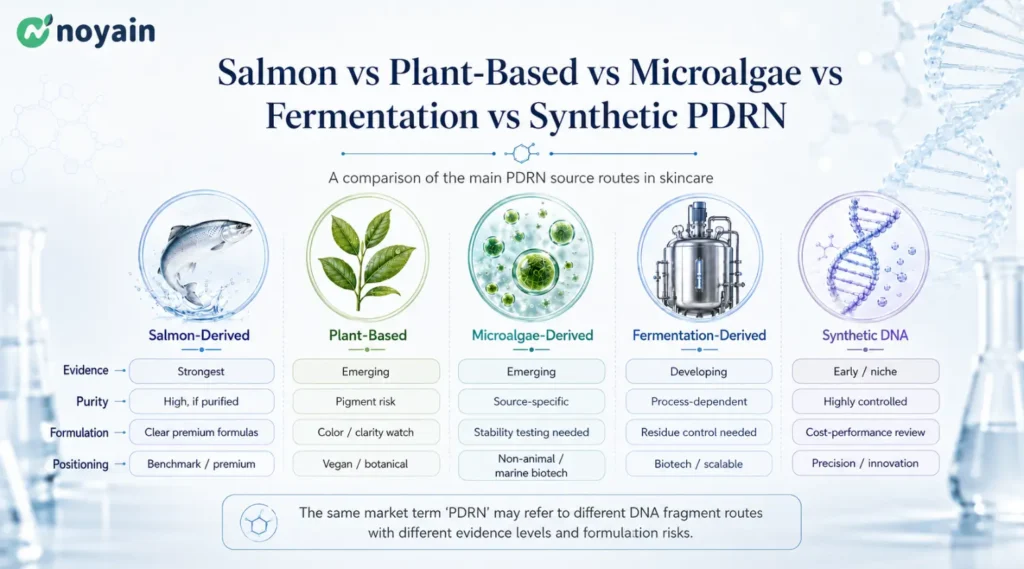
The skincare market now uses or discusses five major PDRN source routes. “Vegan PDRN” is an umbrella term rather than one standardized technical category: it may refer to plant, microalgae or microbial production routes.
| Source Route | Common Market Names | Typical Source | Evidence Maturity | Best-Fit Positioning |
|---|---|---|---|---|
| Salmon-derived PDRN | Salmon PDRN, salmon DNA, Sodium DNA | Salmon trout or chum salmon DNA | Most established | Evidence-led premium skincare, K-beauty-inspired concepts and post-care cosmetic formulas |
| Plant-based PDRN | Vegan PDRN, plant PDRN, PhytoPDRN | Plant DNA, including source-specific routes such as ginseng or peony | Emerging | Vegan, botanical and clean-beauty concepts |
| Microalgae PDRN | Microalgae PDRN, algae PDRN, marine biotech DNA | Microalgae such as Chlorella species | Emerging / early | Non-animal, marine-biotechnology and sustainability concepts |
| Fermentation-derived PDRN | Bioengineered PDRN, microbial PDRN, L-PDRN | Microbial or fermentation-based production systems | Developing | Scalable non-animal biotechnology positioning |
| Synthetic DNA fragments | Synthetic PDRN, designed DNA fragments | Chemical, enzymatic or cell-free synthesis | Early / application-specific | Precision-design, customized and high-end innovation concepts |
Evidence Maturity: Which PDRN Source Has the Strongest Research Base?
A source can sound more innovative because it is vegan, fermented or synthetic, but innovation language does not automatically equal stronger evidence.
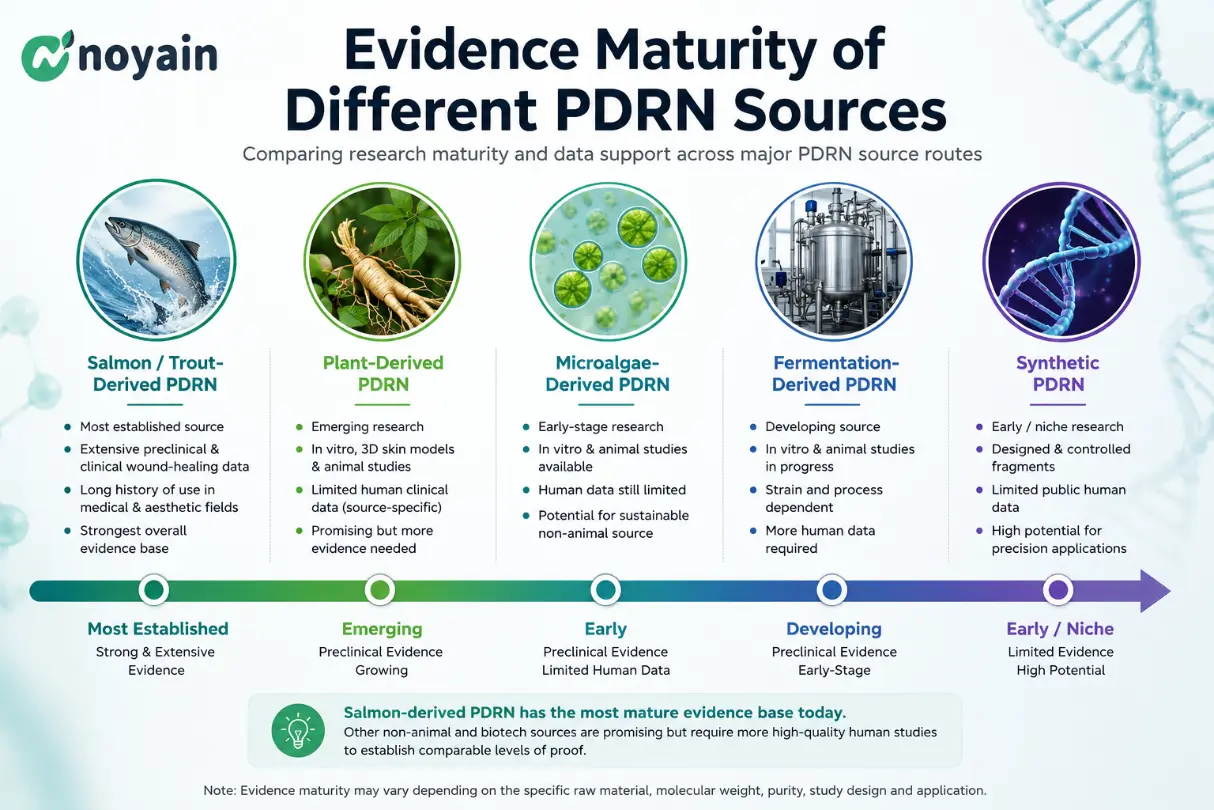
| PDRN Route | Current Evidence Level | What the Evidence Currently Supports | Main Limitation |
|---|---|---|---|
| Salmon / trout-derived | Most established | Decades of pharmacological, preclinical and clinical evidence, especially in medical and injectable settings | Much of the strongest evidence cannot be directly transferred to ordinary topical cosmetics |
| Panax ginseng-derived | Emerging | Cell and 3D skin-model data supporting source-specific regeneration and barrier-related activity | Limited human topical evidence |
| Peony-derived | Emerging human evidence | Preclinical data plus a small topical human assessment of barrier recovery and elasticity | Only ten participants, short duration and no active salmon-PDRN comparator |
| Microalgae-derived | Early / emerging | Promising source-specific preclinical activity and non-animal production potential | Limited independent human topical evidence |
| Microbial / fermentation-derived | Early / developing | One Lactobacillus-derived route has reported cell-based mechanism, migration and antioxidant findings | Results are source- and process-specific and remain mainly preclinical |
| Synthetic DNA fragments | Early / application-specific | Potential for controlled sequence and fragment design | Limited publicly available long-term topical, comparative and commercial-scale evidence |
A systematic review of PDRN in wound healing and tissue regeneration found promising results, but the body of evidence was heterogeneous and centered largely on medical or tissue-repair use rather than standard over-the-counter skincare.
Salmon-Derived PDRN: The Benchmark Route
Most Established Evidence Route
Salmon-derived PDRN is generally produced from purified DNA obtained from salmonid reproductive tissues. It remains the benchmark because the classic scientific definition and pharmacology of PDRN and much of its historical evidence were developed using salmon trout or chum salmon DNA.
Why Salmon PDRN Became the Benchmark
Three factors explain its position:
- Historical evidence: classic PDRN pharmacology, wound-repair and tissue-regeneration research predominantly used salmonid-derived preparations.
- Mechanism characterization: A₂A receptor-related activity and the salvage pathway have been studied more extensively for defined salmon-derived pharmaceutical PDRN than for most newer routes.
- Market recognition: “salmon DNA” is already familiar in K-beauty and Korean skincare, aesthetic dermatology and premium post-care skincare communication.
What the Research Supports—and What It Does Not
Salmon-derived PDRN has the strongest historical background in medical, wound-healing and tissue-repair contexts, as reflected in both a major pharmacology review and a systematic review of wound and tissue-regeneration studies. For cosmetic communication, this evidence should be translated into appearance-focused language rather than medical claims.
More defensible cosmetic language includes:
- Supports skin comfort
- Helps maintain a healthy-looking skin barrier
- Supports a visibly renewed or recovered-looking complexion
- Helps improve the appearance of stressed-looking skin
- Supports hydration, elasticity and anti-aging appearance care when supported by finished-product data
Avoid claiming that a topical serum “heals wounds,” “regenerates tissue,” “works like an injection” or “treats inflammation.”
Key Advantages
- Strongest overall evidence maturity
- Established purification and characterization history
- High consumer and professional recognition
- Strong fit for premium and evidence-led positioning
- Clear connection to classic PDRN literature
Key Limitations
- Animal-derived and unsuitable for vegan positioning
- Traceability and sustainability documentation should be verified
- Poor purification may leave odor, color or residual protein
- Batch quality may vary among suppliers
- Injectable evidence cannot be copied directly into topical cosmetic claims
Salmon PDRN Quality Questions
- Which salmonid species and tissue source are used?
- What analytical method is used for DNA content?
- What is the measured molecular-weight distribution?
- What are the residual protein result and test method?
- Are endotoxin or pyrogen data available and relevant to the intended use?
- Does the material have a detectable fish odor or color?
- Does it remain clear in the intended serum, toner or gel system?
- Can the supplier provide batch-specific COA, TDS, SDS and source documentation?
Key takeaway: salmon origin provides an established evidence story, but it does not replace supplier qualification. “Sodium DNA” on a label does not by itself confirm purity, grade or formulation performance.
Plant-Based or Vegan PDRN: Real Science or Marketing Term?
Emerging Non-Animal Route
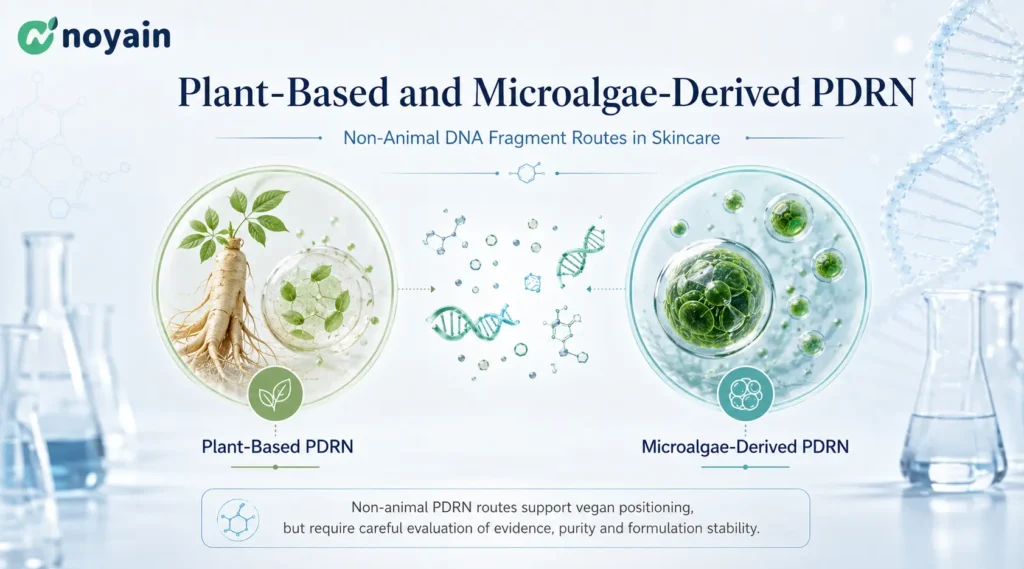
Plant-based PDRN refers to DNA fragments isolated from botanical materials or plant-cell systems. The category is attractive to brands seeking vegan, botanical or sustainability-oriented positioning, but “plant PDRN” is not one standardized ingredient.
What “Vegan PDRN” Actually Means
A vegan claim should be supported by documentation rather than accepted from a marketing name. Buyers should ask:
- What is the exact botanical species and tissue source?
- Is the material directly extracted from a plant, produced through plant-cell culture or combined with another process?
- What is the declared INCI?
- Is the non-animal claim supported across processing aids and manufacturing steps?
- What is the DNA content and molecular-weight distribution?
- Are polysaccharides, pigments, polyphenols, proteins and extraction residues controlled?
- Is the research based on this exact source and grade?
What Plant-PDRN Research Shows So Far
A 2023 study of PDRN isolated from Panax ginseng adventitious roots reported source-specific results in keratinocytes, fibroblasts and three-dimensional skin models, including barrier-related and regeneration-related endpoints. This established that plant-derived PDRN can represent a genuine research route, not merely a marketing label.
Evidence has since moved beyond the statement that vegan PDRN is supported “only by in-vitro studies.” A 2025 study of low-molecular-weight peony PDRN included a small topical human assessment. It reported improved transepidermal water-loss recovery after two weeks in an experimentally disrupted barrier model and improved periorbital elasticity after four weeks. However, the study included only ten participants and did not establish equivalence to salmon PDRN.
The correct conclusion is therefore:
Human evidence for selected plant-derived PDRN is beginning to emerge, but robust randomized, double-blind and head-to-head evidence remains limited. Findings from ginseng or peony cannot be generalized to every “vegan PDRN” ingredient.
Key Advantages
- Non-animal positioning when properly documented
- Strong botanical and clean-beauty storytelling
- Emerging source-specific research
- Potential fit for plant-biotechnology concepts
- May align with markets or brands that reject fish-derived ingredients
Key Limitations
- “Vegan PDRN” is not a standardized technical category
- Evidence varies substantially by botanical source
- Plant matrices may introduce polysaccharides, pigments and polyphenols
- Purification can affect color, clarity, odor and DNA purity
- Human and head-to-head data remain limited
Microalgae PDRN: An Emerging Non-Animal Direction
Marine Biotechnology Route
Microalgae PDRN is obtained from algae or microalgae biomass and is increasingly discussed as a non-animal source for microalgae DNA skincare concepts.
A 2025 study of PDRN derived from Chlorella protothecoides reported promising skin-related biological activity in preclinical models. This supports microalgae as a legitimate research direction, but it does not yet provide category-wide human proof.
Microalgae-derived PDRN may appeal to brands seeking:
- Non-animal sourcing
- Marine-biotechnology positioning
- Controlled cultivation and scalability narratives
- Sustainability-oriented active concepts
- Differentiation from traditional salmon DNA
Key Advantages
- Non-animal source potential
- Controlled cultivation may support scale and traceability
- Strong marine-biotechnology story
- Emerging preclinical research
- Potential compatibility with vegan product concepts
Key Limitations
- Limited independent human topical evidence
- Residual pigments and algal metabolites may affect appearance
- Color drift and oxidative stability require source-specific testing
- Purification quality may vary substantially
- DNA content and molecular-weight distribution must be verified
Do not assume that “microalgae” automatically means better penetration, higher purity or stronger efficacy. The supplier should demonstrate the actual source organism, purification process, DNA assay, molecular-weight distribution and finished-formula stability.
Fermented or Bioengineered PDRN: Benefits and Limitations
Scalable Biotechnology Route
Fermentation-derived PDRN is produced using microbial or biotechnology-based systems. It may reduce reliance on animal raw materials and support controlled industrial production, but the final quality depends heavily on the production organism and downstream purification process.
A 2025 study of PDRN extracted from Lactobacillus rhamnosus reported A₂A-related signaling, antioxidant activity and migration-related findings in cell-based assays. The fragments were under 100 base pairs, compared with the salmon comparator used in that study. These results are promising but remain source-specific and primarily preclinical.
Fermented PDRN Benefits
- Potential non-animal production
- Possibility of controlled and scalable manufacturing
- Reduced dependence on seasonal marine biological materials
- Strong biotechnology and fermentation story
- Potential for tighter batch control after process validation
Fermented PDRN Limitations
- Performance is strain- and process-dependent
- Host-cell proteins, cell debris, metabolites and process residues require control
- Endotoxin control is especially relevant to Gram-negative production systems; it should not be generalized identically to every microbial host
- Downstream purification can affect purity, color, odor and clarity
- Published human comparative evidence remains limited
- Lower cost should not be assumed before commercial-scale validation
Questions to Ask a Fermented-PDRN Supplier
- What organism or production system is used?
- Is the final DNA native to the host, engineered or produced through another defined pathway?
- How are host-cell proteins, nucleic-acid impurities and cell debris removed?
- What is the DNA assay and molecular-weight distribution?
- Which endotoxin method is used when relevant, and what are the units, detection limit and acceptance criterion?
- Are residual solvents, salts or processing reagents monitored?
- How many commercial-scale batches support the consistency claim?
Key takeaway: the useful question is not only, “Is it fermented?” It is, “Is the exact production and purification process mature, documented and compatible with my formula?”
Synthetic DNA Fragments: Precision, Safety and Commercial Limits
Precision-Design Route
Synthetic DNA fragments are produced through controlled chemical, enzymatic or cell-free methods rather than direct extraction from animal, plant or microbial biomass. Depending on the technology, this route may provide tighter control over sequence, fragment length and source-related impurities.
Potential Advantages
- Controlled sequence or fragment design
- Potentially narrower molecular-weight distribution
- Reduced exposure to fish proteins, plant pigments or biological-matrix impurities
- Strong precision-biotechnology and intellectual-property positioning
- Potential fit for customized laboratory or patent-driven active systems
Key Limitations
- Higher cost at commercial scale
- Residual synthesis reagents and process impurities require analytical control
- Sequence, identity and fragment specifications need clear methods
- Regulatory naming and cosmetic positioning may be more complex
- Publicly available long-term topical safety data remain limited
- Limited human evidence directly comparing synthetic fragments with established PDRN preparations
Synthetic PDRN Safety
Synthetic origin alone does not prove that a DNA ingredient is safer—or less safe. Safety must be assessed from the actual material, including:
- Chemical and sequence identity
- Fragment-length distribution
- Purity and residual synthesis reagents
- Microbial quality
- Stability and degradation profile
- Intended concentration and route of exposure
- Finished-product compatibility and safety substantiation
Under MoCRA, the responsible person must maintain records supporting adequate safety substantiation for marketed cosmetic products, while FDA does not prescribe one universal test package for every cosmetic ingredient or product.
Key takeaway: synthetic DNA may provide manufacturing precision, but precision alone does not establish superior skincare performance or long-term safety.
Is Vegan PDRN as Effective as Salmon PDRN?
The current evidence does not support a simple category-wide “yes.”
Salmon-derived PDRN has the most mature historical evidence, particularly in pharmaceutical, injectable and wound-repair settings. Selected plant and microbial routes have produced encouraging source-specific findings, and peony PDRN has now generated preliminary topical human data. However, “vegan PDRN” includes multiple unrelated sources and processes. Positive data for ginseng, peony, Chlorella or Lactobacillus cannot validate every vegan PDRN ingredient.
| Evaluation Question | Salmon-Derived PDRN | Vegan / Non-Animal PDRN |
|---|---|---|
| Evidence maturity | Most established overall | Emerging and highly source-specific |
| Human data | Substantial medical/injectable history; topical evidence still less mature | Early human data for selected sources; limited head-to-head trials |
| Mechanism evidence | Extensively characterized for defined pharmaceutical preparations | Reported for selected ginseng and microbial materials, not the entire category |
| Vegan suitability | No | Potentially yes, with complete source and processing documentation |
| Main quality concern | Residual protein, odor, source traceability and batch purification | Pigments, polysaccharides, host-cell materials, process residues and category ambiguity |
| Best-fit positioning | Premium, K-beauty-inspired and evidence-led concepts | Vegan, botanical, marine-biotech or fermentation-led concepts |
Evidence-based answer: a documented vegan PDRN can be a credible cosmetic ingredient, but current research does not establish that vegan PDRN as a whole works as well as salmon PDRN. Comparability must be demonstrated for the exact source, grade, concentration and finished formula.
Why Two PDRN Ingredients Can Behave Differently
1. Molecular-Weight and Fragment Distribution
PDRN is usually a distribution of fragments. Two samples with the same average molecular weight can still have different low- and high-molecular-weight fractions. This may influence characterization, solubility, viscosity, formula behavior and biological testing.
2. Source-Related Impurities
Each source introduces a different purification burden:
- Salmon: residual protein, odor, lipids and source traceability
- Plant: polysaccharides, pigments, polyphenols, proteins and extraction residues
- Microalgae: pigments, algal metabolites, proteins and oxidative color change
- Fermentation: host-cell proteins, cell debris, metabolites, salts and organism-dependent endotoxin concerns
- Synthetic: residual reagents, catalysts, solvents or incomplete synthesis products
Residual protein and endotoxin should be described as process-related quality and safety concerns—not automatically as the proven “main cause” of redness or allergy in every topical PDRN product.
3. Purification Process
A well-purified material is more likely to support clear, low-odor premium formulas than a poorly purified material with visible color, haze or odor. Purification may also influence assay results, residual protein, microbial quality and batch consistency.
4. Double-Stranded DNA Characteristics
Hyperchromicity can be useful when discussing double-stranded DNA structure and denaturation behavior, but it is not a standalone efficacy claim. Read our technical guide on why hyperchromicity matters for Sodium DNA quality .
5. Evidence Route
Classic salmon PDRN has accumulated more published history. Many newer routes rely on a small number of source-specific papers or supplier studies. Newer does not mean invalid; it means the evidence package should be reviewed more carefully before making equivalence claims.
Key Quality Testing Standards for PDRN Raw Materials
A serious PDRN raw material should not be approved because its label says “salmon,” “vegan,” “bioengineered,” “high purity” or “pharmaceutical grade.” Qualification should combine identity, analytical quality, impurity control, documentation and formulation performance.
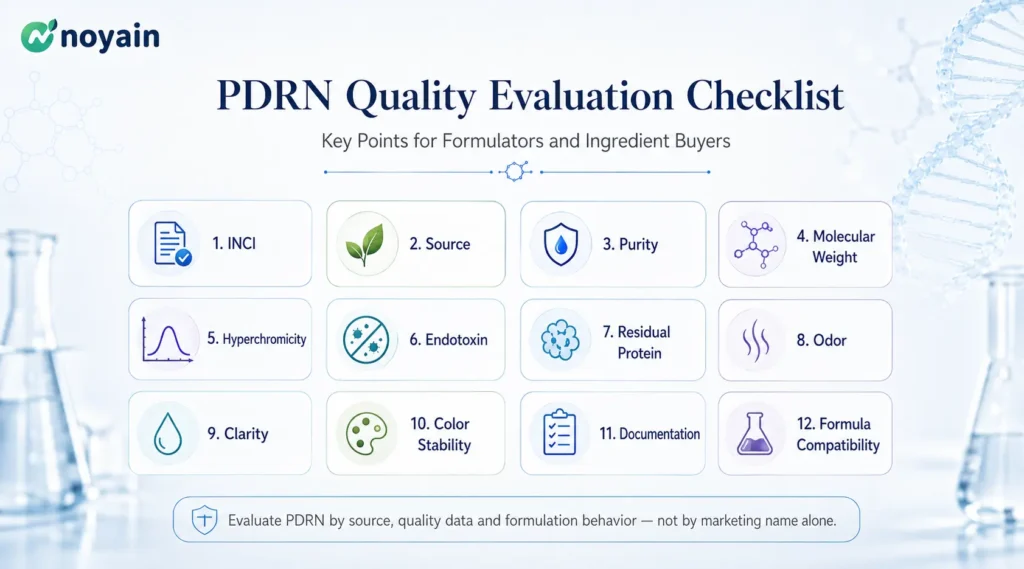
| Test Item | What Buyers Should Request | Why It Matters |
|---|---|---|
| INCI and identity | Declared INCI, chemical/salt form and identity method | Confirms what the material is and how it should be documented |
| Biological source | Species, botanical source, algae strain or production organism | Supports traceability, vegan statements and source-specific evidence review |
| DNA content / assay | Quantitative method, calculation basis and batch result | Helps distinguish a DNA-rich active from a highly diluted carrier system |
| A260/A280 | Measured ratio, sample concentration, buffer and instrument conditions | A value around 1.8 is commonly used as a screening indicator for relatively pure DNA |
| A260/A230 | Measured ratio and spectral profile | Values around 2.0–2.2 are commonly associated with relatively clean nucleic-acid samples and can help flag salts, phenols or carbohydrate carryover |
| Molecular-weight distribution | Range, dominant fraction, average/peak and analytical method | A single average value can hide a broad or inconsistent distribution |
| Hyperchromicity | Method, heating conditions, calculation and interpretation | Can provide structural information for double-stranded DNA but does not directly prove efficacy |
| Residual protein | Validated method, specification and batch result | Important for purification assessment and source-related impurity control |
| Endotoxin / pyrogen | Method, reporting units, detection limit, batch result and justified acceptance criterion | Relevant to risk assessment, especially for certain microbial processes and higher-risk routes of exposure |
| Microbial limits | Total count, yeast/mold and specified organisms | Supports raw-material and finished-product microbiological quality |
| Heavy metals | Lead, arsenic, mercury, cadmium and market-relevant specification | Supports safety review and regulatory documentation |
| Moisture / loss on drying | Specification and batch result | Affects assay basis, powder handling and storage stability |
| Appearance | Color, odor, physical form and solution clarity | Directly affects transparent serums, toners, ampoules and gels |
| Solubility | Solvent, concentration, temperature and preparation method | Determines whether the material is practical in the intended formula |
| pH compatibility | Recommended range and stress-test results | Reduces the risk of precipitation, degradation or loss of clarity |
| Stability | Real-time, accelerated and finished-formula data | Identifies source-specific color, odor, assay and performance changes over shelf life |
| Documentation | COA, TDS, SDS, specification, source statement and test methods | Supports supplier qualification, customer review and change control |
A260/A280: Useful, but Not Proof of Total Purity
Thermo Fisher technical guidance on nucleic-acid purity commonly uses an A260/A280 ratio of approximately 1.8 for relatively pure DNA and an A260/A230 range of approximately 2.0–2.2. These ratios are useful screening indicators, but they are affected by concentration, pH, ionic strength and contaminants. They do not independently prove identity, molecular-weight distribution, absence of all impurities or biological activity.
A stronger analytical package combines UV ratios with DNA assay, molecular-size analysis, residual protein and other orthogonal methods.
There Is No Single Universal “Cosmetic-Grade” Endotoxin Limit
Do not publish one fixed endotoxin number as the universal definition of cosmetic-grade PDRN unless it is supported by a validated internal specification and intended-use risk assessment. The appropriate acceptance criterion can depend on production host, raw-material concentration, finished-product format, route of exposure, analytical method and customer requirement.
A more defensible purchasing request is:
Ask for the test method, units, detection limit, batch result and the supplier’s justified internal acceptance criterion.
Minimum Supplier Qualification Package
| Qualification Area | Minimum Supplier Requirement |
|---|---|
| Identity | INCI name, biological source declaration and analytical identity method |
| Composition | DNA assay and complete disclosure of carriers or excipients |
| Molecular Size | Molecular-weight distribution, dominant fraction and test method |
| Purity | A260/A280, A260/A230, residual protein and relevant process-impurity data |
| Safety Quality | Microbial limits, heavy metals and endotoxin or pyrogen data where relevant |
| Formulation Performance | Solubility, recommended pH range, clarity and raw-material or finished-formula stability |
| Sensory Quality | Color, odor and solution appearance at the recommended use concentration |
| Batch Control | Batch-specific COA and evidence of lot-to-lot consistency |
| Technical Documents | TDS, SDS, specification, source statement and relevant test methods |
For formulation testing, see our salmon-derived Sodium DNA cosmetic ingredient.
For practical procurement questions and document expectations, review our PDRN supplier evaluation guide based on Korea buyer feedback.
Which PDRN Source Is Best for Your Skincare Product?
There is no universally best PDRN source for every project. The best PDRN source for skincare depends on evidence expectations, formula format, target claims, regulatory market, brand positioning, cost structure and supplier documentation.
| Product or Brand Direction | Source Route to Evaluate First | Primary Qualification Requirement |
|---|---|---|
| Evidence-led premium serum or ampoule | High-purity salmon-derived Sodium DNA | Verify source, assay, molecular-weight distribution, residual protein, odor and topical formulation data |
| K-beauty-inspired skincare | Salmon-derived PDRN or a well-documented Korean biotech route | Ensure the source story matches the actual INCI and evidence |
| Vegan or clean-beauty skincare | Documented plant, microalgae or fermentation-derived material | Confirm exact source, processing aids, purification and source-specific evidence |
| Botanical biotechnology concept | Panax, peony or another specified plant-derived PDRN | Do not rely on the generic term “plant PDRN”; review the exact botanical source |
| Marine-biotechnology concept | Salmon or microalgae-derived material | Match the source narrative with sustainability, purity and stability documentation |
| Scalable non-animal biotech line | Fermentation-derived PDRN | Evaluate production host, downstream purification and commercial-scale consistency |
| High-end customized laboratory concept | Synthetic or designed DNA fragments | Confirm identity, fragment specification, residual reagents, regulatory naming and cost |
| Clear toner, essence or transparent gel | Any qualified source with demonstrated optical stability | Prioritize solubility, clarity, color stability and preservative compatibility |
| Sensitive-skin positioning | Highly purified and well-characterized material from any suitable route | Review residual protein, process impurities, microbial quality and finished-product testing |
A Four-Step Selection Framework
- Define the product: serum, ampoule, toner, cream, gel or mask essence.
- Define the positioning: evidence-led, vegan, botanical, marine-biotech, fermentation-led or precision-designed.
- Define the technical constraints: clarity, color, pH, temperature, preservative system, packaging and target shelf life.
- Compare actual supplier data: source, identity, assay, molecular-weight distribution, impurities, stability, documentation, MOQ and lead time.
Do not choose a source only because it is fashionable. A theoretically attractive route that creates haze, color drift, odor or documentation gaps may be commercially weaker than a less fashionable but well-controlled material.
After selecting the source route, use our PDRN formulation guide for serums, creams, masks, toners and ampoules to screen product format, clarity and processing requirements.
Final Conclusion: Source Matters, but Specification Matters More
PDRN is not one universally interchangeable skincare ingredient.
Salmon-derived PDRN remains the benchmark for evidence maturity and market recognition, but its medical and injectable history should not be used as automatic proof of topical cosmetic performance.
Plant, microalgae and fermentation-derived PDRN are credible emerging routes when the exact source, production process, analytical quality and source-specific research are disclosed. Preliminary human data now exist for one low-molecular-weight peony PDRN material, but this does not establish category-wide equivalence between vegan and salmon PDRN.
Synthetic DNA fragments may provide greater control over sequence or fragment design, but they require independent assessment of identity, residual reagents, safety, scale, regulatory naming and cost.
For procurement teams, formulators and OEM/ODM laboratories, the most important rule is:
Do not qualify a PDRN raw material from its source story alone. Compare the actual INCI, biological source, DNA assay, molecular-weight distribution, residual protein, relevant endotoxin data, microbial limits, heavy metals, solubility, color, odor, stability and finished-formula performance.
Evaluate Salmon-Derived Sodium DNA for Your Formula
Noyain supplies salmon-derived Sodium DNA for B2B cosmetic formulation evaluation. Brands, distributors and OEM/ODM laboratories can request the specification, COA, TDS, SDS and sample support for internal testing.
For more related content, visit our PDRN ingredient article hub .
Frequently Asked Questions
Is PDRN always made from salmon DNA?
No. Classic PDRN research is strongly associated with salmon trout and chum salmon DNA, but the skincare market now also includes plant-derived, microalgae-derived, fermentation-derived and synthetic DNA-fragment routes.
Is vegan PDRN good for skin?
Selected vegan PDRN materials have shown promising source-specific results. Panax ginseng has cell and 3D skin-model data, and low-molecular-weight peony PDRN has preliminary topical human data. However, buyers should evaluate the exact source and grade rather than relying on the generic term “vegan PDRN.”
Is vegan PDRN as effective as salmon PDRN?
Current evidence does not establish category-wide equivalence. Salmon PDRN has the more mature historical evidence base. Vegan PDRN evidence is emerging and varies by plant, microalgae or microbial source. Direct comparison requires the same test model, dose, delivery system and finished-product conditions.
Does plant PDRN work as well as salmon PDRN?
Research on ginseng and peony PDRN is encouraging, but it does not prove that plant PDRN as a category performs identically to salmon PDRN. Fragment distribution, purification, impurities and evidence maturity can differ substantially.
What is microalgae DNA skincare?
Microalgae DNA skincare refers to products formulated with DNA fragments or PDRN-like materials derived from algae or microalgae. This route can support non-animal and marine-biotechnology positioning, but buyers should verify pigment control, DNA content, molecular-weight distribution and finished-formula stability.
What are the benefits and limitations of fermented PDRN?
Potential benefits include non-animal production, scalability and process control. Limitations include strain-dependent performance, host-cell materials, downstream purification requirements and limited human comparative evidence. Endotoxin control is particularly relevant when the production system creates that risk.
Is synthetic PDRN safe?
Synthetic origin alone does not establish safety. The material should be assessed for identity, fragment design, purity, residual synthesis reagents, microbial quality, stability, intended concentration and finished-product safety. Long-term human topical and comparative evidence remains limited.
What is the difference between PDRN and Sodium DNA?
PDRN is commonly used as a technical or commercial description for DNA-derived fragments. Sodium DNA is an ingredient naming route for the sodium salt of DNA. The exact declaration should be confirmed from supplier documentation and the requirements of the target market.
Can topical PDRN work the same way as injectable PDRN?
Not necessarily. Injection bypasses the stratum corneum, while topical performance depends on molecular-weight distribution, vehicle, delivery system, formula stability and skin condition. Injectable findings may support biological plausibility but are not direct evidence of injection-equivalent topical results.
What is the best grade of PDRN raw material?
There is no universal best grade for every formula. A qualified cosmetic PDRN should provide verified identity and source, quantified DNA content, molecular-weight distribution, residual protein data, microbial and heavy-metal results, relevant endotoxin information, appearance, solubility, stability and complete COA/TDS/SDS documentation.
Is A260/A280 enough to prove PDRN purity?
No. A ratio near 1.8 is a useful DNA-purity screening indicator, but it cannot independently prove identity, total purity, fragment distribution, biological activity or absence of all contaminants. It should be combined with orthogonal analytical methods.
References & Sources
- Squadrito F. et al. “Pharmacological Activity and Clinical Use of PDRN.” Frontiers in Pharmacology, 2017. Classic PDRN definition, salmonid origin, molecular-weight range, A₂A receptor involvement and salvage-pathway background.
- Colangelo M.T. et al. “The Effects of Polydeoxyribonucleotide on Wound Healing and Tissue Regeneration: A Systematic Review.” Evidence background and limitations for wound and tissue-regeneration research.
- Lee K.S. et al. “Analysis of Skin Regeneration and Barrier-Improvement Efficacy of Polydeoxyribonucleotide Isolated from Panax Ginseng.” Molecules, 2023. Source-specific plant PDRN evidence.
- Park J.M. et al. “Effects of Chlorella protothecoides-derived Polydeoxyribonucleotide.” 2025. Emerging microalgae-derived PDRN research.
- Chae D. et al. “First Report on Microbial-Derived Polydeoxyribonucleotide.” 2025. Lactobacillus-derived PDRN and source-specific preclinical findings.
- Bak S.U. et al. “Anti-Aging Efficacy of Low-Molecular-Weight Peony Polydeoxyribonucleotide.” 2025. Preliminary topical human evidence for a specific plant-derived material.
- European Commission CosIng. “Sodium DNA/RNA.” Cosmetic ingredient naming context.
- U.S. Food and Drug Administration. “Modernization of Cosmetics Regulation Act of 2022 (MoCRA).” Cosmetic safety-substantiation and regulatory context.
- Thermo Fisher Scientific. “Assessment of Nucleic Acid Purity.” A260/A280 and A260/A230 interpretation and limitations.
- Marques C. et al. “From Polydeoxyribonucleotides (PDRNs) to Polynucleotides (PNs).” Biomolecules, 2025. Current nomenclature and molecular-weight discussion.