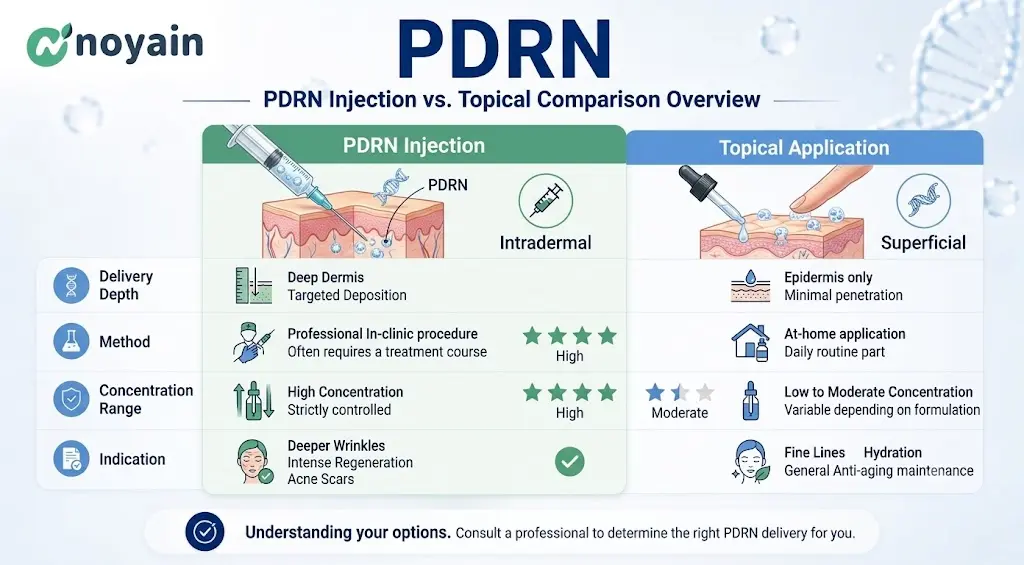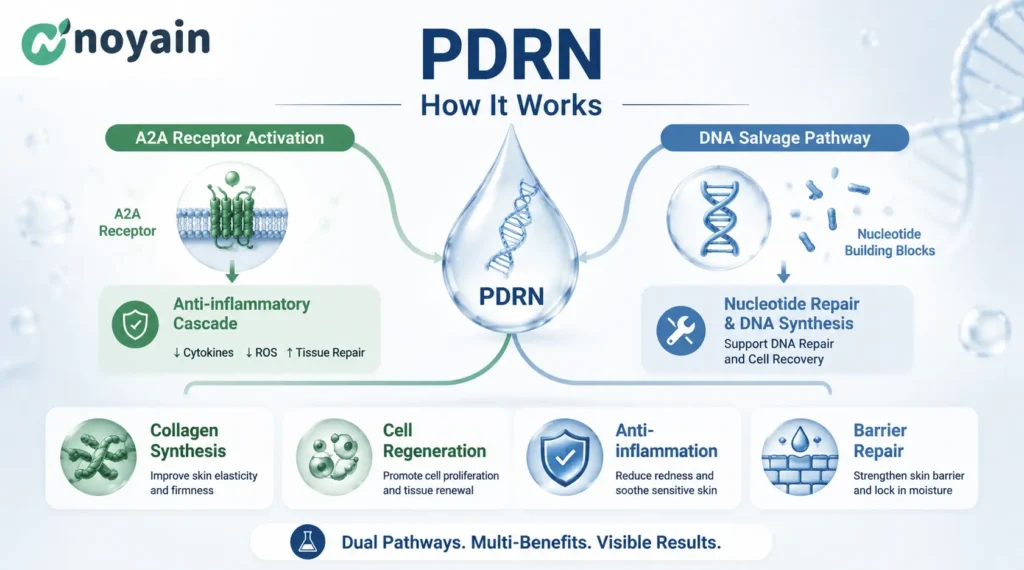
Walk through the modern skincare market and one pattern becomes obvious: many serums have different ingredient stories but surprisingly similar first-use experiences. Whether a product highlights peptides, exosomes, or salmon DNA, the immediate skin feel is often a familiar hydrating texture.
Korean skincare brands have found a way to stand out. By combining polydeoxyribonucleotide (PDRN, listed as Sodium DNA on ingredient labels) with microscopic spicules, they create products that offer something conventional serums often lack: an immediate, distinctive sensory experience.
Two products illustrate this strategy particularly well: VT PDRN Reedle Shot 100 and medicube PDRN Pink Collagen Exosome Shot.
Both combine trending skincare concepts with a clinic-inspired positioning, but their approaches to ingredient selection, pricing, sensory experience, and product development are quite different.
For global skincare brands, OEM/ODM manufacturers, and cosmetic formulators, these products offer valuable lessons in turning raw material innovations into commercially attractive skincare products.
The Commercial Power of the Prickle: Why Brands Pair PDRN with Spicules
PDRN and spicules bring two different types of value to a skincare formula.
PDRN provides a recognizable skin-conditioning and skin-renewal ingredient story, drawing attention from the growing market for advanced repair and anti-aging skincare.
Spicules introduce a different dimension: a noticeable physical sensation during application.
Unlike conventional serums, spicule-based products can create an immediate tingling experience when applied to the skin. Consumers can feel the difference from the first application, making the product more memorable.
This combination gives brands several commercial advantages:
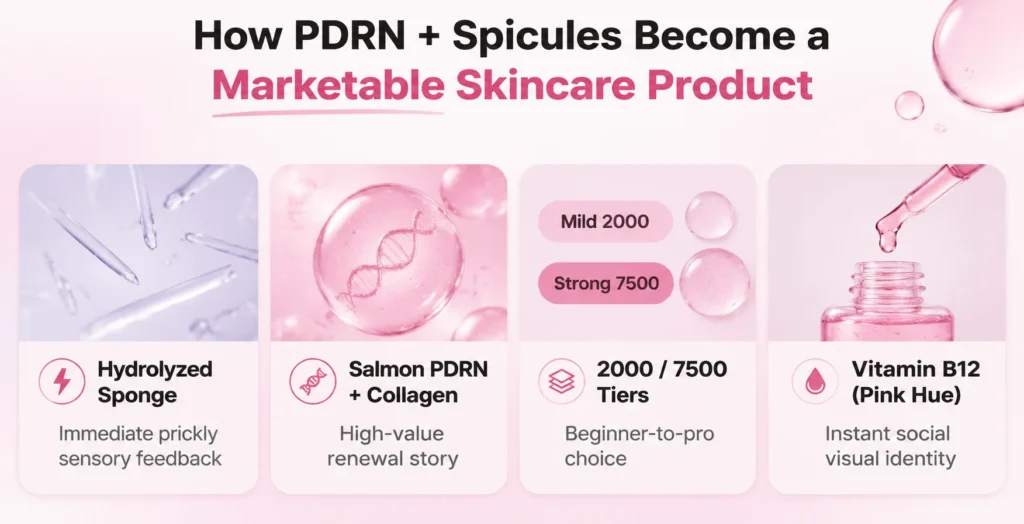
- Immediate Sensory Feedback: A distinctive tingling sensation makes the application experience more noticeable.
- Product Differentiation: Spicule serums stand apart from conventional hyaluronic acid, peptide, and moisturizing serums.
- Higher Perceived Value: Combining a physical delivery concept with premium actives such as PDRN supports a more sophisticated product position.
- Memorable Skincare Ritual: The application experience gives consumers something distinctive to discuss and share on social media.
- Product Tiering: Different spicule grades and use levels allow brands to develop mild, daily-use, and intensive product versions.
This is one reason Hydrolyzed Sponge spicules have become an interesting ingredient for modern skincare development.
The commercial opportunity is not simply about adding two trending ingredients to one bottle. It is about combining an ingredient story with an experience consumers can immediately recognize.
Case Study 1 — VT PDRN Reedle Shot 100: Extending an Established Product Franchise
VT Cosmetics had already established strong market recognition with its Reedle Shot range before introducing PDRN into this product concept.
According to a September 2026 VT Cosmetics press release, the broader Reedle Shot line has sold more than 87 million units worldwide.
This figure belongs to the overall Reedle Shot range, not the individual PDRN Reedle Shot 100 product.
The achievement is still commercially significant. VT had already built consumer familiarity with its distinctive spicule-based product experience, making it easier to introduce new ingredient concepts within an established product family.
A Familiar Format with a New Ingredient Story
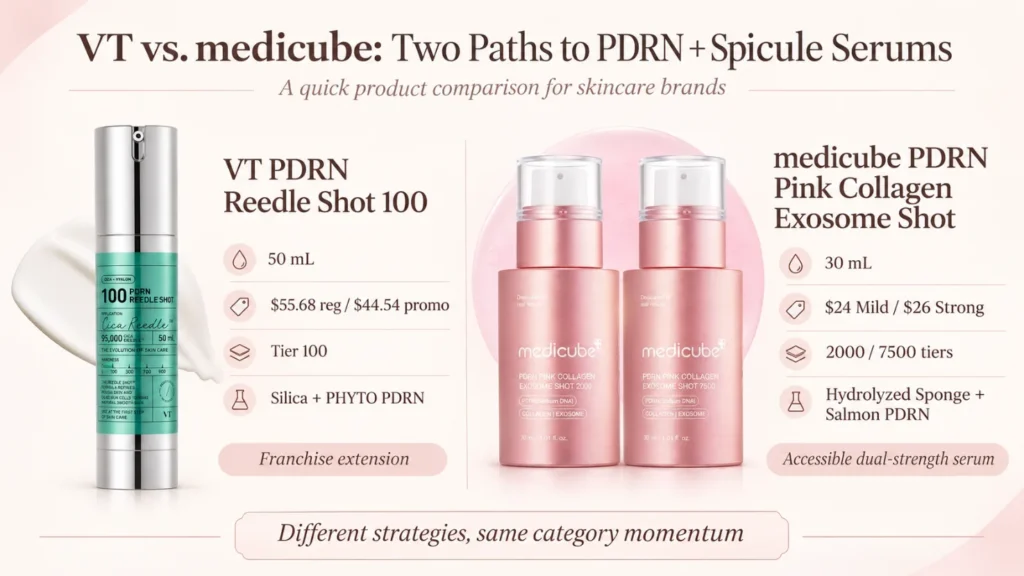
The VT PDRN Reedle Shot 100 comes in a 50 mL bottle and follows the brand’s established numerical product architecture.
The 100 version is positioned as a beginner-friendly Step Zero booster, applied after cleansing and before the rest of the skincare routine.
At the time of checking, the official global storefront displayed a regular price of $55.68 and a promotional price of $44.54.
Rather than creating an entirely new product category, VT uses a familiar format and adds another ingredient story to its existing Reedle Shot concept.
Its PDRN positioning is particularly interesting.
VT promotes a vegan PDRN concept sourced from Korean ginseng, offering an alternative to conventional fish-derived PDRN positioning.
The published INCI also lists:
- Panax Ginseng Root Extract
- Sodium DNA (0.05 ppm)
- Niacinamide
- Silica
- Hyaluronic Acid
- Peptides
One detail deserves attention from ingredient buyers: the product-specific INCI lists Silica rather than Hydrolyzed Sponge, while VT’s broader Reedle Shot technology is described in its corporate communications as using marine sponge-derived spicules.
This is a useful reminder for product developers: always examine the actual ingredient list of the individual SKU rather than assuming every product within a brand franchise uses an identical raw material system.
What can other brands learn from VT?
A successful product technology can become a platform for future product development.
Once consumers recognize a particular application experience, brands can introduce new active ingredients, different skin concerns, and new product stories without having to educate the market from the beginning.
VT’s approach also illustrates how different PDRN source concepts can be used to create distinct market positioning. For a closer look, see our article on different sources of PDRN, including salmon-derived and plant-based alternatives.
Case Study 2 — medicube PDRN Pink Collagen Exosome Shot: Multi-Active Stacking
For brands specifically interested in combining Hydrolyzed Sponge with salmon-derived PDRN, medicube provides an especially relevant market example.
Its PDRN Pink Collagen Exosome Shot features both Hydrolyzed Sponge and Sodium DNA in its published ingredient list.
More importantly, medicube demonstrates how several popular skincare concepts can be brought together in one commercially recognizable product.
Two Product Strengths, One Product Concept
The serum is available in a compact 30 mL format with two versions:
- Mild 2000: An entry-level option.
- Strong 7500: A more intensive product option.
The numerical naming gives consumers an easy way to distinguish the two versions and allows the brand to build a product ladder within the same category.
At the time of checking on November 19, 2026, medicube’s official US storefront displayed a regular price of $24 and a promotional price of $22. Prices and selected-variant displays may change.
The product’s price positioning is also interesting.
Compared with VT’s $55.68 regular price for 50 mL, medicube offers a lower entry price and a smaller package. This makes it easier for consumers who are curious about spicule skincare to try the concept without committing to a higher-priced product.
Ingredient Stacking: More Than Just PDRN
The public INCI list includes several ingredients that support the product’s overall positioning:
| Ingredient | Role in the Product Concept |
|---|---|
| Hydrolyzed Sponge | Distinctive spicule experience |
| Sodium DNA | Salmon PDRN ingredient story |
| Collagen Extract | Collagen-focused skincare positioning |
| Niacinamide | Brightening and skin-conditioning |
| Panthenol | Moisturizing and skin comfort |
| Cyanocobalamin | Part of the formula’s visual and ingredient identity |
| Exosome-related ingredients | Exosome-themed product story |
Medicube also highlights 99% Pure Salmon PDRN in its marketing. Its product-page explanation identifies this figure with the raw material’s purity characteristics, rather than the percentage of PDRN in the finished serum.
The Mild 2000 and Strong 7500 labels are part of the product’s strength architecture. They should not be mistaken for the finished formula’s Sodium DNA concentration, which is not disclosed in the official US ingredient list.
Turning Formula Design into a Recognizable Brand Experience
Another interesting detail is the product’s pink appearance.
Medicube describes the natural pink hue as coming from the formula’s original ingredients rather than artificial coloring. Cyanocobalamin is among the ingredients listed in its INCI.
This gives the product a recognizable visual identity that connects with medicube’s wider Pink PDRN product range.
The application instructions are also part of the product concept.
Medicube positions the serum as the first step after cleansing and instructs consumers to gently rub and press the formula into the skin. It then recommends following with its PDRN serum and cream, or another water-based moisturizer.
This creates a natural connection between the product and the rest of the brand’s skincare range.
The result is more than a single serum. It is a product concept built around sensory experience, recognizable ingredients, visual identity, and a complementary skincare routine.
VT vs. medicube: What Makes Their Strategies Different?
The two products demonstrate different approaches to combining trending ingredients with an established consumer experience.
| Comparison | VT PDRN Reedle Shot 100 | medicube PDRN Pink Collagen Exosome Shot |
|---|---|---|
| Bottle Size | 50 mL | 30 mL |
| Regular Listed Price | $55.68 | $24.00 |
| Promotional Price at Check | $44.54 | $22.00 |
| Spicule-Related INCI | Silica | Hydrolyzed Sponge |
| PDRN Positioning | Ginseng-derived Vegan PDRN concept | Salmon PDRN |
| Sodium DNA | 0.05 ppm listed | Listed; percentage not disclosed on US INCI |
| Product Versions | 100 tier | Mild 2000 / Strong 7500 |
| Main Strategy | Established franchise extension | Multi-active product positioning |
Prices reflect the official storefront displays checked on November 19, 2026. Promotions and variant-specific prices may change.
The key difference is their product development approach.
VT builds on an established product franchise and introduces a new PDRN ingredient story.
medicube combines several high-interest ingredients and creates a more accessible product concept with two distinct strength options.
Both approaches offer useful inspiration for brands planning their own PDRN spicule skincare range.
4 Product Development Lessons for Global Skincare Brands
What can international skincare brands learn from these two products?
01. Make Sensory Experience Part of the Selling Point
Consumers can immediately notice the distinctive tingling experience of spicule products.
Rather than treating this as an incidental formulation characteristic, brands can make it part of the product identity through packaging, application instructions, and marketing content.
A distinctive skin feel can make a product easier to recognize and remember.
02. Build a Product Strength Ladder
Mild and intensive versions give brands more opportunities to reach different consumer groups.
Instead of launching several unrelated products, brands can develop a connected product family around different spicule grades, use levels, and application experiences.
This also creates opportunities for future product extensions.
03. Give PDRN a Clear Ingredient Story
PDRN is not limited to one sourcing concept.
Salmon-derived Sodium DNA and plant-based PDRN concepts can support different brand positioning strategies.
The important decision is to match the raw material source, specification, formulation approach, and marketing story.
Explore our guide to different PDRN sources and their application potential.
04. Connect Product Design with the Skincare Routine
A successful serum does not have to work as an isolated product.
Brands can build complementary routines around a spicule booster, hydrating serum, barrier cream, or other functional skincare products.
Packaging, product color, application instructions, and product naming all contribute to how consumers understand the range.
For product developers looking to turn these ideas into a market-ready concept, explore our PDRN Skincare Product Development Guide. It covers six key stages, from product positioning and format selection to ingredient combinations, testing, and manufacturing feasibility.
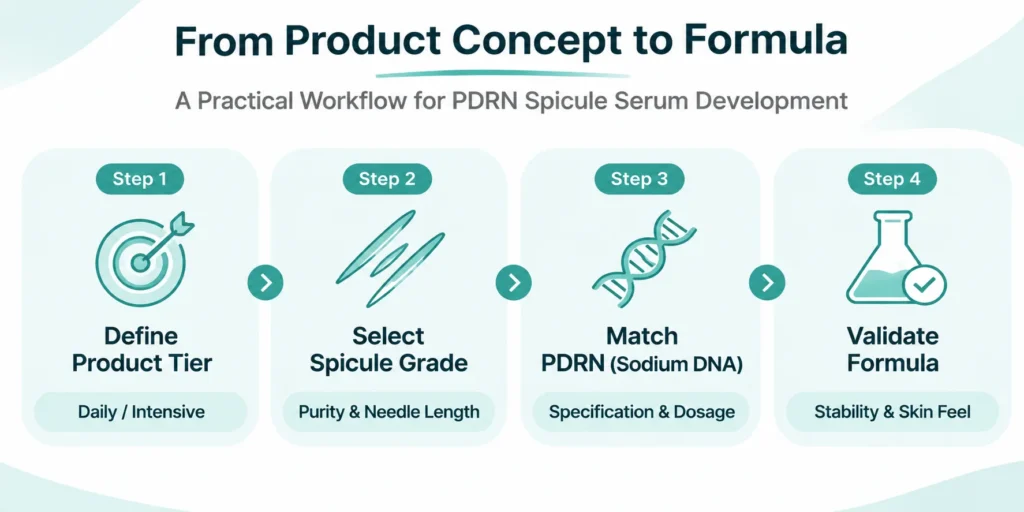
From Product Concept to Lab Bench: Selecting the Right Raw Materials
A successful PDRN spicule serum starts with matching raw material specifications to the intended product experience.
At NOYAIN Biochemicals, we supply two ingredient categories relevant to this type of product development.
Hydrolyzed Sponge: Selecting Spicule Grades
NOYAIN’s Hydrolyzed Sponge is a purified, freshwater sponge-derived spicule powder.
Available grades include:
| Grade | Purity | Spicule Length |
|---|---|---|
| Long Needle | 99% | 350–450 μm |
| Standard Needle | 99% | 200–280 μm |
| Standard Needle | 97% | 200–280 μm |
Different spicule specifications offer different starting points for product development.
Longer spicules can create a more pronounced sensory experience, while standard grades offer another option for balanced skincare concepts.
The right selection depends on the intended product positioning, use level, formula base, and target skin feel.
For a closer comparison, read our guide to Hydrolyzed Sponge purity and spicule grade selection.
Salmon Sodium DNA: Building the PDRN Ingredient Story
For brands developing salmon PDRN skincare, NOYAIN supplies cosmetic-grade Sodium DNA.
Our current product specifications include:
- INCI: Sodium DNA
- Assay: 99.8%
- Hyperchromicity: 47.7%
- Recommended use level: 0.02–1%
- Source: Wild Pacific salmon
Sodium DNA can be incorporated into serums, ampoules, creams, masks, and other water-based skincare concepts.
For practical guidance on addition temperature, mixing, and formula development, see our PDRN formulation guide.
What Formulators Should Consider
Hydrolyzed Sponge is nearly insoluble in water and oil, so it needs to be properly dispersed and suspended in the finished formula.
During development, formulators should pay attention to:
- Spicule dispersion and suspension uniformity
- Viscosity and sedimentation
- Pump and packaging compatibility
- Target sensory intensity
- PDRN processing conditions and stability
- Finished-product performance and skin compatibility
The Hydrolyzed Sponge safety guide also provides practical considerations for grade selection, use level, application method, and finished-product evaluation.
A successful product is not simply a combination of popular ingredients. It requires the right raw material specifications, a suitable formulation base, and a product experience that matches the brand’s positioning.
Develop Your Next PDRN + Spicule Skincare Concept with NOYAIN
The success of VT and medicube demonstrates how distinctive sensory experiences and well-positioned active ingredients can create new opportunities in the skincare market.
For brands looking to develop their own PDRN spicule serums, NOYAIN can support raw material sourcing and initial ingredient evaluation.
Explore our Hydrolyzed Sponge and Salmon Sodium DNA specifications, or contact our team to discuss your product development requirements.
Request PDRN & Spicule Samples
Product References
- VT PDRN Reedle Shot 100 — Official Product Page
- medicube PDRN Pink Collagen Exosome Shot — Official Product Page
- VT Reedle Shot — Global Sales Announcement
More Than Ingredients. A Little More Value.