
Rose PDRN Essence
PLANT-DERIVED

- Non-animal-origin positioning
- Formulation-ready liquid
- Four complementary actives
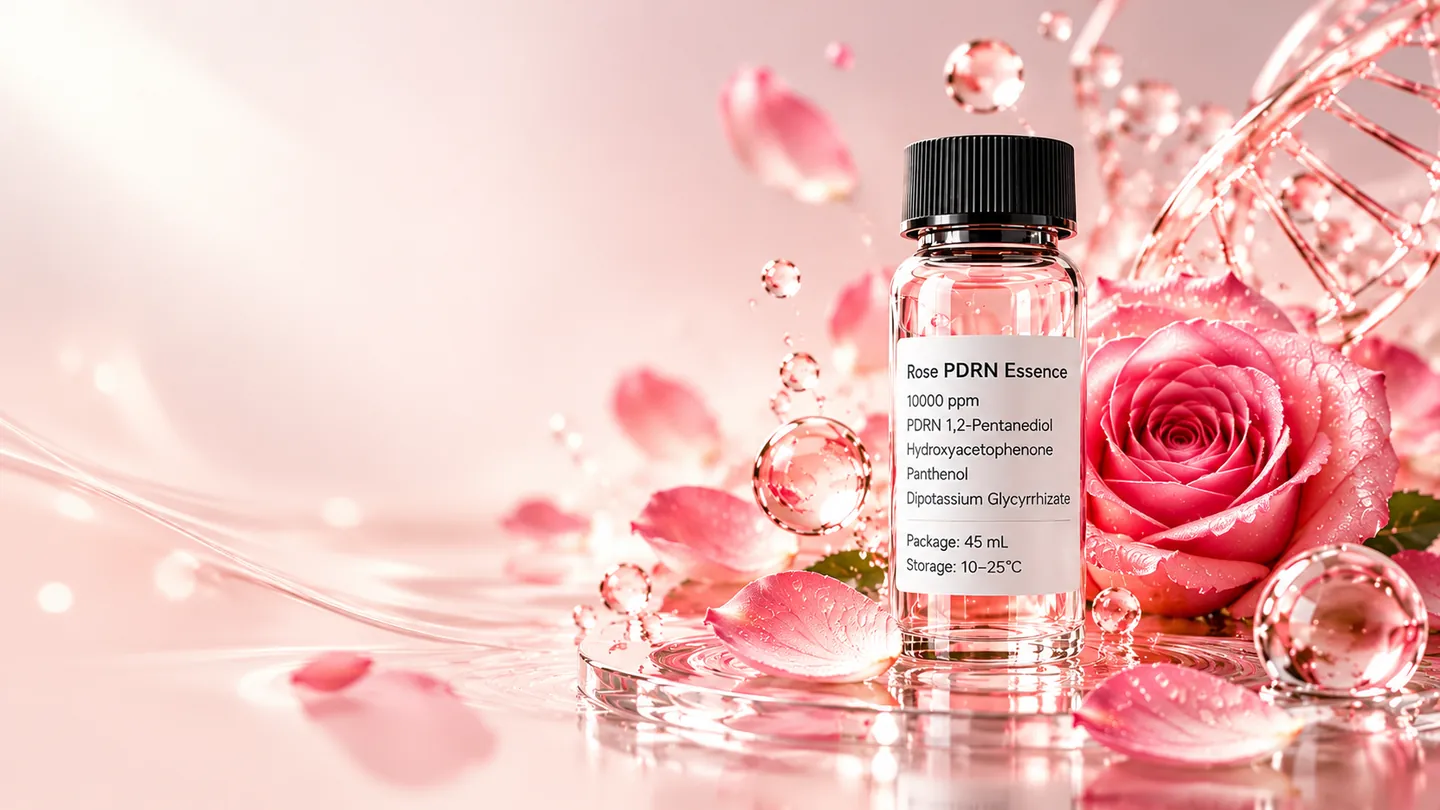
BOTANICAL ACTIVE / FORMULATION-READY
Bring the PDRN Trend to Plant-Based Skincare.
Capture the high-growth PDRN market without compromising your vegan standards. Rose PDRN Essence combines non-animal-origin, rose-derived PDRN with hyaluronic acid, panthenol, and dipotassium glycyrrhizate in a clear, formulation-ready liquid. Designed to eliminate separate powder hydration steps, it provides a practical foundation for vegan-positioned serums, ampoules, and skin-comfort formulations.
45 mL R&D evaluation sample · Technical documentation on request
Product concept illustration · Simulated label
Features non-animal-origin, rose-derived DNA fragments tailored for vegan-focused skincare development.
Pre-blended, nearly colorless liquid that eliminates the need for separate PDRN powder hydration and dispersion.
Pairs emerging botanical PDRN research with established moisturizing and soothing co-actives to support immediate hydration feel and skin comfort.
Available in 5,000 ppm and 10,000 ppm concentrations to flexibly match target PDRN dosage levels across different formula budgets.
When developing a new PDRN product line, R&D and marketing teams often weigh plant-derived PDRN against traditional marine (salmon) PDRN. As a supplier of both formats, we recommend selecting based on your brand's core positioning:
Explore Salmon PDRNPLANT-DERIVED
MARINE-DERIVED
While marine-derived PDRN holds a longer history of clinical documentation, its animal origin automatically disqualifies it from vegan product lines. Rose-derived PDRN unlocks the sought-after "PDRN / Botanical DNA" marketing narrative for plant-based and vegan-positioned brands.
Because published research on botanical PDRN is still an emerging field compared to marine equivalents, relying solely on a single botanical DNA extract carries formulation risk. By combining rose-derived PDRN with Hyaluronic Acid, Panthenol, and Dipotassium Glycyrrhizate, this blend secures both angles: Rose PDRN drives the Skin Longevity storytelling, while the three classic co-actives support immediate hydration feel and skin comfort through established moisturizing and soothing mechanisms.
One liquid format. Botanical innovation supported by established skincare co-actives.
Skin Longevity Story
Non-animal-origin botanical DNA fragments associated in emerging research with cellular vitality, collagen protection, and environmental stress defense.
Hydration Support
Attracts and retains moisture to support a smoother, plumper-looking skin feel in aqueous systems.
Barrier Care
Helps maintain stratum corneum hydration and reinforces skin barrier care, complementing PDRN in restorative concepts.

Skin Comfort
A licorice-derived soothing agent valued for calming stressed skin and supporting overall formula gentleness.
A 2025 peer-reviewed study published in Current Issues in Molecular Biology (Cavagnino et al., 2025) evaluated a 0.1% rose-derived PDRN test preparation across stressed human keratinocyte and ex vivo human skin explant models (investigating cellular longevity markers including mitochondrial quality control, autophagy pathways, and matrix integrity). The published findings highlight four key areas of protective efficacy against pollution and UV-induced stress:
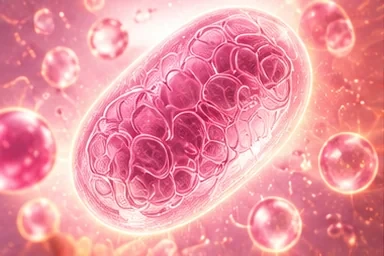
BaP + UVA · human keratinocytes
Demonstrated 94% protective efficacy for mitochondrial membrane polarization in human keratinocytes exposed to BaP + UVA stress.
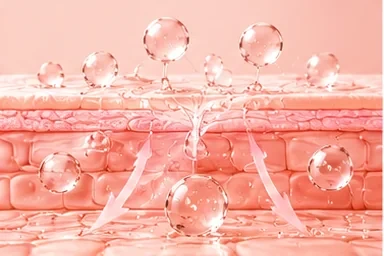
PM10 + UVA · ex vivo human skin
Showed 81% protective efficacy for both Collagen I integrity and MMP-1 regulation in ex vivo human skin explants under PM10 + UVA stress.
PM10 + UVA · ex vivo human skin
Counteracted stress-induced IL-1α elevation (100% protective efficacy) in ex vivo human skin explants exposed to PM10 + UVA.
PM10 + UVA · ex vivo human skin
Demonstrated 56% protective efficacy against dermal protein carbonylation in ex vivo human skin explants under PM10 + UVA stress.
Published research — not tested on this commercial blend. Reference: Cavagnino, A., et al. (2025). Current Issues in Molecular Biology, 47(12), 971 (DOI: 10.3390/cimb47120971). The percentages above reflect relative biomarker protection reported in published laboratory/ex vivo literature for a specific 0.1% rose-derived PDRN test material. They do not represent human clinical efficacy or direct testing on NOYAIN’s commercial Rose PDRN Essence blend. Brands should conduct independent testing to substantiate final product claims.
Practical specifications for lab screening and purchasing review.
| PARAMETER | INFORMATION |
|---|---|
| Product Name | Rose PDRN Essence (Rose PDRN) |
| Botanical Source | Rose-derived botanical DNA (Non-animal origin) |
| Labelled Strengths | 5,000 ppm / 10,000 ppm |
| Appearance | Clear, nearly colorless liquid |
| Key Co-Actives | Hyaluronic Acid, Panthenol, Dipotassium Glycyrrhizate |
| Preservation Support / Carriers | 1,2-Pentanediol, 1,2-Hexanediol, Hydroxyacetophenone (Note: Listed by component name; please request the TDS for official INCI declaration and composition breakdown) |
| Storage & Shelf Life | Store at 10–25°C in a tightly sealed container; 24 months |
| Sample & Bulk Supply | 45 mL R&D evaluation sample / Commercial packaging confirmed upon request |
Transparent aqueous serum formats
Barrier-support emulsions

Water-based mask essence
Lightweight hydration formats
Product-development directions that connect botanical PDRN with practical formulation goals.
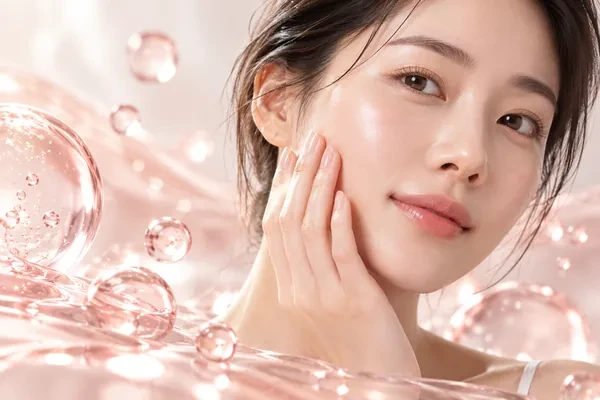
Plant-based PDRN concepts for skin longevity positioning.
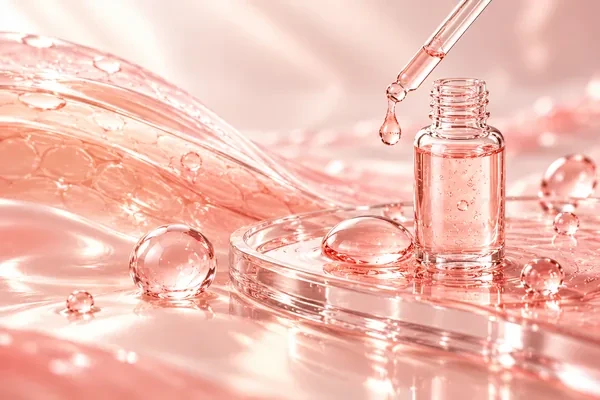
Soothing and skin-comfort formulation direction.
Hydration and comfort-focused cosmetic routines.
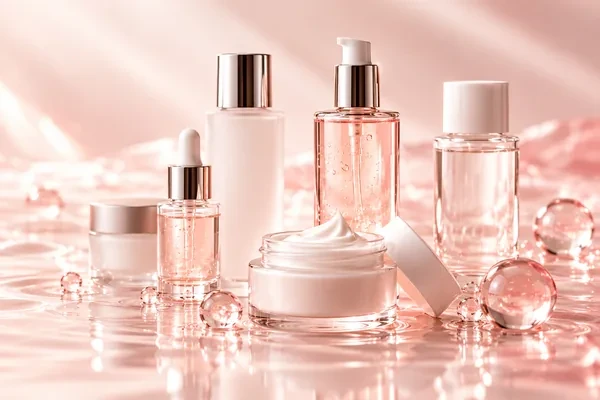
Ingredient-focused modern skincare formulation concepts.
 Ingredient concept illustration
 Ingredient concept illustration
 Ingredient concept illustration
Explore ingredient evaluation and development resources.
Selected reading for R&D, ingredient evaluation and procurement teams.

PDRN INSIGHTS
Understand the difference between invasive administration and topical cosmetic care.
Read article ↗
PDRN INSIGHTS
A practical introduction to PDRN terminology, evidence and quality control.
Read article ↗
PDRN INSIGHTS
A manufacturing and quality-focused guide for formulators and buyers.
Read article ↗Choose Rose PDRN Essence if your project requires a non-animal-origin / vegan-friendly positioning, or if you prefer a convenient, pre-blended liquid with built-in moisturizing and soothing co-actives. If your brand does not require vegan claims and prioritizes single-ingredient purity with extensive clinical history, please explore our High-Purity Salmon PDRN (Sodium DNA) Powder.
These values indicate the labelled concentration of rose-derived PDRN within the raw material blend itself, rather than a direct tier of clinical efficacy. Choosing 10,000 ppm allows formulators to achieve twice the theoretical labelled PDRN content in the finished product compared to 5,000 ppm at the same inclusion level (e.g., adding 2% of the 10,000 ppm blend yields a theoretical 200 ppm of rose PDRN, vs. 100 ppm with the 5,000 ppm grade), offering greater flexibility in water-phase budgeting.
Yes. We assist R&D and regulatory teams by providing available COA, TDS, SDS, official INCI breakdowns, and raw material non-animal-origin statements. Final consumer-facing vegan claims should be verified across your complete finished formula and supply chain.
We supply 45 mL samples for laboratory evaluation. Please click Request Sample or contact our team with your company details, target application, preferred concentration (5,000 or 10,000 ppm), and estimated volume to confirm sample terms and bulk quotation.
Partner with NOYAIN for botanical active sourcing and technical support. Contact us today to request a 45 mL evaluation sample, technical dossier (TDS / COA / SDS), or bulk quotation for 5,000 ppm and 10,000 ppm grades.