
- **Protect from light and oxygen** – Use opaque, UV-protective, or airless packaging whenever possible.
- **Add during cool-down phase** – Incorporation below 40 deg C is recommended to protect retinoid stability.
- **Avoid strong oxidizing agents** – HPR should not be exposed to harsh oxidative conditions.
- **Control active dose carefully** – Calculate HPR active content when using 10% solution formats.
- **Build in comfort actives** – Retinoid products benefit from barrier-support and soothing systems.
- **Verify compliance by market** – Retinoid rules and warning requirements vary by region.
Cosmetic Active System
Hydroxypinacolone Retinoate (HPR)
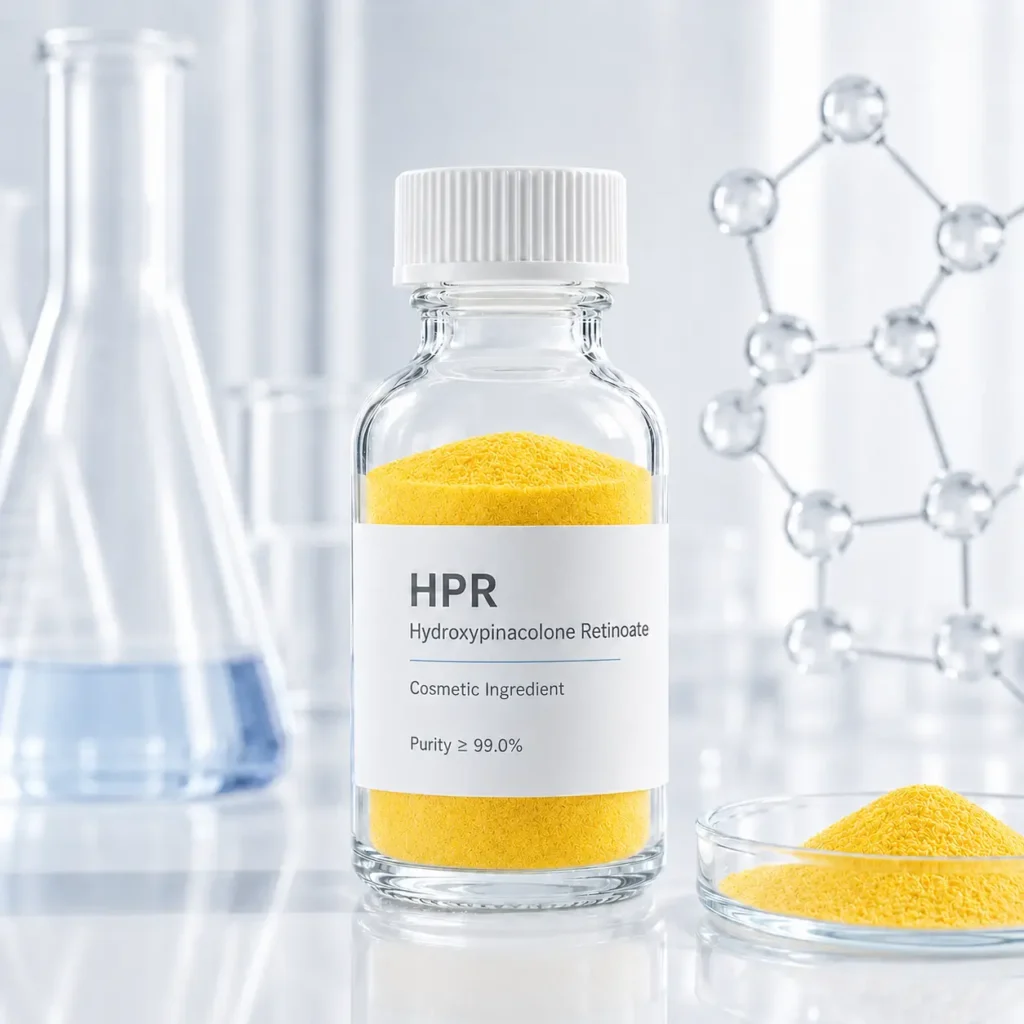
Hydroxypinacolone Retinoate (HPR) is a next-generation cosmetic retinoid and ester of all-trans retinoic acid. Designed to interact directly with retinoic acid receptors, it supports wrinkle-care, skin renewal, smoother texture, and premium retinol-alternative positioning with a lower irritation profile than many traditional retinoid systems.
INCI
Hydroxypinacolone Retinoate
CAS
2039-63-0
Function
Anti-aging, skin renewal, texture refinement, wrinkle-care, retinol alternative
Shelf Life
24 months
Product Overview
Advanced Retinoid Solution for Modern Anti-Aging Formulations
Hydroxypinacolone Retinoate is a modern retinoid active developed for formulators who want the performance narrative of vitamin A technology with improved consumer tolerance and easier premium positioning. Traditional retinoids such as retinol and retinyl esters must be converted through the skin's metabolic pathway before they can interact with retinoic acid receptors. HPR is a retinoic acid ester designed to bind directly to retinoic acid receptors, making it a compelling choice for high-performance anti-aging products focused on skin renewal, wrinkle-care, and visible texture improvement.
For cosmetic manufacturers and OEM/ODM developers, HPR offers a strong balance between efficacy story and formulation flexibility. It can be used in night serums, creams, eye-area products, ampoules, and retinoid systems for consumers who want smoother, more refined skin but may struggle with the dryness and discomfort often associated with conventional retinol formulas. Its low water solubility makes it especially suitable for oil-phase, solvent-assisted, encapsulated, and DMI-based delivery systems.
HPR is commonly supplied as high-purity crystalline powder or as a 10% active solution in Dimethyl Isosorbide. This allows formulators to choose between maximum active control and easier processing, depending on the desired product format. When combined with barrier-support and soothing ingredients such as niacinamide, ceramides, panthenol, bisabolol, and peptides, Hydroxypinacolone Retinoate can help build a refined retinoid product experience suitable for premium anti-aging and sensitive-skin renewal lines.
Skincare principles
HPR Mechanism of Action
Collagen Support
Hydroxypinacolone Retinoate supports retinoid-signaling pathways that are associated with fibroblast activity and extracellular matrix maintenance. In anti-aging formulations, this makes HPR relevant to wrinkle-care, firmness, and photoaging-focused positioning. Its direct receptor interaction allows formulators to communicate a differentiated retinoid mechanism compared with traditional retinol conversion pathways.
Elastin Protection
Retinoid signaling helps support dermal structure by influencing matrix turnover and the appearance of skin elasticity. HPR can be used in formulas designed to address loss of bounce, roughness, and visible signs of photoaging, especially when paired with peptides, antioxidants, and barrier lipids for a broader anti-aging strategy.
Cellular Renewal
HPR helps support epidermal renewal processes that are relevant to smoother texture, improved radiance, and refined skin appearance. Because it is positioned as a lower-irritation retinoid option, it can encourage better routine consistency, which is essential for retinoid-based cosmetic products.
Skin Barrier Improvement
HPR itself is an active renewal ingredient, so comfort-focused formulation design is important. Pairing HPR with niacinamide, ceramides, panthenol, sodium hyaluronate, and bisabolol helps support the skin barrier and improves the sensory experience of retinoid products. This is especially useful for sensitive-skin retinoid concepts, first-retinoid products, and eye-area formulations.
Suitable for the following applications
Recommended Applications
Anti-Aging Serums
Primary application for HPR. Supports wrinkle-care, smoother texture, improved radiance, and premium retinoid positioning in lightweight leave-on formats.
Night Creams
A strong fit for overnight renewal products that combine HPR with ceramides, niacinamide, peptides, and moisturizers for a more comfortable retinoid experience.
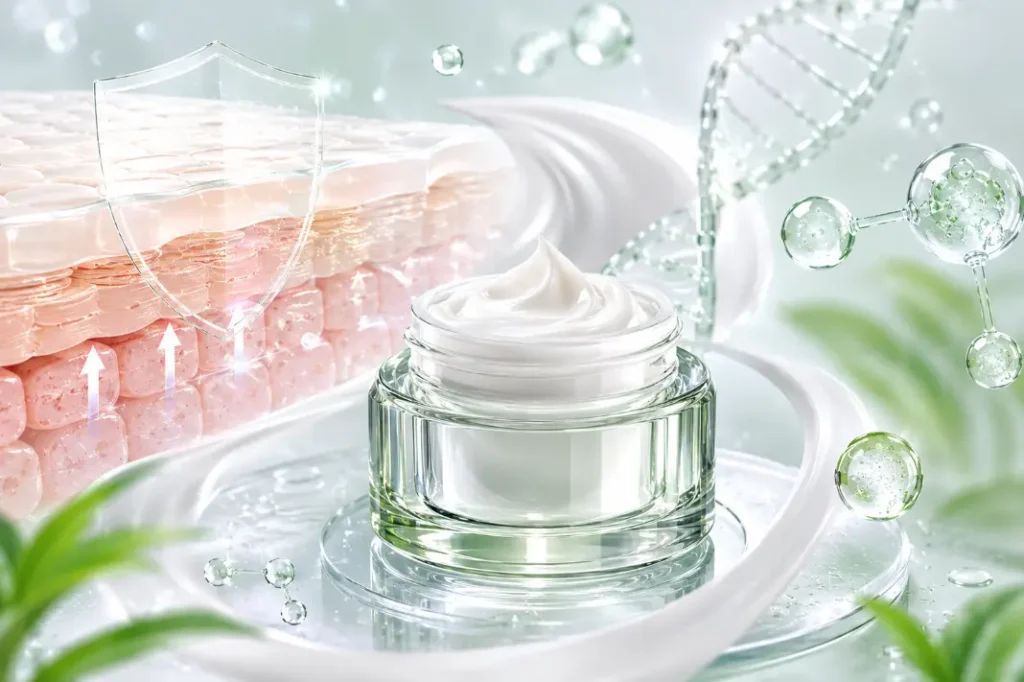
Eye Creams and Eye Serums
Suitable for low-dose fine-line and texture-care products around the eye area. Final formula tolerance and safety testing should guide positioning.
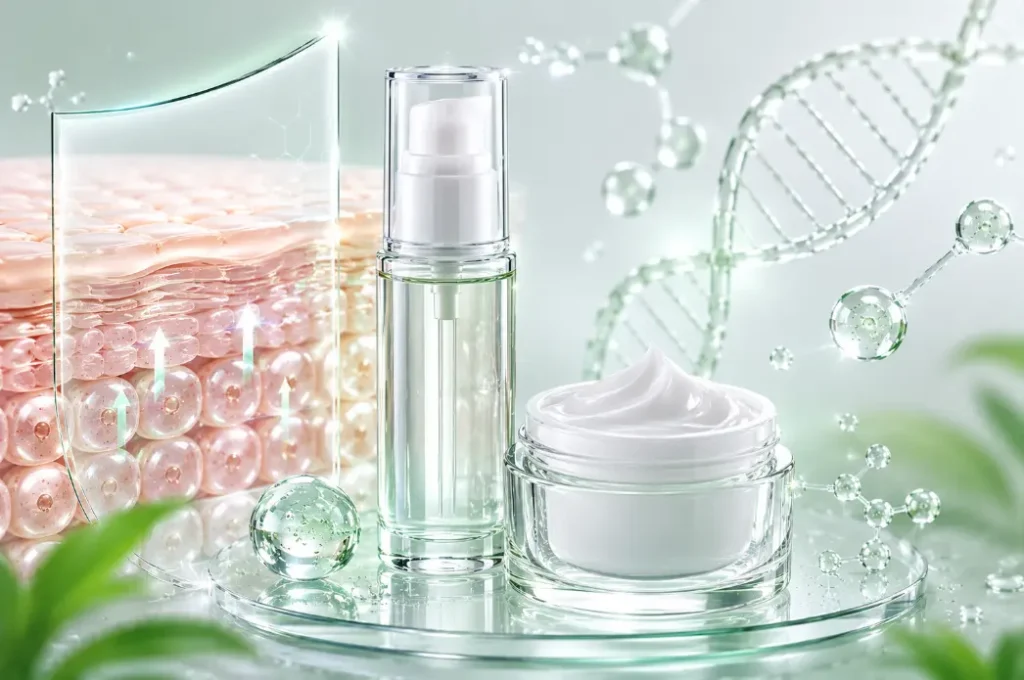
Retinoid Ampoules
Concentrated active systems for professional or premium home-care routines. HPR can be delivered through DMI, encapsulated, or oil-compatible systems.
Product's own advantages
What Makes HPR a Smarter Retinoid Choice?
Direct Retinoid Receptor Story
HPR is designed to interact directly with retinoic acid receptors, giving formulators a clear mechanism-based narrative that differentiates it from retinol and retinyl esters that rely on multi-step conversion.
Lower Irritation Positioning
HPR is valued for retinoid-like performance with a gentler user experience. This supports sensitive-skin retinoid products, beginner retinoid products, and night-care lines where long-term routine adherence matters.
Premium Retinol Alternative
Consumers understand retinol but often associate it with dryness, peeling, and discomfort. HPR allows brands to build a more advanced retinoid story while still connecting to familiar anti-aging expectations.
Flexible Commercial Formats
HPR can be supplied as high-purity powder or as a 10% DMI solution. Powder gives formulators maximum active control, while solution formats simplify dosing, dispersion, and scale-up.
Strong Synergy with Comfort Actives
HPR works well in formulas containing niacinamide, ceramides, panthenol, bisabolol, hyaluronic acid, and peptides. These combinations help create retinoid systems that feel more elegant and tolerable.
High-Value Product Applications
HPR fits premium serums, eye creams, ampoules, night creams, professional skincare, and dermocosmetic-positioned product ranges where ingredient differentiation is commercially important.
Technical Specifications
Product Technical Parameters
Parameter | Specification |
|---|---|
Brand Name | NOYAIN® HPR |
INCI Name | Hydroxypinacolone Retinoate |
Appearance | Yellow to light-yellow crystalline powder |
Purity | 99.0% |
Recommended Dosage | 0.05%-0.5% active HPR in finished leave-on products |
Solubility | Practically insoluble in water; compatible with selected oils, DMI, and solvent-assisted systems |
pH Stability | 5.0-7.0 |
Application | Anti-aging, skin renewal, texture refinement, wrinkle-care, retinol alternative |
Storage Condition | Store at 2-8 deg C in sealed container, protected from light, heat, oxygen, and moisture |
Shelf Life | 24 months |
why choose us
Why Choose Our HPR for Skincare Formulations?
Powerful retinoid narrative
Clear differentiation from traditional retinol conversion pathways.
Low use level
Active HPR is typically used at 0.05%-0.5% in finished leave-on products.
Solution-format convenience
0% HPR in DMI simplifies dosing and manufacturing.
Premium sensory design
Works well in elegant anhydrous, emulsion, serum, and ampoule systems.
Barrier-support compatibility
Pairs effectively with niacinamide, ceramides, panthenol, bisabolol, and sodium hyaluronate.
Encapsulation potential
Suitable for stabilized retinoid delivery systems where controlled release and light protection are priorities.
Kind tips
Formulation Precautions
related products
Other related products
Related Documents
Technical Support Materials
COA Document
Get For FreeTDS (Technical Data Sheet)
Get For FreeMSDS (Material Safety Data Sheet)
Get For FreeFormulation Guide
Get For FreeRelated Topics
Product-related articles
Frequently Asked Questions
- What is Hydroxypinacolone Retinoate used for in cosmetic formulations?Hydroxypinacolone Retinoate is used as an anti-aging retinoid active for leave-on skincare products. It supports skin renewal, smoother texture, wrinkle-care positioning, improved radiance, and retinol-alternative product concepts. It is especially popular in night serums, creams, eye-area formulas, ampoules, and premium retinoid systems where brands want a strong vitamin A story with a more comfortable user experience than many conventional retinol formulas.
- How is Hydroxypinacolone Retinoate different from retinol?Retinol must be converted in the skin through a multi-step pathway before becoming retinoic acid, the form that interacts with retinoic acid receptors. Hydroxypinacolone Retinoate is a retinoic acid ester designed to interact directly with retinoic acid receptors. This gives HPR a differentiated mechanism story and helps explain why it is often positioned as a next-generation retinoid or retinol alternative in cosmetic formulations.
- What is the recommended dosage for HPR?The typical recommended dosage is 0.05%-0.5% active Hydroxypinacolone Retinoate in finished leave-on products. If using a 10% HPR solution in Dimethyl Isosorbide, the corresponding use level is generally 0.5%-5.0% of the solution. The final use level should be selected based on target market rules, product format, tolerance goals, stability results, and finished-product safety assessment.
- Is HPR suitable for sensitive-skin retinoid products?Yes, HPR is often selected for sensitive-skin and beginner-retinoid concepts because it is associated with a lower irritation profile than many traditional retinoid systems. However, it is still a retinoid active, so formulation design matters. Combining HPR with niacinamide, ceramides, panthenol, bisabolol, and humectants can help improve comfort. Final safety, patch, and stability testing should be performed before launch.
- Can Hydroxypinacolone Retinoate be used around the eye area?HPR can be used in eye creams and eye serums when formulated at an appropriate level and supported by final product tolerance testing. Eye-area products should use careful dosing, elegant delivery systems, and barrier-support ingredients. Avoid aggressive claim language and confirm regional cosmetic regulations before commercializing eye-area retinoid products.
- What formulation systems are compatible with HPR?HPR is practically insoluble in water, so it is best suited for oil-phase, solvent-assisted, encapsulated, nanoemulsion, or DMI-based systems. High-purity powder offers flexibility for advanced formulators, while 10% HPR in Dimethyl Isosorbide provides easier handling and dosing. It is commonly used in emulsions, serums, ampoules, night creams, and retinoid capsules.
- What stability precautions are needed for Hydroxypinacolone Retinoate?HPR should be protected from light, oxygen, heat, and harsh oxidizing conditions. Add it during the cool-down phase, preferably below 40 deg C, and use opaque, UV-protective, or airless packaging for finished products. Antioxidants and encapsulation systems can further support stability, but every formula should undergo accelerated and real-time stability testing.
- Can HPR be combined with niacinamide, peptides, or ceramides?Yes. HPR pairs well with niacinamide for barrier and tone support, peptides for collagen-support positioning, and ceramides for barrier reinforcement. These combinations are especially useful in premium anti-aging formulas where the goal is retinoid renewal plus improved comfort. HPR can also be paired with panthenol, bisabolol, sodium hyaluronate, and tocopherol in balanced night-care systems.
- Is Hydroxypinacolone Retinoate regulated like other retinoids?Regulatory requirements vary by market. Public Australian assessment information covers leave-on skincare products containing up to 0.5% active HPR under the assessed scope, while other regions may apply their own ingredient inventory, warning, and finished-product safety rules. Brands should confirm the latest requirements for each launch market before finalizing formula concentration, labeling, and claims.