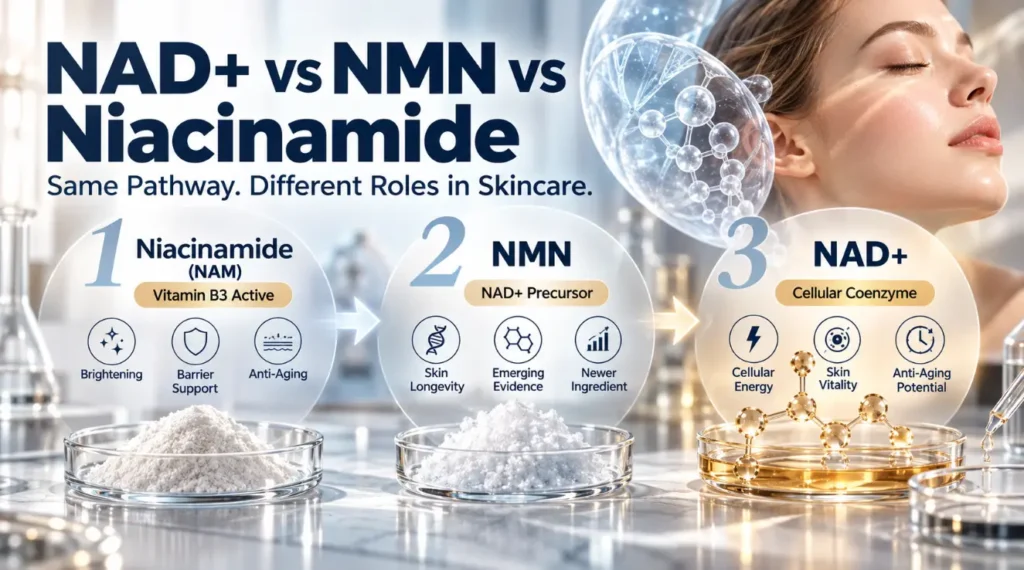
NAD+ (Nicotinamide Adenine Dinucleotide) is a fundamental coenzyme driving cellular energy metabolism, Sirtuin activation, and DNA repair — making it one of the most mechanistically compelling anti-aging actives emerging in cosmetic ingredient science. This article covers what NAD+ is, how it functions in skin cells, formulation considerations for product developers, and what the evidence says about its potential in topical skincare.
Key Takeaways
- NAD+ is a central coenzyme in every living cell, essential for mitochondrial ATP production, Sirtuin activation (SIRT1/3/6), and PARP-mediated DNA repair
- Skin NAD+ levels decline by up to 50% with age, contributing to reduced cellular energy, accumulated oxidative damage, and visible skin aging
- Topical NAD+ replenishment faces formulation challenges — the molecule is water-soluble, pH-sensitive, and requires cold-process handling below 40°C
- Evidence from in vitro studies supports NAD+ benefits for cellular energy restoration, antioxidant protection, and DNA repair support in human skin cell models
What Is NAD+?
Nicotinamide Adenine Dinucleotide (NAD+) is a coenzyme found in every living cell, functioning as an essential electron carrier in cellular metabolism. It exists in two interchangeable forms: NAD+ (the oxidized form, ready to accept electrons) and NADH (the reduced form, carrying electrons and hydrogen for energy release). This continuous cycling between the two forms acts as a molecular shuttle bus that transfers energy from nutrients into ATP — the universal energy currency of cells.
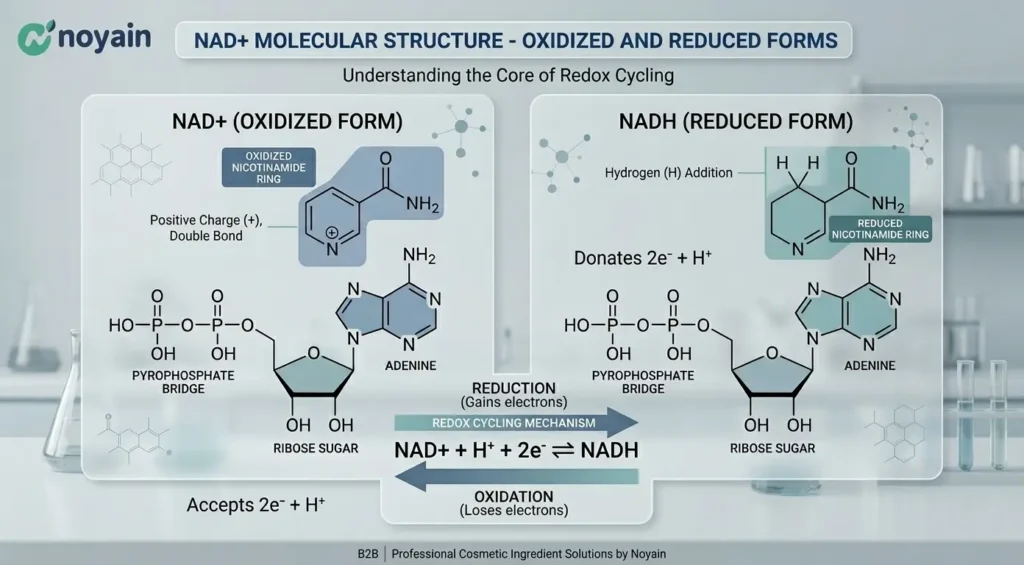
NAD+ serves three primary biological functions that are directly relevant to skin health:
- Energy metabolism — it is a critical coenzyme in the mitochondrial electron transport chain (Complex I and III), driving ATP production that powers all cellular activities in keratinocytes and fibroblasts
- Sirtuin activation — it is an essential substrate for SIRT1, SIRT3, and SIRT6, the longevity-regulating proteins that control cellular stress resistance, DNA repair, and metabolic regulation
- DNA repair — it serves as the substrate for PARP-1 (Poly ADP-Ribose Polymerase), the primary enzyme that senses and repairs DNA damage
For cosmetic ingredient formulators, NAD+ represents a mechanistically distinct category of anti-aging active — one that addresses skin aging not at the surface level but at the fundamental energy and repair machinery within skin cells.
Quick Specifications
| Parameter | Information |
|---|---|
| INCI Name | Nicotinamide Adenine Dinucleotide |
| CAS No. | 53-84-9 |
| Molecular Formula | C21H27N7O14P2 |
| Molecular Weight | 663.43 g/mol |
| Appearance | White to off-white crystalline powder |
| Solubility | Readily soluble in water |
| Recommended Dosage | 0.5% – 3.0% |
| Optimal pH Range | 2.5 – 6.0 |
Why Is NAD+ Gaining Attention in Skincare?
The interest in NAD+ for cosmetic applications stems from a well-documented biological observation: NAD+ levels decline significantly with age. Research indicates that by middle age, human tissues can experience up to a 50% reduction in NAD+ concentration compared to youthful levels. This decline has been linked to:
- Reduced mitochondrial function and ATP production in aging skin cells
- Diminished Sirtuin activity, compromising cellular stress resistance
- Impaired DNA repair capacity, allowing accumulation of UV-induced damage
- Disrupted circadian rhythm regulation, affecting overnight skin repair cycles
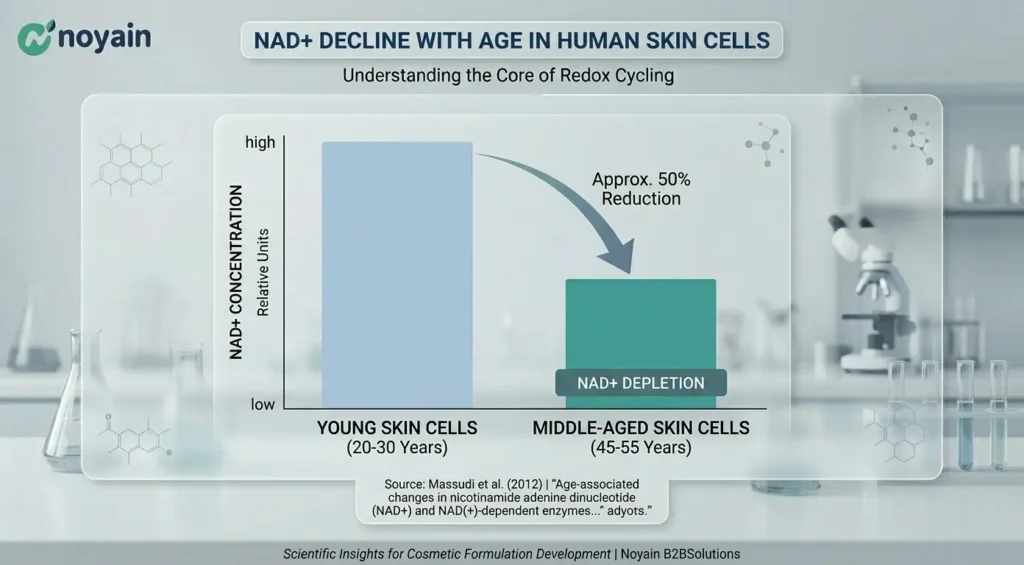
From a formulator’s perspective, this creates an interesting target: topical NAD+ replenishment may help restore the cellular energy and repair machinery that naturally diminishes with age. Unlike traditional anti-aging actives that target a single pathway (retinol for collagen, vitamin C for antioxidant protection), NAD+ addresses multiple aging hallmarks simultaneously through its role as a central metabolic coenzyme.
Functions of NAD+ in Skin
Evidence Note: The majority of published data on NAD+ in skin cells comes from in vitro (laboratory) studies using human keratinocytes and fibroblasts. While these models provide valuable mechanistic insight, direct topical application of NAD+ (MW 663 Da) faces formulation and delivery challenges that may limit in vivo translation. Human clinical trials specifically evaluating topical NAD+ for cosmetic anti-aging remain limited. Formulators should interpret mechanistic findings in the context of these evidence constraints and consider delivery system design as a critical variable.
Cellular Energy Production
NAD+ is the primary electron carrier in the mitochondrial electron transport chain. By accepting electrons from metabolic substrates and transferring them through Complex I and III, NAD+ drives the synthesis of ATP — the molecule that powers every energy-dependent process in skin cells, including proliferation, migration, differentiation, and extracellular matrix synthesis.
In vitro studies on human dermal fibroblasts suggest that NAD+ replenishment at 0.1–1 mM concentrations may support ATP output in aged cells, supporting the energy-intensive processes of collagen production and cell turnover. This mechanism is distinct from most topical anti-aging actives, which typically stimulate collagen synthesis through receptor signaling rather than by providing the energy substrate for it.
Sirtuin Activation
NAD+ is the essential substrate for the seven-member Sirtuin protein family (SIRT1–7), which function as NAD+-dependent deacetylases regulating cellular aging pathways (see also our PDRN ingredient guide for comparative regenerative mechanisms) cellular stress resistance, metabolism, and genomic stability. The three Sirtuins most relevant to skin aging are:
| Sirtuin | Location | Skin-Relevant Function |
|---|---|---|
| SIRT1 | Nucleus | Deacetylates p53 and FOXO transcription factors; promotes cellular stress resistance and collagen support |
| SIRT3 | Mitochondria | Activates SOD2 (superoxide dismutase), enhancing mitochondrial antioxidant defense |
| SIRT6 | Nucleus | Promotes DNA repair and genomic stability; regulates aging-related gene expression |
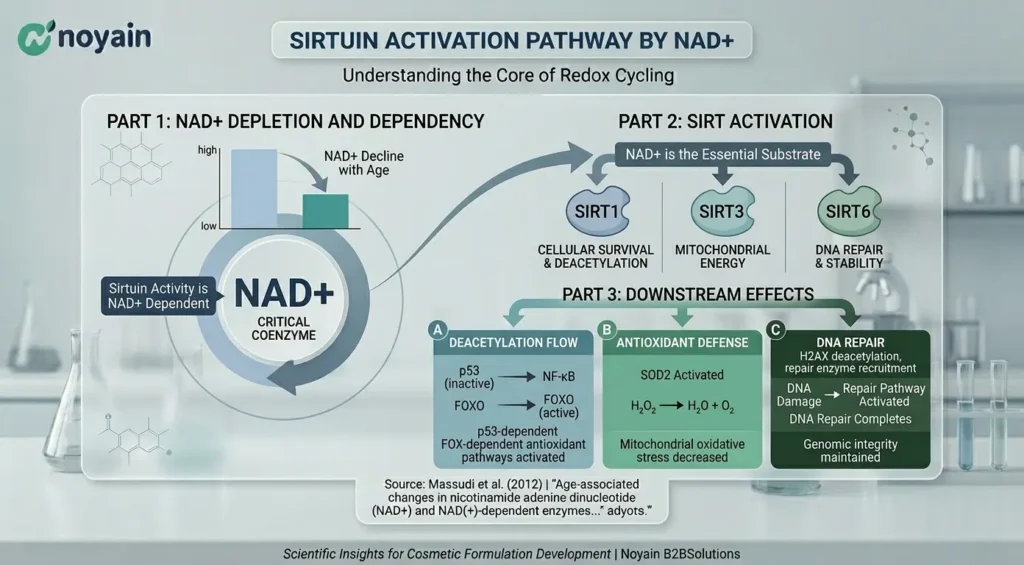
Sirtuin activation is one of the most extensively researched anti-aging mechanisms in molecular biology, and NAD+ availability is a rate-limiting factor for Sirtuin activity in cell models. When NAD+ levels decline with age, Sirtuin function is directly compromised — restoring NAD+ levels provides the substrate needed to maintain Sirtuin-driven cellular maintenance.
DNA Repair Support
NAD+ serves as the exclusive substrate for PARP-1 (Poly ADP-Ribose Polymerase), the primary DNA damage sensor in cells. When UV exposure causes cyclobutane pyrimidine dimers (CPDs) and other DNA lesions, PARP-1 consumes NAD+ to synthesize poly(ADP-ribose) chains that recruit DNA repair machinery to the damage site.
In UVB-irradiated human keratinocyte models, NAD+ supplementation has been shown to enhance PARP activity and accelerate the removal of CPDs. This DNA repair-supportive mechanism, while still at the in vitro stage, is potentially relevant for formulations targeting photodamage and UV recovery applications.
Antioxidant and Anti-Inflammatory Activity
NAD+ contributes to the cellular antioxidant defense system through two mechanisms:
- It supports the regeneration of glutathione (GSH) via NADPH-dependent pathways, preserving the cell’s primary endogenous antioxidant
- NAD+-dependent SIRT1 activation inhibits NF-kB signaling, reducing the expression of pro-inflammatory cytokines including IL-1-beta, IL-6, and TNF-alpha
In H2O2-induced oxidative stress models in keratinocytes, NAD+ treatment was associated with reduced intracellular ROS accumulation (in vitro data; clinical relevance requires further investigation) and preserved GSH/GSSG ratio in cell culture models under oxidative challenge.
Circadian Rhythm Regulation
NAD+ levels follow a natural circadian oscillation, peaking during active periods and declining during rest. Through the NAD+-SIRT1 pathway, NAD+ directly interacts with core circadian clock proteins (CLOCK, BMAL1, PER2), creating a feedback loop that synchronizes cellular repair processes with the sleep-wake cycle. Declining NAD+ with age disrupts this loop, impairing overnight skin repair — a consideration for night repair and anti-aging ampoule formulations.
NAD+ in Cosmetic Formulations
Skin Penetration and Delivery Considerations
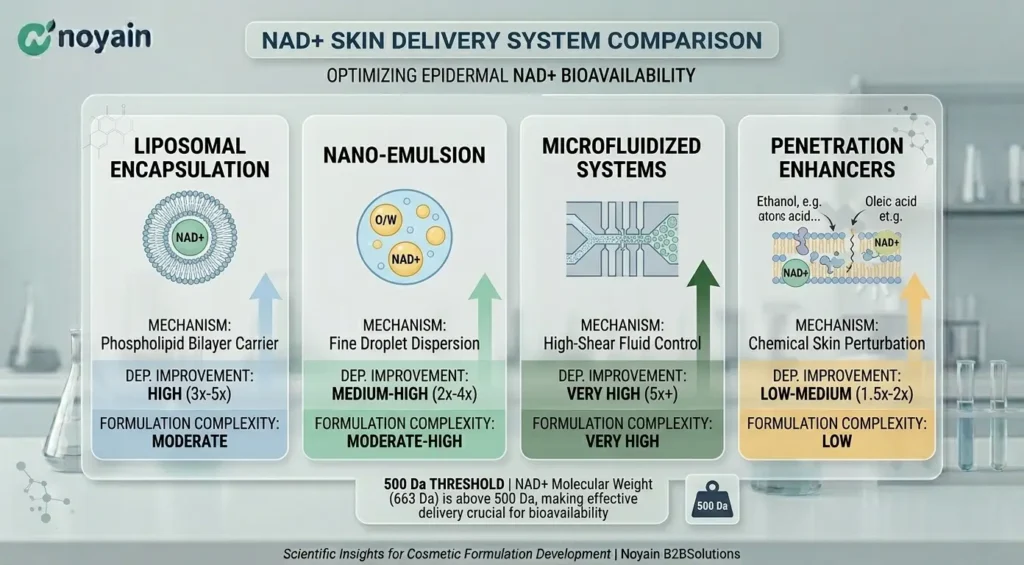
NAD+ possesses a molecular weight of 663.43 g/mol and exhibits high water solubility. As a result, passive diffusion through the stratum corneum may be limited compared with lower molecular weight actives.
In vitro studies have shown that liposomal encapsulation can improve NAD+ skin deposition by approximately 30% compared with free-form solutions, though these results are formulation-specific and not yet validated in comparative human trials.
To improve epidermal delivery, formulators may consider:
- Liposomal encapsulation — improved deposition in vitro; requires process validation
- Nano-emulsion systems — potential for enhanced penetration; stability testing required
- Microfluidized delivery systems — uniform particle size; scale-up cost consideration
- Penetration enhancers such as Pentylene Glycol
- Post-procedure applications where barrier permeability is increased (professional use only)
⚠️ Formulation note: NAD+ possesses a molecular weight of 663.43 g/mol, exceeding the 500 Da conventional threshold for passive transdermal diffusion. This does not preclude topical efficacy — particularly with appropriate delivery systems or in compromised barrier conditions — but it is a critical parameter for formulation expectations.
Formulation Considerations
Incorporating NAD+ into topical formulations requires attention to several key factors:
Solubility and Incorporation: NAD+ is readily soluble in water and should be incorporated into the aqueous phase of serums, gels, and emulsions. Multi-functional glycols such as Pentylene Glycol may also be incorporated to improve humectancy, formulation elegance, and delivery performance. Cold-process manufacturing is feasible in aqueous systems, making it compatible with both hot-process and cold-process production workflows.
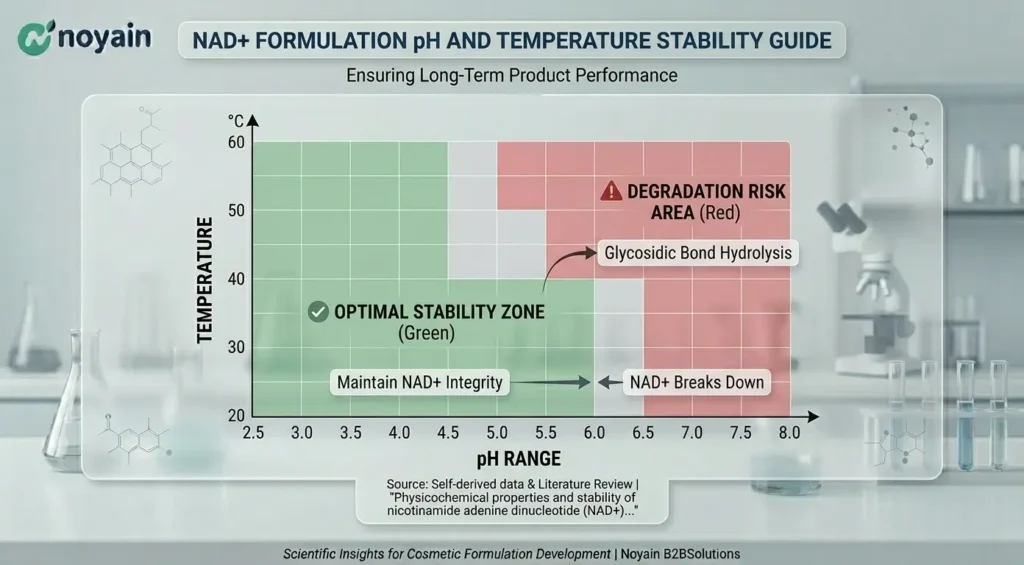
pH Stability: NAD+ is most stable at pH 2.5–6.0. Above pH 6.0, particularly at elevated temperatures (>40°C), NAD+ undergoes accelerated hydrolysis of the glycosidic bond linking the nicotinamide ring to the ribose moiety. Degradation follows first-order kinetics under alkaline conditions. Formulators targeting pH >6.0 should consider low-temperature manufacturing and cold filling to minimize thermal exposure. Most anti-aging serum formulations fall within this pH range, making NAD+ compatible with typical product pH targets.
Temperature Sensitivity: NAD+ is sensitive to prolonged heat exposure above 40°C, especially in alkaline environments. For hot-process emulsions, incorporating NAD+ during the cool-down phase (below 40°C) is recommended.
Stabilizer Considerations: Polyols such as trehalose, glycerol, and Pentylene Glycol may provide stabilization effects in aqueous NAD+ formulations by reducing water activity and limiting hydrolytic degradation. Inclusion of a chelating agent (e.g., EDTA) can mitigate metal-ion-catalyzed degradation.
Packaging Protection: NAD+ is susceptible to light-induced degradation. Finished products should use opaque or UV-protective packaging. Airless pump systems are recommended for leave-on serum formats.
Skin Tolerance Considerations: Limited published irritation data are available for topical NAD+ at cosmetic use levels. A repeated insult patch test (RIPT) is recommended for finished formulations, particularly when combining NAD+ with other active ingredients. Starting formulations at the lower end of the recommended dosage range (0.5–1.0%) may reduce potential irritation risk in sensitive skin or periocular applications.
Ingredient Compatibility
| Compatible Ingredient | Synergy |
|---|---|
| Niacinamide | Precursor synergy — niacinamide supports NAD+ biosynthesis in skin cells. Formulators can also refer to our Ingredient Guide collection for additional vitamin-based active ingredient strategies. |
| Retinol | Cellular recovery support — NAD+ helps skin cells manage retinol-induced oxidative stress |
| Vitamin C (Ascorbic Acid) | Dual antioxidant protection — NAD+ supports vitamin C recycling |
| CoQ10 (Ubiquinone) | Mitochondrial synergy — both act in the electron transport chain |
| Peptides (Matrixyl, Argireline) | Complementary anti-aging — NAD+ provides energy, peptides signal collagen |
| Hyaluronic Acid | Energy boost + hydration for comprehensive rejuvenation |
| Avoid Combining With | Reason |
|---|---|
| Strong oxidizing agents (e.g., benzoyl peroxide, high-concentration hydrogen peroxide) | May degrade NAD+ in the formulation |
| High pH ingredients (above pH 6.0) | Accelerates NAD+ degradation via glycosidic bond hydrolysis |
| Prolonged heat (>40°C) in alkaline conditions | Significant stability risk; follow first-order degradation kinetics |
| High concentration ionic compounds | Potential salting-out effect in concentrated solutions |
Recommended Applications
| Product Type | Recommended Dosage | Key Benefit |
|---|---|---|
| Anti-aging serum | 1.0–3.0% | Daily cellular energy support |
| Night repair ampoule | 2.0–3.0% | Intensive overnight NAD+ boost |
| Eye cream | 0.5–1.5% | Delicate periorbital area support |
| Firming cream | 0.5–2.0% | Combined with peptides for comprehensive anti-aging |
| Sheet mask | 1.0–2.0% | Short-contact energy and antioxidant treatment |
| UV recovery product | 0.5–1.5% | Post-exposure DNA repair support — may benefit from combining with regenerative actives such as PDRN to support post-exposure skin recovery. |
Technical Specifications
| Parameter | Specification |
|---|---|
| INCI Name | Nicotinamide Adenine Dinucleotide |
| CAS No. | 53-84-9 |
| Purity | >= 98% |
| Molecular Formula | C21H27N7O14P2 |
| Molecular Weight | 663.43 g/mol |
| Appearance | White to off-white crystalline powder |
| Solubility | Readily soluble in water |
| pH (1% Solution) | 2.5 – 4.5 |
| Recommended Dosage | 0.5% – 3.0% |
| Storage | 2–8°C in sealed, light-protected container |
| Shelf Life | 24 months |
FAQ
NAD+ vs Niacinamide and NMN
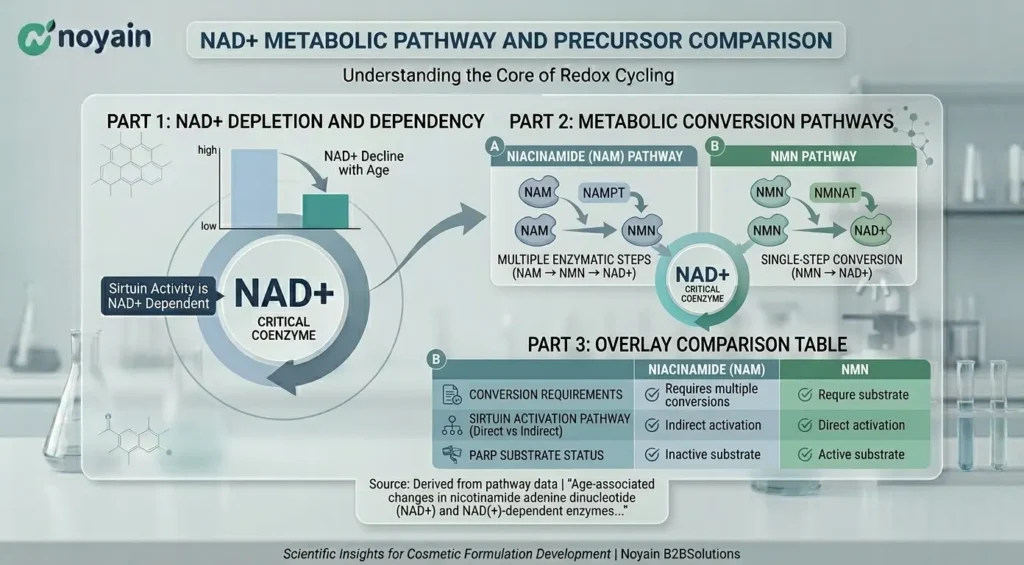
A common question among formulators is how NAD+ compares to related actives such as niacinamide (vitamin B3) and NMN (nicotinamide mononucleotide). Each occupies a different position in the NAD+ biosynthesis pathway, with distinct implications for formulation strategy.
| Feature | Niacinamide | NMN | NAD+ |
|---|---|---|---|
| Molecular Role | Vitamin B3 precursor | Direct NAD+ precursor | Active coenzyme |
| Conversion Required | Multiple enzymatic steps | Single-step conversion | No conversion required |
| Skin Barrier Benefits | Excellent | Limited evidence | Limited evidence |
| Cellular Energy Support | Indirect | Indirect | Direct |
| Sirtuin Activation | Indirect | Indirect | Direct |
| DNA Repair Support | Indirect | Indirect | Direct |
Unlike niacinamide and NMN, NAD+ provides the exact coenzyme utilized by Sirtuins and PARP enzymes, eliminating the need for intracellular conversion steps. For formulators targeting direct Sirtuin activation or PARP-mediated DNA repair support, NAD+ offers a mechanistically distinct advantage over precursor-based strategies.
What is the difference between NAD+ and NADH?
NAD+ (oxidized form) and NADH (reduced form) are two interchangeable states of the same coenzyme. NAD+ is the “empty” form that accepts electrons during biochemical reactions, while NADH is the “full” form carrying electrons and hydrogen for energy release. This continuous cycling between the two states is the basis of NAD’s role as a molecular electron shuttle in cellular energy metabolism. In cosmetic formulations, the oxidized form (NAD+) is the standard cosmetic ingredient.
What is the recommended dosage range for NAD+ in anti-aging formulations?
The recommended dosage for NAD+ in leave-on skincare products is 0.5% to 3.0%. For daily anti-aging serums, 1.0–1.5% provides a good balance of efficacy and formulation cost. For night repair ampoules and intensive treatments, 2.0–3.0% can be used. Sheet masks and eye creams typically benefit from 0.5–1.5%.
Is NAD+ stable in water-based formulations?
NAD+ is stable at pH 2.5–6.0 and readily soluble in water. However, it is sensitive to prolonged heat exposure (above 40°C) and light. Finished formulations should be stored in opaque or UV-protective packaging and manufactured with a cool-down phase addition below 40°C. Cold-process manufacturing is a viable option for aqueous serum systems.
Can NAD+ be combined with retinol in one formulation?
Yes. NAD+ and retinol are complementary anti-aging actives. NAD+ supports cellular energy metabolism and antioxidant defenses, which can help skin cells manage the oxidative stress associated with retinoid-induced turnover. This pairing allows formulators to leverage retinol’s collagen-stimulating effects while supporting the cell’s intrinsic energy and repair capacity through NAD+ replenishment.
Is NAD+ suitable for professional aesthetic aftercare products?
NAD+’s DNA repair support and anti-inflammatory properties make it well-suited for post-procedure recovery formulations. Its mechanism supports cellular repair processes that are particularly active after aesthetic treatments. Concentrations of 0.5–1.5% are recommended for this application.
Where can I source cosmetic-grade NAD+ for formulation development?
NOYAIN Biochemicals supplies cosmetic-grade Nicotinamide Adenine Dinucleotide (NAD+) with >= 98% purity, produced through fermentation and enzymatic conversion. COA, TDS, and MSDS documentation are available upon request. For bulk pricing, sample requests, and formulation support, please contact us through the inquiry form.
How strong is the clinical evidence for topical NAD+ in anti-aging?
Most current evidence for NAD+ in skin cells comes from in vitro studies on cultured keratinocytes and fibroblasts. While these data suggest potential mechanisms relevant to anti-aging (energy metabolism, Sirtuin activation, DNA repair), well-controlled human clinical trials specifically evaluating topical NAD+ for cosmetic anti-aging outcomes remain limited. Formulators should view the current evidence base as mechanistically promising but clinically preliminary. Delivery system optimization is a key variable influencing whether in vitro findings translate to measurable in vivo benefits.
Can NAD+ penetrate the skin barrier?
NAD+ has a molecular weight of 663.43 g/mol, exceeding the 500 Da conventional threshold for passive transdermal diffusion. Combined with its high water solubility, passive permeation through intact stratum corneum is likely limited compared with smaller lipophilic molecules. Liposomal encapsulation has been shown in vitro to improve NAD+ skin deposition by approximately 30%, but results are formulation-dependent. Delivery strategies such as nano-emulsion systems, penetration enhancers, and professional-use protocols (e.g., post-microneedling) may improve epidermal bioavailability.
What is the difference between NAD+ and NMN?
NMN (nicotinamide mononucleotide) is a direct precursor to NAD+ and requires a single enzymatic conversion step to become NAD+. NAD+ itself is the active coenzyme, requiring no conversion. For topical cosmetic applications, NAD+ provides immediate bioavailability to skin cells, while NMN depends on cellular conversion efficiency. Direct NAD+ supplementation also bypasses potential rate-limiting steps in the salvage pathway.
Is NAD+ more effective than niacinamide?
Niacinamide and NAD+ serve different roles in skincare. Niacinamide is a vitamin B3 precursor that undergoes multiple enzymatic conversions before becoming NAD+. It has well-documented benefits for barrier function, sebum regulation, and visible pore size. NAD+ provides direct Sirtuin activation, PARP-mediated DNA repair support, and cellular energy enhancement. The two may be used complementarily rather than as direct substitutes.
Can NAD+ be used in liposomal formulations?
Yes. NAD+ is water-soluble and compatible with liposomal encapsulation systems. Liposomal delivery can improve NAD+ stability in formulation and enhance epidermal penetration. For formulators developing premium anti-aging serums, liposomal NAD+ offers a differentiated delivery approach that supports both stability and bioavailability claims.
Is NAD+ suitable for post-procedure skincare?
NAD+ supports DNA repair mechanisms and cellular energy metabolism, both of which are relevant for post-procedure recovery. Its anti-inflammatory profile (via NF-kB pathway inhibition) and PARP-1 substrate function make it a potential candidate for professional aftercare formulations targeting accelerated recovery after aesthetic treatments.
Does NAD+ work with peptides?
Yes. NAD+ and peptides operate through complementary mechanisms. Peptides such as Matrixyl and Argireline signal collagen production via receptor-mediated pathways, while NAD+ provides the cellular energy (ATP) necessary for collagen synthesis to proceed efficiently. This mechanism-level complementarity makes NAD+ a strong candidate for peptide-based anti-aging serum formulations.
Explore Our Products
NOYAIN NAD+ (Nicotinamide Adenine Dinucleotide) is available as cosmetic-grade crystalline powder.
Available documentation and technical resources:
- COA (Certificate of Analysis) with full purity and identity data
- TDS (Technical Data Sheet)
- MSDS (Material Safety Data Sheet)
- NAD+ Serum Sample Formulation Guide
- Stability Evaluation Reference
- pH Compatibility Reference Sheet
- Ingredient Compatibility Guide
- Sample Evaluation Protocol
For formulators interested in evaluation, our technical documentation package includes a Serum Sample Formulation Guide and Stability Reference. Available upon request through our inquiry form.
To request a sample, download documentation, or discuss your formulation needs, please contact us through our inquiry form:
Contact Us
Or reach us directly at [email protected]
NOYAIN Biochemicals
Room 3a05, 4th Floor, No. 6, Ketai Second Road, Baiyun District, Guangzhou City, China
References
- Massudi H, Grant R, Braidy N, Guest J, Farnsworth B, Guillemin GJ. Age-associated changes in oxidative stress and NAD+ metabolism in human tissue. PLOS ONE. 2012;7(7):e42357.
- Imai S, Guarente L. NAD+ and sirtuins in aging and disease. Trends in Cell Biology. 2014;24(8):464-471.
- Verdin E. NAD+ in aging, metabolism, and neurodegeneration. Science. 2015;350(6265):1208-1213.
- Benigni A, Cassis P, Conti S, Perico L, Corna D, Cerullo D, et al. Sirt3 deficiency shortens lifespan and impairs cardiac mitochondrial function. Scientific Reports. 2019;9(1):17039.
- Bai P, Canto C, Oudart H, Brunyanszki A, Cen Y, Thomas C, et al. PARP-1 inhibition increases mitochondrial metabolism through SIRT1 activation. Cell Metabolism. 2011;13(4):461-468.
- Yoshino J, Baur JA, Imai S. NAD+ intermediates: the biology and therapeutic potential of NMN and NR. Cell Metabolism. 2018;27(3):513-528.
- Rajman L, Chwalek K, Sinclair DA. Therapeutic potential of NAD-boosting molecules: the in vivo evidence. Cell Metabolism. 2018;27(3):529-547.