Propylene glycol is still a practical humectant-solvent, but pentylene glycol has become the better fit for many modern leave-on skincare formulas. This comparison explains the safety perception, preservative support, sensory differences, sourcing factors, and real formulation trade-offs behind the switch.
Quick Answer: Which One Is Better?
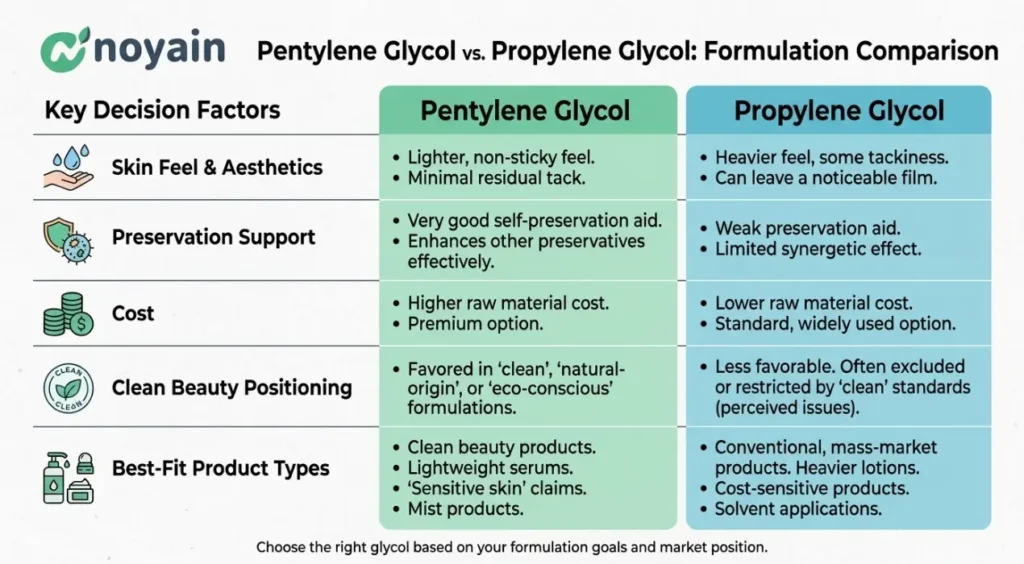
If your priority is cost efficiency, propylene glycol is still a practical option. It is inexpensive, widely available, easy to process, and familiar to most formulation teams.
If your priority is skin feel, clean beauty positioning, preservative support, and sensitive skin compatibility, pentylene glycol is generally the better choice. It gives you humectancy, solvent support, improved slip, and preservation-system support in one ingredient.
For most modern leave-on skincare products – especially serums, toners, essences, masks, and gel-creams – I would choose pentylene glycol first. Propylene glycol still has a place in cost-sensitive formulas, but pentylene glycol usually gives the formulator more room to improve both performance and label perception.
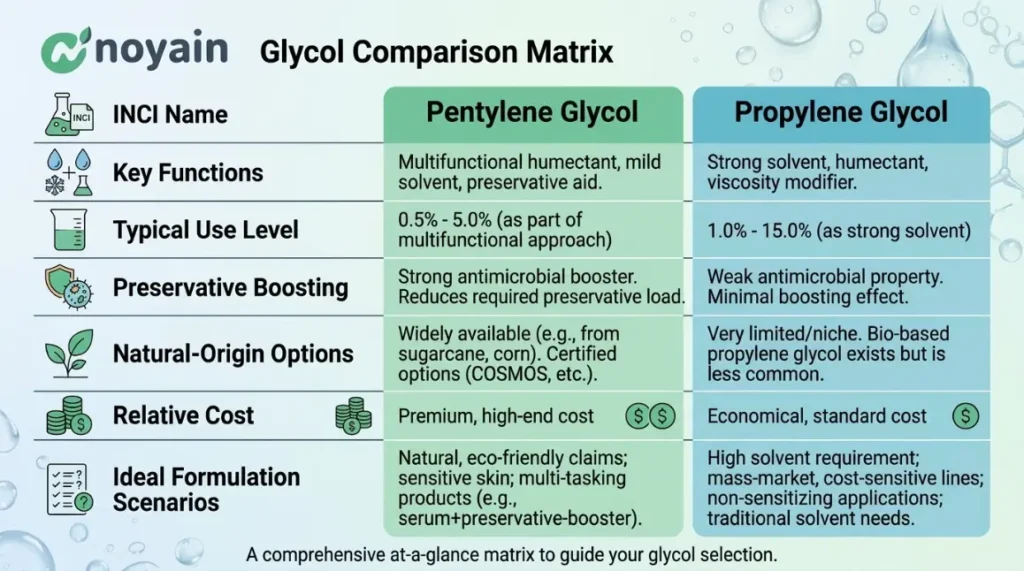
At a Glance: Pentylene Glycol vs Propylene Glycol
| Comparison Point | Pentylene Glycol | Propylene Glycol |
|---|---|---|
| INCI Name | Pentylene Glycol | Propylene Glycol |
| Chemical Name | 1,2-Pentanediol | 1,2-Propanediol |
| CAS Number | 5343-92-0 | 57-55-6 |
| Molecular Formula | C₅H₁₂O₂ | C₃H₈O₂ |
| Molecular Weight | 104.15 g/mol | 76.09 g/mol |
| EWG Skin Deep Score | 1 | 3 |
| Comedogenicity Rating | 0-1 | 0-3 |
| Core Functions | Humectant, Preservative Booster, Solvent, Texture Enhancer | Humectant, Solvent, Viscosity Reducer |
| Preservative Boosting | Strong (reduces water activity + amphiphilic membrane interaction) | Weak |
| Natural Origin Grade | Available (sugarcane fermentation, COSMOS-compatible grades) | Standard grade is usually petrochemical |
| Recommended Dosage | 1-5% | 1-5% |
| Relative Cost | $$ (2-3× propylene glycol) | $ |
| Best For | Clean beauty, sensitive skin, preservation systems | Cost-sensitive, simple formulations |
Quick Overview: How These Two Glycols Differ
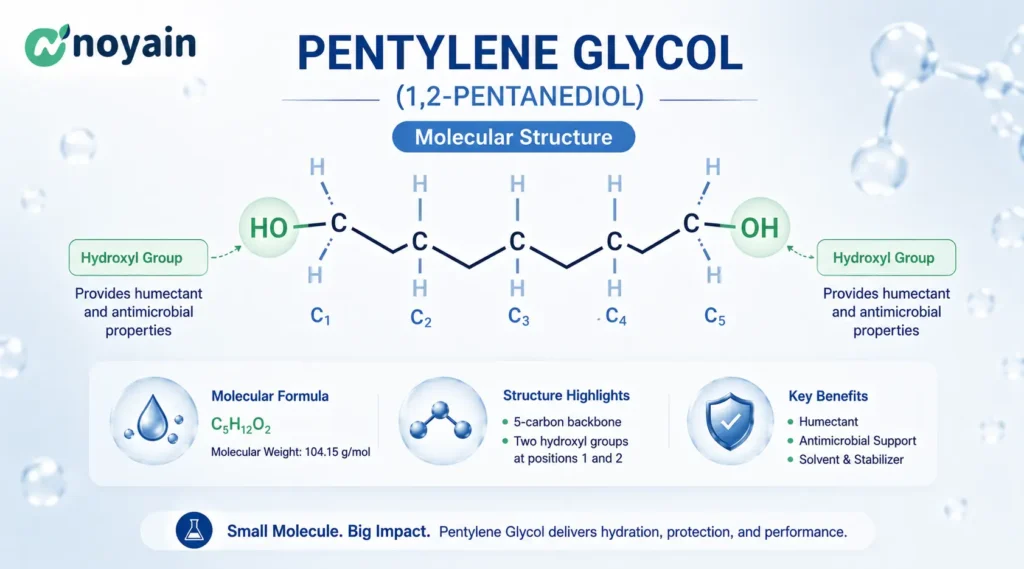
When comparing 1,2-pentanediol vs propylene glycol, the chemical structure dictates nearly every functional difference. Pentylene glycol is a C5 1,2-glycol with a five-carbon backbone and two hydroxyl groups, while propylene glycol is a C3 1,2-glycol with a three-carbon backbone. That extra two-carbon length gives pentylene glycol meaningfully different properties — better humectancy per molecule, stronger water-activity reduction for preservation support, and an amphiphilic character that propylene glycol lacks.
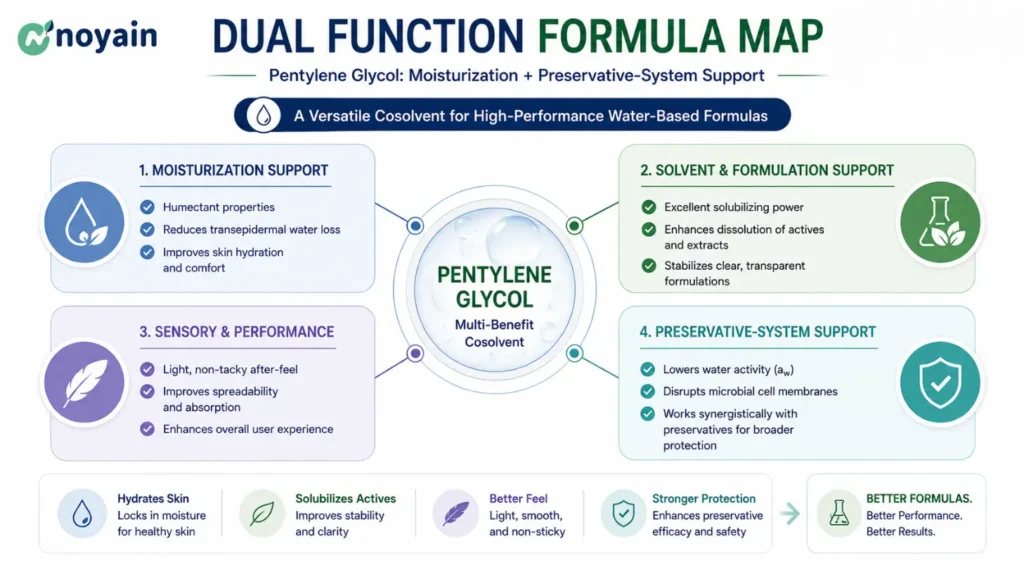
The amphiphilic nature of pentylene glycol — meaning it has both hydrophilic (water-attracting) and lipophilic (oil-attracting) regions — is a direct result of its five-carbon chain. This structure allows pentylene glycol to partially interact with microbial cell membranes while simultaneously reducing water activity in the formulation, creating a synergistic antimicrobial effect with traditional preservative systems. Propylene glycol’s shorter chain does not provide this membrane-interaction benefit, which is why it functions primarily as a humectant and solvent without meaningful preservative boosting.
Pentylene glycol is available in both petrochemical and bio-based grades derived from sugarcane fermentation. Our Pentylene Glycol is available with COSMOS-compatible documentation, making it suitable for natural and organic cosmetic formulations. Propylene glycol is produced almost exclusively from petroleum feedstocks, though limited bio-based options have begun to emerge.
Many formulators first encounter pentylene glycol as a glycol preservative booster, but its value extends far beyond antimicrobial support — it delivers a silky, non-tacky skin feel that is particularly valuable in high-glycerin serum formulations.
Why I Switched from Propylene Glycol to Pentylene Glycol
Several years ago, propylene glycol was the default choice whenever I needed a cost-effective humectant and solvent. It was easy to buy, easy to process, and acceptable in many formulas. For basic rinse-off products or low-cost leave-on formulas, that logic still makes sense.
The turning point came when more brand teams started asking for phenoxyethanol-reduced systems, cleaner ingredient decks, and lighter serum textures. In those projects, I found myself reaching for pentylene glycol more often – not because propylene glycol suddenly became unsafe, but because pentylene glycol solved several practical problems at the same time.
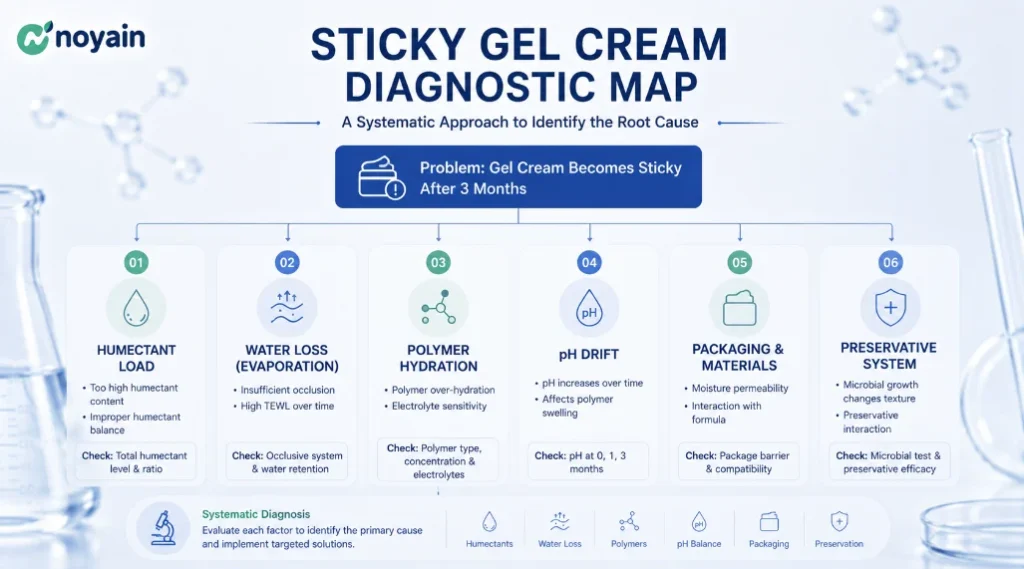
The biggest surprise was not the preservative boost. It was the skin feel. In glycerin-heavy serums, replacing part or all of the propylene glycol with pentylene glycol usually reduced tackiness and improved spreadability within the first bench sample. The formula felt less sticky during rub-out, and the dry-down became smoother without needing a heavy silicone or extra emollient.
That is why the decision is rarely just “which glycol is safer?” A better question is: which glycol helps the formula meet the brand brief with fewer compromises? For many modern serums, essences, toners, and mask liquids, pentylene glycol gives you a cleaner label story, better sensory profile, and useful preservative-system support in one raw material.
Safety and Irritation Profile
| Indicator | Pentylene Glycol | Propylene Glycol |
|---|---|---|
| EWG Skin Deep Score | 1 | 3 |
| Regulatory Acceptance | Accepted for cosmetic use | Accepted for cosmetic use |
| Comedogenicity Rating | 0-1 | 0-3 |
| Primary Skin Irritation | Usually well tolerated at 1-5% | Can sting in some leave-on systems, especially at higher levels |
| Sensitization Potential | Low | Low to moderate |
| Best Fit | Sensitive-skin, premium, clean-positioned leave-on products | Cost-sensitive formulas with established safety testing |
EWG assigns pentylene glycol a score of 1 and propylene glycol a score of 3. However, EWG is a consumer-facing ingredient database, not a regulatory authority. Both ingredients are considered acceptable for cosmetic use by major regulatory frameworks and safety-review bodies, including CIR safety assessments and the EU cosmetic ingredient framework.
In practice, the difference is mainly about consumer perception and formulation comfort, not a simple “safe vs unsafe” judgment. Propylene glycol can be used safely, but it often receives more scrutiny from clean beauty teams and may cause stinging in some facial leave-on products. Pentylene glycol is easier to defend in sensitive-skin and premium-positioned formulas, especially when the brand wants a shorter and more modern ingredient deck.
For a deeper dive into dermatological safety data, read our full review: Is Pentylene Glycol Safe?.
A note on use levels: CIR safety reviews have evaluated propylene glycol at high concentrations in certain cosmetic applications, but most modern facial leave-on formulas use much lower levels because sensory feel and irritation complaints become more important than theoretical maximum use. We recommend testing both ingredients in the final formula rather than judging safety from database scores alone.
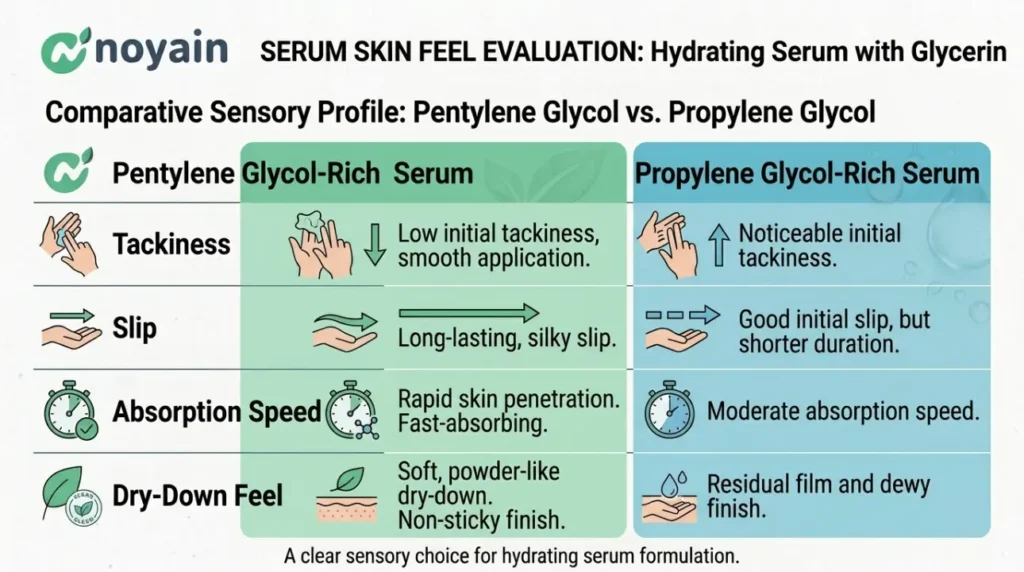
Sensory Profile Comparison
Skin feel is one of the most immediate differentiators between these two glycols — and often the reason formulators switch to pentylene glycol even when cost is not the primary concern.
| Sensory Attribute | Pentylene Glycol | Propylene Glycol |
|---|---|---|
| Tackiness | Low | Medium to High |
| Slip | High, silky | Moderate |
| Absorption Speed | Fast (quickly penetrates) | Moderate |
| After-Feel | Smooth, non-sticky | Slightly sticky, can feel warm |
| Glycerin Compatibility | Reduces glycerin tackiness | Does not significantly reduce glycerin tackiness |
| Consumer Perception | Premium, lightweight | Standard, functional |
Pentylene glycol is frequently used to reduce the tacky after-feel created by glycerin-rich formulations. At 2-4%, it transforms the texture of high-glycerin serums from sticky to silky without reducing the formula’s total humectant capacity. For formulators developing lightweight serums and gel-creams, this sensory improvement alone can justify the ingredient cost premium.
Formulator’s Tip: When using pentylene glycol as a preservative booster, the ideal pH range is broad (3.0-10.0). This makes it highly versatile for low-pH AHA/BHA exfoliants where traditional organic acids might struggle with stability, and for alkaline hair care formulations — coverage that propylene glycol cannot match.
Formulation Performance Comparison
| Function | Pentylene Glycol | Propylene Glycol |
|---|---|---|
| Humectancy | Good — C5 chain provides effective water binding | Moderate — C3 chain, less water retention per molecule |
| Preservative Boosting | Strong — Dual mechanism: reduces water activity + amphiphilic membrane interaction | Weak — Minimal antimicrobial contribution |
| Solvent Capacity | Broad — Dissolves both hydrophilic and lipophilic actives | Good — Standard solvent for most actives |
| Texture Impact | Reduces tackiness of high-glycerin formulas, adds silky slip | Lightweight, may require additional thickeners in high-glycerin systems |
| pH Stability | 3.0-10.0 | 4.0-8.0 (less stable in extreme pH) |
| Cold Process Compatibility | Yes — fully miscible with water at room temperature | Yes — very low viscosity, easy cold processing |
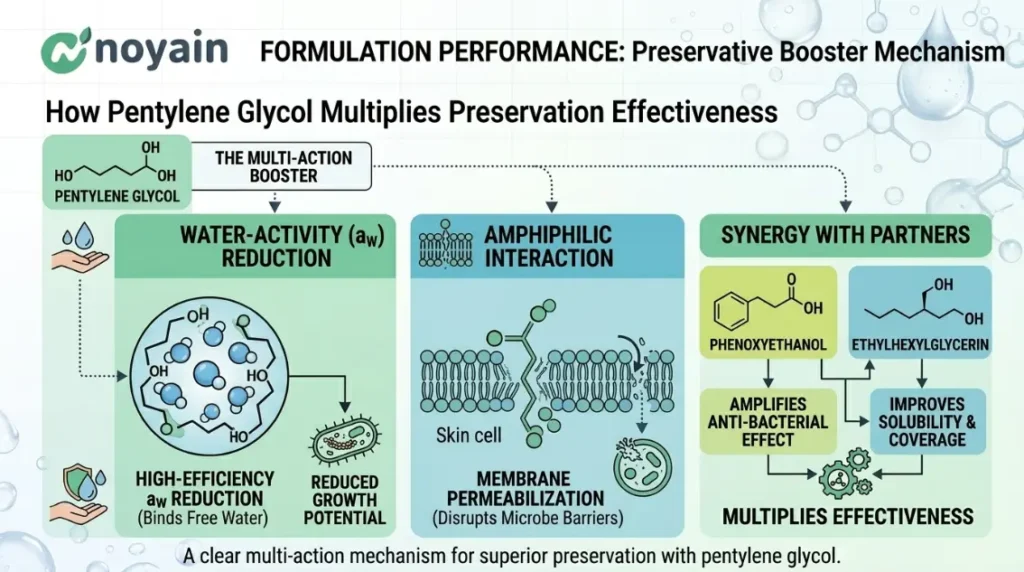
How Preservative Boosting Works at the Molecular Level
Pentylene glycol exhibits amphiphilic behavior due to its hydroxyl groups and five-carbon backbone. A simple way to picture it: propylene glycol behaves more like a small water-loving helper, while pentylene glycol behaves more like a two-sided adapter – one side works comfortably in water, and the longer carbon chain gives it more interaction with oily or membrane-like environments.
This matters because preservation is not only about killing microbes directly. It is also about making the formula less comfortable for microbes to grow in. Pentylene glycol can reduce water activity while supporting the performance of conventional preservatives, especially in water-rich toners, serums, mask liquids, and gel systems.
Which Preservatives Work Best with Pentylene Glycol?
| Preservative System | Typical Synergy with Pentylene Glycol | Formulation Note |
|---|---|---|
| Phenoxyethanol | Excellent | Common choice for phenoxyethanol-reduced systems; still requires PET/challenge testing |
| Ethylhexylglycerin | Excellent | Often paired with glycols for broad sensory and preservation support |
| Sodium Benzoate | Moderate | Works best in acidic systems where benzoic acid is active |
| Potassium Sorbate | Moderate | pH-dependent; useful in natural-positioned formulas |
| Organic Acid Systems | High | Strong fit for low-pH toners, AHA/BHA products, and some clean beauty systems |
| Benzyl Alcohol | Good | Can support natural-preservative positioning but may affect odor profile |
At 3-5%, pentylene glycol can help reduce the pressure on the primary preservative system, but it should not be treated as a standalone preservative. Always run a preservative efficacy test (PET / USP 51 / EP 5.1.3) after changing glycols, pH, packaging, or botanical load. This is especially important when using pentylene glycol as a preservative booster in formulas with high water content.
Replacing Propylene Glycol with Pentylene Glycol: A Practical Guide
For most skincare formulations, pentylene glycol can replace propylene glycol on a 1:1 basis — same concentration, same incorporation point (water phase), and the same broad formulation compatibility. However, formulators making the switch should evaluate four variables:
| Evaluation Point | What to Check | Typical Impact |
|---|---|---|
| Viscosity Changes | Pentylene glycol is slightly more viscous than PG at room temperature | Minimal in most formulas; may require minor thickener adjustment in sprayable toners |
| Preservative Efficacy | Challenge test after switch | Usually improves — preservative concentration can be reduced by 10-20% |
| Sensory Profile | In-house panel evaluation | Noticeable improvement — less tacky, more silky |
| Cost Impact | Total formula cost analysis | Pentylene glycol costs 2-3× more, but savings from reduced preservative load offset part of the increase |
Step-by-step replacement checklist:
- Replace propylene glycol with pentylene glycol at the same weight percentage
- Evaluate viscosity at 25°C and adjust thickener if needed
- Run a preservative efficacy test (PET / USP 51 / EP 5.1.3) — preservative levels can often be reduced
- Conduct a sensory panel comparison — expect improvement in tackiness and slip scores
- Verify active ingredient solubility — pentylene glycol’s solvent range may differ slightly from PG
Formulator’s Tip: When switching from propylene glycol to pentylene glycol in a high-glycerin formula, you may be able to reduce your glycerin level by 1-2% while maintaining the same hydration performance because pentylene glycol contributes to the total humectant load. This can help offset the cost difference.
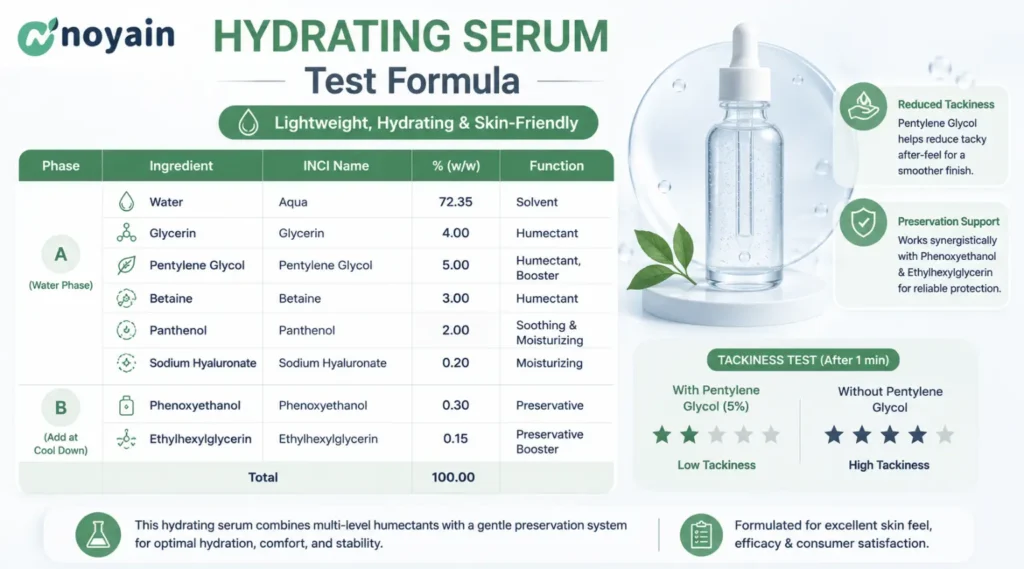
Example Formula: Hydrating Serum
Here is a simple way to test the sensory difference in a water-based serum chassis:
Example Hydrating Serum
Aqua / Water ..................... q.s. to 100%
Glycerin ......................... 4.0%
Pentylene Glycol ................. 3.0%
Betaine .......................... 2.0%
Panthenol ........................ 1.0%
Sodium Hyaluronate ............... 0.1%
Phenoxyethanol / Ethylhexylglycerin .... 0.8%
Carbomer or Acrylates Copolymer .. q.s.
pH Adjuster ...................... q.s. to pH 5.5-6.0
In a formula like this, replacing 3% propylene glycol with 3% pentylene glycol usually changes the sensory profile before it changes the hydration story. The serum tends to feel less sticky during application, spreads more evenly, and dries down with a smoother finish.
For development work, we recommend preparing two bench samples: one with propylene glycol and one with pentylene glycol at the same percentage. Compare tackiness at 30 seconds and 3 minutes after application, then run a simple internal panel before moving into preservative efficacy testing. That small side-by-side test often makes the decision clearer than any ingredient table.
Who Should Choose Which
| If Your Priority Is… | Recommended Choice |
|---|---|
| Minimizing irritation concerns and consumer database scrutiny | Pentylene Glycol |
| Building a clean beauty / “free-from” positioning | Pentylene Glycol |
| Reducing preservative load in your formula | Pentylene Glycol |
| Creating a non-comedogenic product for acne-prone skin | Pentylene Glycol |
| Improving serum sensory feel (less tacky, more silky) | Pentylene Glycol |
| Lowest possible raw material cost | Propylene Glycol |
| Simple humectancy with well-known behavior | Propylene Glycol |
| Cold-process-only manufacturing (very low viscosity) | Propylene Glycol |
Planning a formulation upgrade? If you are evaluating pentylene glycol as a propylene glycol replacement, we recommend testing it in your existing formula before committing to scale-up. Request a 100g sample of our bio-based Pentylene Glycol → Technical support available for formulation adjustments.
Can You Use Them Together?
Yes — there is no chemical incompatibility between pentylene glycol and propylene glycol. Some formulators use both: pentylene glycol at 2-4% for its preservative-boosting effect, and propylene glycol at 1-2% as a secondary solvent or to fine-tune viscosity. However, using both offers no functional advantage over pentylene glycol alone at the same total glycol level, unless cost optimization is the primary driver.
Cost and Supply Chain
| Supply Chain Factor | Pentylene Glycol | Propylene Glycol |
|---|---|---|
| Price Level | $$ — 2-3× propylene glycol | $ — Commodity pricing |
| Main Producing Regions | China, Europe, USA | Global (commodity chemical) |
| Typical MOQ | 200 kg – 1 MT | 1 MT+ |
| Natural/Clean Certifications | COSMOS, Halal, Vegan, Non-GMO | Limited (standard grade is petrochemical) |
| Supply Chain Risk | Moderate (fewer dedicated producers) | Low (widely produced globally) |
Pentylene glycol costs more per kilogram – roughly 2-3 times the price of commodity propylene glycol. But the cost difference narrows when accounting for its dual function: using bio-based pentylene glycol at 3-5% can reduce or eliminate the need for separate humectants and can lower the required preservative load, offsetting part of the raw material cost increase.
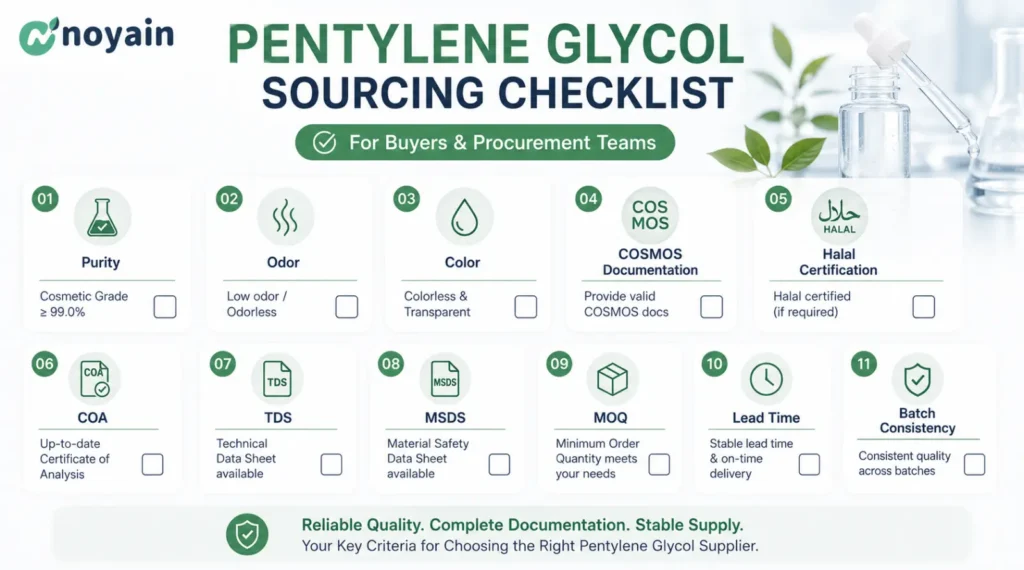
What Buyers Should Look for When Sourcing Pentylene Glycol
For procurement teams, the question is not only “pentylene glycol vs propylene glycol.” It is also whether the supplier can support stable production, documentation, and claim requirements. Before approving a pentylene glycol source, check the following:
- Purity specification at or above 98%
- Low odor and stable color across batches
- Clear INCI, CAS, and origin documentation
- COSMOS-compatible documentation if you are building natural-positioned formulas
- Halal, vegan, non-GMO, or other certifications when required by your target market
- Batch-to-batch COA consistency for moisture, assay, odor, color, and impurities
- Available COA, TDS, MSDS, allergen statement, and formulation guidance
- MOQ, lead time, sample policy, and export documentation before pilot production
This sourcing checklist matters because pentylene glycol is often used in premium leave-on products where odor, color, and documentation problems become visible quickly. A low-cost quotation is not useful if the ingredient creates sensory drift, certification gaps, or repeated delays during scale-up.
FAQ
What is the main difference between propylene glycol and pentylene glycol?
Pentylene glycol is a multifunctional humectant, solvent, texture enhancer, and preservative booster. Propylene glycol is mainly a humectant and solvent. The structural difference – C5 vs C3 carbon chain – gives pentylene glycol stronger sensory and preservation-system benefits.
Can pentylene glycol replace propylene glycol in any formula?
In most water-based skincare formulas, yes, pentylene glycol can be tested as a 1:1 replacement. Check viscosity, active solubility, skin feel, pH, preservative efficacy, and cost before scale-up. See the replacement guide above for detailed steps.
Which one is better for sensitive skin?
Pentylene glycol is usually the better choice for sensitive-skin positioning because it has a lower consumer database score, a lighter skin feel, and a strong track record at typical skincare use levels. Propylene glycol can still be safe, but it may cause stinging in some leave-on facial products, especially at higher levels or in compromised-skin formulas.
Is pentylene glycol natural?
Pentylene glycol can be petrochemical or bio-based depending on the production route. If your formula needs natural-positioned claims, ask the supplier for origin documentation, COSMOS-compatible statements, and batch-level traceability.
Is pentylene glycol better than butylene glycol?
It depends on the formula goal. Butylene glycol is widely used for humectancy and solvent support, while pentylene glycol usually gives stronger preservative boosting and a cleaner-label story. For a premium serum where preservation support and low tack are priorities, pentylene glycol is often the stronger option.
Can pentylene glycol replace phenoxyethanol?
No. Pentylene glycol can support a preservative system, but it should not be treated as a full replacement for phenoxyethanol or another approved preservative without challenge testing. In many formulas, it helps reduce preservative load rather than eliminate preservatives completely.
What percentage of pentylene glycol is needed for preservative boosting?
Most formulators evaluate pentylene glycol at 3-5% for preservative-system support. Lower levels may still improve skin feel and humectancy, but the preservation benefit becomes more formula-dependent. Always confirm with PET/challenge testing.
Does pentylene glycol cause acne?
Pentylene glycol is generally considered low-comedogenic and is commonly used in acne-prone and lightweight skincare formulas. Acne response depends on the full formula, not one glycol alone, so test the finished product rather than judging from the INCI list only.
Is propylene glycol bad for skin?
No. Propylene glycol is not inherently bad for skin and is widely used in cosmetics. The concern is more about sensory feel, stinging potential in some users, and consumer perception. For cost-sensitive formulas, it can still be a practical choice.
Where can I source cosmetic-grade pentylene glycol?
Cosmetic-grade pentylene glycol is available from specialty ingredient suppliers worldwide. When sourcing, look for purity specifications of at least 98%, low odor, stable color, relevant certification documents, and batch-specific COA documentation. Our Pentylene Glycol product page provides technical specifications and documentation.
The Bottom Line
| If You Care Most About… | Recommended Choice |
|---|---|
| Safety perception and sensitive-skin positioning | Pentylene Glycol |
| Clean beauty / natural positioning | Pentylene Glycol |
| Reduced preservative load | Pentylene Glycol |
| Premium sensory feel (silky, non-tacky) | Pentylene Glycol |
| Raw material cost | Propylene Glycol |
| Cold-process convenience (very low viscosity) | Propylene Glycol |
| Multi-functionality (humectant + booster) | Pentylene Glycol |
Three situations where pentylene glycol outperforms propylene glycol every time:
- Low-pH formulations (AHAs, BHAs) — pentylene glycol’s broad pH stability (3.0-10.0) makes it ideal
- High-glycerin serums — pentylene glycol reduces tackiness while adding preservative support
- Clean beauty products – lower consumer-database score, natural-origin options, and preservative reduction all align with clean beauty requirements
Three situations where propylene glycol still makes sense:
- Simple, low-cost formulations where preservation is handled by separate ingredients
- High-volume commodity products where every cent of ingredient cost matters
- Cold-process-only manufacturing where minimal viscosity is critical
Looking for a pentylene glycol alternative to upgrade your formula? We supply cosmetic-grade pentylene glycol with full technical documentation and formulation support.
Sourcing and Formulation Support
We supply both cosmetic-grade pentylene glycol and propylene glycol with full documentation:
- Pentylene Glycol → Product Page with COA, TDS, and MSDS
- Propylene Glycol → Contact us for specifications and pricing
To request a sample, download documentation, or discuss your pentylene glycol formulation guide needs, please contact us through our inquiry form:
Or reach us directly at [email protected]
Noyain Biochemicals
Room 3a05, 4th Floor, No. 6, Ketai Second Road, Baiyun District, Guangzhou City, China
References
- Cosmetic Ingredient Review (CIR). “Safety Assessment of 1,2-Glycols as Used in Cosmetics.” 2022. https://www.cir-safety.org/
- Cosmetic Ingredient Review (CIR). “Safety Assessment of Propylene Glycol and Glycerin as Used in Cosmetics.” 2016. https://www.cir-safety.org/
- Environmental Working Group (EWG) Skin Deep Database. “Pentylene Glycol” and “Propylene Glycol.” https://www.ewg.org/skindeep/
- European Commission. CosIng cosmetic ingredient database. “Pentylene Glycol” and “Propylene Glycol.” https://ec.europa.eu/growth/tools-databases/cosing/
- European Chemicals Agency (ECHA). Substance information for 1,2-pentanediol and propylene glycol. https://echa.europa.eu/
- USP <51> Antimicrobial Effectiveness Testing and European Pharmacopoeia 5.1.3. Preservative efficacy testing frameworks for cosmetic and personal care products.