
Cosmetic Active System
ZINC PCA
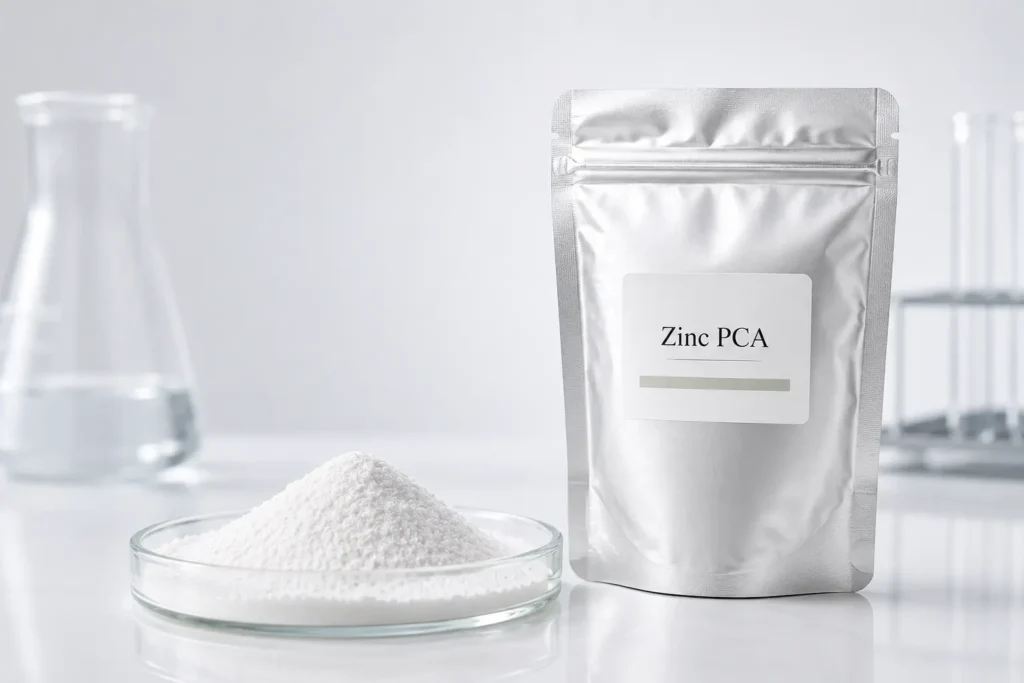
ZINC PCA (Zinc Pyrrolidone Carboxylic Acid) is a multifunctional active ingredient designed for acne-prone and oily skin formulations. It combines the sebum-regulating properties of zinc with the natural moisturizing factor PCA, delivering effective oil control, antimicrobial activity against *Cutibacterium acnes*, and astringent benefits — all within a water-soluble, easy-to-formulate platform.
INCI
Zinc PCA
CAS
15454-75-8
Function
Sebum regulator, anti-acne, astringent, antimicrobial, moisturizing
Shelf Life
24 months
Product Overview
Advanced Sebum-Regulating Solution for Acne-Prone and Oily Skin Formulations
Zinc PCA is a well-characterized active ingredient widely adopted in professional anti-acne and oil-control cosmetic systems. Its dual-mechanism approach addresses two root causes of acne-prone skin: excessive sebum production and microbial imbalance. The zinc ion inhibits 5α-reductase, the enzyme responsible for converting testosterone to dihydrotestosterone (DHT), thereby reducing sebocyte activity and sebum output at the source. Meanwhile, the PCA moiety — a natural component of the skin's NMF — ensures the ingredient remains compatible with the skin's physiological environment and contributes to gentle hydration maintenance.
For formulators, Zinc PCA offers a clean, water-soluble profile that integrates readily into both rinse-off and leave-on systems. Unlike harsh astringents or high-concentration keratolytics, it provides oil-control benefits without disrupting the stratum corneum barrier or causing rebound sebum hypersecretion. Its mild antimicrobial activity against *C. acnes* supports the broader anti-acne strategy without the regulatory complexity of drug-level actives. Zinc PCA is increasingly specified in premium anti-acne ranges, sebum-regulating scalp care lines, and minimalist "skin balancing" formulations across Asia, Europe, and North America.
Core Advantages
How It Supports Acne Care
Sebum Regulation
Zinc PCA reduces sebum secretion by inhibiting 5α-reductase activity in sebocytes, leading to a measurable decrease in sebum production over 2–4 weeks of regular use. Clinical studies demonstrate that formulations containing 1% Zinc PCA can reduce sebum levels by 25–35% in oily skin subjects. This makes it a valuable alternative or complement to oral retinoids and hormonal therapies in topical acne management.
Keratin Regulation
By normalizing the lipid environment within the follicle, Zinc PCA helps prevent the formation of microcomedones — the earliest precursor of acne lesions. It supports desquamation by reducing the stickiness of corneocytes in the follicular infundibulum, without the peeling or irritation commonly associated with salicylic acid or retinoids at higher concentrations.
Pore Management
Zinc PCA's mild astringent action helps refine the appearance of enlarged pores by tightening the follicular orifice. The effect is gradual and non-irritating, making it suitable for long-term daily use in maintenance skincare for individuals prone to visible pore congestion.
Microbial Balance
Zinc PCA exhibits antimicrobial activity against *Cutibacterium acnes*, the key bacterial contributor to inflammatory acne. While not as potent as topical antibiotics or benzoyl peroxide, it provides a gentler, non-antibiotic means of suppressing *C. acnes* proliferation — reducing the risk of antibiotic resistance when used in maintenance or combination formulations.
Core Advantages
Why Formulators Choose Zinc PCA
Dual-Action Sebum Control
Targets sebum production at the enzymatic level (5α-reductase inhibition) while also providing a mild astringent and antimicrobial effect, offering comprehensive oil-control in a single active.
Water-Soluble and Easy to Formulate
Dissolves readily in water without requiring heating, emulsification, or organic solvents. Compatible with both simple aqueous systems and complex emulsion bases.
Gentle Profile for Sensitive and Acne-Prone Skin
Unlike salicylic acid, benzoyl peroxide, or high-concentration retinoids, Zinc PCA provides oil control without significant peeling, redness, or irritation. Suitable for sensitive and reactive acne skin types.
Non-Comedogenic and Non-Phototoxic
Does not contribute to follicular occlusion or photosensitivity. Can be used in both AM and PM formulations without sun-exposure restrictions.
Regulatory Simplicity
Marketed as a cosmetic active in the EU, US, China, and ASEAN regions. Avoids the drug-level regulatory pathways required for certain anti-acne actives, simplifying go-to-market timelines.
Maintains Skin Hydration
The PCA component delivers mild humectant activity, helping to maintain stratum corneum hydration levels that are often compromised in oil-control and acne treatment regimens.
Suitable for the following applications
Recommended Applications
Acne Serum
The primary delivery platform. Zinc PCA at 1–2% in a lightweight aqueous or gel serum provides daily sebum control and gradual acne improvement. Pairs well with niacinamide and soothing actives.
Oil-Control Toner
Low-viscosity, water-based format for daily refresh. Zinc PCA at 0.5–1% works effectively in transparent, preservative-balanced toner systems without cloudiness or residue.
Spot Treatment
A higher-concentration target format. Zinc PCA at 1.5–2.0% combined with salicylic acid or azelaic acid for targeted blemish management.
Cleanser
Rinse-off format where Zinc PCA at 1% delivers sebum-regulating carry-over effects without compromising foam quality or sensory properties.
why choose us
Our high-quality Zinc PCA ingredients
Cold-water processable
Zinc PCA dissolves in water at room temperature, eliminating the need for pre-heating and simplifying manufacturing workflows.
Non-viscosity altering
Does not significantly thicken or thin the base formulation, allowing formulators to maintain their target rheology without re-optimization.
Transparent system compatible
Produces clear solutions in aqueous and hydro-alcoholic systems, enabling crystal-clear toner and serum formulations.
Wide pH compatibility
Stable and effective across pH 5.0 – 7.5, covering the typical range of leave-on and rinse-off acne care products.
No discoloration
Does not cause yellowing or browning in finished products. Compatible with white and pastel-colored bases.
Odor neutral
No inherent smell. Does not interfere with the target fragrance profile of the finished product.
Technical Specifications
Product Technical Parameters
Parameter | Specification |
|---|---|
INCI Name | Zinc PCA |
CAS | 15454-75-8 |
Appearance | White to slightly yellow powder |
Recommended Dosage | 0.1–1.0% |
Solubility | Readily soluble in water |
pH Stability | 4.0–6.5 |
Application | Serums, Creams, Lotions, Masks, Ampoules, Repair Treatments |
Storage | Store sealed in a cool, dry place, protected from light. |
Shelf Life | 24 months |
related products
Other related products
Related Documents
Technical Support Materials
COA Document
Get For FreeTDS (Technical Data Sheet)
Get For FreeMSDS (Material Safety Data Sheet)
Get For FreeFormulation Guide
Get For FreeRelated Topics
Product-related articles
No related articles available yet. Stay tuned for more insights and updates.
Frequently Asked Questions
- What is the primary function of Zinc PCA in cosmetic formulations?Zinc PCA is primarily used as a sebum-regulating active in acne-prone and oily skin formulations. It reduces sebum production by inhibiting 5α-reductase activity in sebocytes, while also providing mild antimicrobial effects against *Cutibacterium acnes* and a gentle astringent action. It is suitable for daily leave-on and rinse-off formats targeting oil control and blemish management.
- What is the recommended dosage range for Zinc PCA?The recommended dosage depends on the product format. For leave-on products such as serums and toners, 0.5% to 2.0% is standard. For rinse-off products such as cleansers, 0.5% to 1.0% is typically sufficient. Higher concentrations within the range are recommended for targeted spot treatments, while lower concentrations suit daily maintenance formulations.
- Is Zinc PCA suitable for sensitive skin types?Yes. Zinc PCA is considered a mild anti-acne active with a favorable irritation profile. Unlike salicylic acid or benzoyl peroxide, it does not cause peeling, stinging, or significant barrier disruption. For formulations targeting sensitive and reactive acne-prone skin, combine Zinc PCA with soothing agents such as panthenol, allantoin, or bisabolol at a dosage of 0.5% to 1.0%.
- Can Zinc PCA be combined with other anti-acne actives?Yes. Zinc PCA is frequently combined with salicylic acid, niacinamide, or azelaic acid in multi-active anti-acne systems. It works well in both leave-on serums and rinse-off cleansers. When formulating with multiple actives, we recommend stability and compatibility testing as interactions may affect preservative system performance.
- How does Zinc PCA compare to salicylic acid for acne treatment?Zinc PCA and salicylic acid address different aspects of acne pathology. Zinc PCA targets sebum overproduction (the root cause) and *C. acnes* proliferation, while salicylic acid focuses on comedolysis and pore clearance. They are best used as complementary actives rather than substitutes. A typical regimen might pair 0.5–2% salicylic acid (rinse-off) with 1% Zinc PCA (leave-on) for comprehensive coverage.
- Does Zinc PCA maintain skin hydration?Yes. The PCA moiety in Zinc PCA is a natural component of the skin’s natural moisturizing factor (NMF). While the primary function of Zinc PCA is sebum regulation, the PCA component contributes mild humectant activity, helping to maintain stratum corneum hydration. This distinguishes it from traditional astringent or alcohol-based oil-control actives that can dehydrate the skin over time.