Choosing between PDRN, retinol, azelaic acid, and exosomes for your next formulation? We compare their mechanisms, efficacy profiles, irritation potential, formulation compatibility, and cost to help formulators and procurement professionals make informed ingredient decisions.
Key Takeaways
- PDRN is the best choice for barrier repair and post-procedure recovery, with very low irritation and unique DNA-repair signaling — ideal for sensitive and compromised skin formulations
- Retinol remains the gold standard for anti-aging (collagen stimulation, cell turnover) but carries the highest irritation risk, requiring careful formulation strategies
- Azelaic acid offers the best balance of efficacy and tolerability for acne, redness, and pigmentation — the cyclodextrin complexed form (AC60) further reduces irritation and improves stability
- Exosomes represent the cutting edge in deep rejuvenation, delivering growth factors directly to cells with near-zero irritation, but remain the most expensive and technically complex ingredient to formulate with
- All four ingredients can be strategically combined in layered routines or multi-active formulations when compatibility and pH are managed properly
At a Glance: PDRN vs Retinol vs Azelaic Acid vs Exosomes
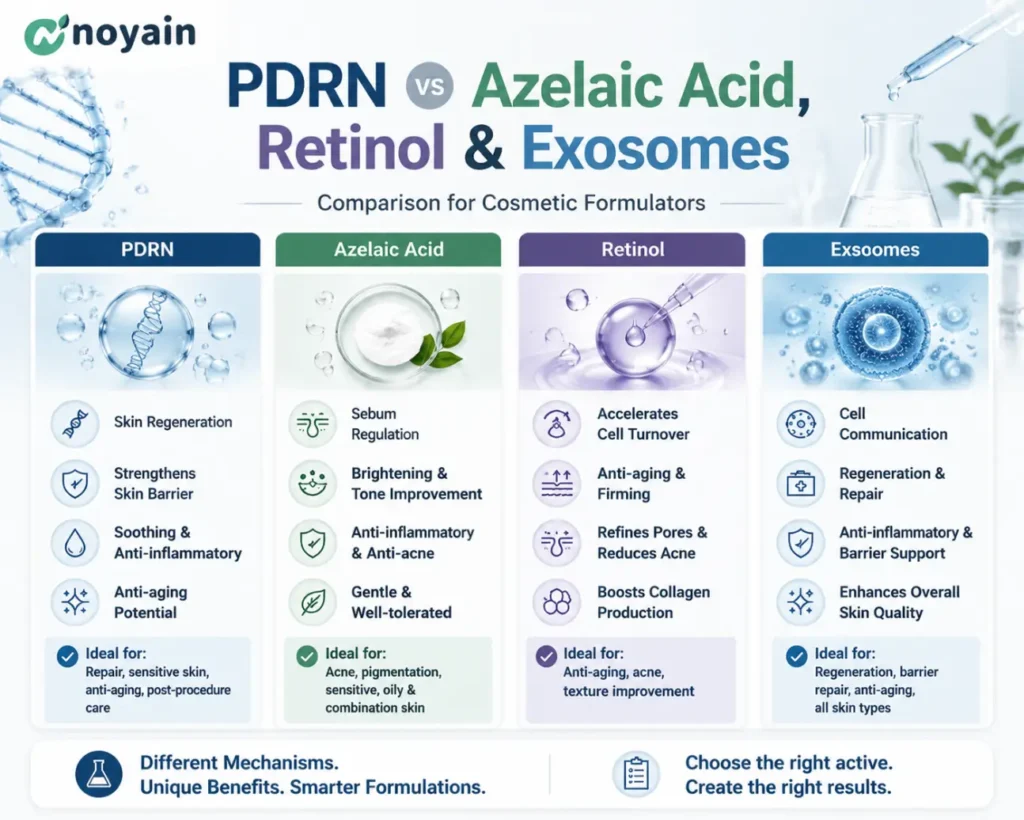
| Comparison dimension | PDRN (Sodium DNA) | Retinol | Azelaic Acid | Exosomes |
|---|---|---|---|---|
| INCI | Sodium DNA | Retinol | Azelaic Acid | Typically listed as “Exosomes” or “Human Adipocyte Conditioned Media” |
| Core Function | Repair & elasticity | Anti-aging & regeneration | Soothing & hyperpigmentation | Deep rejuvenation |
| Best For | Scars, thinning skin, barrier damage | Wrinkles, texture, acne | Rosacea, acne, melasma, redness | Aging, loss of firmness, dullness |
| Mechanism | Nucleotides signal DNA repair & fibroblast activity via A2A receptors | Accelerates cell turnover & collagen production | Gentle non-exfoliating acid targeting melanocytes & reducing inflammation | Delivers growth factors to cells triggering rapid repair & collagen synthesis |
| Irritation Level | Very Low | High (peeling/redness at higher concentrations) | Low | Extremely Low (biocompatible) |
| Starting Efficacy | Moderate (cumulative) | High (visible within weeks) | Moderate (consistent use) | High (rapid onset) |
| Relative Cost | $$ | $ | $ | $$$$ |
| Formulation Complexity | Moderate (requires delivery tech for topical) | Moderate (stabilization needed) | Low-Moderate | High (stability & sourcing) |
At a glance summary: quick reference for formulation decision-making.
What Is PDRN?
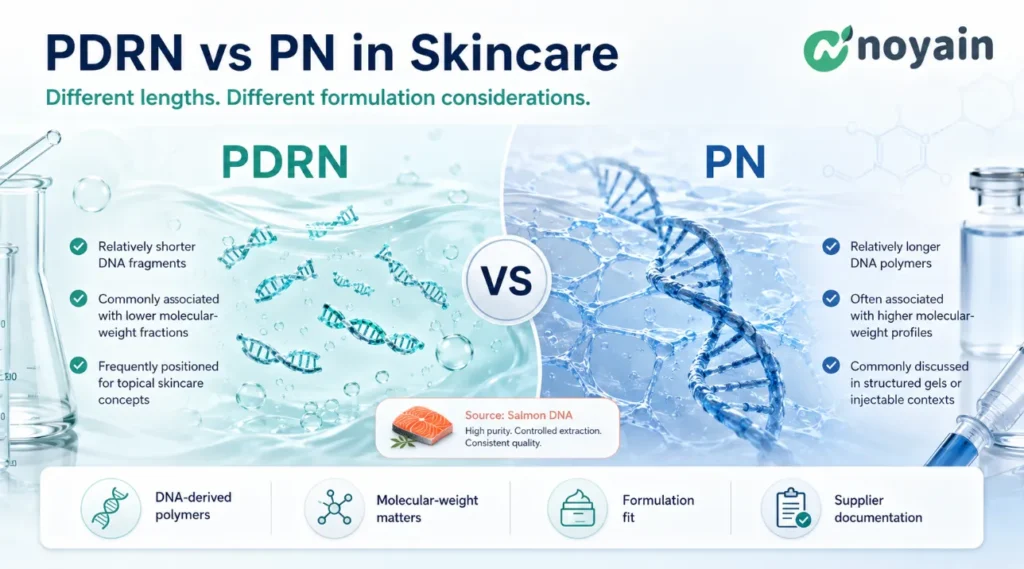
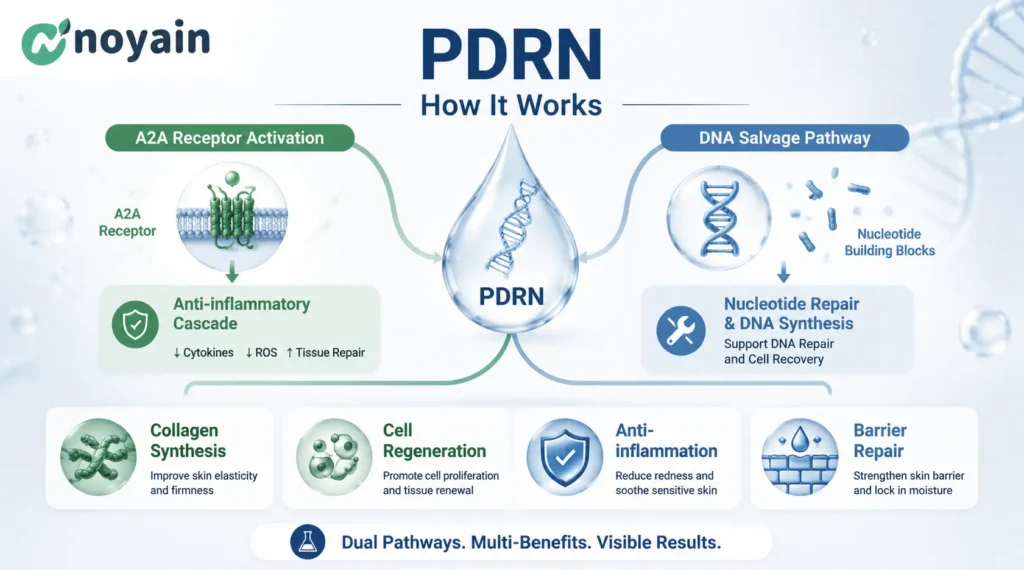
PDRN (polydeoxyribonucleotide), also known as Sodium DNA in INCI nomenclature, is a DNA-derived biopolymer extracted from salmon gonadal cells. Its mechanism is unique among cosmetic active ingredients: it binds to adenosine A2A receptors on fibroblasts and keratinocytes, triggering anti-inflammatory and pro-regenerative signaling cascades, while simultaneously providing nucleotides that serve as building blocks for DNA synthesis and cell proliferation.
For a comprehensive overview of PDRN\’s chemistry, molecular weight grades (50-300 kDa), and regulatory status, see our PDRN Complete Guide.
Key formulation note: PDRN\’s large molecular weight (50-300 kDa) far exceeds the 500 Dalton rule for passive transdermal penetration, which naturally raises a question: if it cannot penetrate deeply, how does topical PDRN provide any benefit at all?
The answer lies in PDRN\’s polyphosphate backbone — structurally similar to high-molecular-weight hyaluronic acid. When applied topically, PDRN forms a bioadhesive film on the stratum corneum that: (1) physically reduces transepidermal water loss (TEWL) through surface film formation, and (2) binds water molecules via its phosphate groups, creating an immediate hydration and plumping effect. This surface-level barrier + hydration mechanism is the source of the baseline efficacy (modest barrier improvement, temporary smoothness) seen with simple topical PDRN formulations.
To reach fibroblasts in the dermis and trigger collagen synthesis, DNA repair signaling, and deep regeneration, advanced delivery technology is required — liposomal encapsulation (2-3x epidermal penetration enhancement), microneedle patches (direct dermal delivery), or injection (medical-grade delivery). Without these, the anti-aging and tissue-regeneration benefits attributed to PDRN in injectable studies should not be extrapolated to standard topical serums.
See our PDRN Benefits & Science article for detailed clinical evidence comparing delivery methods.
What Is Retinol?
Retinol is a Vitamin A derivative that remains the most extensively studied anti-aging active ingredient in cosmetics. It works by binding to retinoic acid receptors (RARs and RXRs) in the nucleus of skin cells, triggering gene expression that accelerates epidermal cell turnover and stimulates dermal collagen production.
The irritation trade-off: Retinol\’s efficacy is dose-dependent, but higher concentrations (0.3%+) frequently cause retinoid reaction — peeling, redness, and stinging — particularly during the adjustment period. For formulators, this means:
- Encapsulated or slow-release retinol systems (e.g., cyclodextrin complexation, microencapsulation) can improve tolerance
- Buffering with soothing agents (panthenol, niacinamide, allantoin) is recommended in leave-on formulations
- Retinol is pH-sensitive, with optimal stability at pH 5.0-6.0
Current market context: Despite the emergence of newer actives, retinol remains the benchmark for anti-aging efficacy comparisons — any alternative must demonstrate non-inferiority in collagen stimulation and wrinkle reduction to compete.
What Is Azelaic Acid?
Azelaic acid is a naturally occurring dicarboxylic acid derived from grains like wheat, barley, and rye. In cosmetic formulations, it is valued for its gentle, non-exfoliating mechanism of action:
- Anti-acne: Inhibits bacterial protein synthesis and reduces follicular keratinization
- Anti-pigmentation: Competitively inhibits tyrosinase, targeting hyperactive melanocytes without affecting normal pigmentation
- Anti-inflammatory: Scavenges free radicals and reduces inflammatory mediators, making it particularly effective for redness associated with rosacea and acne
Formulation challenge: Traditional azelaic acid is poorly water-soluble and can be difficult to formulate at effective concentrations without causing gritty textures or instability. This is where cyclodextrin complexation makes a meaningful difference — our AC60 product uses cyclodextrin technology to improve dispersion, enhance stability, and further reduce the already-low irritation potential.
| Parameter | Traditional Azelaic Acid | AC60 (Cyclodextrin Complex) |
|---|---|---|
| Solubility | Poor (requires neutralization) | Dispersible in water systems |
| Recommended dosage | 1-10% | 0.5-5.0% |
| pH stability | 4.0-7.0 | 4.0-8.0 |
| Irritation potential | Low | Very Low |
| Formulation compatibility | Limited | High (improved dispersion) |
Why More Brands Are Switching to Cyclodextrin-Based Azelaic Acid
Traditional azelaic acid has been a trusted active for decades, but formulation challenges have limited its adoption in modern skincare systems:
| Traditional Azelaic Acid Pain Points | AC60 Cyclodextrin Complex Advantage |
|---|---|
| Poor water solubility — requires neutralization or high shear to disperse | Enhanced dispersibility — ready-to-use powder disperses easily in water systems |
| Prone to crystallization at higher concentrations (> 5%), causing gritty textures | Improved stability — cyclodextrin complexation prevents crystal formation |
| Narrow pH tolerance range (4.0-7.0) limits formulation flexibility | Broad pH stability (4.0-8.0) — compatible with more formulation types |
| Moderate irritation potential at therapeutic concentrations | Reduced irritation — cyclodextrin encapsulation buffers direct skin contact |
| Difficult to incorporate into clear or low-viscosity formulations | Greater formulation versatility — suitable for serums, gels, masks, and creams |
Key insight for distributors: AC60 solves the primary complaints formulators have had with azelaic acid for years — poor solubility and difficult handling. This means fewer formulation rejections, faster product development cycles, and broader application range for your customers. For more details, see the AC60 product page.
What Are Exosomes?
Exosomes are nano-sized extracellular vesicles (30-150 nm) naturally secreted by cells, containing a cargo of growth factors, cytokines, peptides, and mRNA. In cosmetic applications, exosomes function as intercellular messengers — they fuse with target cell membranes and deliver their bioactive cargo directly into the cytoplasm, triggering rapid and coordinated tissue repair responses.
The key difference from traditional actives: While retinol, PDRN, and azelaic acid all work by signaling cells to change their behavior (receptor-mediated), exosomes deliver the actual functional molecules directly into cells. This mechanistic distinction gives exosomes a potency advantage but also introduces significant formulation challenges:
| Consideration | Detail |
|---|---|
| Sourcing | Human (adipose/umbilical cord), plant, or synthetic exosomes — each with different cargo profiles |
| Stability | Extremely fragile — require cold chain storage (-20°C) in pure form, or lyophilization for encapsulated formats |
| Concentration | Dosing is measured by particle count (e.g., 1×10^9 particles/mL) rather than weight percentage |
| Regulatory | Varies by region — may be classified as cosmetic ingredient, drug precursor, or novel substance depending on sourcing and claims |
| Cost | 10-50x higher than traditional actives |
PDRN vs Retinol: Head-to-Head Comparison
PDRN and retinol are often positioned as competing anti-aging ingredients, but they operate through fundamentally different mechanisms and serve different formulation scenarios.
| Dimension | PDRN | Retinol |
|---|---|---|
| Primary mechanism | DNA repair signaling + fibroblast activation via A2A receptors | Nuclear receptor binding → gene expression → cell turnover |
| Onset of visible results | 4-8 weeks (cumulative barrier improvement) | 2-4 weeks (accelerated shedding) |
| Irritation risk | Very low — suitable for compromised skin | High — requires gradual introduction and buffering |
| Best application | Post-procedure recovery, barrier repair, sensitive skin | Routine anti-aging, acne with texture concerns |
| Formulation complexity | Moderate (delivery technology recommended) | Moderate (stabilization required) |
| Synergy potential | Excellent pairing with retinol — PDRN pre-treatment reduces retinoid reaction by up to 40% | Better tolerated when paired with PDRN or soothing agents |
Bottom line for formulators: PDRN is not a retinol replacement — it is a retinol complement. Use retinol for the aggressive cell turnover, and PDRN to support the barrier through the adjustment phase.
PDRN vs Exosomes: The Regeneration Race
Both PDRN and exosomes target skin regeneration, but at different depths and speeds.
| Dimension | PDRN | Exosomes |
|---|---|---|
| Delivery mode | Signals cells to repair (receptor-mediated) | Delivers growth factors directly into cells (membrane fusion) |
| Onset of results | Moderate — cumulative over weeks | Fast — visible improvement in 1-2 weeks |
| Depth of action | Epidermal to superficial dermal (topical); deep dermal (injectable) | Dermal — vesicles penetrate to deeper layers |
| Cost per unit | ||
| Technical barrier | Moderate — delivery technology matters | High — cold chain, stability, sourcing |
| Best for | Sustained barrier repair, post-procedure recovery | Rapid rejuvenation, premium anti-aging lines |
Bottom line for formulators: Exosomes deliver faster, deeper results but at significantly higher cost and complexity. PDRN offers a more accessible, stable alternative for day-to-day repair and maintenance. Many premium brands use both — PDRN as the foundation repair ingredient, exosomes as the advanced treatment booster.
PDRN vs Azelaic Acid: Repair vs Soothe
These two ingredients are the most compatible pair in this comparison, targeting different layers of the same problem.
| Dimension | PDRN | Azelaic Acid |
|---|---|---|
| Primary target | Tissue repair, barrier restoration, hydration | Acne, redness, hyperpigmentation |
| Irritation risk | Very low | Low (very low with AC60 cyclodextrin complex) |
| pH compatibility (shared range) | 5.0-7.0 | 4.0-8.0 (shared optimal: 5.0-7.0) |
| Best use case | Post-procedure, barrier damage, aging skin | Acne-prone, rosacea, sensitive, pigmentation |
| Can they be combined? | Yes — excellent synergy. PDRN repairs barrier while azelaic acid soothes and controls pigment. One of the safest multi-active combinations available. |
Bottom line for formulators: If you could only stock two ingredients for a complete skincare range, PDRN + azelaic acid would be one of the most versatile combinations — covering repair, barrier support, acne, pigmentation, and anti-aging in just two active ingredients.
Efficacy Comparison
| Efficacy indicators | PDRN | Retinol | Azelaic Acid | Exosomes |
|---|---|---|---|---|
| Collagen stimulation | Moderate — primarily indirect (A2A receptor + nucleotide supply) | Strong — directly upregulates Type I & III collagen gene expression | Limited — not a primary mechanism | Strong — delivers TGF-beta, FGF, and other pro-collagen growth factors |
| Wrinkle reduction | Moderate — injectable data stronger than topical | Strong — most validated ingredient for this endpoint | Limited — indirect via improved skin condition | Strong — clinical studies show rapid improvement |
| Acne improvement | Limited — minimal direct anti-acne data | Strong — normalizes follicular keratinization | Strong — antibacterial + anti-keratinization | Moderate — anti-inflammatory benefit |
| Hyperpigmentation | Limited — early in vitro data only | Moderate — accelerates pigment dispersion | Strong — direct tyrosinase inhibition | Moderate — growth factors may regulate melanogenesis |
| Barrier repair | Strong — unique among these four | Weak — may transiently disrupt barrier | Moderate — anti-inflammatory supports barrier recovery | Moderate — growth factors support repair |
| Anti-inflammatory | Moderate — A2A receptor mediated | Limited — may cause initial irritation | Strong — direct ROS scavenging + cytokine modulation | Moderate — cargo dependent |
Key insight for formulators: No single ingredient covers all efficacy dimensions. The most effective formulations strategically layer or combine ingredients based on their complementary strength profiles.
Data note — Injectable vs topical distinction matters: Some of the Strong and Moderate ratings above (particularly for PDRN in collagen stimulation and wrinkle reduction) are based on clinical studies using intradermal injection delivery — for example, the Noh et al. (2020) study comparing injectable PDRN with injectable hyaluronic acid. These results should not be directly extrapolated to standard topical leave-on formulations without appropriate delivery technology (liposomal encapsulation, microneedle patches). See the PDRN section above for a detailed breakdown of how delivery method affects observable efficacy.
Formulation Compatibility
| dimensionality | PDRN (Sodium DNA) | Retinol | Azelaic Acid | Exosomes |
|---|---|---|---|---|
| pH Stability | 5.0-7.0 | 5.0-6.0 (optimal) | 4.0-8.0 | 5.5-7.4 (physiological) |
| Thermal Stability | Stable up to 60°C | Sensitive — avoid > 40°C; requires antioxidants | Stable up to 80°C | Very sensitive — cold chain preferred |
| Recommended concentration | 1-5% (topical) | 0.1-0.5% (leave-on); 0.5-1.0% (wash-off) | 0.5-5.0% (cyclodextrin complex) | 1×10^8 to 1×10^10 particles/mL |
| Common compatibilities | HA, niacinamide, panthenol, peptides, ceramides | Niacinamide, azelaic acid (alternating days), antioxidants | PDRN, niacinamide, salicylic acid | Peptides, HA, PDRN |
| Incompatibilities | Cationic polymers, high divalent metal ions |
Why PDRN is incompatible with these ingredients: PDRN (Sodium DNA) is a polyanionic polymer — its nucleic acid backbone carries a dense negative charge at formulation-relevant pH (5.0-7.0). When combined with cationic polymers such as Polyquaternium-10 (PQ-10), Polyquaternium-7, or cationic surfactants (e.g., behentrimonium chloride, cetrimonium bromide), electrostatic charge neutralization occurs immediately upon mixing, causing the PDRN to flocculate and precipitate out of solution. This results in visible turbidity, sedimentation, or phase separation — a failure mode that is irreversible once it occurs.
The same principle applies to high-concentration divalent metal ions (Mg²⁺, Ca²⁺, Zn²⁺): these cations bridge adjacent PDRN chains, inducing macromolecular aggregation. For formulators, the practical rule is: never add PDRN to a phase containing cationic polymers, high-load ionic minerals, or quaternary ammonium compounds. If combination with cationics is required, use a chelating agent (EDTA, tetrasodium glutamate diacetate) to sequester metal ions, and always conduct a room-temperature compatibility pre-test before scaling. | Benzoyl peroxide (oxidation), high pH (> 7.0) | Cationic surfactants (in high concentration) | High solvent concentrations, aggressive surfactants |
When to Choose Each Ingredient
Choose PDRN When
- Formulating for post-procedure recovery (post-laser, post-peel, post-microneedling)
- Targeting barrier repair and hydration as primary claims
- Developing products for sensitive or compromised skin where irritation must be minimized
- Building a synergistic anti-aging stack with retinol or exosomes (PDRN pre-treatment reduces retinol irritation)
Choose Retinol When
- Anti-aging efficacy is the primary product claim and clinical validation is required
- Targeting acne-prone skin with texture concerns — retinol normalizes follicular shedding
- Formulating for younger, resilient skin that can tolerate accelerated cell turnover
- The target market expects the “gold standard” ingredient — retinol carries the strongest consumer recognition
Choose Azelaic Acid When
- The target concern is acne + redness + pigmentation — azelaic acid uniquely addresses all three
- Formulating for rosacea-prone skin — it is one of the few actives clinically validated for this condition
- Formulating for sensitive skin that cannot tolerate retinoids or exfoliating acids
- Combining with other actives — azelaic acid\’s low irritation and broad pH tolerance make it the easiest ingredient to formulate in combination products
Choose Exosomes When
- Building a premium/luxury product line targeting deep rejuvenation
- The formulation can support cold chain storage or lyophilized delivery
- Targeting rapid, visible results — exosomes show faster onset than PDRN or retinol
- The target market accepts higher price points justified by superior delivery technology
Can They Be Used Together? Synergy Stacking Guide
One of the most frequent questions from formulators is whether these ingredients can be combined. The short answer is yes — when approached strategically.
Recommended Stacking Strategies
| Stack | Protocol | Why It Works |
|---|---|---|
| PDRN + Retinol | Apply PDRN serum first as a “barrier primer”, then retinol | PDRN strengthens barrier and reduces retinol-induced irritation; retinol handles cell turnover. Studies suggest PDRN pre-treatment can reduce retinoid reaction by up to 40% |
| PDRN + Azelaic Acid | Combine in a single formulation or layering routine | Compatible across pH 5.0-7.0; PDRN repairs while azelaic acid soothes and controls pigmentation |
| Azelaic Acid + Retinol | Use on alternating days (azelaic acid AM, retinol PM) | Azelaic acid\’s anti-inflammatory properties can soothe retinoid-induced redness; avoid same-time application due to pH preference differences |
| PDRN + Exosomes | Layer (PDRN first for barrier prep, then exosomes) | PDRN primes the skin environment for growth factor delivery; exosomes deliver the regenerative payload |
| Retinol to PDRN to Exosomes | Week 1-4: Retinol to initiate turnover; Week 4-8: Switch to PDRN for repair; Maintenance: Exosomes for deep rejuvenation | Progressive protocol that respects skin tolerance while maximizing each ingredient\’s strength phase |
Stacking Rules of Thumb
- Start low, go slow — introduce one active at a time, especially when retinol is involved
- pH layering matters — apply lower-pH products first, wait 2-3 minutes between layers
- Consider delivery format — leave-on serums generally offer better ingredient delivery than creams, but creams can layer multiple incompatible actives via separate internal phases
- Do not mix exosomes with high-surfactant systems — vesicles will rupture
Cost & Supply Chain Comparison
| dimensionality | PDRN (Sodium DNA) | Retinol | Azelaic Acid (AC60) | Exosomes |
|---|---|---|---|---|
| Price Range | $200-800/kg (powder) | $50-300/kg (encapsulated) | $30-80/kg (AC60 cyclodextrin complex) | $2,000-10,000/L (depending on sourcing) |
| Main Producing Regions | China, South Korea | Switzerland, India, China | China, India | USA, South Korea, China |
| MOQ | 1 kg (powder) | 5 kg | 1 kg | 500 mL – 1 L |
| Certifications | ISO 9001, COSMOS, Halal, BSE/TSE-free, IECIC | ISO, USP, EP | ISO 9001, COSMOS, Halal | Custom (cell bank cert, sterility testing) |
| Lead Time | 7-14 days | 14-21 days | 7-14 days | 21-45 days (custom order) |
| Supply Chain Risk | Low — established production base | Low — mature global supply chain | Low — abundant raw material sources | High — specialized manufacturing, limited suppliers |
B2B takeaway: PDRN and azelaic acid offer the best supply chain reliability and documentation completeness for formulators who need consistent quality and regulatory compliance. Exosomes require more due diligence on supplier qualification and cold chain logistics.
Market Opportunity Analysis for Ingredient Distributors
While the previous sections addressed formulators and R&D professionals, the commercial decision framework for distributors is fundamentally different. Distributors care less about mechanism of action and more about: Is demand growing? How competitive is the market? What is the margin potential?
Market Snapshot: Ingredient Demand and Opportunity (2026)
| Ingredient | Market Demand | Competition Level | Average Margin Potential | Trend Outlook |
|---|---|---|---|---|
| PDRN (Sodium DNA) | High | Medium | High | Rapid Growth |
| Retinol | Very High | Very High (saturated) | Low-Medium | Mature |
| Azelaic Acid | High | High | Medium | Stable Growth |
| Exosomes | Emerging | Low (first-mover advantage) | Very High | Strong Growth |
Ingredient Popularity Trends (2023-2026)
Google search interest over the past 3 years reveals clear trajectory differences:
| Ingredient | Search Trend Direction | Key Signal |
|---|---|---|
| PDRN | Strong growth | K-beauty exports, post-procedure skincare boom, brand-led demand for unique actives |
| Exosomes | Very strong growth from low base | Premium anti-aging buzz, aesthetics clinic adoption, social media amplification |
| Azelaic Acid | Moderate growth | Rosacea awareness, acne-treatment expansion into OTC, influencer-driven ingredient education |
| Retinol | Stable / plateaued | Market saturation, consumer shift to gentler alternatives, regulatory scrutiny on high-concentration claims |
(Source: Google Trends data for skincare ingredient queries, 2023-2026. Relative trajectory comparison.)
Deep Dive: Ingredient-by-Ingredient
PDRN — High Growth, High Margin
- K-beauty wave continues to drive global search growth, with PDRN appearing in an increasing number of international product launches
- Google search interest for PDRN has grown steadily over 3 years, with spikes correlating to K-beauty brand launches and influencer coverage
- Brand owners are actively seeking reliable PDRN suppliers — the ingredient is still early in its adoption curve outside of Korea
- High value-add positioning (regenerative, DNA-derived, premium) supports higher pricing and margins
- Distributor opportunity: First-mover advantage for suppliers outside of Korea who can offer documented, BSE/TSE-free PDRN
Exosomes — Emerging, Highest Margin, Highest Barrier
- Currently the most talked-about ingredient in advanced skincare, but technical complexity limits supply
- Very few suppliers can meet the cold-chain, sterility, and documentation requirements demanded by brand owners and regulators
- Those who can supply certified, stable exosome ingredients command premium pricing, often 10 to 50 times traditional actives
- Distributor opportunity: Requires technical support capability and cold-chain logistics investment, but the margin and differentiation payoff is unmatched.
Azelaic Acid — Stable, Reliable, Easy Entry
- Consistent demand driven by acne and rosacea treatment categories — both growing segments globally
- Mature supply chain means competitive pricing, but consistent quality and documentation (especially for the China market) remain differentiators
- Cyclodextrin complexed forms (like AC60) represent a value-add opportunity — easier formulation means faster customer adoption
- Distributor opportunity: Easy to add to existing portfolio, fast-moving product, low technical barrier for customer education.
Retinol — Volume Game, Low Margin
- The most widely available anti-aging active with the highest brand recognition — and the highest supplier competition
- Market saturation has driven prices down; margins are thin unless offering encapsulated or proprietary delivery systems
- Well-suited for large-volume distribution to established brands with predictable demand
- Distributor opportunity: Best for distributors who compete on volume and logistics efficiency, rather than margin or differentiation.
Which Ingredient Should Distributors Stock?
| If you serve… | Prioritize stocking… | Why |
|---|---|---|
| K-beauty brands and anti-aging product developers | PDRN (Sodium DNA) | High demand growth, limited qualified suppliers, higher margin than commodity actives |
| Acne-care and sensitive skin brands | Azelaic Acid (AC60) | Steady demand, easy to formulate, fast-moving inventory, cyclodextrin version offers differentiation |
| Premium/luxury brands and aesthetics clinics | Exosomes | Highest margin, first-mover advantage, strong trend trajectory, but requires technical support capability |
| Mass-market and volume buyers | Retinol | Guaranteed demand, suitable for large-volume distributors with logistics advantage, but thin margins |
| Multi-category brands (recommended starter portfolio) | PDRN + Azelaic Acid | The most versatile 2-ingredient combination — covers anti-aging, repair, acne, pigmentation. Compatible in formulations, complementary in function |
Strategic note for new distributors: If you are building your active ingredient portfolio from scratch, start with PDRN and azelaic acid (AC60). These two cover the widest range of brand customer needs with the best balance of margin, demand growth, and supply chain reliability. Add exosomes once you have technical support infrastructure in place. Retinol is best reserved for volume-based procurement relationships.
Verdict: Which Ingredient for Your Next Formulation?
| If Your Priority Is… | Recommended Choice | Also Consider Stacking With… |
|---|---|---|
| Post-procedure recovery & barrier repair | PDRN | Azelaic acid (soothing) |
| Anti-aging efficacy (gold standard) | Retinol | PDRN (barrier support to reduce irritation) |
| Acne + redness + pigmentation (all-in-one) | Azelaic Acid (AC60) | PDRN (for underlying barrier repair) |
| Deep rejuvenation with rapid visible results | Exosomes | PDRN (for sustained repair) |
| Sensitive skin formulation | Azelaic Acid or PDRN | Both are compatible in combination |
| Best value (efficacy per dollar) | Azelaic Acid (AC60) | Retinol (if tolerance allows) |
| Premium positioning & fastest action | Exosomes | PDRN (as a delivery enhancer) |
| Simplest formulation & supply chain | Azelaic Acid (AC60) | Ready-to-use cyclodextrin complex |
Frequently Asked Questions for Distributors
Q1: Is PDRN more popular than retinol right now?
In search volume terms, retinol remains significantly more searched globally. However, PDRN shows a much higher growth rate — search interest has increased 3-5x over the past 2 years, while retinol has plateaued. For distributors, this means retinol is the safe volume play, while PDRN represents the growth opportunity with higher margins.
Q2: Can distributors sell PDRN in Europe?
Yes. PDRN (Sodium DNA) is listed in the EU CosIng database and is compliant for cosmetic use. Suppliers who provide full documentation — including COA, BSE/TSE-free certification, and manufacturing process details — will find regulatory acceptance straightforward. Both Sodium DNA and AC60 from our product line meet EU compliance requirements.
Q3: Is exosome skincare regulated differently in different countries?
Yes, significantly. Exosomes occupy a regulatory grey area in many regions. In the EU and US, they may be classified as cosmetic ingredients, drug precursors, or novel substances depending on sourcing (human vs plant vs synthetic) and marketing claims. In China, imported exosome ingredients face additional scrutiny under NMPA. PDRN and azelaic acid have clearer regulatory pathways globally.
Q4: Which ingredient offers the highest profit margin?
Exosomes offer the highest absolute margin (10-50x traditional actives) but require cold-chain logistics and technical support. PDRN offers the best relative margin-to-complexity ratio — high margins without extreme handling requirements. Azelaic acid (AC60) offers moderate but reliable margins with the lowest technical barrier. Retinol margins are the thinnest due to market saturation.
Q5: What is the typical MOQ for PDRN ingredients?
For standard cosmetic-grade PDRN (Sodium DNA) powder, the typical MOQ is 1 kg for sample/testing quantities and 25 kg for production scale. AC60 Azelaic Acid Cyclodextrin Complex follows the same structure: 1 kg trial size, 25 kg production. For custom formulations or liposomal encapsulated versions, MOQ may vary based on the processing requirements.
Q6: Can PDRN and azelaic acid be supplied together as a bundle?
Yes. Many distributors prefer bundling complementary ingredients to simplify procurement for their customers. PDRN and azelaic acid are an ideal pair — compatible in formulations, complementary in function, and both supplied with full regulatory documentation (COA, MSDS, IECIC, EU CosIng). Contact our team for bundled pricing and combined documentation packages.
Explore Our Products
We supply high-purity cosmetic-grade PDRN and azelaic acid cyclodextrin complex with full regulatory documentation.
| Product | INCI | Purity | Key Advantage | Sample Size | Production Size |
|---|---|---|---|---|---|
| Sodium DNA (PDRN) | Sodium DNA | >= 99% (powder) | Salmon-derived, BSE/TSE-free, 50-300 kDa | 1 kg | 25 kg |
| AC60 Azelaic Acid Complex | Azelaic Acid (and) Cyclodextrin | 99% | Cyclodextrin-enhanced stability & dispersion | 1 kg | 25 kg |
Full documentation with every order:
- COA with specification testing
- MSDS
- IECIC compliance documentation (China)
- China NMPA Raw Material Submission Code — available for both Sodium DNA and AC60, meeting the 2026 NMPA filing requirements for imported cosmetic ingredients. This is increasingly a non-negotiable requirement for brand owners sourcing ingredients destined for the China market.
- EU CosIng compliance dossier
- BSE/TSE-free certification (Sodium DNA)
Technical formulation support available — contact our team for:
- Tested benchmark frame formulations incorporating these ingredients
- Compatibility testing for your specific formula
- Custom grade and particle size requirements
Reach us at [email protected] or visit our product pages:
Related Articles
- Pillar: What is PDRN? Complete Guide
- Related: PDRN Benefits for Skin | Salmon DNA: Trend or Science?
- Category: Ingredient Comparison
- Products: Sodium DNA (PDRN) | AC60 Azelaic Acid
References
- Kwon, T.R., et al., 2021. Polydeoxyribonucleotide and Its Role in Tissue Regeneration: A Systematic Review. Molecules, 26(10), 2984.
- Noh, T.K., et al., 2020. Comparison of Polydeoxyribonucleotide and Hyaluronic Acid for Skin Rejuvenation. Dermatologic Surgery, 46(6), 804-812.
- Mukherjee, S., et al., 2006. Retinoids in the treatment of skin aging: an overview of clinical efficacy and safety. Clinical Interventions in Aging, 1(4), 327-348.
- Fitton, A. & Goa, K.L., 1991. Azelaic Acid: A Review of its Pharmacological Properties and Therapeutic Efficacy in Acne and Hyperpigmentary Skin Disorders. Drugs, 41(5), 780-798.
- Lee, J.H., et al., 2022. Effects of Topical Polydeoxyribonucleotide on Skin Barrier Function. International Journal of Molecular Sciences, 23(15), 8452.
- Kalluri, R. & LeBleu, V.S., 2020. The biology, function, and biomedical applications of exosomes. Science, 367(6478), eaau6977.
- CosIng Database — Sodium DNA, Retinol, Azelaic Acid. European Commission. Accessed June 2026.
- China NMPA. YI SHI YONG HUA ZHUANG PIN YUAN LIAO MU LU (IECIC 2021).
- Google Trends. PDRN / Retinol / Azelaic Acid / Exosomes Skincare 2023-2026. Accessed June 2026.