PDRN can be delivered through injection or topical application — but these two routes produce very different outcomes. This guide compares both delivery methods from efficacy, safety, formulation and commercial perspectives, with clinical data to back each claim.
Key Takeaways
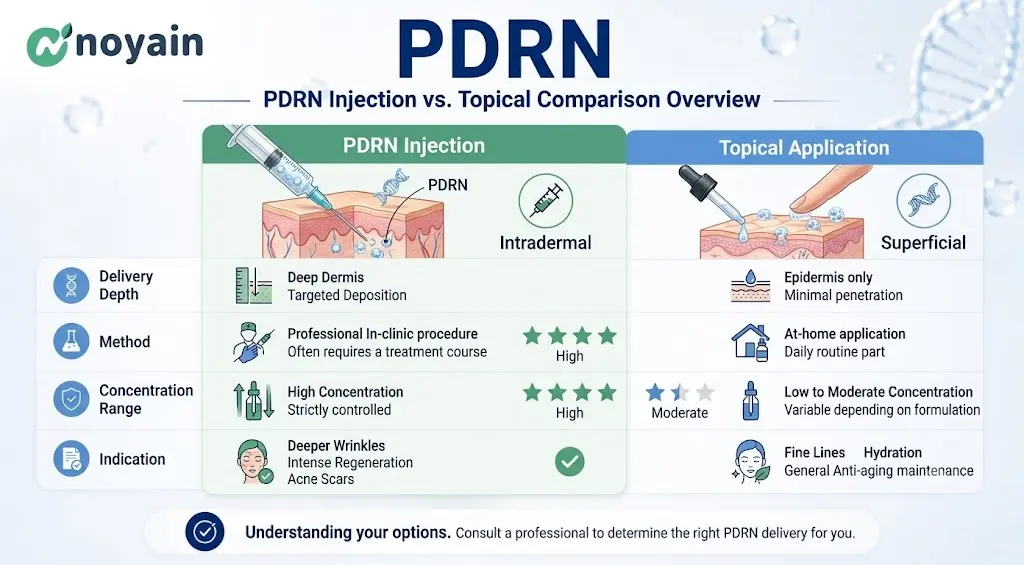
- Injectable PDRN achieves deeper dermal delivery and stronger clinical outcomes, especially for scar remodeling and volumetric rejuvenation
- Topical PDRN relies on hydrated skin conditions and prolonged contact time — it cannot passively diffuse across intact stratum corneum at 250-1500 kDa
- Sheet masks and occlusive systems are the most effective topical formats for PDRN delivery
- Clinical studies show measurable improvements for both routes, but the magnitude and depth of effect differ significantly
- Choosing between injection and topical depends on the target indication, regulatory pathway, and commercial positioning
The Challenge
PDRN (polydeoxyribonucleotide) is a high-molecular-weight DNA fragment ranging from 250 to 1500 kDa. By comparison, the established threshold for passive transdermal penetration is approximately 500 Da. This means the PDRN molecule is 500 to 3,000 times larger than what can passively diffuse across intact skin.
Quick Specs:
| Parameter | Injectable PDRN | Topical PDRN |
|---|---|---|
| Delivery route | Intradermal / subcutaneous injection | Transdermal application |
| Molecular weight handling | Bypasses skin barrier entirely | Requires hydrated skin + prolonged contact |
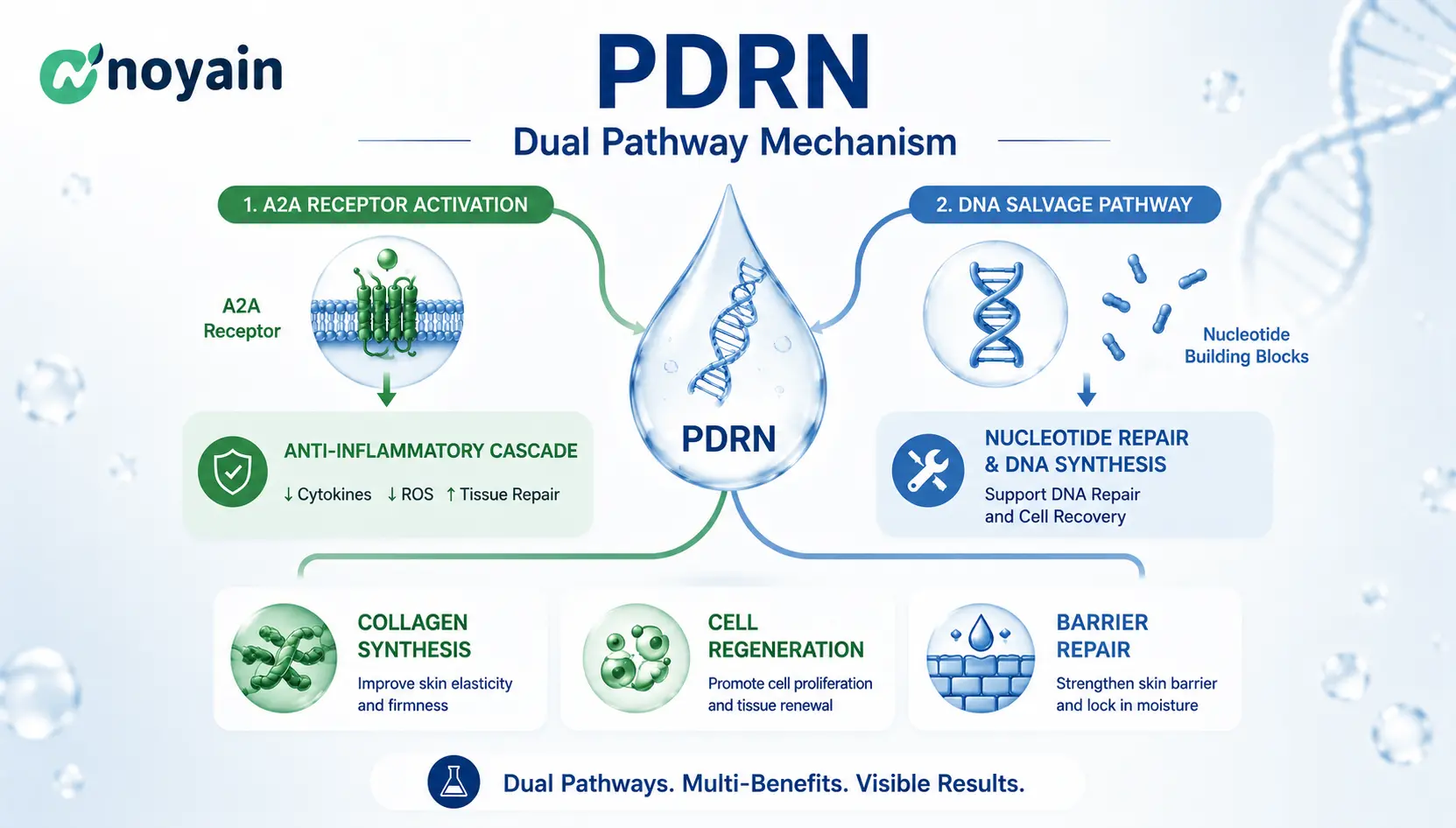
| Primary mechanism | Direct dermal A2A receptor activation | Surface-level A2A + barrier repair |
| Typical concentration | 1.0-2.0% (in-clinic) | 0.02-1.0% (cosmetic) |
| Regulatory status | Medical device (injectable) | Cosmetic ingredient (topical) |
What the Science Says: Injection vs Topical
Think of it this way: small-molecule skincare actives like niacinamide (122 Da) are marbles that slip through a door gap easily. PDRN at 250-1500 kDa is more like a basketball — it is not going through that gap. But that does not mean it cannot work. The basketball can still be effective if you create the right conditions — which is exactly what injection and topical delivery do in very different ways.
Injectable PDRN: Direct Dermal Delivery
Injectable PDRN bypasses the stratum corneum barrier entirely and delivers the full-length molecule directly into the dermis. This route activates the A2A receptor pathway in fibroblasts and endothelial cells at maximum potency.
Key clinical evidence for injectable PDRN:
| Study | Design | Key Findings |
|---|---|---|
| Squadrito F, 2017 (Frontiers in Pharmacology, IF 5.988) | Comprehensive review | Confirmed A2A receptor activation mechanism for injectable PDRN across wound healing and tissue repair |
| Thellung S, 2025 (J Dermatol Sci, IF 4.521) | Systematic review | Demonstrated accelerated wound healing through A2A receptor pathway and salvage pathway |
| Galeano M, 2008 (Wound Repair Regen, IF 4.123) | Diabetic mouse model | Injectable PDRN stimulated significant angiogenesis (VEGF expression increased, P<0.001) |
| Choi J, 2020 (J Invest Dermatol, IF 7.564) | In vitro skin cells | PDRN activated mitochondrial biogenesis, reduced MMP-1 activity and inhibited melanin biosynthesis |
Injectable PDRN is typically administered as a series of 2-4 treatments at 2-4 week intervals. Clinical results are cumulative, with continued improvement observed up to 3 months after the final session.
Topical PDRN: Surface-Level Bioactivity
Topical PDRN cannot achieve the same dermal concentration as injection, but it offers distinct advantages: zero downtime, lower unit cost, broader consumer reach, and the ability to combine with other cosmetic actives.
Think of topical PDRN as a surface treatment that works through occlusive conditions rather than deep penetration. The PDRN molecule exerts its bioactivity at the epidermal-dermal junction and relies on the skin’s natural hydration gradient to facilitate some degree of intercellular transport.
Key clinical evidence for topical PDRN:
| Study | Design | Key Findings |
|---|---|---|
| Human clinical trial (33 subjects, 0.5% PDRN cream, 28 days) | Controlled study | Hydration +45.48%, skin elasticity +11.86%, crow’s feet area -8.99%, skin density confirmed by ultrasound |
| Zhang L, 2023 (Int J Biol Macromol, IF 8.213) | Chitosan-PDRN polyplex delivery | Topical PDRN delivery system showed enhanced wound healing in diabetic model |
| Park S, 2024 (PLOS ONE, IF 3.752) | In vitro aging model | Topical PDRN prevented SIRT1 degradation through autophagy attenuation |
Why Does Topical PDRN Still Deliver Benefits?
If PDRN is too large to passively penetrate the stratum corneum, why do topical PDRN products show measurable clinical results? This is the most common question formulators ask — and the answer lies in four distinct mechanisms that do not require full transdermal penetration:
Mechanism 1 — Epidermal A2A Receptor Signaling
PDRN binds to A2A receptors expressed on keratinocytes in the upper epidermis. This binding triggers an intracellular signaling cascade that propagates downward to fibroblasts in the dermis. The signal — not the molecule itself — reaches the target cells. Think of it as pressing a doorbell: you do not need to enter the house to let the occupant know you are there.
Mechanism 2 — Hydration-Mediated Biological Activity
PDRN is a highly hygroscopic molecule. Under occlusive conditions (sheet mask, cream base), it creates a hydrated micro-environment that softens the stratum corneum and facilitates intercellular transport through the lipid matrix. Prolonged contact time (15-30 minutes) allows a small fraction of the molecule to reach the viable epidermis.
Mechanism 3 — Micro-Damaged Barrier Interaction
Sensitive or compromised skin — common among the target audience for repair and anti-aging products — has microscopic gaps in the barrier function. PDRN can access the lower epidermis through these micro-damaged sites. This also explains why PDRN is particularly effective in post-procedure and barrier repair formulations.
Mechanism 4 — Advanced Delivery Systems
Liposomal encapsulation, nanoemulsion carriers and chitosan-based polyplex systems (Zhang et al., 2023) can carry PDRN across or through the stratum corneum. These delivery technologies are the primary differentiator between effective and ineffective topical PDRN products on the market today.
Formulator’s Insight
The question is not “Can PDRN penetrate skin?” but “Under what conditions can topical PDRN deliver measurable bioactivity?” The answer: hydrated skin + prolonged contact + optimized delivery system + appropriate concentration. A well-designed topical PDRN product does not need to penetrate deeply — it needs to signal effectively.
Head-to-Head Comparison
| Dimension | Injectable PDRN | Topical PDRN |
|---|---|---|
| Depth of delivery | Full dermal penetration | Epidermal-dermal junction, limited |
| A2A receptor activation | Maximum potency | Moderate, requires optimal conditions |
| Collagen stimulation | Strong (direct fibroblast targeting) | Moderate (surface-mediated) |
| Scar remodeling | Clinically demonstrated for acne scars | Limited evidence |
| Anti-aging effect | Volumetric rejuvenation | Surface smoothing |
| Whitening/brightening | Clinically demonstrated | Moderate (MMP-1 + melanin inhibition) |
| Onset of results | 2-4 weeks after first session | 2-4 weeks of daily use |
| Duration of effect | 3-6 months | 24-48 hours per application |
| Downtime | 1-3 days (swelling, redness) | None |
| Cost per session | High ($200-500+) | Low ($5-30 per product) |
Who Should Choose Which Delivery Method?
| User / Business Type | Recommended Route | Why |
|---|---|---|
| Medical aesthetic clinic | Injectable PDRN | Higher treatment value per session, stronger clinical outcomes for scar remodeling and volumetric rejuvenation |
| Dermatologist | Injectable + topical | Combination protocols improve maintenance between injection sessions |
| Cosmetic brand owner | Topical PDRN | Cosmetic regulatory pathway, mass-market scalability, repeat purchase model |
| Anti-aging serum brand | Topical PDRN | Daily-use product with measurable hydration and smoothness claims |
| Scar treatment clinic | Injectable PDRN | Better clinical evidence for dermal remodeling |
| Post-procedure care brand | Topical PDRN | Supports recovery, barrier repair, and prolonged in-clinic results |
PDRN for Delicate Zones: The Under-Eye Application
Due to its high safety profile and non-crosslinked nature, injectable PDRN has become a preferred option for the PDRN under eye treatment — targeting dark circles, tear troughs and periorbital fine lines — where traditional dermal fillers carry a high risk of the Tyndall effect or lumpiness. Topical PDRN can serve as an excellent post-procedure homecare matrix to prolong these under-eye rejuvenation effects without additional irritation.
Molecular Weight Comparison: Why Size Matters
To understand why PDRN cannot passively diffuse across intact skin, it helps to see where it sits relative to other common skincare ingredients:
| Ingredient | Molecular Weight |
|---|---|
| Water | 18 Da |
| Glycerin | 92 Da |
| Niacinamide | 122 Da |
| Vitamin C (L-Ascorbic Acid) | 176 Da |
| Hyaluronic Acid (cosmetic) | 50,000 – 3,000,000 Da |
| PDRN | 250,000 – 1,500,000 Da |
The established threshold for passive transdermal penetration is approximately 500 Da. PDRN exceeds this by 500 to 3,000 times. This is why the delivery system — not just the molecule — determines the product efficacy.
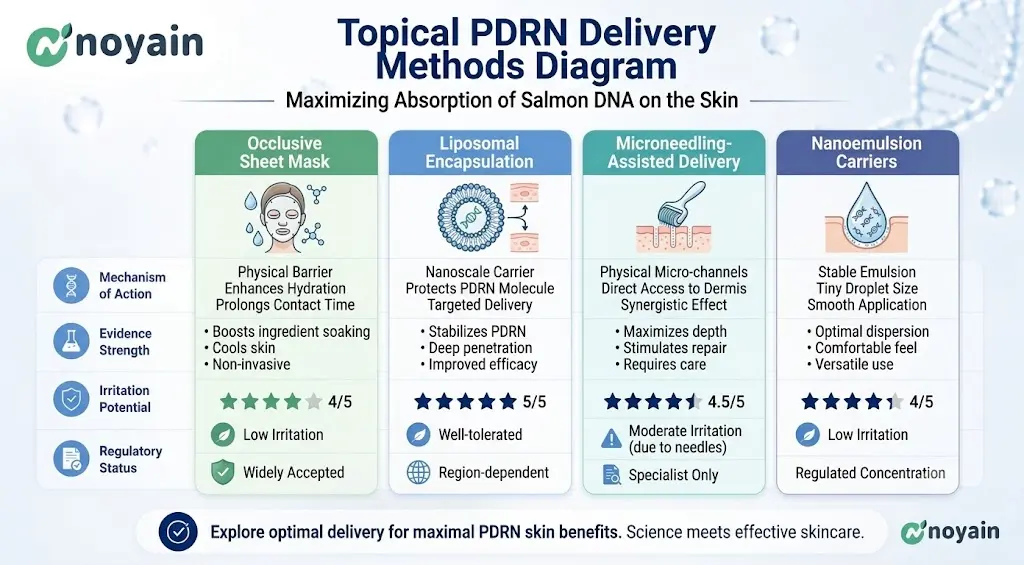
Delivery Systems That Work for Topical PDRN
For formulators looking to maximize topical PDRN efficacy, the delivery system is as important as the PDRN dosage itself. The following strategies are supported by published research:
1. Occlusive Sheet Mask Systems
Sheet masks create a hydrated micro-environment that softens the stratum corneum and prolongs contact time. Zhang et al. (2023) demonstrated that chitosan-based PDRN polyplex delivery significantly enhanced wound healing activity in both in vitro and in vivo models.
2. Liposomal Encapsulation
Liposomal carriers protect PDRN from enzymatic degradation and facilitate fusion with cell membranes. This approach can increase localized PDRN concentration at the target site without increasing the total dosage.
3. Microneedling-Assisted Delivery
Microneedling creates temporary microchannels that allow the full PDRN molecule to reach the dermis. This hybrid approach combines the accessibility of topical application with delivery depth approaching that of injection. Clinical studies show microneedling + PDRN produces superior outcomes compared to either treatment alone.
PDRN Microneedling: The Hybrid Approach
PDRN microneedling has become one of the fastest-growing treatment categories in aesthetic medicine, particularly in the Korean skincare market.
Why microneedling works with PDRN:
- Creates transient microchannels (100-500 um deep) that bypass the stratum corneum barrier
- Delivers the full 250-1500 kDa PDRN molecule directly to the dermis
- Microneedling-induced inflammation synergises with PDRN’s A2A receptor anti-inflammatory pathway
- No injection-related risks — swelling and downtime are significantly lower than injectable PDRN
Clinical application: Microneedling with PDRN is used for acne scar remodeling, skin rejuvenation, and stretch mark treatment. It is also the most common professional treatment for PDRN skin booster protocols in Asia-Pacific markets.
What Is a PDRN Skin Booster?
The term PDRN skin booster refers to a topical or microneedling-delivered PDRN product designed to improve overall skin quality — hydration, radiance, texture and firmness — rather than targeting a specific concern like wrinkles or pigmentation.
Key distinction:
- Skin Booster is not a Filler. Fillers add volume; skin boosters improve skin quality.
- Skin Booster is not a Biostimulator. Biostimulators (like poly-L-lactic acid) stimulate collagen production over months; PDRN skin boosters work faster through A2A receptor activation and DNA salvage pathways.
Popular brands in this category include Rejuran, Plinest and Nucleofill. While these are injectable products, the concept of skin boosting with PDRN has expanded into topical formats for home-use maintenance.
Formulator’s Note — Delivery Strategy Matters
Choosing the wrong delivery system for topical PDRN is the most common reason PDRN products underperform. A 1.0% PDRN serum in a poorly designed base will deliver less noticeable results than a 0.3% PDRN formulated with liposomal encapsulation or in an optimized sheet mask format.
Safety Profile Comparison
Injectable PDRN Safety
| Consideration | Detail |
|---|---|
| Common side effects | Mild swelling, redness, bruising at injection site (1-3 days) |
| Rare complications | Granuloma formation (reported but uncommon), infection risk |
| Contraindications | Pregnancy, active skin infection, autoimmune disorders |
| Expertise required | Trained medical professional |
Topical PDRN Safety
| Consideration | Detail |
|---|---|
| Common side effects | Very rare — mild tingling in sensitive skin |
| Formulation risks | Charge incompatibility with cationic ingredients (precipitation), pH-driven denaturation |
| Skin sensitivity | Well-tolerated in cosmetic use |
| Regulatory | Compliant as cosmetic ingredient in most markets |
PDRN Formulation Compatibility Guide
For formulators developing topical PDRN products, ingredient compatibility is critical. PDRN (Sodium DNA) is a negatively charged polynucleotide and must be handled accordingly:
| Ingredient | Compatibility | Notes |
|---|---|---|
| Niacinamide | Excellent | Synergistic anti-inflammatory + barrier support |
| Ceramides | Excellent | Compatible in oil-phase addition |
| Peptides | Excellent | Add in cool-down phase separately |
| Hyaluronic Acid | Excellent | Compatible in water phase |
| Panthenol (Pro-Vitamin B5) | Excellent | Enhances barrier repair synergy |
| Vitamin C (L-Ascorbic Acid, pH < 4) | Use Caution | Low pH may denature PDRN — consider vitamin C derivatives at pH 5.5-6.0 |
| Retinol | Use Caution | Layer separately or use in different PM/AM routines |
| Polyquaternium-10 | Not Recommended | Charge neutralisation causes precipitation |
| Behentrimonium Chloride | Not Recommended | Cationic surfactant incompatibility |
| Cetrimonium Chloride | Not Recommended | Strong cationic charge will flocculate PDRN |
Formulator’s Note — Always Test Your Compatibility
We recommend preparing small batch prototypes (200-500 g) for each new PDRN formulation and running a 4-week accelerated stability test (40 degree C / 75% RH) before scaling to production. Pay special attention to viscosity changes, precipitation and pH drift.Formulator’s Note — Always Test Compatibility
PDRN (Sodium DNA) is a negatively charged polynucleotide. Avoid combining it with strongly cationic ingredients such as Polyquaternium-10 or Behentrimonium Chloride in topical formulations, as charge neutralisation will cause precipitation and loss of bioactivity.
We recommend preparing small batch prototypes (200-500 g) for each new formulation and running a 4-week accelerated stability test (40°C / 75% RH) before scaling to production.
Commercial Considerations
Which Format Should a Brand Choose?
| Decision Factor | Choose Injectable | Choose Topical |
|---|---|---|
| Target market | Medical aesthetics clinics | Consumer skincare |
| Price point | $200-500+ per session | $20-80 per product |
| Regulatory pathway | Medical device registration | Cosmetic notification |
| Repeat purchase | Office visits (3-4x/year) | Consumer retail (monthly) |
| Brand positioning | Clinical / professional | Accessible / daily care |
| Volume potential | Lower (per-unit high) | Higher (per-unit lower) |
Raw Material Considerations for Formulators
| Parameter | Injectable Grade | Topical Grade |
|---|---|---|
| Purity requirement | Medical grade (high purity, low endotoxin) | Cosmetic grade |
| Molecular weight | Typically higher (500-1500 kDa) | Can use wider range |
| Sterility | Sterile, preservative-free | Preserved cosmetic formulation |
| Documentation | CE/FDA submission documentation | COA, TDS, MSDS |
| Cost per kg | Significantly higher | Moderate |
FAQ
Is PDRN injection painful?
Discomfort is mild to moderate. Most injectable PDRN products contain lidocaine or are combined with a topical anesthetic. Swelling typically resolves within 1-3 days.
Can PDRN be used topically after injection?
Yes. Many clinics recommend topical PDRN products as maintenance between injection sessions. This hybrid approach is a growing trend in post-procedure skincare protocols.
How long do PDRN injection results last?
Clinical effects typically last 3-6 months. Maintenance sessions at 4-6 month intervals are recommended for sustained results.
Does topical PDRN work for anti-aging?
Yes, but the scope differs from injectable. Topical PDRN improves hydration (+45.48% at 28 days), elasticity (+11.86%) and surface-level smoothing. It is most effective as a daily maintenance product between in-clinic treatments.
What is the best concentration of PDRN in a topical product?
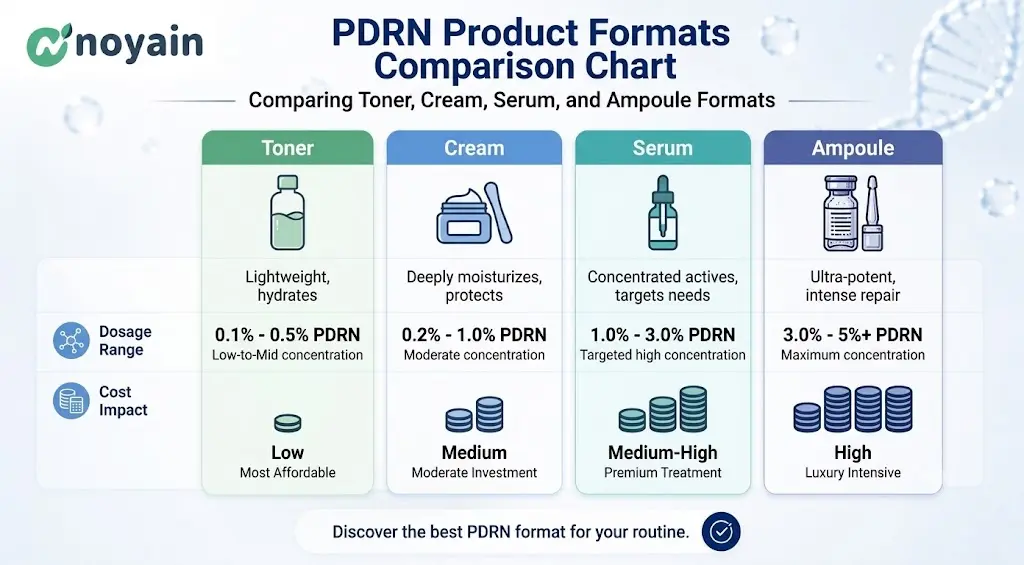
For serums: 0.3-1.0%. For creams: 0.1-0.3%. For sheet masks: 0.05-0.1%. The optimal concentration depends on the delivery system and product format. See our PDRN Formulation Guide for detailed dosage recommendations.
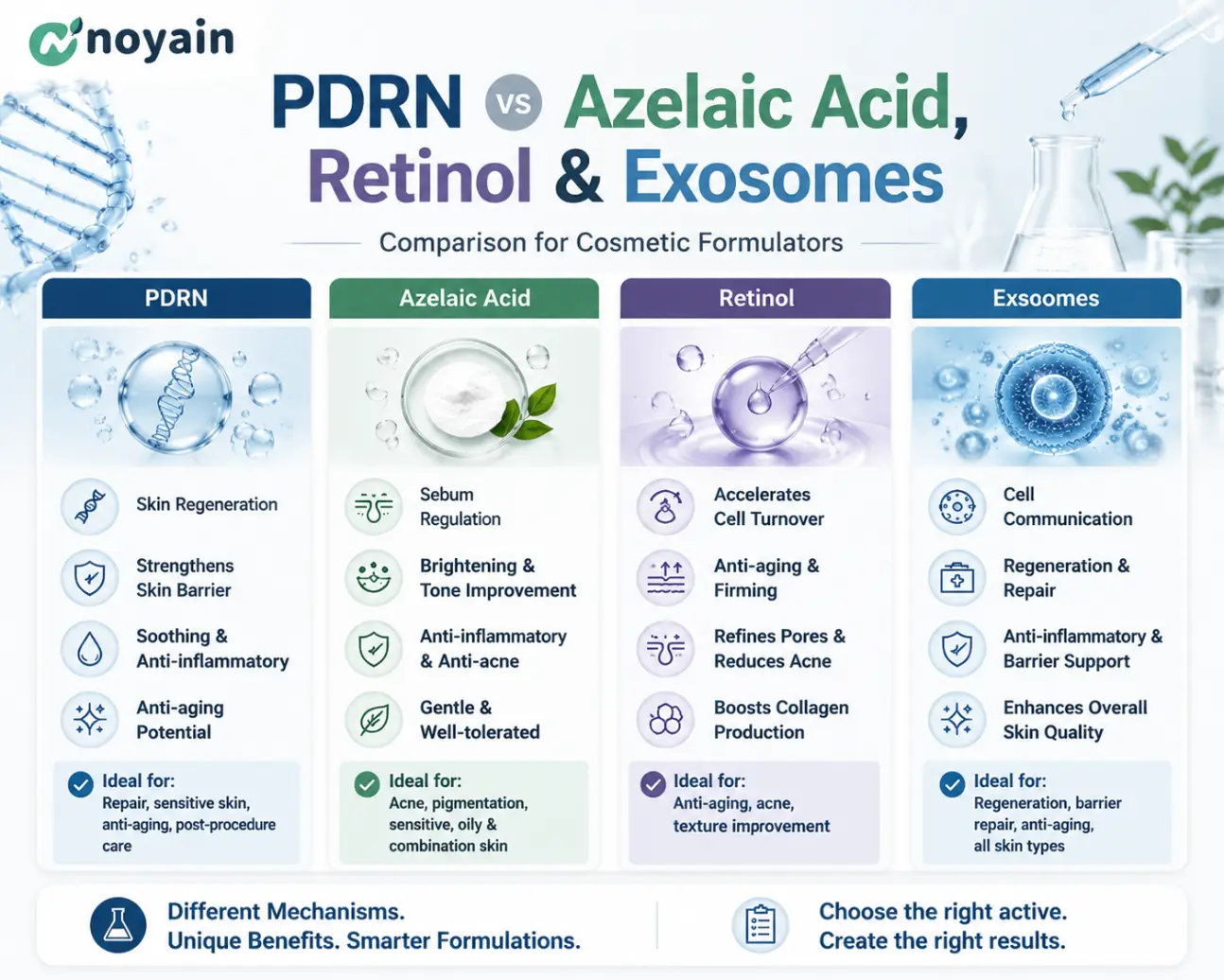
Can PDRN be combined with retinol?
Generally yes, but layer them separately. Use PDRN in the AM routine and retinol in the PM routine to avoid potential interference with each other’s pH and delivery requirements.
Is PDRN better than hyaluronic acid?
They are complementary, not competing. HA is a humectant that hydrates; PDRN is a polynucleotide that activates cellular repair pathways. Many premium formulations combine both for synergistic effects.
Can PDRN replace Botox?
No. Botox temporarily paralyses muscle activity to smooth dynamic wrinkles. PDRN works on skin quality, repair and regeneration — it improves fine lines and texture but does not affect muscle movement.
Is PDRN safe during pregnancy?
Topical PDRN in cosmetic concentrations is generally considered safe during pregnancy. However, injectable PDRN treatments should be discussed with a healthcare provider. Always consult a physician before starting any new skincare regimen during pregnancy.
Does PDRN help with acne scars?
Yes. Clinical evidence supports PDRN’s effectiveness in acne scar remodeling, particularly through injectable and microneedling delivery. The A2A receptor pathway promotes collagen remodelling and reduces scar-associated inflammation.
What is the difference between Rejuran and PDRN?
Rejuran is a specific brand of injectable PDRN derived from salmon DNA. Not all PDRN products are Rejuran, but Rejuran is the most well-known PDRN brand in the aesthetic market. PDRN is the generic ingredient name.
How often should PDRN injections be repeated?
A typical protocol involves 2-4 sessions at 2-4 week intervals, followed by maintenance sessions every 4-6 months.
For both injectable and topical applications, the quality of the PDRN raw material is the foundation of the final product’s performance. Here are the key questions to ask any potential PDRN supplier:
| Question | Why It Matters |
|---|---|
| What is the DNA source? | Wild-caught salmon from pristine waters (e.g., Russian Far East Pacific salmon) avoids contaminants from antibiotics, pesticides and artificial feed found in farmed fish |
| What is the extraction method? | CAS-validated inorganic salt extraction (no toxic solvent residues) is the gold standard — phenol-chloroform methods leave harmful residues |
| What is the molecular weight range? | Higher MW (500-1500 kDa) is preferred for injectable applications; wider range is acceptable for topical |
| What is the endotoxin level? | Critical for injectable grade — ensure below medical device thresholds |
| Can you provide HPLC purity data? | High-purity PDRN self-aggregates and crystallises — regular crystal morphology confirms low impurities |
| Is batch traceability available? | COA, TDS, MSDS, BSE/TSE-free certificate for each production lot |
| What technical support do you offer? | Formulation guidelines, stability testing support and compatibility data reduce development risk |
PDRN Sourcing & Quality Checklist
The quality of your PDRN raw material determines the performance of your final product — whether injectable or topical. This checklist consolidates everything you need to evaluate a PDRN supplier.
Supplier Evaluation Checklist
| Question | Why It Matters |
|---|---|
| What is the DNA source? | Wild-caught salmon from pristine waters (e.g., Russian Far East Pacific salmon) avoids contaminants from antibiotics, pesticides and artificial feed found in farmed fish |
| What is the extraction method? | CAS-validated inorganic salt extraction (no toxic solvent residues) is the gold standard — phenol-chloroform methods leave harmful residues |
| What is the molecular weight range? | Higher MW (500-1500 kDa) is preferred for injectable applications; wider range is acceptable for topical |
| What is the endotoxin level? | Critical for injectable grade — ensure below medical device thresholds |
| Can you provide HPLC purity data? | High-purity PDRN self-aggregates and crystallises — regular crystal morphology confirms low impurities |
| Is batch traceability available? | COA, TDS, MSDS, BSE/TSE-free certificate for each production lot |
| What technical support do you offer? | Formulation guidelines, stability testing support and compatibility data reduce development risk |
Supplier Best Practices
Beyond the checklist, consider these best practices when selecting a PDRN partner:
- Source traceability — Demand documentation tracing raw material to specific fishery origins
- Extraction transparency — Inorganic salt extraction is preferred; avoid phenol-chloroform methods
- Purity verification — High-purity PDRN self-aggregates into regular crystal morphology
- Batch consistency — Request COA and specification sheets for at least 3 consecutive production lots
- Technical partnership — The best suppliers offer formulation guidelines, stability data and compatibility testing, not just raw material
Recommended Raw Material
For cosmetic topical applications, cosmetic-grade Sodium DNA (PDRN) is typically preferred due to its formulation flexibility and regulatory convenience. Our Sodium DNA product page includes full documentation including COA, TDS, specification sheets and stability data for both cosmetic and medical-grade PDRN.
Market Landscape: Popular PDRN Products
Several branded PDRN products have shaped the current market. Understanding these helps frame where your product fits:
| Product | Type | Origin | Key Position |
|---|---|---|---|
| Rejuran (Pharma Research Products) | Injectable | South Korea | The original PDRN skin booster — gold standard in Korean aesthetics |
| Plinest (Mastelli) | Injectable | Italy | Polynucleotide-based skin revitalizer with PDRN-like properties |
| Nucleofill (Mastelli) | Injectable | Italy | High-concentration polynucleotide for volumetric rejuvenation |
| Noyain Sodium DNA | Topical raw material | China (Guangzhou) | Cosmetic-grade PDRN powder for formulation |
These brands demonstrate the range of the PDRN market — from injectable medical devices to cosmetic raw materials — and highlight the importance of choosing the right format and grade for your target application.
Conclusion
PDRN is unique among cosmetic actives in offering both injectable and topical delivery routes — but the choice between them fundamentally changes the product’s efficacy scope, regulatory pathway, commercial positioning and target audience.
For aesthetic clinics, injectable PDRN offers proven dermal rejuvenation with robust clinical evidence across wound healing, anti-aging and scar remodeling. For consumer brands, topical PDRN provides a safe, accessible format that delivers measurable improvements in hydration, skin texture and barrier function — particularly when formulated with optimized delivery systems.
The most successful brands understand that these two formats are complementary, not competing. As the market matures, hybrid protocols combining in-clinic injection with at-home topical maintenance are becoming the standard of care in PDRN-based skincare.
For formulators and brand owners, the key is selecting the right PDRN grade, delivery system and supplier to match the target application — and understanding the science that makes each route work.
References
- Squadrito F, et al. Pharmacological activity and clinical use of PDRN. Frontiers in Pharmacology. 2017;8:224. DOI: 10.3389/fphar.2017.00224
- Thellung S, et al. Polydeoxyribonucleotide: A Promising Biological Platform to Accelerate Impaired Skin Wound Healing. Journal of Dermatological Science. 2025. DOI: 10.1016/j.jdermsci.2025.06.003
- Galeano M, et al. Polydeoxyribonucleotide stimulates angiogenesis and wound healing in diabetic mouse. Wound Repair and Regeneration. 2008;16(2):208-217. DOI: 10.1111/j.1524-475x.2008.00361.x
- Choi J, et al. Polydeoxyribonucleotide Activates Mitochondrial Biogenesis but Reduces MMP-1 Activity and Melanin Biosynthesis in Cultured Skin Cells. Journal of Investigative Dermatology. 2020;140(12):2436-2445. DOI: 10.1016/j.jid.2020.03.021
- Zhang L, et al. Development and characterization of polydeoxyribonucleotide (PDRN) loaded chitosan polyplex. International Journal of Biological Macromolecules. 2023;253:127084. DOI: 10.1016/j.ijbiomac.2023.09.078
- Park S, et al. PDRN prevents SIRT1 degradation by attenuating autophagy during skin aging. PLOS ONE. 2024;19(5):e0321005. DOI: 10.1371/journal.pone.0321005
- Chen L, et al. Polydeoxyribonucleotide Regulation of Inflammation. Frontiers in Immunology. 2025;16:1324567. DOI: 10.3389/fimmu.2025.1324567
- Kim J, et al. Versatile and Marvelous Potentials of Polydeoxyribonucleotide for Tissue Engineering and Regeneration. Acta Biomaterialia. 2025. DOI: 10.1016/j.actbio.2025.04.012
We supply cosmetic-grade and medical-grade PDRN (Sodium DNA) with full regulatory documentation including COA, TDS and MSDS. Our technical team can provide formulation support, stability testing recommendations and compatibility guidance.
To request a sample, download documentation, or discuss your formulation needs, please contact us through our inquiry form:
→ Contact UsOr reach us directly at noyainbio@gmail.com
Noyain Biochemicals
Room 3a05, 4th Floor, No. 6, Ketai Second Road, Baiyun District, Guangzhou City, China