This guide is designed for cosmetic chemists, formulators, product developers, and skincare brands evaluating PDRN (Sodium DNA) for new product development. It explains how PDRN performs across different product formats, including serums, creams, masks, ampoules, and toners. We also discuss formulation challenges, ingredient compatibility, common causes of underperformance, and the key sourcing factors brands should consider before selecting a PDRN supplier.
Whether you are developing an anti-aging serum, a post-procedure repair product, or a complete PDRN skincare line, this guide provides both formulation and sourcing insights to support product development decisions.
PDRN (polydeoxyribonucleotide) has moved rapidly from clinical wound healing into mainstream cosmetic formulation — but it is not an easy ingredient to work with. As a high-molecular-weight DNA fragment (250–1500 kDa) derived from salmon, PDRN presents unique formulation challenges that most botanical extracts and synthetic peptides do not.
Why Some PDRN Products Fail
Before diving into specific formats, it is worth understanding why many PDRN products on the market fail to deliver noticeable results. The reasons are almost always formulation-related rather than ingredient-related.
Common Formulation Mistakes
| Mistake | Consequence |
|---|---|
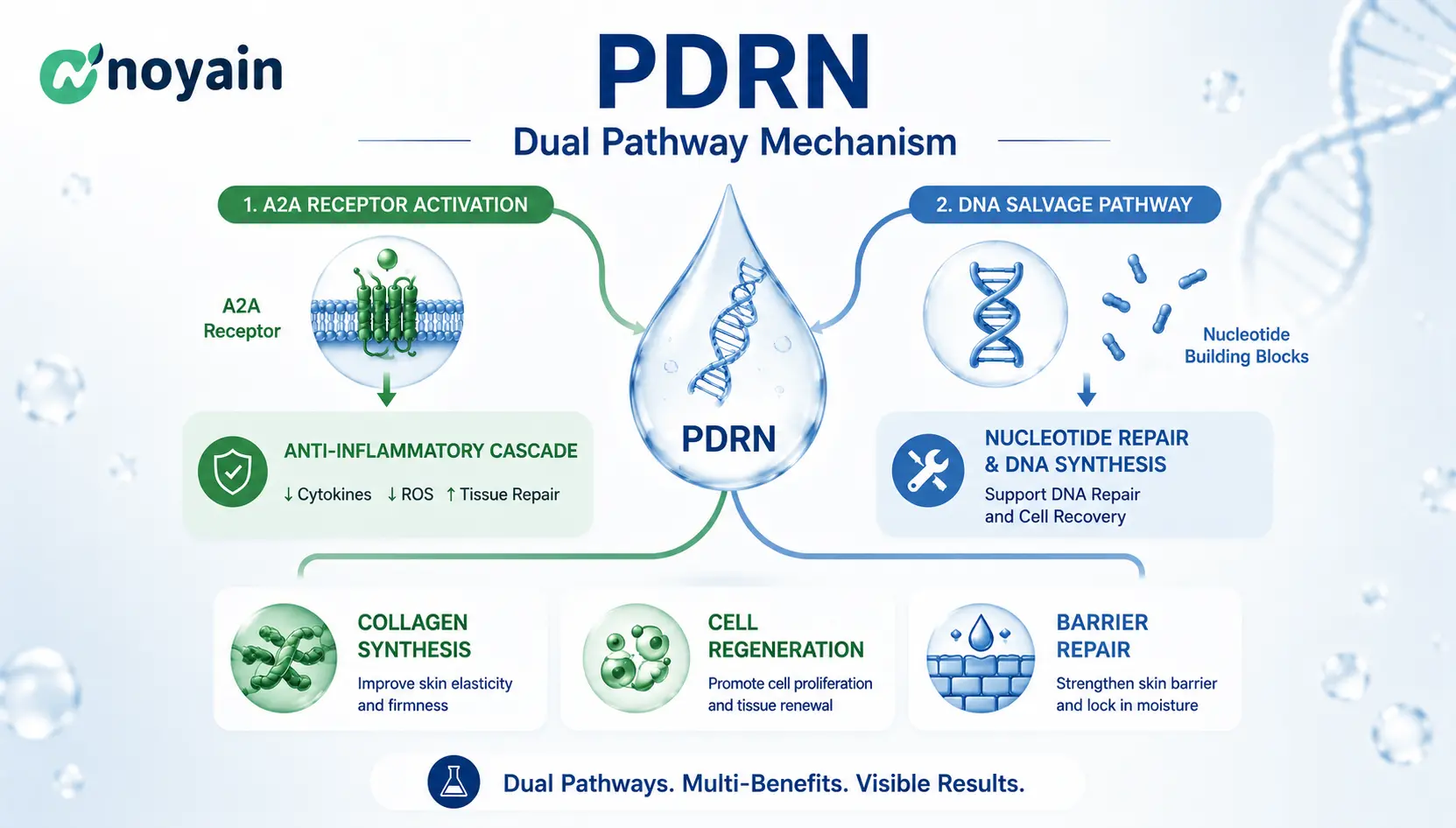
| Insufficient dosage (< 0.01%) | No measurable biological effect. PDRN requires a minimum threshold concentration to activate A2A receptors |
| Extreme pH conditions (< 4.0 or > 8.0) | DNA denaturation — the double-strand structure unravels and bioactivity is lost |
| High-temperature processing (> 60°C) | Thermal degradation of the DNA polymer |
| Cationic ingredient incompatibility | Charge neutralisation causes precipitation and loss of activity |
| High-shear mixing | Mechanical shearing of long DNA chains reduces molecular weight and efficacy |
| Poor quality PDRN source | Low-purity PDRN contains short-chain fragments and impurities that lack the full biological profile |
Formulator’s Note — Charge Conflict
PDRN (Sodium DNA) is a negatively charged polynucleotide in aqueous solution. Avoid combining it directly with strongly cationic ingredients such as Polyquaternium-10, Polyquaternium-7, Behentrimonium Chloride, Cetrimonium Chloride or cationic emulsifiers. Think of it like magnets — opposite charges attract, and when too many of them pair up, they clump together and precipitate out of solution. Charge neutralisation will cause visible precipitation and reduce or eliminate biological activity. If cationic ingredients are required in the formula, separate the addition phases and confirm compatibility through accelerated stability testing.
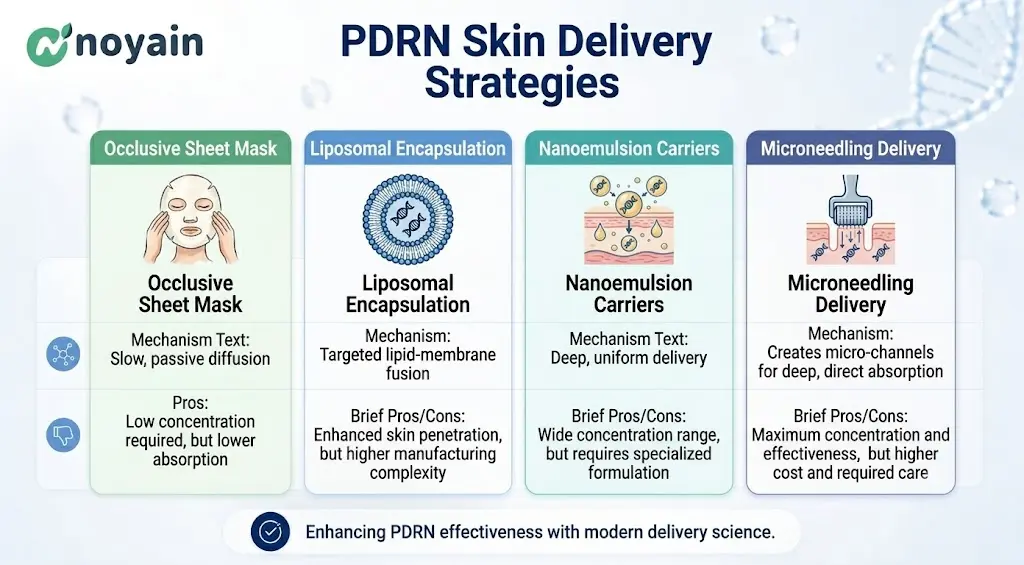
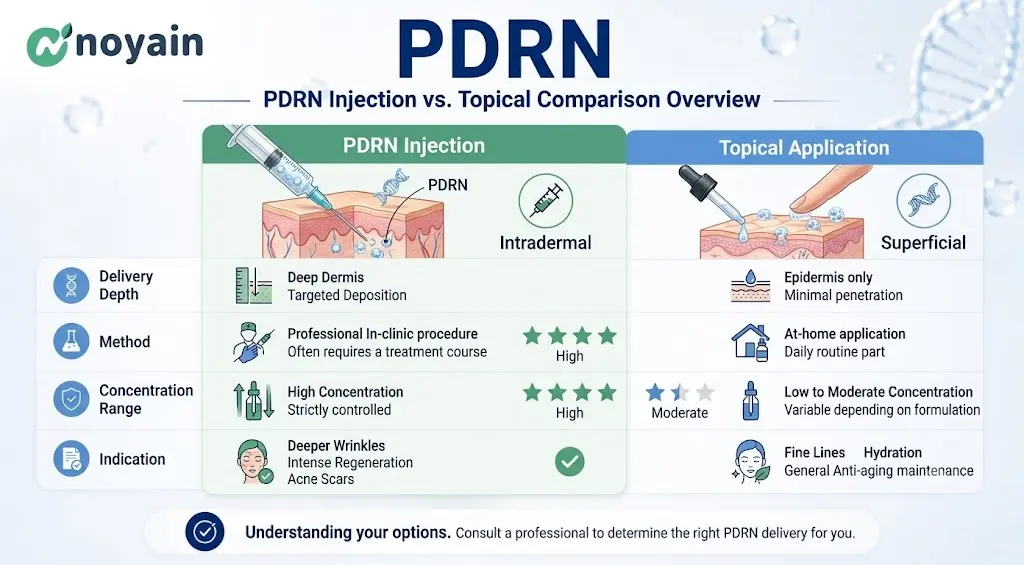
How PDRN Reaches the Skin: Delivery Strategies
A 250–1500 kDa polymer cannot passively diffuse across intact stratum corneum. This is a fundamental biophysical constraint that every formulator must account for.
Think of it this way: small-molecule actives like niacinamide (122 Da) are like marbles that can easily slip through a door gap. PDRN at 250–1500 kDa is more like a basketball — it is not going through that gap. But that does not mean it cannot work. The basketball can still be effective if you create the right conditions on the other side of the door.
Most cosmetic PDRN products rely on hydrated skin conditions and prolonged contact time rather than complete transdermal penetration. The practical strategies include:
| Strategy | How It Works | Best Format Fit |
|---|---|---|
| Occlusive sheet mask | Increases stratum corneum hydration by 45%+, creating a temporary permeability gradient | Sheet mask, hydrogel mask |
| Prolonged contact time | Leave-on formats allow 8–12 hours of continuous exposure | Serum, cream, night mask |
| Liposomal encapsulation | Lipid bilayer vesicles fuse with stratum corneum lipids, carrying PDRN into deeper layers | Serum, ampoule |
| Nanoemulsion carriers | Droplet sizes < 200 nm can carry PDRN through intercellular lipid pathways | Serum, toner |
| Microneedling-assisted delivery | Creates microchannels that bypass the stratum corneum barrier entirely | Professional ampoule |
| Post-procedure application | Disrupted barrier from chemical peels or laser treatments allows transient macromolecule passage | Post-procedure serum, mask |
Formulator’s Note — Penetration Reality
No topical formulation delivers the full applied PDRN dose to the dermis. This is normal and expected. The clinical data showing efficacy at 0.5% in an emulsion format (33-subject trial: hydration +45.48%, crow’s feet volume -6.58%) was achieved through daily application over 28 days — not through a single high-dose event. Design your product for repeated use, not a single “miracle” application.
1. PDRN Serum
Best for: Targeted anti-aging, post-procedure repair, brightening
Typical concentration range: 0.1% – 1.0%
Market search volume: ~8,100 monthly searches — the most popular PDRN product format by a wide margin
Formulation Considerations
| Factor | Guidance |
|---|---|
| Solubility | Water-soluble. Add to water phase below 40°C |
| pH stability | Optimal range pH 5.5–7.0. Avoid pH < 4.0 or > 8.0 |
| Shear sensitivity | Add PDRN under low-speed mixing only. High shear can fragment the DNA polymer and reduce molecular weight. Stir at 300–500 rpm when adding PDRN solution |
| Viscosity | PDRN contributes minimal viscosity at 0.1–1.0%. Use standard thickeners (xanthan gum 0.1–0.2%, HEC 0.3–0.5%) |
| Preservation | Standard systems compatible. Pentylene glycol + 1,2-hexanediol is a strong preservative booster option |
| Packaging | Airless pump or amber glass dropper. Avoid UV-transparent packaging |
Suggested Formula Skeleton
| Order | Phase | Ingredient | % | Notes |
|---|---|---|---|---|
| 1 | A | Water | qs to 100 | Heat to 75°C |
| 2 | A | Glycerin | 3.0 | Humectant |
| 3 | A | Xanthan gum | 0.15 | Pre-disperse in glycerin before adding to water |
| 4 | B | PDRN (Sodium DNA) | 0.5–1.0 | Add at < 40°C, low-speed mixing (300–500 rpm) |
| 5 | B | Hyaluronic acid (low MW) | 0.1 | Add at < 40°C |
| 6 | B | Pentylene glycol | 3.0 | Preservation booster |
| 7 | B | 1,2-Hexanediol | 2.0 | Preservative |
| 8 | C | Citric acid solution | qs to pH 6.0 | Add dropwise with gentle stirring |
2. PDRN Cream
Best for: Daily moisturising + anti-aging, barrier restoration, sensitive skin
Typical concentration range: 0.05% – 0.5%
Market search volume: ~1,900 monthly searches
Formulation Considerations
| Factor | Guidance |
|---|---|
| Emulsion type | O/W preferred for PDRN release. W/O possible for barrier-focused products but requires higher energy input |
| Emulsifier selection | Avoid cationic emulsifiers. Non-ionic (Olivate, Ceteareth, Sucrose esters) or anionic systems preferred |
| Processing | Prepare emulsion at 75°C, cool to 40°C, then add PDRN solution under slow sweep mixing |
| Compatibility | Good with: glycerin, pentylene glycol, 1,2-hexanediol, low-MW HA, niacinamide, ceramides, panthenol |
| Incompatible with | L-ascorbic acid (low pH), glycolic acid > 5%, salicylic acid > 1%, denatured alcohols, cationic surfactants |
Texture by Application
| Application | PDRN Level | Texture | Complementary Actives |
|---|---|---|---|
| Anti-aging night cream | 0.3–0.5% | Rich | Peptides, bakuchiol, niacinamide |
| Barrier repair cream | 0.1–0.3% | Medium-rich | Ceramides, panthenol, squalane |
| Sensitive skin day cream | 0.05–0.1% | Light | Centella asiatica, madecassoside, allantoin |
3. PDRN Sheet Mask / Face Mask
Best for: Intensive treatment, post-procedure soothing
Typical concentration range: 0.05% – 0.3% (in essence phase)
Market search volume: ~1,040 monthly searches (mask + face mask combined)
Sheet masks provide the most favourable delivery environment for PDRN: occlusive conditions increase stratum corneum hydration, creating a temporary permeability gradient that allows higher-molecular-weight fragments to penetrate further than they would in an open-application format.
In the 33-subject clinical trial, hydration improved by 35.51% at 14 days and 45.48% at 28 days — results consistent with a hydrated, occluded application model.
4. PDRN Ampoule
Best for: Professional/in-clinic use, microneedling combinations, high-concentration treatment
Typical concentration range: 0.5% – 2.0%
Market search volume: ~260 monthly searches
Ampoules allow the highest PDRN loading. Because they are single-dose or short-course formats, preservation demands are lower, enabling cleaner INCI lists.
5. PDRN Toner
Best for: Daily hydration prep, sensitive skin, first-step layering
Typical concentration range: 0.02% – 0.1%
Market search volume: ~320 monthly searches
The entry-level format. At these concentrations, PDRN provides mild anti-inflammatory support and barrier maintenance rather than active repair.
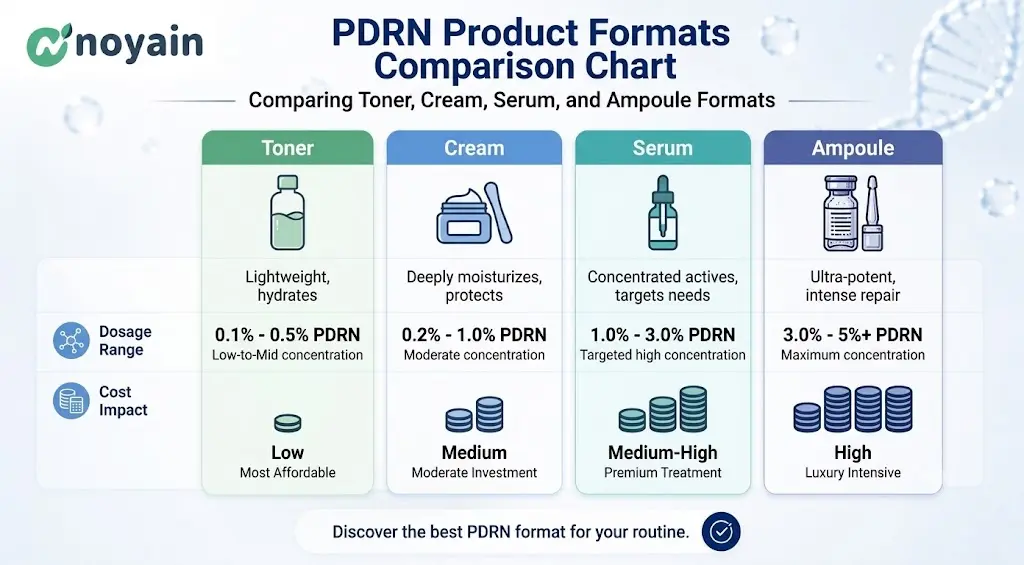
PDRN Product Format Comparison
| Format | Recommended PDRN Level | Stability Demand | Cost Impact | Best Use Case | Difficulty |
|---|---|---|---|---|---|
| Toner | 0.02–0.05% | Medium | Low | Entry-level, daily prep | Low |
| Cream | 0.05–0.5% | Medium-High | Medium | Daily repair, moisturising | Moderate |
| Sheet mask | 0.05–0.3% | Low (single-use) | Low | Intensive treatment | Low |
| Serum | 0.1–1.0% | Medium | High | Premium anti-aging | Moderate |
| Ampoule | 0.5–2.0% | Low (short-term) | Very High | Professional use | Low |
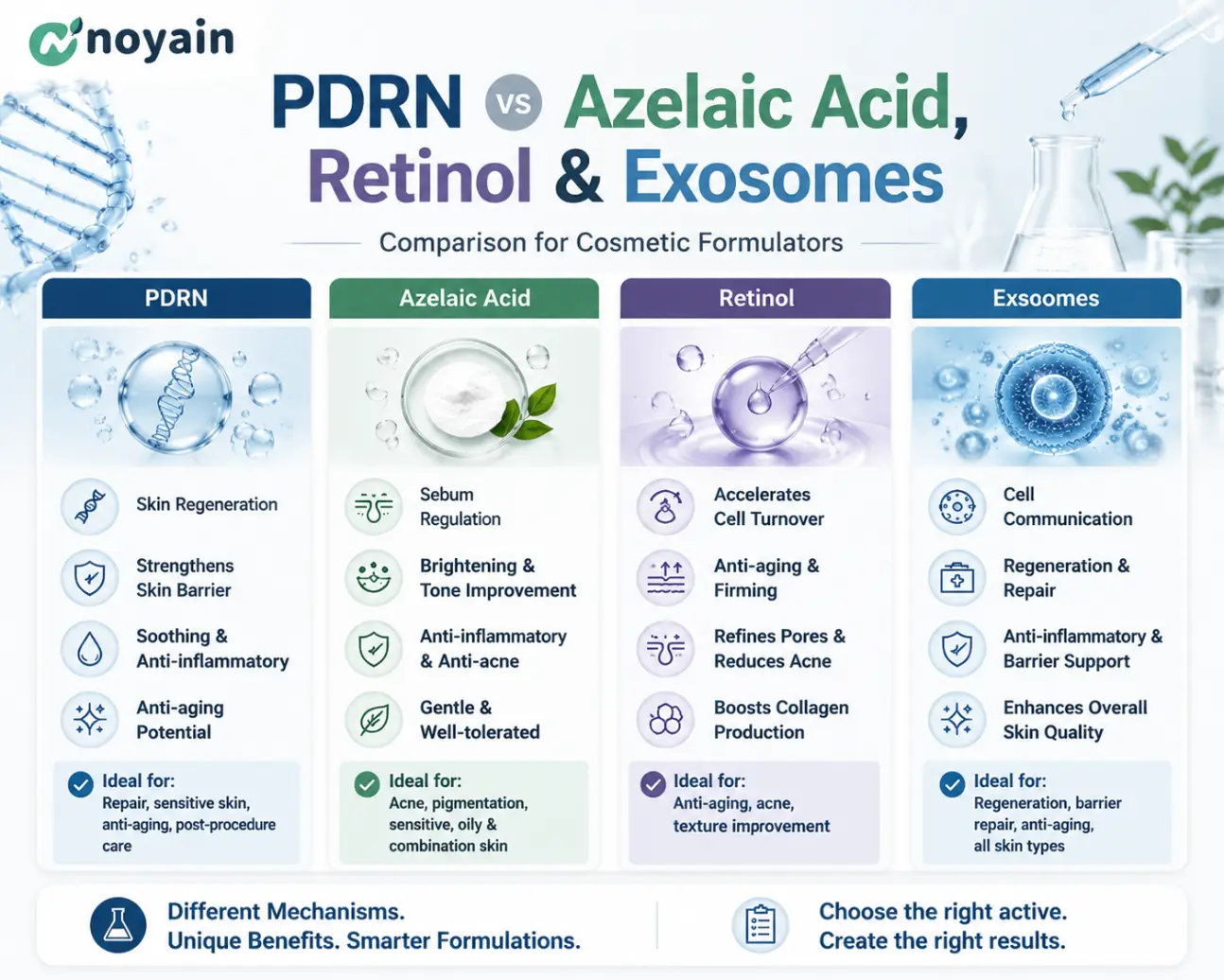
PDRN vs Exosomes vs Peptides: Ingredient Comparison
| Ingredient | Repair | Anti-Aging | Stability | Cost | Sourcing Complexity |
|---|---|---|---|---|---|
| PDRN | High | High | High | Medium | Moderate |
| Exosomes | Very High | Very High | Low | Very High | Very High (cell culture) |
| Peptides | Medium | High | High | Medium | Low (synthetic) |
Formulator’s Note — Ingredient Selection
PDRN, exosomes and peptides are often described as competitors, but they work best at different stages of the repair cascade. PDRN provides the DNA-level repair foundation; peptides signal specific collagen production; exosomes deliver a broad payload of growth factors. A layered strategy using PDRN as the base with targeted peptides for specific claims often outperforms any single-ingredient approach.
PDRN occupies a unique position — it offers strong repair and anti-aging activity with better stability and lower cost than exosomes, while providing a more fundamental (DNA-level) mechanism than peptides.
Commercial Considerations for PDRN Product Development
| Product Type | Recommended PDRN Level | Cost Impact | Positioning |
|---|---|---|---|
| Toner | 0.02–0.05% | Low | Entry-level, mass market |
| Cream (daily) | 0.1–0.3% | Medium | Daily repair, mid-range |
| Serum (premium) | 0.3–1.0% | High | Premium anti-aging |
| Ampoule (professional) | 1.0–2.0% | Very High | Clinical, professional channel |
Formulator’s Note — Cost vs. Efficacy Trade-Off
A common mistake is choosing a PDRN supplier based solely on price per kilogram. Low-cost PDRN often means shorter DNA fragments produced through aggressive processing — these fragments lack the full molecular weight distribution needed for sustained A2A receptor activation. Always request molecular weight distribution data alongside the COA before comparing prices.
Key Sourcing Considerations
| Factor | What to Check |
|---|---|
| PDRN grade | Full-length vs. fragmented. Request molecular weight distribution data from supplier |
| Cost per kg | Varies significantly with purity and source. CAS-validated extraction typically costs more but delivers higher purity |
| Concentration basis | “99% PDRN powder” and “10% PDRN solution” are very different cost propositions. Confirm the basis |
| Supply chain | Salmon-derived PDRN depends on fishery supply. Ask about alternative sourcing if supply is interrupted |
| Documentation | COA, TDS, MSDS, BSE/TSE-free certificate, batch-to-batch consistency data |
FAQ
What is the best concentration of PDRN in a serum?
Most formulations use 0.3%–1.0% depending on the target price point and efficacy claims.
Can PDRN be combined with niacinamide?
Yes, they are generally compatible. Niacinamide’s anti-inflammatory synergy complements PDRN’s A2A receptor pathway well.
Does PDRN work in a cream?
Yes, especially in barrier repair and anti-aging cream formats. Use the O/W emulsion type for better PDRN release.
Is PDRN compatible with vitamin C?
Only under suitable pH conditions. Low-pH L-ascorbic acid systems (pH < 4) may denature PDRN. Consider using a vitamin C derivative (e.g., ascorbyl glucoside, ethyl ascorbic acid) at pH 5.5–6.0 instead.
What is the difference between PDRN and Sodium DNA?
Sodium DNA is the INCI name for the sodium salt form of PDRN used in cosmetic formulations. They refer to the same ingredient. For more detail, see our guide on Sodium DNA in Skincare.
How long does it take to see results from a PDRN product?
Clinical data from a 33-subject trial shows measurable improvements at 14 days (hydration +35.51%) with continued improvement at 28 days (hydration +45.48%, crow’s feet area -8.99%).
Can PDRN be used with microneedling?
Yes. In-clinic microneedling with PDRN is a growing professional treatment. The microchannels bypass the stratum corneum barrier, allowing direct delivery of the full PDRN molecule to the viable epidermis.
Formulator’s Note — Always Test Your Compatibility
Even well-characterised ingredients can behave unpredictably in novel combinations. We recommend preparing small batch prototypes (200–500 g) for each new PDRN formulation and running a 4-week accelerated stability test (40°C / 75% RH) before scaling to production. Pay special attention to viscosity changes, precipitation, and pH drift — these are early indicators of formulation instability.
Choosing a PDRN Supplier: What Matters Most
For formulators, sourcing high-purity PDRN is often more important than increasing dosage. A 0.3% PDRN from a quality supplier can outperform 1.0% from a supplier with inferior extraction methods.
When evaluating suppliers, look for:
- Wild-caught source documentation — Traceability to the fishery
- CAS-validated inorganic salt extraction — No toxic solvent residues (vs. phenol-chloroform)
- Purity evidence — High-purity PDRN self-aggregates and crystallises; regular crystal morphology confirms low impurities
- Certifications — ISO 9001, COSMOS, Halal, BSE/TSE-free
- Technical support — Does the supplier provide formulation guidelines, compatibility data, and stability testing support?
Interested in evaluating Sodium DNA for your next formulation? Visit our product page to request COA, TDS, specification sheets, formulation guidance, and sample support.
Conclusion
PDRN is one of the most versatile active ingredients available to formulators today — but only if the product format, concentration, processing conditions and delivery strategy are properly matched. A well-designed PDRN product respects the ingredient’s molecular weight, charge characteristics, and pH sensitivity, and uses appropriate delivery strategies to ensure the active reaches its target.
The brands that get this right will have a significant advantage in the growing PDRN market. For a complete overview of PDRN’s mechanisms and benefits, see our What is PDRN? guide.
References
- Squadrito F, et al. Pharmacological activity and clinical use of PDRN. Frontiers in Pharmacology. 2017;8:224. DOI: 10.3389/fphar.2017.00224
- Thellung S, et al. Polydeoxyribonucleotide: A Promising Biological Platform to Accelerate Impaired Skin Wound Healing. Journal of Dermatological Science. 2025. DOI: 10.1016/j.jdermsci.2025.06.003
- Zhang L, et al. Development and characterization of polydeoxyribonucleotide (PDRN) loaded chitosan polyplex. International Journal of Biological Macromolecules. 2023. DOI: 10.1016/j.ijbiomac.2023.09.078
To request a sample, download documentation, or discuss your formulation needs, please contact us through our inquiry form:
→ Contact UsOr reach us directly at noyainbio@gmail.com
Noyain Biochemicals
Room 3a05, 4th Floor, No. 6, Ketai Second Road, Baiyun District, Guangzhou City, China