
Cosmetic Active System
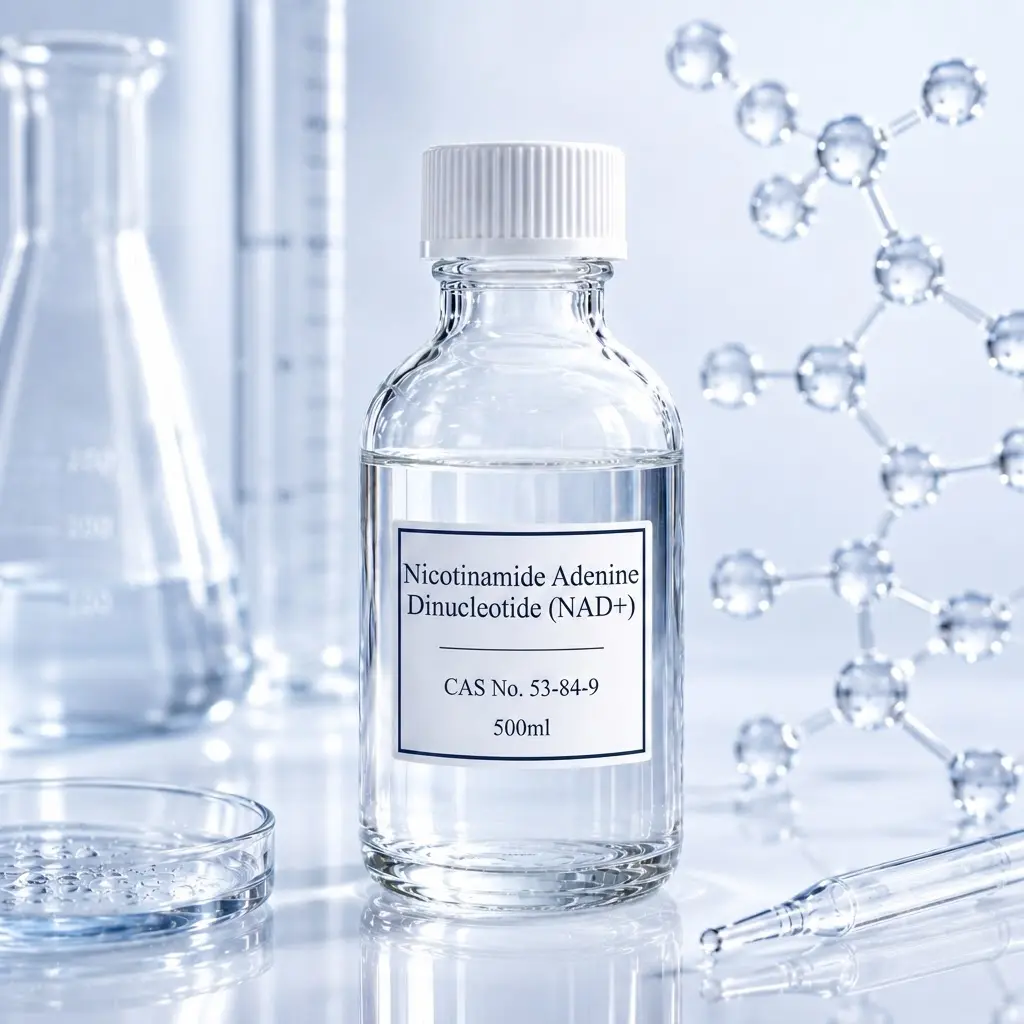
Nicotinamide Adenine Dinucleotide (NAD+)
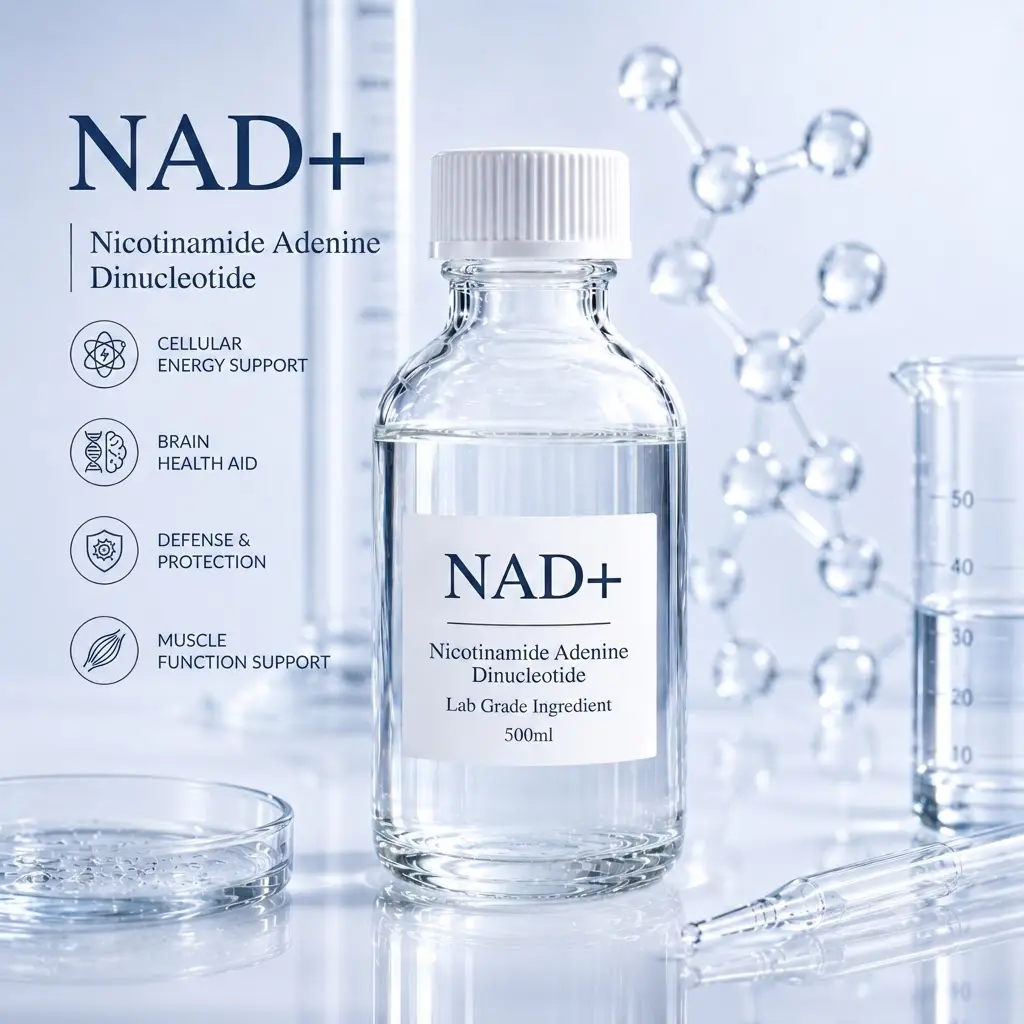
Nicotinamide Adenine Dinucleotide (NAD+) is a vital coenzyme found in every living cell. It acts as a molecular shuttle bus that transports electrons between molecules, powering cellular energy metabolism, activates Sirtuin longevity pathways, and supports DNA repair mechanisms in aging skin. As a centrally acting anti-aging active, it restores declining NAD+ levels in aged keratinocytes and fibroblasts, driving ATP production, reducing oxidative stress, and promoting skin renewal for a visibly firmer, more resilient complexion.
INCI
Nicotinamide Adenine Dinucleotide
CAS
53-84-9
Function
Cellular energy boost, Sirtuin activation, DNA repair, antioxidant, anti-inflammatory, skin renewal
Shelf Life
24 months
Product Overview
Advanced Cellular Energy Solution for Anti-Aging Formulations
Nicotinamide Adenine Dinucleotide (NAD+) is one of the most extensively studied molecules in cellular aging research, recognized for its central role in mitochondrial energy metabolism, genomic stability, and longevity signaling. As an essential coenzyme in redox reactions, NAD+ acts as a molecular shuttle bus — constantly cycling between two forms: NAD+ (oxidized, "empty" form) and NADH (reduced, "full" form) — to transport electrons between molecules and convert nutrients into usable ATP energy. NAD+ drives ATP synthesis in mitochondria, activates the SIRT1/3/6 Sirtuin family (the body's key regulators of cellular stress resistance and aging), and serves as the substrate for PARP-1-mediated DNA repair. In aging skin, NAD+ levels decline by up to 50%, contributing to reduced cellular energy, accumulated oxidative damage, impaired DNA repair, and visible signs of aging including loss of firmness, elasticity, and radiance.
Topical application of NAD+ delivers the coenzyme directly to epidermal and dermal cells, replenishing depleted stores and reactivating the energy and repair machinery that declines with age. NOYAIN® Nicotinamide Adenine Dinucleotide is produced through fermentation and enzymatic conversion, yielding ≥ 98% pure cosmetic-grade NAD+ suitable for premium anti-aging skincare formulations. For formulators developing science-driven anti-aging products — from energy-boosting serums to DNA repair night treatments — NAD+ offers a clinically grounded, mechanism-based active that addresses skin aging at the cellular level. Nicotinamide Adenine Dinucleotide (NAD+) is gaining recognition in cosmetic ingredient development across Asia, Europe, and North America as a next-generation anti-aging active.
Core Advantages
How It Supports Acne Care
Collagen Support
NAD+ enhances collagen synthesis in dermal fibroblasts through Sirtuin-mediated signaling pathways. SIRT1 activation promotes the deacetylation of transcription factors involved in extracellular matrix production, supporting type I and type III collagen synthesis. By maintaining cellular energy (ATP) levels in fibroblasts, NAD+ also ensures that the energy-intensive process of collagen production can proceed efficiently, counteracting the age-related decline in dermal matrix density.
Elastin Protection
Through SIRT6 activation and antioxidant mechanisms, NAD+ helps preserve elastin fiber integrity by reducing matrix metalloproteinase (MMP) activity driven by oxidative stress. The NAD+-dependent regeneration of glutathione (GSH) protects elastic fibers from degradation by reactive oxygen species, supporting skin elasticity and recoil over time.
Cellular Renewal
NAD+ restores the declining energy metabolism of aging keratinocytes and fibroblasts by driving mitochondrial ATP production. This energy boost supports cellular proliferation, migration, and differentiation — key processes for maintaining a healthy epidermal turnover rate. In vivo-like models show that NAD+ replenishment can restore ATP levels in aged cells to near-young levels, directly supporting skin renewal and a more youthful appearance.
Skin Barrier Improvement
By promoting keratinocyte proliferation and differentiation, NAD+ contributes to the maintenance of a healthy epidermal barrier. The energy-dependent processes of lipid synthesis, cornification, and tight junction formation all benefit from restored NAD+ levels, supporting barrier function and resilience against environmental stressors.
Circadian Rhythm Regulation
NAD+ levels follow a natural circadian oscillation, peaking during active periods and declining during rest. Through the NAD+-dependent SIRT1 pathway, NAD+ directly interacts with core circadian clock proteins (CLOCK, BMAL1, PER2), creating a feedback loop that synchronizes cellular repair processes with the sleep-wake cycle. With age, declining NAD+ disrupts this feedback loop, contributing to impaired overnight skin repair. Topical NAD+ replenishment helps restore circadian rhythm synchronization, optimizing the skin’s natural overnight renewal cycle — making it particularly valuable in night repair and anti-aging ampoule formulations.
By promoting keratinocyte proliferation and differentiation, NAD+ contributes to the maintenance of a healthy epidermal barrier. The energy-dependent processes of lipid synthesis, cornification, and tight junction formation all benefit from restored NAD+ levels, supporting barrier function and resilience against environmental stressors.
Suitable for the following applications
Recommended Applications
Anti-Aging Serum
Aqueous or gel serum at 1–3% NAD+. The primary delivery platform for daily cellular energy support. Pairs well with peptides and antioxidants for comprehensive anti-aging.
Night Repair Ampoule
High-concentration treatment (2–3%) designed for overnight application. Delivers intensive NAD+ boost during the skin's natural repair cycle when Sirtuin activity and DNA repair mechanisms are most active.
Eye Cream
Targeted periorbital formulation at 0.5–1.5%. Supports the delicate eye area where signs of aging first appear; reduces appearance of fine lines and loss of firmness.
Firming Cream
Rich emulsion at 0.5–2% combined with peptides and ceramides. Addresses loss of elasticity and firmness in mature skin.
Core Advantages
Why Formulators Choose NAD+
Dual-Action Anti-Aging Mechanism
NAD+ addresses aging through two complementary pathways: restoring cellular energy metabolism (ATP production) and activating Sirtuin longevity proteins (SIRT1/3/6). This dual mechanism provides a more comprehensive anti-aging strategy than single-pathway actives.
Clinically Grounded in Aging Research
The role of NAD+ in cellular aging is supported by extensive scientific literature. Declining NAD+ levels are a hallmark of aging across tissues, making its replenishment a well-validated target for anti-aging interventions.
Broad Efficacy Spectrum
Beyond collagen support, NAD+ contributes to DNA repair, antioxidant defense, anti-inflammatory balance, and skin barrier maintenance — delivering multiple benefits from a single active ingredient.
Precursor Synergy
NAD+ works synergistically with niacinamide (which supports NAD+ biosynthesis), retinol (which benefits from NAD+-mediated cellular recovery), and antioxidants (which are regenerated through NADPH-dependent pathways), enabling flexible formulation strategies.
Water-Soluble and Easy to Formulate
Readily soluble in water, NAD+ integrates into aqueous phase of serums, gels, and emulsions. Cold-process feasible in aqueous systems, reducing production complexity.
Science-Driven Positioning
NAD+'s well-characterized mechanism in aging biology supports premium product positioning with credible scientific narrative, appealing to educated consumers and professional channels.
why choose us
Our high-quality NAD+ ingredients
Water-soluble
Easily incorporates into aqueous phase of serums, gels, and emulsions
Cold-process capable
Can be added at room temperature, simplifying production
Low use level
Clinically relevant efficacy at 0.5–3%, enabling cost-effective formulations
Broad pH tolerance
Stable at pH 2.5–6.0, compatible with most anti-aging formulation pH targets
Transparent system compatible
Suitable for clear serum formulations without clouding
Synergistic with popular actives
Works well with niacinamide, retinol, peptides, vitamin C, and CoQ10
Technical Specifications
Product Technical Parameters
Parameter | Specification |
|---|---|
INCI Name | Nicotinamide Adenine Dinucleotide |
Appearance | White to off-white crystalline powder |
Purity | ≥ 98.0% |
Recommended Dosage | 0.5% – 2.0% |
Solubility | Readily soluble in water |
pH Stability | 2.5 – 4.5 |
Application | Anti-aging serums, eye creams, night repair ampoules, sheet masks, professional aesthetic products |
Shelf Life | 24 months |
related products
Other related products
Related Documents
Technical Support Materials
COA Document
Get For FreeTDS (Technical Data Sheet)
Get For FreeMSDS (Material Safety Data Sheet)
Get For FreeFormulation Guide
Get For FreeRelated Topics
Product-related articles
Frequently Asked Questions
- What is the difference between NAD+ and NADH?NAD+ (oxidized form) and NADH (reduced form) are the two interchangeable states of the same coenzyme. Think of NAD+ as the “empty” form — ready to accept electrons during chemical reactions — and NADH as the “full” form — carrying electrons and hydrogen, ready to release energy. This continuous cycling between the two forms is what makes NAD a molecular shuttle bus that transfers energy from nutrients to ATP production inside mitochondria. In skincare, maintaining adequate NAD+ levels supports the cell’s energy metabolism, DNA repair capacity, and Sirtuin activation — functions that rely on this dynamic NAD+/NADH cycling.
- What is Nicotinamide Adenine Dinucleotide (NAD+) and how does it benefit the skin?Nicotinamide Adenine Dinucleotide (NAD+) is a fundamental coenzyme present in every living cell. It is essential for mitochondrial energy production (ATP synthesis), activation of Sirtuin longevity proteins (SIRT1, SIRT3, SIRT6), and DNA repair through PARP-1 activity. In skincare, topical NAD+ replenishes declining levels in aging skin cells, supporting cellular energy, antioxidant defenses, and skin renewal. This results in improved firmness, elasticity, and overall skin vitality.
- Is Zinc-PCA suitable for sensitive skin types?Yes. Zinc-PCA is considered a mild anti-acne active with a favorable irritation profile. Unlike salicylic acid or benzoyl peroxide, it does not cause peeling, stinging, or significant barrier disruption. For formulations targeting sensitive and reactive acne-prone skin, combine Zinc-PCA with soothing agents such as panthenol, allantoin, or bisabolol at a dosage of 0.5% to 1.0%.
- What is the recommended dosage for NAD+ in topical formulations?The recommended dosage range is 0.5% to 3.0%, depending on the formulation type and target benefits. For daily leave-on serums, 0.5–1.5% is a good starting point. For intensive night repair ampoules or professional treatments, 2–3% may be used. Sheet masks and eye creams typically benefit from 0.5–1.5%. Optimal dosage should be confirmed through formulation stability testing.
- Is NAD+ compatible with retinol in anti-aging formulations?Yes. NAD+ and retinol are highly complementary. NAD+ supports cellular energy metabolism and antioxidant defenses, which can help skin cells recover from retinol-induced oxidative stress. Pairing them allows formulators to leverage retinol’s collagen-stimulating effects while supporting the cell’s intrinsic repair capacity through NAD+ replenishment, potentially reducing retinoid-related irritation.
- Can NAD+ be combined with peptides and niacinamide?Absolutely. NAD+ works synergistically with both ingredient classes. With peptides (such as Matrixyl and Argireline), NAD+ provides the cellular energy foundation that supports peptide-driven collagen signaling. With niacinamide, there is a direct biochemical synergy — niacinamide serves as a precursor for NAD+ biosynthesis in skin cells, and combining them can amplify cellular NAD+ availability.
- What is the stability profile of NAD+ in finished formulations?NAD+ is stable at pH 2.5–6.0 and is best incorporated into the aqueous phase. It is sensitive to prolonged heat exposure, particularly in alkaline environments; incorporation below 40°C is recommended. Finished products should be packaged in opaque or UV-protective containers to prevent light-induced degradation. Cold-process manufacturing is feasible in aqueous systems.