
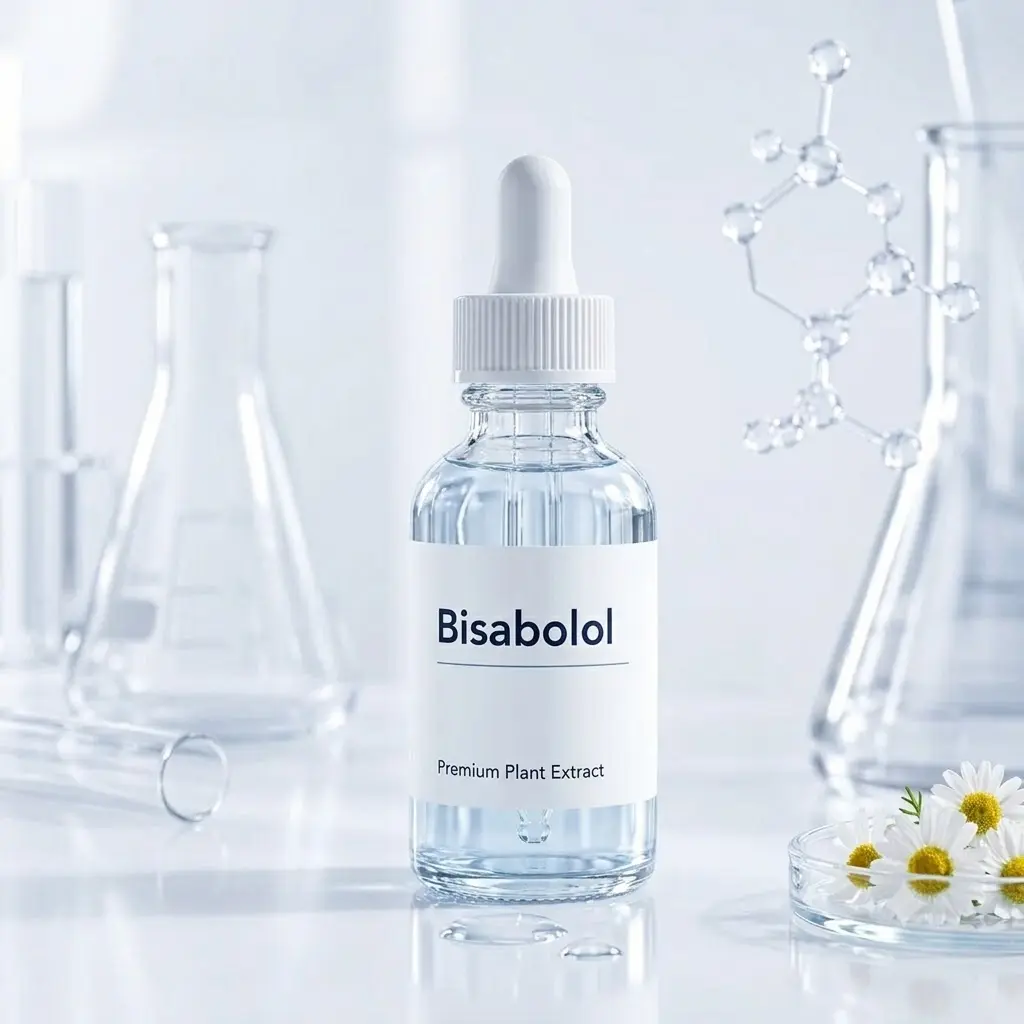
Soothing and Anti-Inflammatory Agent
Bisabolol
Bisabolol (α-Bisabolol) is a naturally identical sesquiterpene active with multi-target anti-inflammatory, anti-itch, and skin repair properties. Produced through advanced biosynthesis technology, it delivers high-purity (>98%) single-levorotatory structure for enhanced efficacy. It is widely used in sensitive skin, post-procedure repair, sun care, and scalp care formulations where rapid soothing and sustained calming are required.
INCI
bisabolo
CAS
515-69-5
Function
Anti-inflammatory, soothing, anti-itch, skin repair, redness reduction, antimicrobial
Shelf Life
24 Months
Product Overview
Advanced Soothing Solution for Sensitive and Compromised Skin Formulations
Bisabolol is one of the most extensively studied soothing actives in cosmetic science, recognized for its multi-target mechanism that addresses inflammation, itching, pain, and barrier compromise simultaneously. Its activity spans three complementary pathways: inhibition of pro-inflammatory cytokines (TNF-α and IL-6), antagonism of the TRPV1 receptor (the primary mediator of thermal and chemical sensitivity in skin), and suppression of mast cell degranulation that drives histamine-mediated itch and swelling.
NOYAIN® Bisabolol is produced through synthetic biology combined with enzymatic catalysis — a biosynthesis platform that yields a single (-)-α levorotatory structure at >98% purity, with 98% bio-based carbon content and ultra-low allergen residues (Farnesol < 0.5%). This ensures batch-to-batch consistency and reliable clinical performance, free from the variability of plant extraction or the low-activity isomer mixtures of chemical synthesis. For formulators developing sensitive skin ranges, post-procedure recovery products, or after-sun calming systems, Bisabolol provides a clinically supported, clean-label active that works at exceptionally low use levels. Bisabolol is widely adopted in premium soothing and repair formulations across Asia, Europe, and North America.
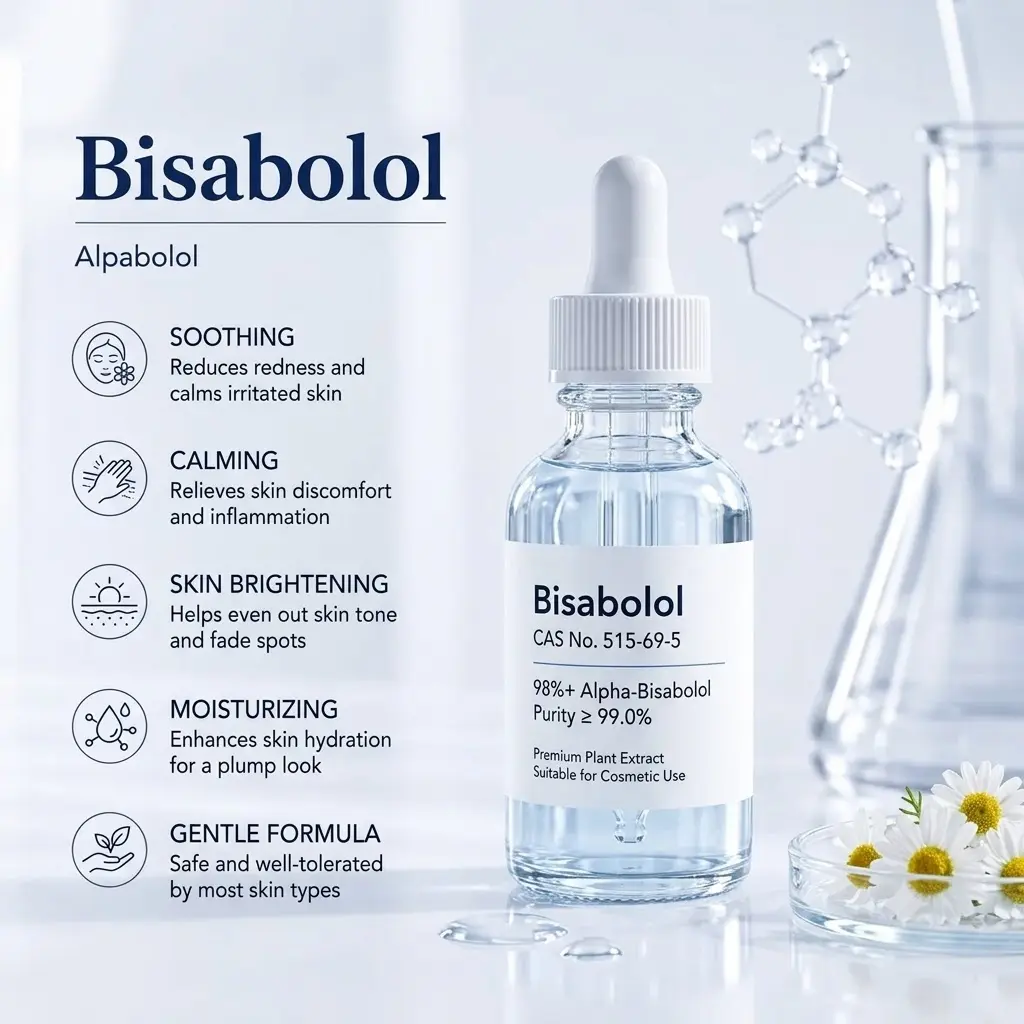
Core Advantages
Soothing Mechanism
Barrier Repair
Bisabolol supports skin barrier recovery by promoting keratinocyte migration and proliferation. Cell scratch assay data demonstrate a 17% improvement in wound healing area at 0.001% concentration, confirming its ability to accelerate epidermal repair without the need for occlusive or film-forming agents. This makes it particularly valuable in formulations targeting compromised skin barriers.
Redness Reduction
Through dual inhibition of the inflammatory cytokines TNF-α (32.2% inhibition) and IL-6 (10.5% inhibition), Bisabolol effectively reduces visible erythema and skin redness. Human efficacy testing confirms that 0.1% Bisabolol provides rapid and measurable redness-reducing performance within one hour of application.
Irritation Relief
Bisabolol acts as a TRPV1 receptor antagonist (binding energy: -7.2 kCal/mol) and COX-2 inhibitor (binding energy: -8.2 kCal/mol), directly blocking the neural and enzymatic pathways that mediate stinging, burning, and itching sensations. Mast cell degranulation is suppressed by 27.30%, reducing histamine and leukotriene release at the source.
Suitable for the following applications
Recommended Applications
Sensitive Skin Serum
Lightweight aqueous or gel serum at 0.1–0.5% Bisabolol for daily calming and barrier support. Pairs well with panthenol and niacinamide for comprehensive sensitivity management.
Post-Procedure Care
Targeted recovery formulation at 0.1–0.5% for use after aesthetic treatments. Calms skin discomfort, reduces visible redness, and supports rapid barrier restoration.
After-Sun Care
Cooling gel or lotion at 0.1–0.3% to relieve UV-induced redness, heat sensation, and dryness while supporting skin recovery.
Soothing Mask
Sheet mask or wash-off mask format at 0.1–0.5% for intensive calming treatment. Suitable for both daily sensitive skin and acute reactive episodes.
Core Advantages
Why Formulators Choose Bisabolol
Multi-Target Soothing Action
Addresses inflammation, itching, pain, and barrier damage simultaneously through three complementary pathways (cytokine inhibition, TRPV1 antagonism, and mast cell stabilization), offering comprehensive relief in a single active.
Clinically Validated at Low Use Levels
Efficacy is confirmed at concentrations as low as 0.001% to 0.1%, enabling cost-effective formulation without compromising clinical performance.
Biosynthesis-Derived Purity
>98% purity single (-)-α structure with 98% bio-based carbon content. Free from the low-activity isomer mixtures of chemical synthesis and the supply variability of plant extraction.
Ultra-Low Allergen Profile
Farnesol content < 0.5%, making it suitable for hypoallergenic and sensitive skin product ranges. Certified non-irritating in third-party ocular testing.
Clean-Label and Sustainable
Fermentation-based production with low carbon footprint and non-toxic process. Meets clean beauty and natural-identical positioning without sacrificing efficacy.
Broad Formulation Compatibility
Low use level, heat-stable, and compatible with both leave-on and rinse-off systems. Works across serums, creams, lotions, masks, and scalp care formats.
why choose us
Our high-quality Bisabolol ingredients
Cold-water processable
Clinically active at 0.001–0.1%, reducing ingredient cost and formulation load.
Heat-stable
Withstands standard production heating cycles without degradation.
Oil-phase compatible
Incorporates readily into the oil phase during emulsification; compatible with both O/W and W/O systems.
Broad pH tolerance
Stable across the typical pH range of skincare formulations (pH 4.5–7.5).
No color interference
Colorless to light yellow liquid at recommended use levels; does not alter the visual appearance of finished products.
Synergistic compatibility
Proven synergistic effects with retinol (32% irritation reduction) and VC-IP (14.1% whitening synergy).
Technical Specifications
Product Technical Parameters
Parameter | Specification |
|---|---|
INCI Name | Sodium DNA |
Appearance | Liquids and powders |
Purity | 99% |
Recommended Dosage | 0.05% – 2.0% |
Solubility | Fully soluble in water, alcohol, and glycols |
pH Stability | 4.5 – 8.0 |
Application | Serums, Creams, Lotions, Masks, Ampoules, Repair Treatments |
Shelf Life | 24 Months |
related products
Other related products
Related Documents
Technical Support Materials
COA Document
Get For FreeTDS (Technical Data Sheet)
Get For FreeMSDS (Material Safety Data Sheet)
Get For FreeFormulation Guide
Get For FreeRelated Topics
Product-related articles
Frequently Asked Questions
- What is the primary function of Zinc-PCA in cosmetic formulations?Zinc-PCA is primarily used as a sebum-regulating active in acne-prone and oily skin formulations. It reduces sebum production by inhibiting 5α-reductase activity in sebocytes, while also providing mild antimicrobial effects against *Cutibacterium acnes* and a gentle astringent action. It is suitable for daily leave-on and rinse-off formats targeting oil control and blemish management.
- What is the recommended dosage range for Zinc-PCA?The recommended dosage depends on the product format. For leave-on products such as serums and toners, 0.5% to 2.0% is standard. For rinse-off products such as cleansers, 0.5% to 1.0% is typically sufficient. Higher concentrations within the range are recommended for targeted spot treatments, while lower concentrations suit daily maintenance formulations.
- Is Zinc-PCA suitable for sensitive skin types?Yes. Zinc-PCA is considered a mild anti-acne active with a favorable irritation profile. Unlike salicylic acid or benzoyl peroxide, it does not cause peeling, stinging, or significant barrier disruption. For formulations targeting sensitive and reactive acne-prone skin, combine Zinc-PCA with soothing agents such as panthenol, allantoin, or bisabolol at a dosage of 0.5% to 1.0%.
- Can Zinc-PCA be combined with other anti-acne actives?Yes. Zinc-PCA is frequently combined with salicylic acid, niacinamide, or azelaic acid in multi-active anti-acne systems. It works well in both leave-on serums and rinse-off cleansers. When formulating with multiple actives, we recommend stability and compatibility testing as interactions may affect preservative system performance.
- How does Zinc-PCA compare to salicylic acid for acne treatment?Zinc-PCA and salicylic acid address different aspects of acne pathology. Zinc-PCA targets sebum overproduction (the root cause) and *C. acnes* proliferation, while salicylic acid focuses on comedolysis and pore clearance. They are best used as complementary actives rather than substitutes. A typical regimen might pair 0.5–2% salicylic acid (rinse-off) with 1% Zinc-PCA (leave-on) for comprehensive coverage.
- Does Zinc-PCA maintain skin hydration?Yes. The PCA moiety in Zinc-PCA is a natural component of the skin’s natural moisturizing factor (NMF). While the primary function of Zinc-PCA is sebum regulation, the PCA component contributes mild humectant activity, helping to maintain stratum corneum hydration. This distinguishes it from traditional astringent or alcohol-based oil-control actives that can dehydrate the skin over time.